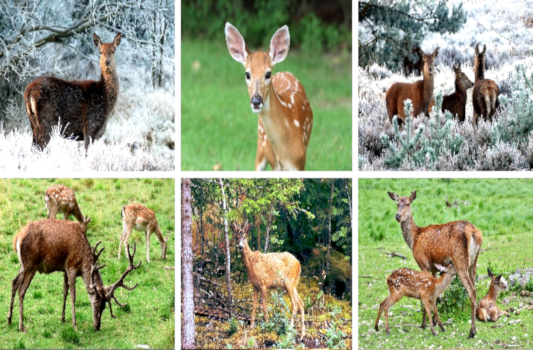
In Tagalog, a deer is called usa (pronounced oo‑sa).
Deer are quiet, gentle wild animals that live in grasslands, forests, and prairies. They eat grass, plants, nuts, twigs, wildflowers, and berries. Because their eyes are located on the sides of their head, deer have very sharp eyesight and can detect predators quickly.
Deer move carefully and quietly through the forest to avoid attracting attention. Their natural enemies include wolves, coyotes, hyenas, lions, tigers, and bobcats.
Names for Deer
- Buck – male deer
- Doe – female deer
- Fawn – baby deer
Deer → Usa
(pronounced: U‑sa)
Example Sentences Using “Deer” in Tagalog
- Ang usa ay naninirahan sa kagubatan.
A deer lives in the forest. - Ang usa ay kumakain ng halaman at damo.
A deer eats plants and grass. - May tatlong usa sa kakahuyan.
There are three deer in the woods. - Ang usa ay isang mailap na hayop.
A deer is an elusive animal. - Ang usa ay isang maamong hayop.
A deer is a kind and gentle animal. - Ang lalaking usa ay hayop na may mga malalaking sungay.
A male deer is an animal with large antlers. - Ang usa ay maaaring tumalon ng napakataas at tumakbo ng napakatulin.
A deer can jump very high and run swiftly.
Deer Species in the Philippines
The Philippines is home to several endemic deer species, many of which are threatened or endangered due to habitat loss and poaching.
1. Philippine Brown Deer (Rusa marianna)
- Also called the Philippine sambar
- Found in Luzon, Mindoro, Samar, Leyte, and Mindanao
- Lives in forests and grasslands from sea level up to 2,900 meters
- Medium‑sized, weighing around 49–50 kg
2. Visayan Spotted Deer (Rusa alfredi)
- Considered one of the rarest deer species in the world
- Found only in Panay and Negros
- Small, nocturnal, and forest‑dwelling
- Juveniles have distinct white spots
- Fewer than 300 individuals are estimated to remain in the wild
3. Calamian Deer (Hyelaphus calamianensis)
- Found only in the Calamian Islands
- Known for its unique appearance and behavior
4. Philippine Mouse‑Deer (Tragulus nigricans)
- Found in Balabac
- Not a true deer, but a chevrotain
- Males have tusk‑like canine teeth used for defense
Conservation Status and Threats
Many Philippine deer species face serious challenges:
Endangered Status
- The Visayan spotted deer is listed as endangered due to rapid population decline.
Habitat Loss
- Deforestation
- Agricultural expansion
- Human settlement
These factors reduce the forest areas where deer can safely live and feed.
Poaching
- Illegal hunting for meat (venison)
- Capture for the live pet trade
Conservation Efforts
- Habitat protection
- Captive breeding programs
- Wildlife sanctuaries and protected areas
These efforts aim to prevent extinction and restore wild populations.
Characteristics and Behavior
- Physical Features:
Philippine brown deer are medium‑sized, while Visayan spotted deer are smaller with faded spots. - Behavior:
Most Philippine deer are nocturnal, active at night, and hide in dense forest patches to avoid hunters.
Conclusion
Learning how to say deer in Tagalog helps you describe wildlife, nature, and animals in everyday conversations. Deer are gentle, graceful creatures found in many parts of the world—including the Philippines, where several unique species need protection and care.