Hello in Tagalog is the heartbeat of Filipino culture, reflecting a deep-rooted sense of respect and community. When you learn how to say hello in the Philippines, you are doing more than just exchanging words; you are practicing “pakikisama,” the art of maintaining harmonious relationships with those around you.
Whether you are parents teaching the younger generation or beginners starting a language journey, understanding these Hello in Tagalog phrases will help you navigate social interactions with sincerity. In Filipino households, the way we greet one another sets the tone for the entire day.
Table of Contents
Common Ways to Greet Someone in Tagalog
Using a variety of ways to say Hello in Tagalog helps you connect more deeply with native speakers. Here are verified examples provided by Filipino families:
- Kumusta ka? (Hello, how are you?)
- Kumusta pamilya. (Hello family.)
- Kumusta, magandang umaga. (Hello, good morning.)
- Kumusta, magandang hapon. (Hello, good afternoon.)
- Kumusta, magandang gabi. (Hello, good evening.)
- Kumusta, ikinalulugod kong makita ka. (Hello, nice to see you.)
- Kumusta, ang pangalan ko ay… (Hello, my name is…)
- Kumusta, Ganda. (Hello beautiful.)
- Kumusta at Maligayang pagdating. (Hello and welcome.)
- Kumusta kayong lahat. (Hello everyone.)
- Kumusta Pilipinas. (Hello Philippines.)
- Kumusta at Paalam. (Hello and goodbye.)
- Kumusta Mahal. (Hello dear / my love.)
- Kumusta Estranghero. (Hello stranger.)
- Kumusta, Maligayang Pasko. (Hello, Merry Christmas.)
Tagalog Greetings for Family Members
In a Filipino home, identifying the person you are greeting is a sign of closeness. Parents often encourage the younger generation to use these specific terms for Hello in Tagalog:
- Kumusta Nanay / Ina. (Hello Mother / Mom.)
- Kumusta Tatay / Ama. (Hello Father / Dad.)
- Kumusta Kapatid na lalaki / babae. (Hello brother / sister.)
- Kumusta Pinsan. (Hello cousin.)
- Kumusta aking Asawang lalaki / babae. (Hello husband / wife.)
- Kumusta Lolo / Lola. (Hello grandfather / grandmother.)
- Kumusta Tito / Tita. (Hello uncle / aunt.)
- Kumusta aking Anak na lalaki / babae. (Hello son / daughter.)
Where “Kumusta” Comes From
- Kumusta (Hello / How are you?): This is the most common way to say Hello in Tagalog. Derived from the Spanish ¿Cómo está?, it serves as both a “hello” and a “how are you?” For formal situations, always add “po” to say “Kumusta po.”
- Magandang Umaga (Good Morning): “Maganda” means beautiful, so you are wishing someone a “beautiful morning.” It is a wonderful way for families to greet each other at the breakfast table.
- Magandang Tanghali (Good Noon): Unique to the Philippines, this is used specifically around 12:00 PM when the sun is at its highest point.
- Magandang Hapon (Good Afternoon): This is appropriate from 1:00 PM until the sun begins to set.
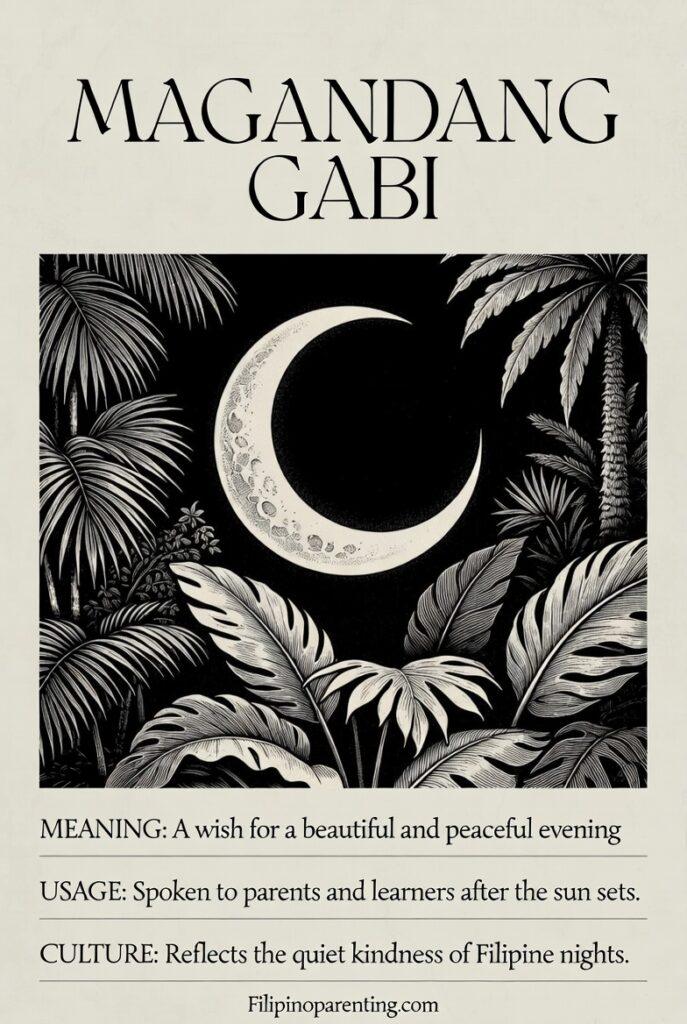
- Magandang Gabi (Good Evening): This is used both as a greeting when arriving and as a way to say “good night” before sleep.
- Mabuti (I am fine): When asked “Kumusta?”, the most honest reply is “Mabuti.” It means “good” or “fine.”
- Salamat (Thank You): Showing gratitude is a core Filipino value. For more emphasis, say “Maraming salamat” (Many thanks).
- Walang Anuman (You’re Welcome): Literally translating to “it is nothing,” this reflects the humble nature of Filipino hospitality.
- Ingat (Take Care): Filipinos often say “Ingat” instead of a formal goodbye to show genuine concern for your well-being.
- Mano Po (A Gesture of Respect): This involves taking the hand of an elder and pressing it to one’s forehead to seek a blessing.
Fascinating Facts About Filipino Respect
In the Philippines, age determines the greeting. You would rarely call an older sibling by their first name alone. We use Ate for older sisters and Kuya for older brothers. Using these titles alongside your Hello in Tagalog shows that you value the family hierarchy.
For those looking to deepen their cultural knowledge, understanding the National Symbols of the Philippines can provide context on why respect is vital. You might also find it helpful to learn about Emotions in Tagalog to better express how you feel. To explore more about values, check out our guide on Filipino Proverbs and Character or see how we celebrate with Maligayang Pasko greetings.
For official language guidelines, you can visit the Komisyon sa Wikang Filipino or explore the cultural archives at the National Commission for Culture and the Arts.
FAQ: Common Questions About Tagalog Greetings
When should I start using “Magandang Gabi”?
Usually, once the sun has set, typically around 6:00 PM, it is appropriate to switch from “Hapon” to “Gabi.”
Is “Kumusta” too casual for a boss?
It is acceptable if you add “po.” Saying “Kumusta po” is a standard and respectful way to check in professionally.
Do I need to bow when I greet someone?
Bowing is not a Filipino custom. A warm smile and a slight nod of the head are the most common ways to acknowledge someone.
Conclusion: Embracing the Warmth of Filipino Connection
Mastering the various ways to say Hello in Tagalog is more than just a linguistic milestone; it is an entry point into a culture that prizes belonging and kindness above all else. When you speak these words, you are participating in a tradition of hospitality that has been passed down through centuries. Whether you are teaching these phrases to the younger generation or using them to greet a new neighbor, you are helping to keep the spirit of togetherness alive.
By taking the time to learn the nuances between a morning greeting and a respectful blessing like “Mano Po,” you show that you value the person standing in front of you. This effort builds a bridge of trust and mutual respect that is at the very core of the Filipino way of life. We hope this guide empowers you to share that warmth and sincerity in every conversation you have.