The Philippines is an archipelago of 7,641 islands, surrounded by some of the richest marine biodiversity on Earth. Because of this deep connection to the ocean, learning sea animals in Tagalog (also called mga hayop sa dagat) is a meaningful way to understand Filipino culture, coastal life, and food traditions while building practical language skills.
Whether you are a language learner, traveler, educator, or simply curious about marine life, this guide focuses on sea animals in Tagalog while also covering ocean animals in Tagalog, sea creatures in Tagalog, and water animals in Tagalog. Each term includes English meanings and example sentences to help you use the vocabulary naturally.
This expanded list of sea animals in Tagalog includes marine life commonly found in Philippine waters, wet markets, coral reefs, and open seas. Each section provides vocabulary tables, real Tagalog sentences, and cultural context for everyday use.
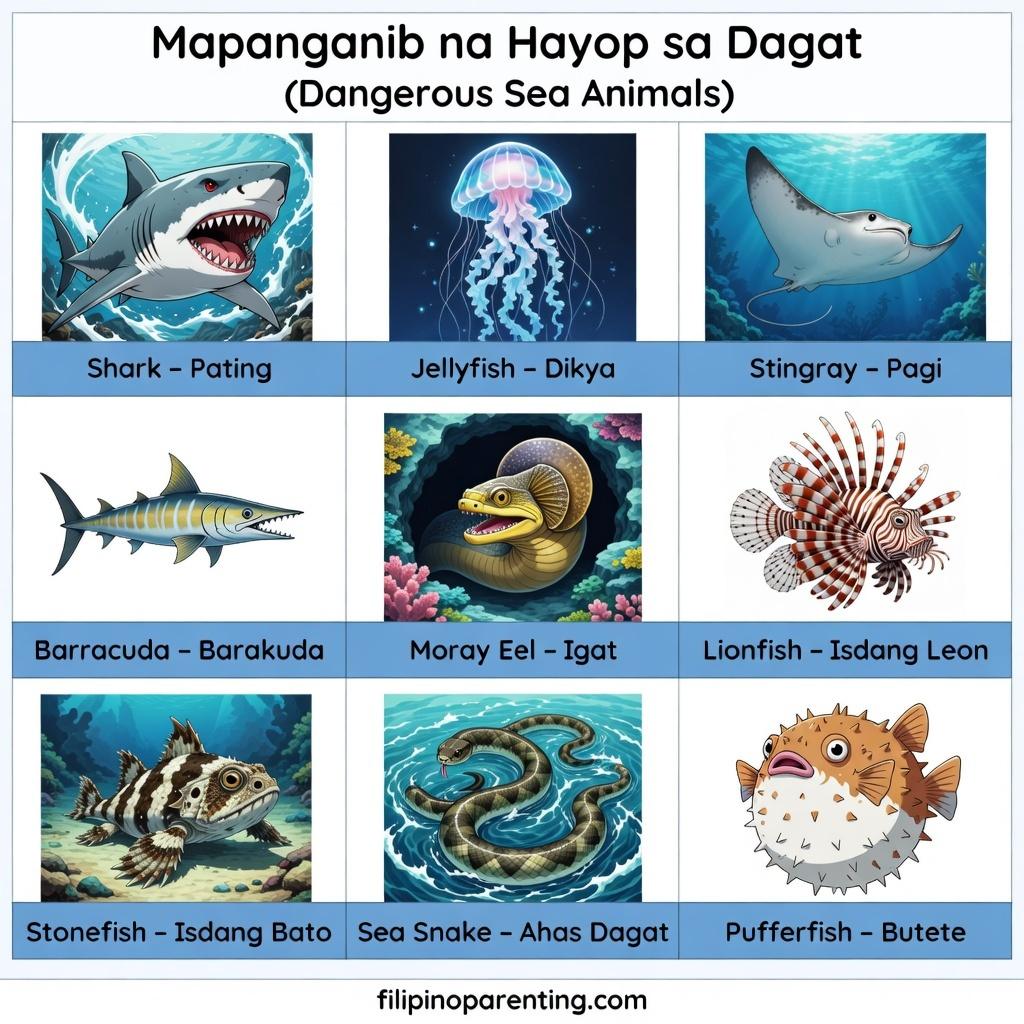
Table of Contents
Common Fish – Sea Animals in Tagalog (Mga Karaniwang Isda)
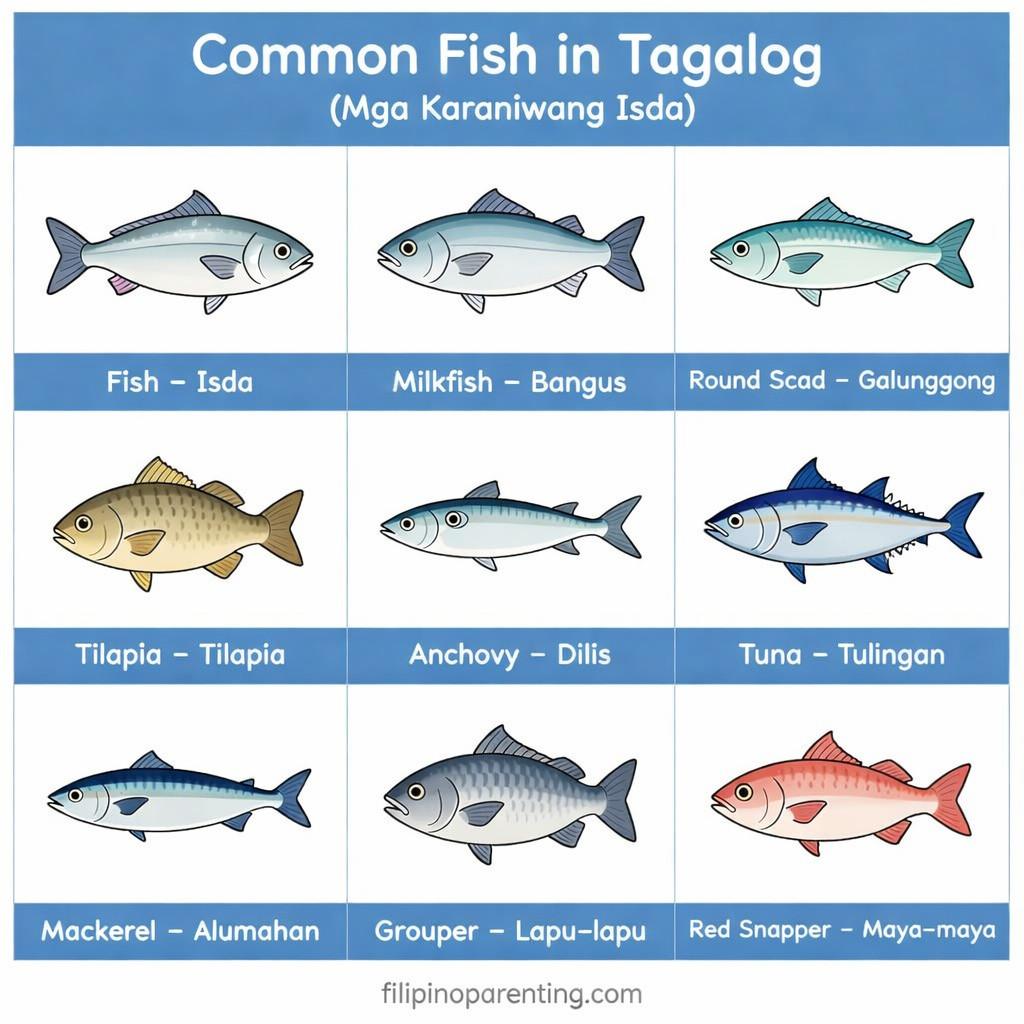
These fish are everyday staples in Filipino wet markets, home cooking, and coastal diets, reflecting the country’s strong fishing culture and deep reliance on the sea for food, livelihood, and tradition. From early morning market stalls to family meals prepared at home, these fish play an essential role in daily Filipino life.
Common Fish Vocabulary
| English | Tagalog |
|---|---|
| Fish (general) | Isda |
| Milkfish | Bangus |
| Round scad | Galunggong |
| Tilapia | Tilapia |
| Anchovy | Dilis |
| Tuna | Tulingan |
| Mackerel | Alumahan |
| Grouper | Lapu-lapu |
| Red snapper | Maya-maya |
| Catfish | Hito |
| Sardine | Tamban |
| Swordfish | Malasugi |
| Rabbitfish | Danggit |
| Yellowfin tuna | Tambakol |
| Flying fish | Bolador |
Example Sentences
- Ang bangus ay paborito sa sinigang.
Milkfish is a favorite ingredient in sinigang. - Bumili ako ng galunggong sa palengke.
I bought round scad at the market. - Ang tilapia ay madaling lutuin at abot-kaya.
Tilapia is easy to cook and affordable. - Ang dilis ay ginagamit sa bagoong at tuyo.
Anchovies are used in fish paste and dried fish. - Ang tulingan ay masarap ihawin.
Tuna is delicious when grilled. - Ang alumahan ay mataba at masustansya.
Mackerel is fatty and nutritious. - Ang lapu-lapu ay madalas ihain sa mga handaan.
Grouper is often served during celebrations. - Ang maya-maya ay may malambot at matamis na laman.
Red snapper has tender and sweet meat. - Ang hito ay karaniwang niluluto sa adobo.
Catfish is commonly cooked as adobo. - Maraming uri ng isda sa dagat ng Pilipinas.
There are many kinds of fish in Philippine seas.
These common fish form the backbone of Filipino seafood cuisine, ranging from simple everyday dishes like fried galunggong and dried dilis to festive and celebratory meals such as grilled bangus and lapu-lapu served during special occasions. Learning these sea animals in Tagalog is especially useful when shopping at wet markets, ordering food at local eateries, or having conversations with locals in coastal and fishing communities, where seafood is an essential part of daily life.
Marine Mammals – Ocean Animals in Tagalog (Mga Mamalya sa Dagat)
Marine mammals found in Philippine waters are among the most well-known sea animals in Tagalog and are closely linked to conservation efforts, eco-tourism activities, and the protection of the country’s marine ecosystems. These animals symbolize the importance of preserving ocean life, support responsible tourism such as whale-watching, and help raise public awareness about marine conservation in coastal communities.
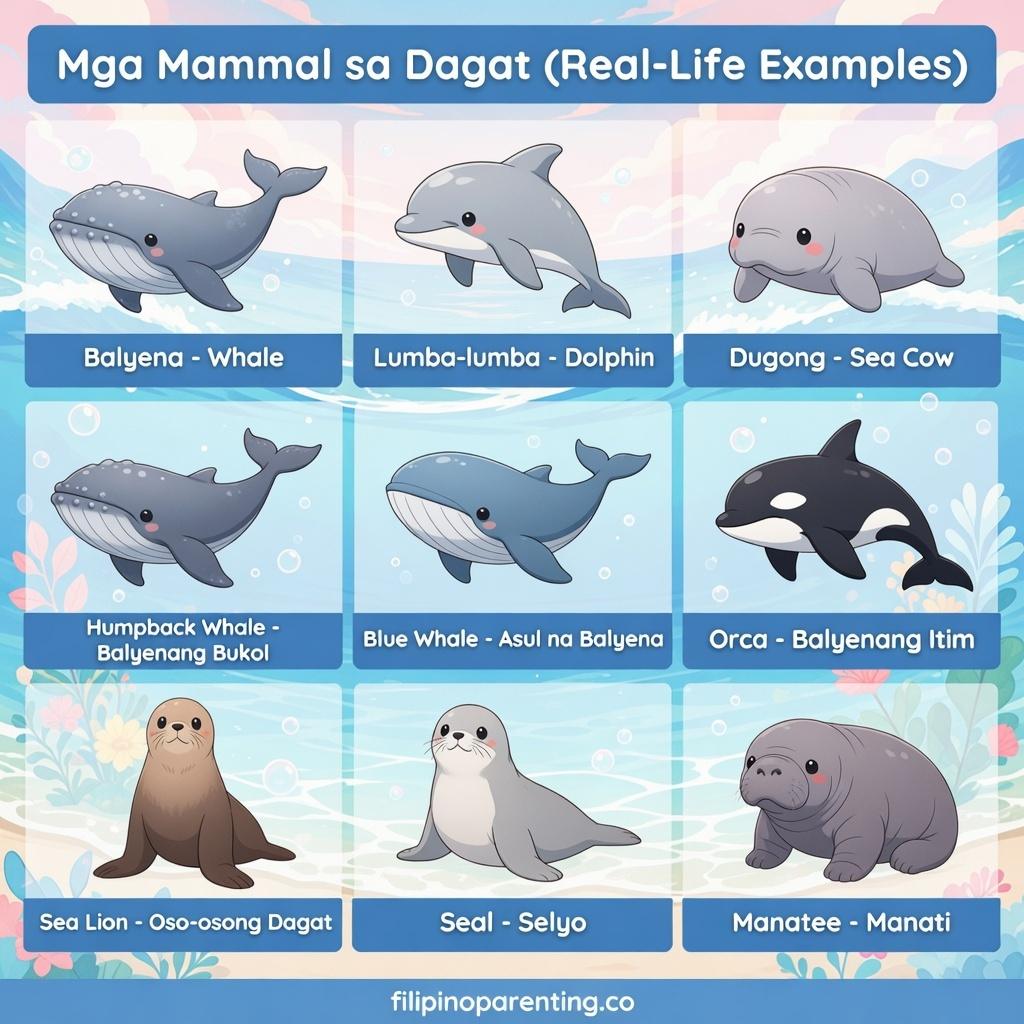
Marine Mammals in Tagalog (Philippine Waters)
| Tagalog | English |
|---|---|
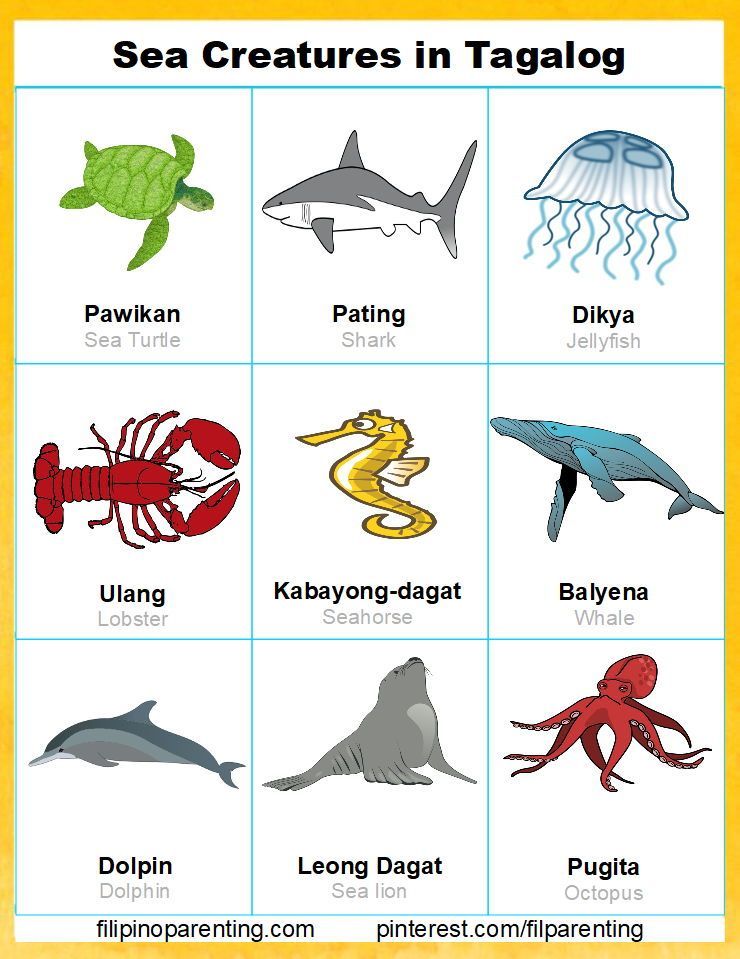
| Balyena | Whale |
| Lumba-lumba | Dolphin |
| Dugong | Sea Cow |
| Balyenang Bukol | Humpback Whale |
| Asul na Balyena | Blue Whale |
| Balyenang Itim | Orca (Killer Whale) |
| Oso-osong Dagat | Sea Lion |
| Selyo | Seal |
| Manati | Manatee |
Example Sentences
- Ang balyena ay pinakamalaking hayop sa dagat.
The whale is the largest animal in the sea. - Nakakita kami ng lumba-lumba sa dagat.
We saw dolphins in the sea. - Ang dugong ay kumakain ng seagrass.
The dugong eats seagrass. - Protektado ang mga balyena sa Pilipinas.
Whales are protected in the Philippines. - Ang dolpin ay matalino at palakaibigan.
Dolphins are intelligent and friendly. - Bihirang makita ang dugong ngayon.
Dugongs are rarely seen today. - Ang mga balyena ay lumilipat ng tirahan.
Whales migrate to different habitats. - Ang lumba-lumba ay sumasabay sa bangka.
Dolphins swim alongside boats. - Tinatawag na sea cow ang dugong.
The dugong is called a sea cow. - Mahalaga ang pagprotekta sa mga mamalya sa dagat.
Protecting marine mammals is important.
These ocean animals in Tagalog highlight the Philippines’ important role in marine protection and responsible eco-tourism, especially in coastal provinces where conservation programs, protected waters, and sustainable tourism help preserve marine life for future generations.
Shellfish and Crustaceans – Sea Creatures in Tagalog
Shellfish and crustaceans are an essential and diverse group of sea animals in Tagalog, playing a central role in Filipino seafood cuisine. They are not only a key ingredient in traditional dishes but are also deeply integrated into Filipino cultural practices, such as festive fiestas, family gatherings, and beachside meals. These marine delicacies are celebrated for their unique flavors and are often enjoyed in both everyday meals and special occasions, highlighting the country’s rich coastal heritage.
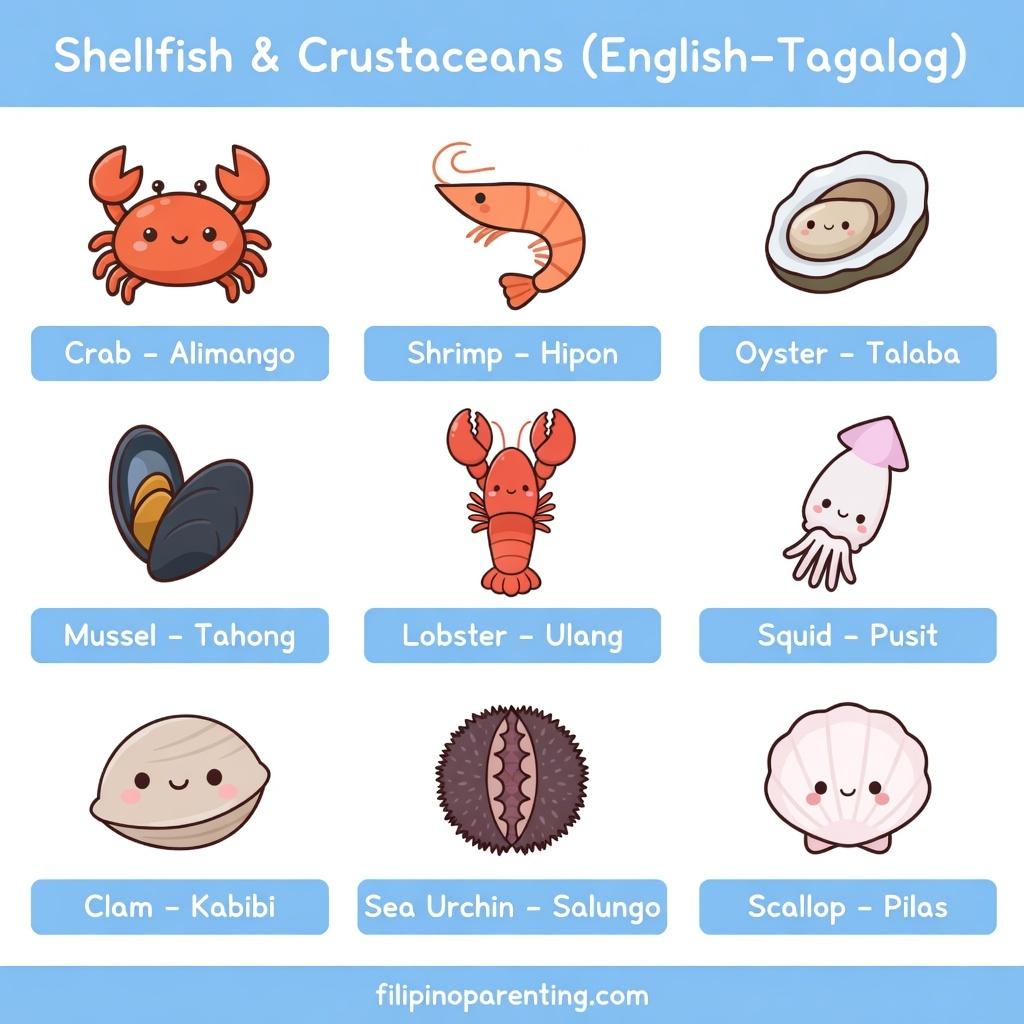
Shellfish and Crustacean Vocabulary
| English | Tagalog |
|---|---|
| Crab | Alimango |
| Shrimp | Hipon |
| Oyster | Talaba |
| Mussel | Tahong |
| Lobster | Ulang |
| Squid | Pusit |
| Clam / Seashell | Kabibi |
| Sea urchin | Salungo |
Example Sentences
- Ang alimango ay masarap sa gata.
Crab is delicious when cooked in coconut milk. - Nag-ihaw kami ng hipon sa tabing-dagat.
We grilled shrimp at the beach. - Sariwa ang talaba ngayong umaga.
The oysters are fresh this morning. - Butter garlic ang luto ng tahong.
The mussels are cooked in butter garlic. - Ang sugpo ay mamahaling seafood.
Lobster is an expensive seafood. - Paborito ko ang adobong pusit.
Adobong squid is my favorite. - Kumakain kami ng kabibi sa probinsya.
We eat clams in the province. - May kakaibang lasa ang tayom.
Sea urchin has a unique flavor. - Malalaki ang alimasag sa Palawan.
Crabs are large in Palawan. - Maraming shellfish sa palengke.
There are many kinds of shellfish in the market.
These sea creatures in Tagalog are essential for understanding Filipino cuisine and market culture, from everyday home-cooked meals and street food favorites to lively beachside seafood feasts enjoyed during family gatherings and celebrations.
Other Sea Animals in Tagalog (Iba Pang Hayop sa Dagat)
This group includes reef dwellers and ocean predators that showcase the wide diversity of sea animals in Tagalog found in coral reefs and coastal waters, highlighting the rich marine life that thrives in these environments.
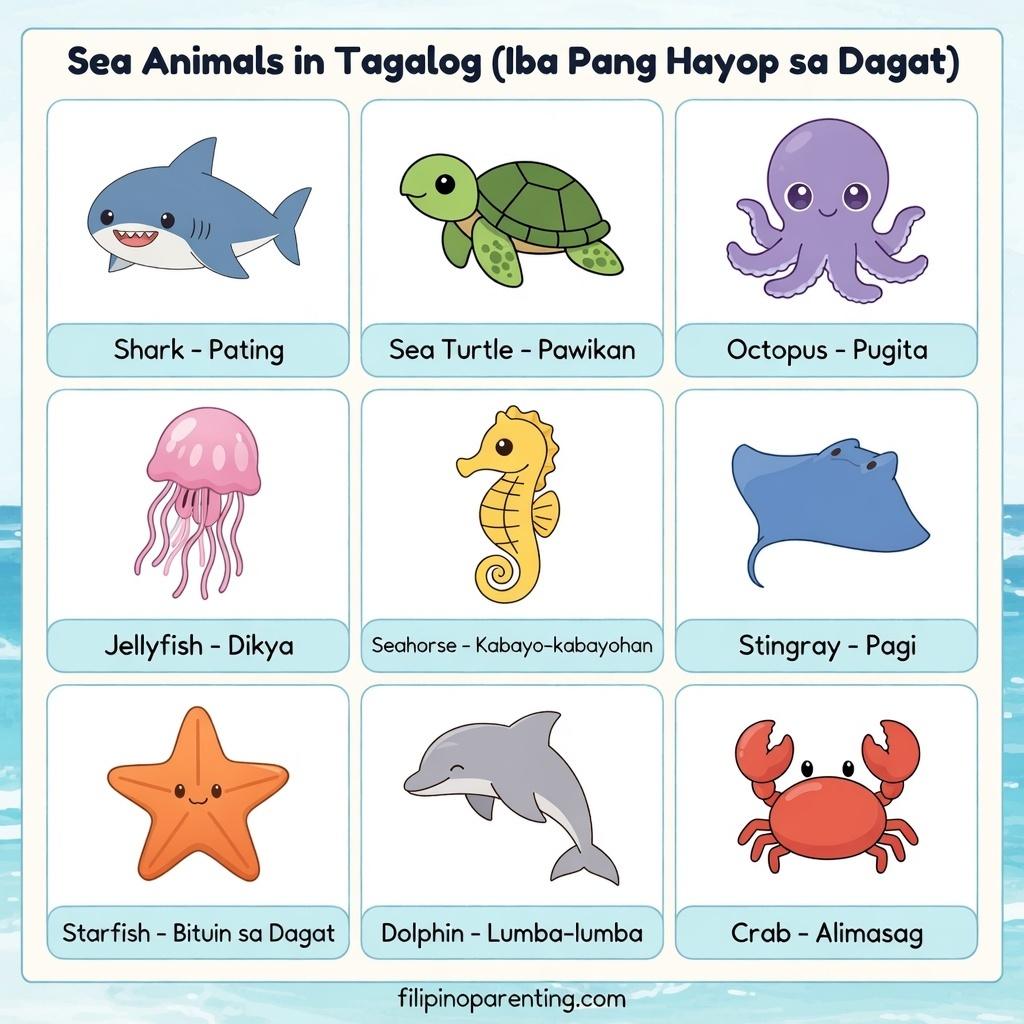
Other Sea Animal Vocabulary
| English | Tagalog |
|---|---|
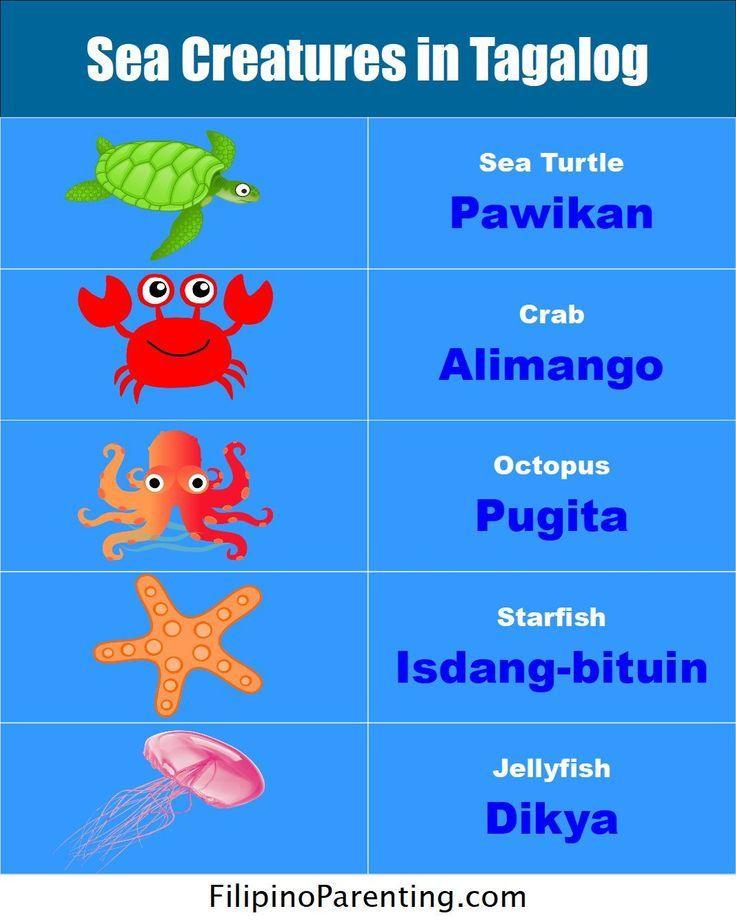
| Shark | Pating |
| Sea turtle | Pawikan / Pagong sa dagat |
| Octopus | Pugita |
| Jellyfish | Dikya |
| Seahorse | Kabayo-kabayohan |
| Stingray | Pagi |
| Starfish | Bituin sa dagat |
| Coral (habitat) | Bahura / Korales |
Example Sentences
- Ang pating ay mandaragit sa dagat.
Sharks are predators in the sea. - Protektado ang pawikan sa Pilipinas.
Sea turtles are protected in the Philippines. - Ang pugita ay nagpapalit ng kulay.
Octopuses change color to hide. - Iwasan ang dikya dahil sa sting.
Avoid jellyfish because of their sting. - Natatangi ang kabayo-kabayohan.
Seahorses are unique. - May malakas na buntot ang pagi.
Stingrays have strong tails. - Ang bituin sa dagat ay may limang braso.
Starfish have five arms. - Ang bahura ay tirahan ng maraming isda.
Coral reefs are home to many fish. - Nanghuhuli ng pagkain ang pugita.
Octopuses hunt for food. - Mahalaga ang coral reefs sa dagat.
Coral reefs are important to the sea.
These water animals in Tagalog represent vibrant reef life, ongoing marine conservation efforts, and the Philippines’ important role within the Coral Triangle, one of the most biologically diverse marine regions in the world.
Sea-Related Phrases in Tagalog
These expressions show how the sea is deeply woven into everyday Filipino language and life, reflecting daily experiences, travel, work, and the strong emotional and cultural connection Filipinos have with the ocean.
| Tagalog | English |
|---|---|
| Ang dagat ay buhay. | The sea is life. |
| Nasa dagat kami ngayon. | We are at sea now. |
| Pupunta kami sa tabing-dagat. | We are going to the beach. |
| Naglalakad kami sa baybaying-dagat. | We are walking along the shoreline. |
| Nasa ibayong dagat ang kanyang trabaho. | His job is overseas. |
| Tahimik ang karagatan ngayon. | The ocean is calm today. |
Frequently Asked Questions
What are sea animals in Tagalog?
Sea animals in Tagalog are called mga hayop sa dagat. This term is commonly used when talking about marine life, seafood, and ocean animals in everyday conversations.
What is shark, whale, and dolphin in Tagalog?
- Shark – pating
- Whale – balyena
- Dolphin – dolpin or lumba-lumba
These are some of the most commonly known sea animals in Tagalog and are often mentioned in travel, education, and marine conservation topics.
What is sea turtle in Tagalog?
Sea turtle in Tagalog is called pawikan or pagong sa dagat. The word pawikan is commonly used in conservation and environmental contexts.
How do I practice these words naturally?
You can practice sea animals in Tagalog by using them when shopping for fish at wet markets, describing beach or island trips, ordering seafood at local restaurants, or talking with locals in coastal communities.
Conclusion
Learning sea animals in Tagalog connects language with everyday Filipino life, from fishing villages and wet markets to coral reefs and island adventures across the Philippines. By practicing sea animals in Tagalog along with ocean animals in Tagalog, sea creatures in Tagalog, and water animals in Tagalog, you build vocabulary that is practical, culturally meaningful, and closely tied to the country’s deep relationship with the sea.
Whether you are studying the language, traveling to coastal areas, teaching learners, or simply enjoying Filipino seafood and marine life, understanding sea animals in Tagalog helps you connect not only with the language, but also with the ocean-centered lifestyle that shapes Filipino culture.