Grasshoppers are common insects found in farms, gardens, and grassy fields across the Philippines. They are known for their strong legs, quick hops, and ability to fly short distances. While they play an important role in nature, some species can become agricultural pests that damage crops.
Grasshoppers are closely related to the kuliglig (cricket), another jumping insect commonly found in the Philippines.
This guide includes vocabulary words, example sentences, fascinating facts, and information about grasshopper species in the Philippines — all designed to help you learn Tagalog naturally.
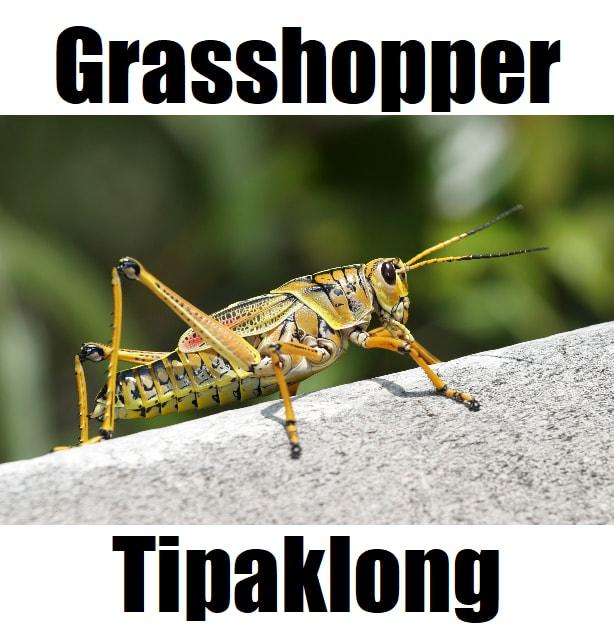
Table of Contents
What is Grasshopper in Tagalog?
The Tagalog word for grasshopper is:
Tipaklong
🦗 Grasshoppers in the Philippines
Grasshoppers in the Philippines represent a wide range of species, from small native varieties to larger agricultural pests. Some species are harmless and simply part of the ecosystem, while others can multiply rapidly and damage crops.
Among the most well-known pest species are green grasshoppers that attack rice and corn fields. Another significant species is the Oriental migratory locust, which can form swarms under certain environmental conditions. These swarms occasionally affect farming communities, especially in parts of Mindanao.
The country also has endemic pygmy grasshoppers (family Tetrigidae), including rare species found in mountainous and forested regions. For example, unique species have been recorded in areas such as Mindanao and near Mount Malindang, both known for rich biodiversity.
Grasshoppers can be found throughout Luzon, Visayas, and Mindanao. Nature observers and citizen science platforms track sightings across the country, showing how widespread and ecologically important these insects are.
🍽 Grasshoppers as Food in the Philippines
In some Filipino communities, grasshoppers are more than insects — they are also food.
In certain provinces, grasshoppers (locally called apan in some areas) are collected at night using nets, especially during peak season. After harvesting, they are cleaned, seasoned, and fried until crispy. Many people describe them as crunchy and savory, similar to other fried snacks.
Aside from human consumption, grasshoppers are also used as feed for poultry and livestock. Because they are rich in protein, they provide nutritional value both for animals and, in some cultures, for people.
🦗 Fascinating Facts About Grasshoppers
Grasshoppers are ancient insects that have existed for over 250 million years — long before dinosaurs appeared on Earth. Their survival through mass extinctions shows how adaptable they are.
Here are some amazing facts:
• Their hearing organs (tympana) are located on their abdomen, not on their head.
• They can leap up to 20 times their body length.
• Some species release a brown liquid when threatened.
• They create sound by rubbing their hind legs against their wings (stridulation).
• Most grasshoppers are active during the daytime (diurnal).
• Females are usually larger than males.
• While all locusts are grasshoppers, only certain species become swarming locusts.
• They are found on every continent except Antarctica.
Some species even change color depending on their surroundings to blend into grass or soil.
🧬 Anatomy of a Grasshopper
A grasshopper’s body has three main sections: head, thorax, and abdomen. Its body is protected by a tough outer covering called an exoskeleton.
🧠 Head (Senses and Feeding)
• Antennae – Used to sense touch and smell
• Compound Eyes – Provide wide-angle vision
• Ocelli – Three small light-sensing eyes
• Mouthparts – Strong chewing parts for eating leaves
🦵 Thorax (Movement and Support)
• Pronotum – Shield-like plate covering the upper thorax
• Six Legs – The back legs are enlarged for jumping
• Two Pairs of Wings – Front wings protect; hind wings allow flight
The hind legs act like springs, storing energy before launching the insect forward.
🫁 Abdomen (Breathing and Reproduction)
• Spiracles – Small breathing holes
• Tympanum – Hearing organ
• Ovipositor (Females) – Used for laying eggs in soil
🦵 Leg Segments
Each leg contains:
• Coxa
• Trochanter
• Femur
• Tibia
• Tarsus
Understanding the anatomy of a grasshopper helps explain how it survives, moves, feeds, and adapts to its environment. Each body part has a specific function that allows the insect to jump long distances, detect danger, breathe efficiently, and reproduce successfully. By learning these parts, students not only improve their science knowledge but also gain a deeper appreciation for how complex and well-designed these small insects are.
📘 Grasshopper Vocabulary Words in Tagalog
Here are common Tagalog words connected to grasshoppers and nature:
Tipaklong – grasshopper
Insekto – insect
Hayop – animal
Berde – green
Damo – grass
Paglukso – hop
Dahon – leaf
Bukid – farm
Hardin – garden
Hayop na walang buto – invertebrate
🗣 Example Sentences Using “Tipaklong” (Grasshopper in Tagalog)
After learning that grasshopper in Tagalog is tipaklong, the next step is to see how the word is used in real sentences. Reading example sentences helps you understand grammar, sentence structure, and everyday vocabulary. These simple examples will help beginners practice using tipaklong correctly in conversation and writing.
Karamihan sa mga tipaklong ay kulay berde o luntian.
Most grasshoppers are colored green.
Ang mga tainga ng mga tipaklong ay nasa kanilang tiyan.
The ears of grasshoppers are located on their abdomen.
Ang tipaklong ay nakakalipad.
A grasshopper can fly.
Ang mga tipaklong ay nakakasira ng mga pananim.
Grasshoppers can destroy crops.
Ang mga tipaklong ay mayaman sa protina.
Grasshoppers are rich in protein.
Ang mga tipaklong ay nakatira sa damuhan.
Grasshoppers live in meadows..
Ang tipaklong ay hayop na kumakain ng mga halaman.
A grasshopper is an herbivore.
Ang tipaklong ay itinuturing na isang peste.
A grasshopper is considered a pest.
These examples show how the word tipaklong (grasshopper in Tagalog) can be used to describe color, habitat, diet, farming impact, and even nutrition. By practicing these sentences, you improve both your vocabulary and your understanding of how nouns work in Tagalog sentences.
The more you read and repeat sentences using grasshopper in Tagalog, the more confident you become in speaking about nature, agriculture, and everyday topics in Filipino.
🌾 Agricultural Impact in the Philippines
Green grasshoppers are major pests that damage rice, corn, and vegetables. They can cause significant yield losses, especially during large infestations.
They are most active during hot, dry periods, particularly in late August and early September.
❓ FAQ – Grasshopper in Tagalog
What is grasshopper in Tagalog?
Grasshopper in Tagalog is tipaklong.
Are grasshoppers common in the Philippines?
Yes. They are widespread across Luzon, Visayas, and Mindanao.
Are grasshoppers harmful to crops?
Some species damage rice, corn, and vegetables during outbreaks.
Is a grasshopper the same as a locust?
All locusts are grasshoppers, but only certain species become swarming locusts.
Do Filipinos eat grasshoppers?
Yes. In some regions, they are harvested, fried, and eaten as snacks. They are also used as animal feed.
Where are a grasshopper’s ears located?
On the abdomen, not on the head.
How long have grasshoppers existed?
For more than 250 million years.
📝 Conclusion
Learning the meaning of grasshopper in Tagalog — tipaklong — helps expand your vocabulary about insects, farming, and nature in everyday Filipino conversations. Understanding how to say grasshopper in Tagalog allows learners to describe farms, gardens, and rural life more clearly and confidently.
Grasshoppers are fascinating creatures — important to ecosystems, sometimes harmful to crops, and even part of local food traditions in some areas of the Philippines. By learning the correct word for grasshopper in Tagalog, along with related vocabulary and example sentences, you improve both language skills and cultural awareness.
Studying grasshopper in Tagalog is more than memorizing a translation. It connects language learning with real-life Philippine agriculture, biodiversity, and daily conversation.