The Filipino kitchen—known as the kusina—is truly the heart of the home. In the Philippines, the kitchen is more than a place for cooking; it is where families come together at the start and end of each day, where stories are shared over meals, and where traditions are quietly passed down from one generation to the next. From early-morning breakfasts to late-night merienda, the kusina is almost always alive with movement, conversation, and the comforting aroma of home-cooked food.
Because everyday Filipino life revolves so closely around cooking and shared meals, learning kitchen utensils in Tagalog (mga kasangkapan sa kusina) becomes a practical and meaningful way to understand Filipino culture while building real-life language skills. These are the words used daily by parents preparing meals, grandparents teaching family recipes, and children helping in the kitchen—making them especially useful for natural, everyday conversations.
Whether you are a language learner, traveler, parent, or educator, this guide focuses on Tagalog kitchen utensils commonly found in Filipino households. Each section includes clear English meanings, simple example sentences, and cultural context to help you use the vocabulary with confidence in real situations—while cooking, shopping, or talking about food with locals.
This expanded list of kitchen utensils in Tagalog covers tools used in traditional provincial homes, modern urban kitchens, and family-centered cooking spaces where meals are made with care and shared with love. By learning these words, you are not just memorizing vocabulary—you are stepping into the rhythm of Filipino daily life, where food, family, and language come together in the warmth of the kusina.
Table of Contents
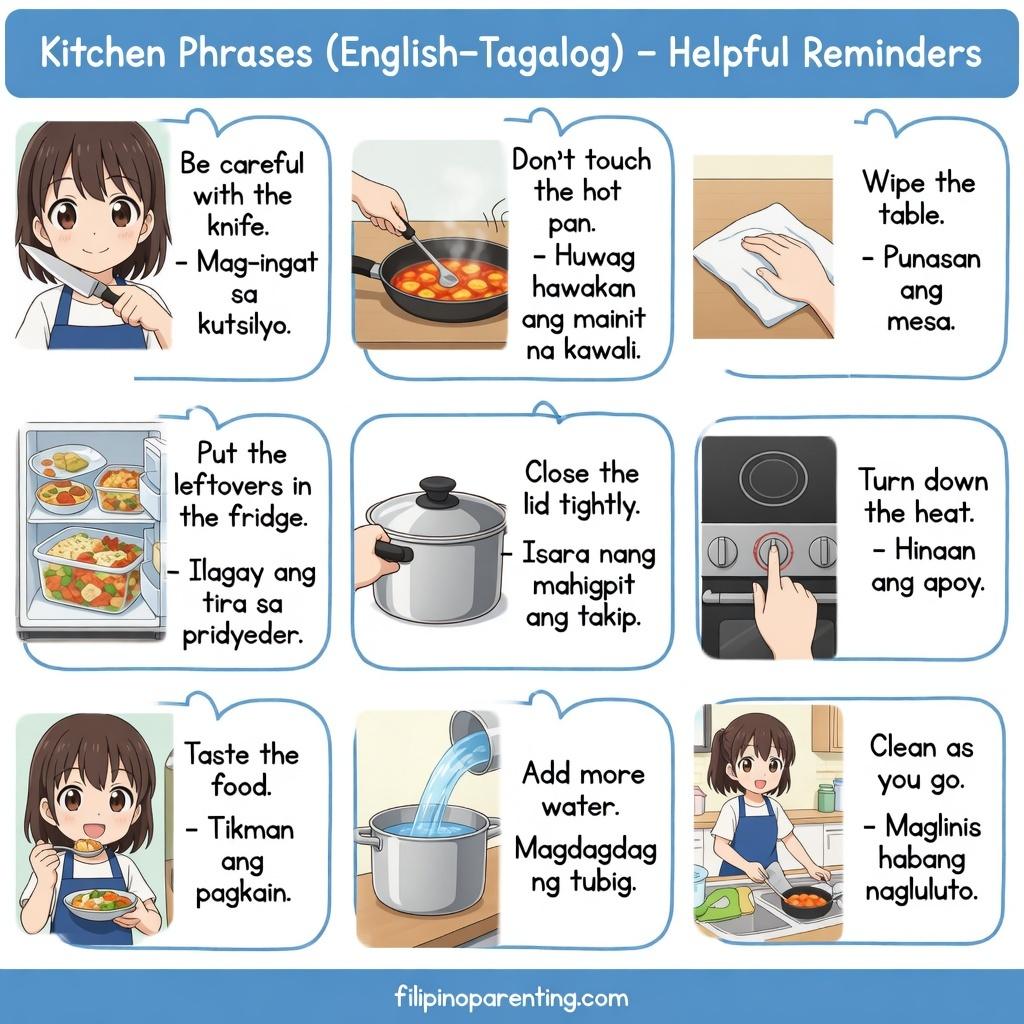
Kitchen Essentials – Tagalog Kitchen Utensils
(Mga Pangunahing Kasangkapan sa Kusina)
These Tagalog kitchen utensils are the most common items found in nearly every Filipino home, from small provincial kitchens to modern city apartments. They form the foundation of daily cooking and meal preparation, supporting the routines that shape everyday Filipino life—from early-morning almusal to shared family hapunan at night.
Because Filipino households prepare multiple meals and snacks throughout the day, these kitchen utensils in Tagalog are used constantly. They are essential for cooking rice, simmering soups, frying fish, grilling meat, and preparing merienda for family and guests. Learning these Tagalog kitchen utensils gives you practical vocabulary you will hear and use naturally in real homes, markets, and conversations.
More than just tools, these mga kasangkapan sa kusina represent comfort, tradition, and togetherness. They are the utensils passed down through families, used during ordinary weekdays and special occasions alike—fiestas, birthdays, and holiday celebrations. By mastering these common kitchen items in Tagalog, you gain language skills that are deeply connected to Filipino culture, food traditions, and the warm hospitality found at every Filipino table.
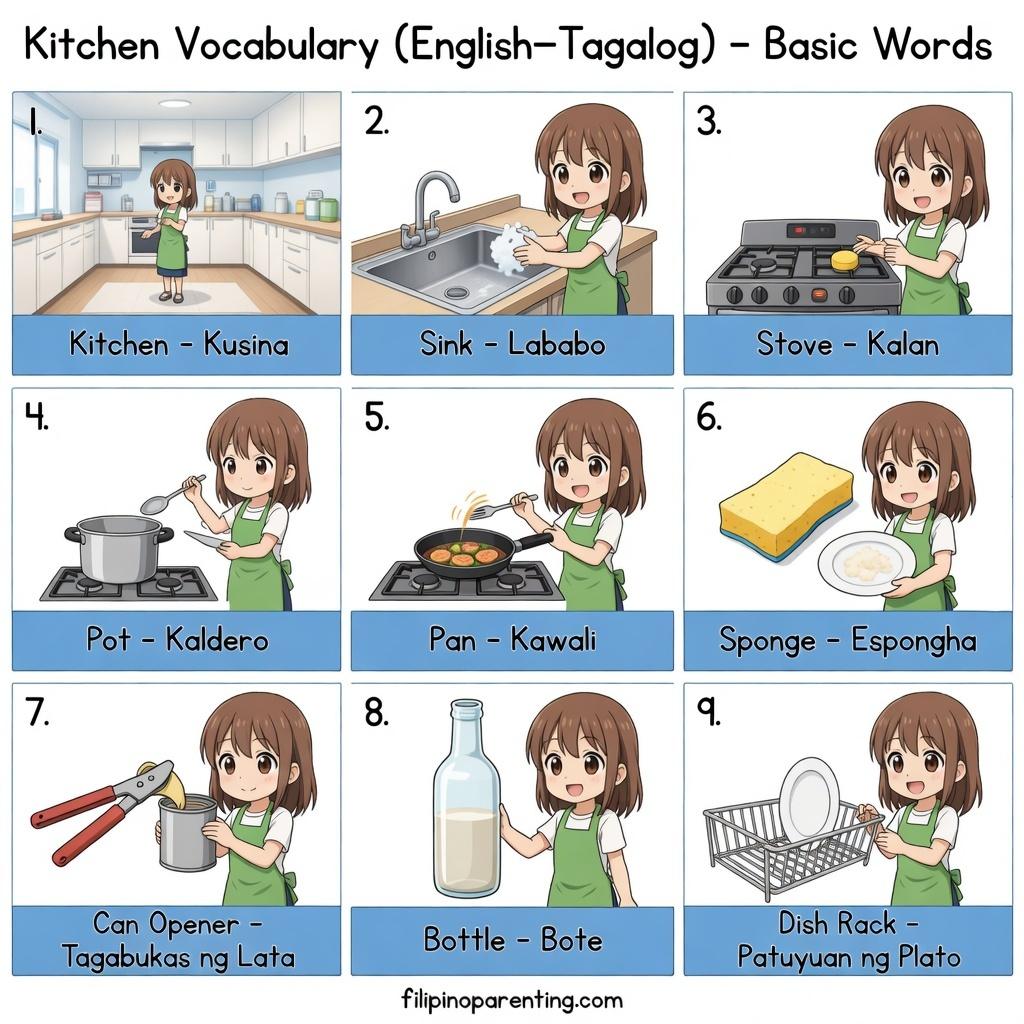
Kitchen Essentials Vocabulary
| English Item | Tagalog Translation |
|---|---|
| Kitchen | Kusina |
| Stove | Kalan |
| Oven | Hurno |
| Refrigerator | Pridyeder |
| Lid | Takip |
| Faucet | Gripo |
| Counter / Table | Mesa |
| Sink | Lababo |
Example Sentences
- Malinis ang kusina namin.
Our kitchen is clean. - Nasa kusina ang kalan at pridyeder.
The stove and refrigerator are in the kitchen. - Isara mo ang takip ng palayok.
Close the lid of the pot. - Ginamit niya ang sangkalan para maghiwa ng gulay.
She used the cutting board to chop vegetables. - Kumuha siya ng baso ng tubig mula sa gripo.
He/She got a glass of water from the faucet.
These Tagalog kitchen essentials form the foundation of everyday life in the Filipino home. From preparing meals to washing dishes and gathering around the table, these words are heard and used constantly. Learning them helps language learners understand daily routines, follow simple instructions, and feel more comfortable inside a Filipino household—where the kitchen is truly the heart of the home.
Cooking Tools – Tagalog Cooking Utensils
(Mga Gamit sa Pagluluto)
These Tagalog kitchen utensils play a direct and essential role in everyday Filipino cooking, from the first step of chopping fresh ingredients to the slow, careful cooking of traditional home-style dishes. In a typical Filipino household, these tools are used multiple times a day—during almusal, pananghalian, merienda, and hapunan—making them some of the most practical and frequently spoken kitchen words in Tagalog.
Understanding these kitchen utensils in Tagalog helps learners describe real cooking actions such as slicing vegetables on a sangkalan, simmering soups in a palayok, or preparing rice and ulam on the kalan. Many of these utensils are closely tied to beloved Filipino recipes like adobo, sinigang, nilaga, and tinola, where patience and slow cooking are part of the tradition.
Because these tools are part of daily life, learning their Tagalog names strengthens vocabulary that is immediately useful in the home, at markets, and in family conversations. Whether you are helping in the kitchen, watching a meal being prepared, or talking about food and cooking, these Tagalog kitchen utensils provide a strong foundation for practical language use while offering a deeper appreciation of Filipino food culture and home-centered living.
Cooking Tools Vocabulary
| English | Tagalog |
|---|---|
| Cooking pot | Palayok |
| Cutting board | Sangkalan |
| Knife | Kutsilyo |
| Grill | Ihawan |
Example Sentences
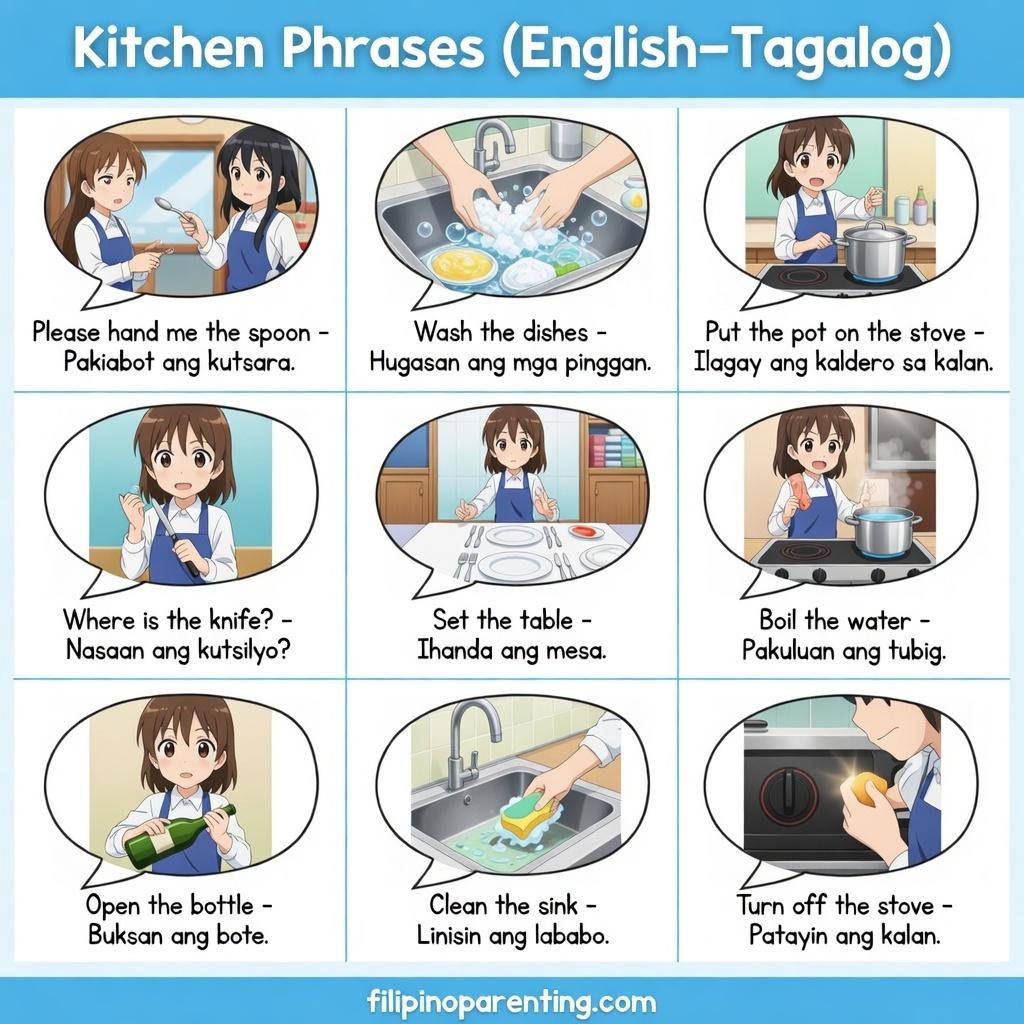
- Gamitin mo ang sangkalan at kutsilyo.
Use the cutting board and knife. - Niluluto ang ulam sa palayok.
The dish is cooked in a pot. - Nag-iihaw sila sa ihawan.
They are grilling using the grill. - Nasa kalan ang kaserola habang kumukulo ang sabaw.
The saucepan is on the stove while the soup is boiling. - Inilagay niya ang pagkain sa palayok para mas dahan-dahang maluto.
She placed the food in the clay pot so it would cook more slowly.
Traditional kitchen tools like the palayok reflect older Filipino cooking methods that value slow cooking and rich flavor, especially in provincial homes. In many modern Filipino kitchens, these traditional utensils are still used alongside newer appliances, showing how Filipino cooking blends heritage and modern convenience while keeping family meals at the center of daily life.
Food Preparation Tools
These food preparation tools are used before cooking even begins, making them essential in every Filipino kitchen. From chopping vegetables and grating ingredients to crushing spices and garlic, these tools support the early stages of meal preparation. Because Filipino cooking often starts with fresh ingredients, these Tagalog kitchen tools are commonly mentioned in daily kitchen conversations.
Learning the Tagalog names for food preparation tools helps you describe real actions in the kusina—whether you’re preparing ingredients for adobo, sinigang, or everyday home-cooked meals. Many of these tools are staples in both traditional and modern Filipino kitchens, bridging old cooking methods with contemporary routines.
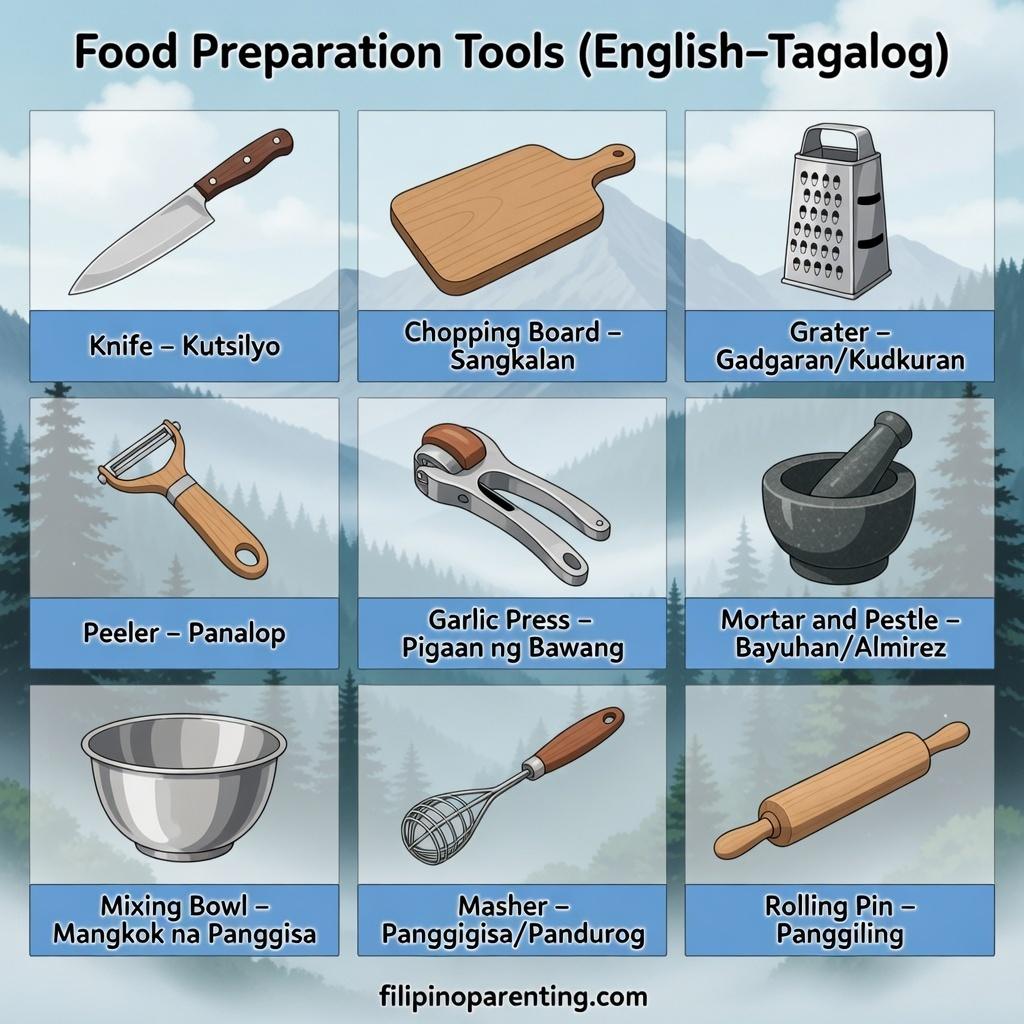
Food Preparation Tools Vocabulary
| English Tool | Tagalog Translation |
|---|---|
| Chopping Board | Sangkalan |
| Grater | Gadgaran / Kudkuran |
| Peeler | Panalop |
| Garlic Press | Pigaan ng Bawang |
| Mortar and Pestle | Bayuhan / Almirez |
By practicing these words while preparing meals, you naturally connect Tagalog vocabulary to hands-on actions. This makes the language easier to remember and more useful in everyday Filipino home life—where cooking is not just a task, but a shared experience rooted in family and tradition.
Small Tools & Accessories
These small kitchen tools and accessories may seem simple, but they play an important role in everyday Filipino cooking and baking. From preparing desserts and breads to keeping meals safe and organized, these items support both traditional recipes and modern kitchen routines. Because they are frequently used, learning their Tagalog names helps reinforce practical vocabulary through daily repetition.
In many Filipino homes, these tools are kept within easy reach—hung on hooks, stored in drawers, or placed near the stove—making their names part of regular kitchen conversation. Whether you are helping mix ingredients, timing a dish, or protecting your hands while cooking, these words naturally come up in real-life situations.
Small Tools & Accessories Vocabulary
| English Accessory | Tagalog Translation |
|---|---|
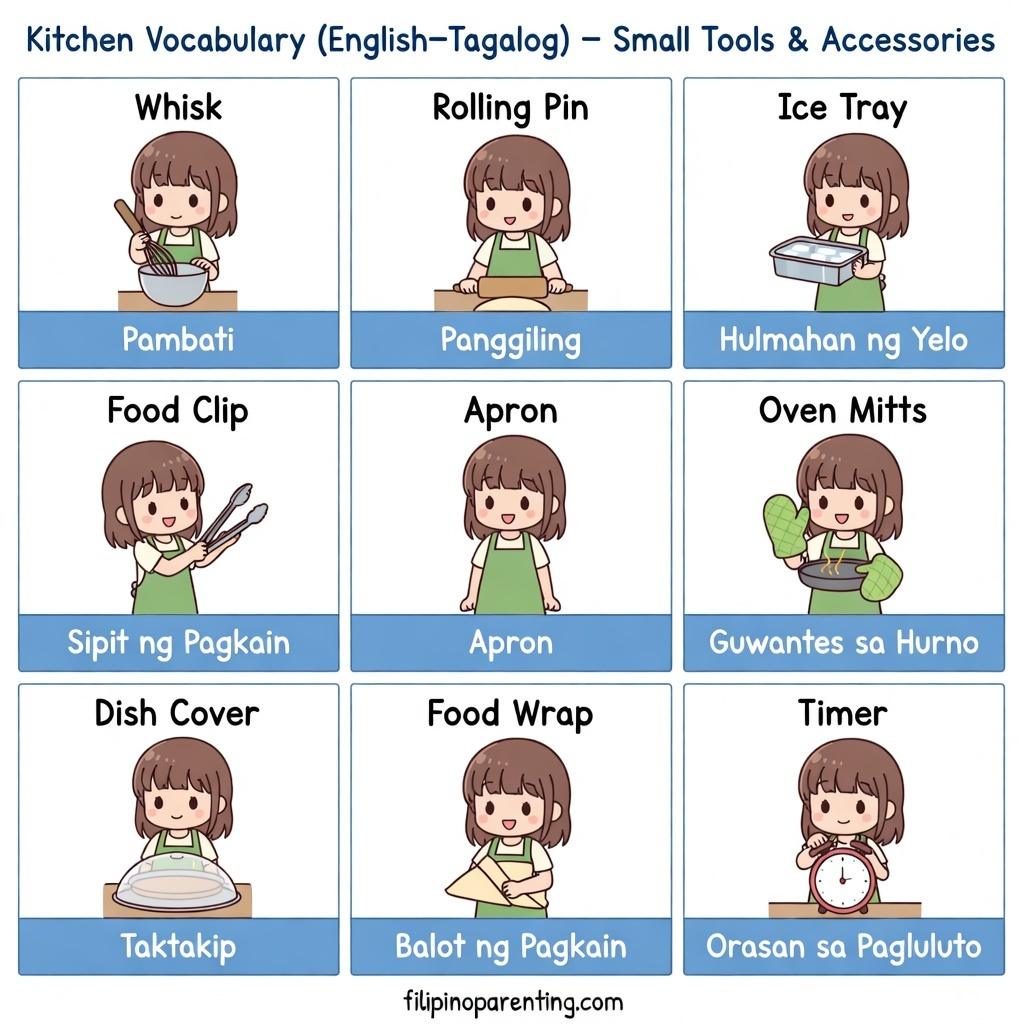
| Whisk | Pambati |
| Rolling Pin | Panggiling |
| Ice Tray | Hulmahan ng Yelo |
| Oven Mitts | Guwantes sa Hurno |
| Apron | Apron |
| Timer | Orasan sa Pagluluto |
These small kitchen tools are easy to remember because they are tied to specific actions—mixing, rolling, freezing, timing, and protecting. By using these words while cooking or baking at home, learners build confidence and fluency while connecting Tagalog vocabulary to real, hands-on experiences in the kusina.
Serving & Drinking Utensils in Tagalog
(Mga Kagamitang Panghain at Inumin)
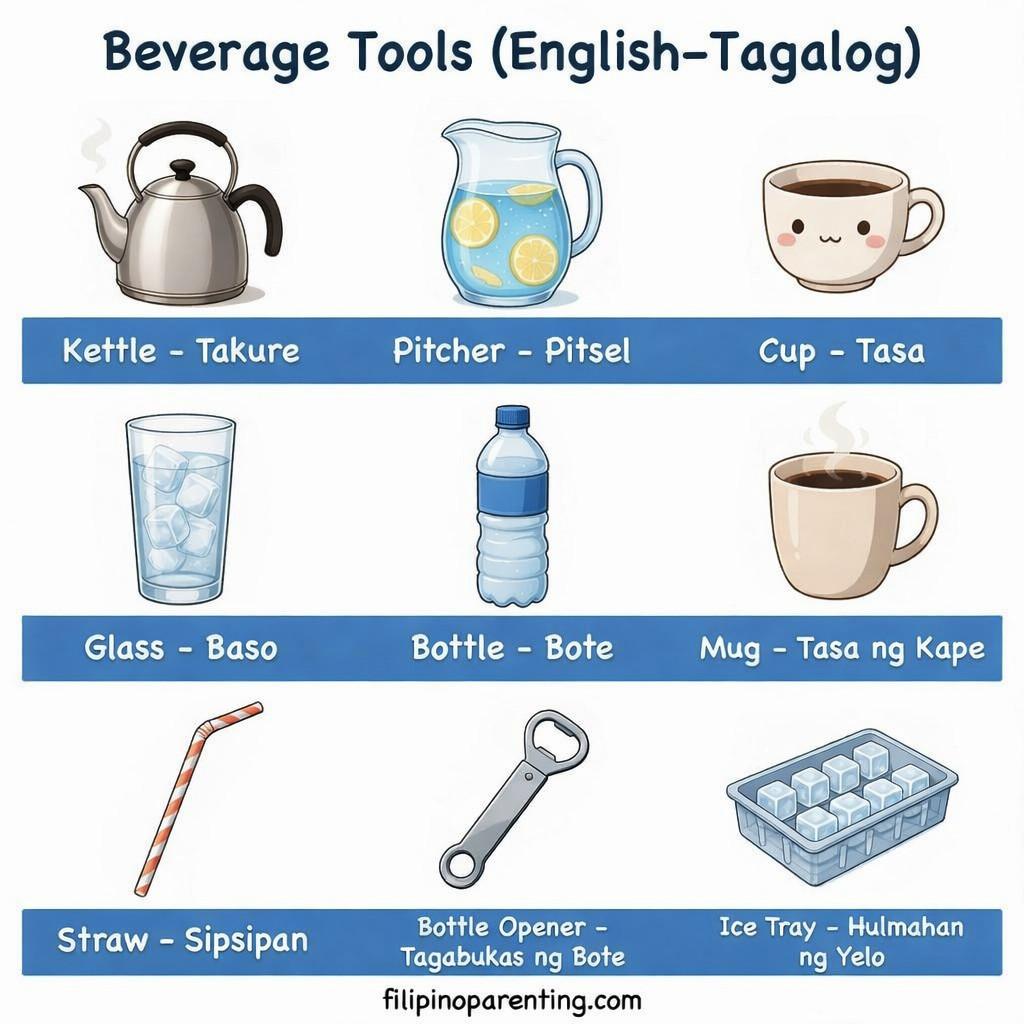
Once food is prepared, these Tagalog kitchen utensils play an essential role in serving meals and sharing food with family members. In Filipino culture, serving food is just as important as cooking it—meals are meant to be enjoyed together, placed at the center of the table, and shared with warmth and hospitality. Learning these kitchen utensils in Tagalog helps you describe everyday dining moments, from ladling soup and passing plates to enjoying rice and ulam with loved ones. These words are commonly heard in Filipino households and are useful for daily conversations, family meals, and cultural understanding.
Serving Utensils Vocabulary
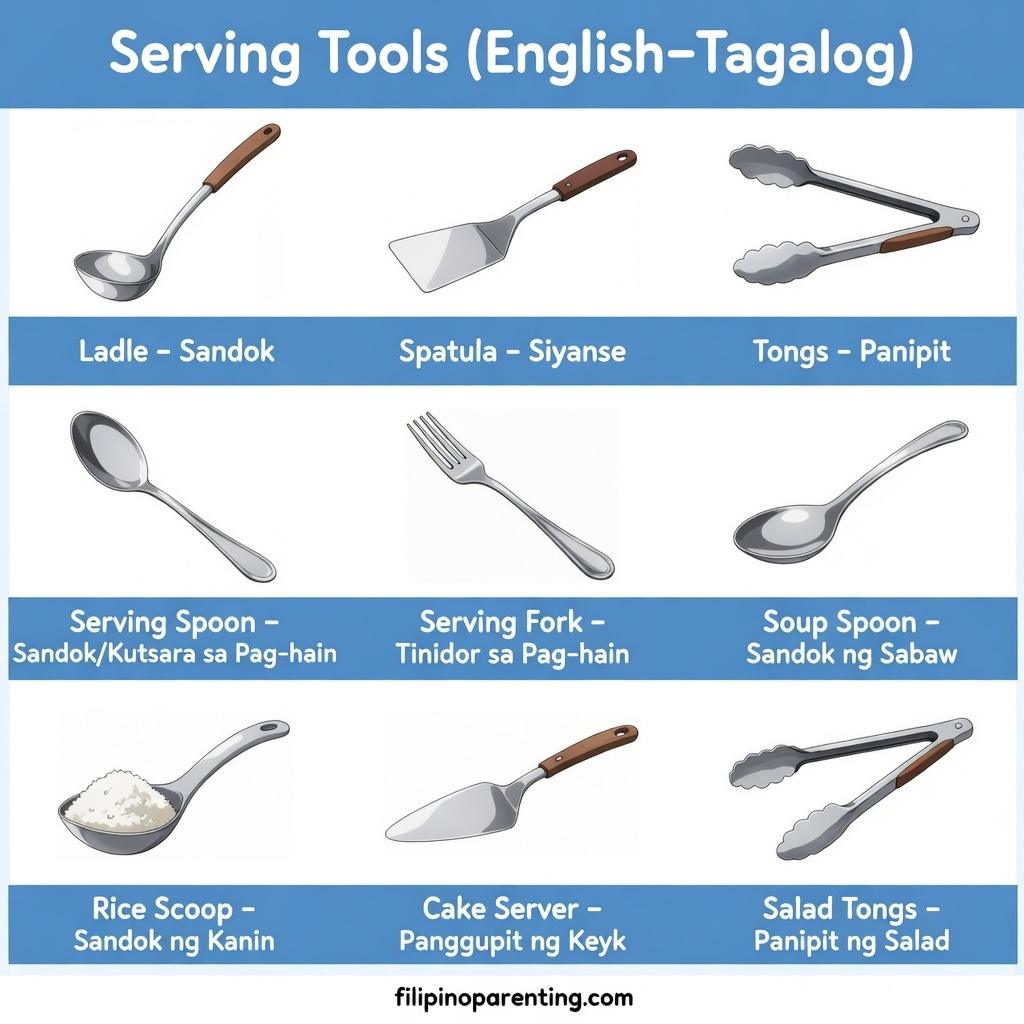
Below is an expanded and organized chart combining basic dining items and common serving tools used in Filipino households. These utensils are frequently seen on the table during family meals, celebrations, and everyday dining.
| English Serving Tool | Tagalog Translation |
|---|---|
| Plate | Plato |
| Bowl | Mangkok |
| Spoon | Kutsara |
| Fork | Tinidor |
| Glass | Baso |
| Jug / Pitcher | Pitsel |
| Ladle | Sandok |
| Spatula | Siyanse |
| Tongs | Panipit |
| Serving Spoon | Sandok / Kutsara sa pag-hain |
| Serving Fork | Tinidor sa pag-hain |
| Soup Spoon | Sandok ng sabaw |
| Rice Scoop | Sandok ng kanin |
| Cake Server | Panggupit ng keyk |
| Salad Tongs | Panipit ng salad |
Example Sentences
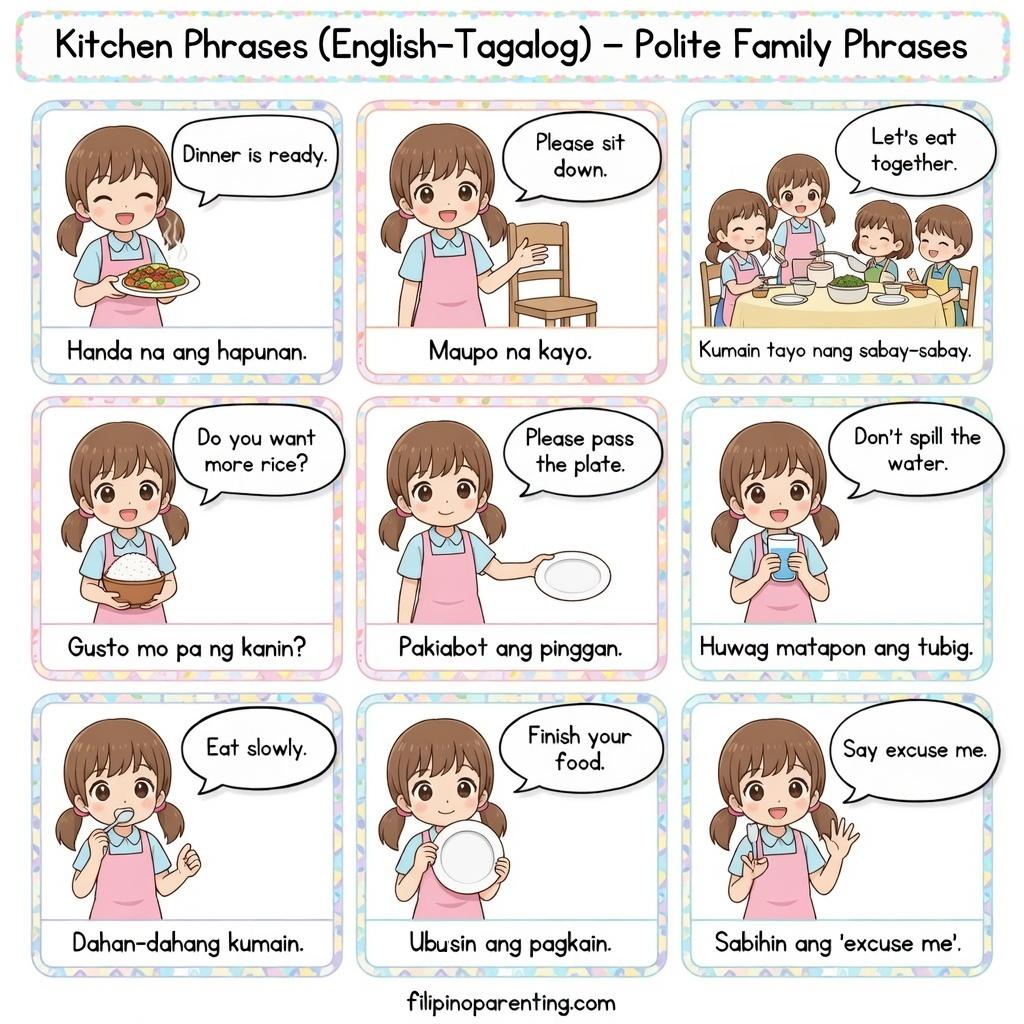
- Ilagay ang pagkain sa plato.
Put the food on the plate. - May tubig sa pitsel.
There is water in the pitcher. - Hugasan ang mga baso at mangkok.
Wash the glasses and bowls. - Ipasa mo ang kutsara at tinidor.
Pass the spoon and fork. - Ihain ang ulam sa mesa.
Serve the dish on the table.
These Tagalog serving utensils are commonly used when food is brought from the kitchen to the dining table and shared with family or guests. Learning these words helps you follow mealtime conversations, assist with serving food, and understand Filipino dining customs—where meals are meant to be shared, enjoyed together, and served with warmth and hospitality.
Cleaning & Water Tools in the Kusina
These Tagalog kitchen terms are commonly heard during cleanup after meals—an important shared responsibility in Filipino households. In many Filipino families, cleaning up is a shared task: one person clears the table, another washes the dishes, while others dry, organize, and return utensils to their proper place. Because this routine happens after every meal—whether it’s almusal, pananghalian, merienda, or hapunan—cleaning-related words naturally become part of everyday conversation in the kusina.
After family meals, fiestas, and gatherings with guests, these terms are used repeatedly. Learning Tagalog kitchen utensils and cleaning tools helps language learners understand real-life Filipino conversations—not only about food, but also about cooperation, responsibility, and family life, where helping in the kitchen is a sign of respect and togetherness.
Cleaning & Water Tools in Tagalog
| English Cleaning Item | Tagalog Translation |
|---|---|
| Sponge | Espongha |
| Sink | Lababo |
| Dish Soap | Sabong panghugas |
| Towel | Tuwalya |
| Scrub Brush | Sipilyong panghugas |
| Drying Rack | Patuyuan |
| Gloves | Gwantes |
| Trash Bin | Basurahan |
| Dishcloth | Basahang panghugas |
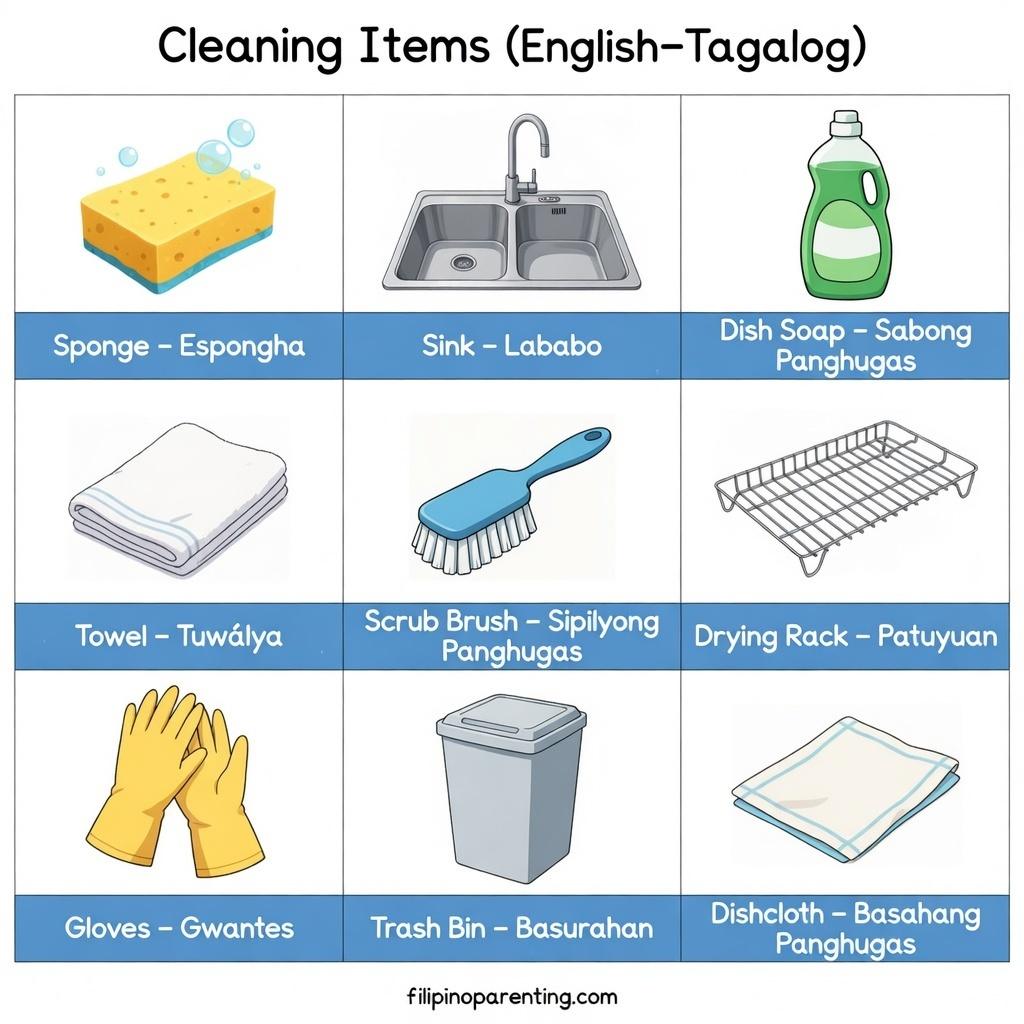
These Tagalog kitchen cleaning tools are used every day in Filipino homes, making them easy to remember through repetition and habit. Practicing these words during daily chores helps learners connect vocabulary with real actions, strengthening both memory and confidence.
Example Sentences
Hugasan mo ang mga plato at mangkok.
Wash the plates and bowls.
Punasan ang mesa pagkatapos kumain.
Wipe the table after eating.
Ilagay ang mga baso sa aparador.
Put the glasses in the cupboard.
Banlawan ang kutsara at tinidor.
Rinse the spoon and fork.
Ayusin ang kusina bago matulog.
Organize the kitchen before sleeping.
These everyday sentences show how Tagalog kitchen utensils are discussed during real-life activities like washing dishes, wiping surfaces, and putting items away. By learning and practicing these phrases, you gain practical Filipino vocabulary that mirrors daily family life—making the language feel natural, useful, and deeply connected to Filipino culture and home traditions.
Why Learning Tagalog Kitchen Utensils Matters
Kitchen utensils in Tagalog are some of the most frequently used words in daily Filipino life. You will hear them during cooking, cleaning, and casual family conversations. Because these objects are visible and used repeatedly, they are ideal for building strong vocabulary through repetition and real-life context.
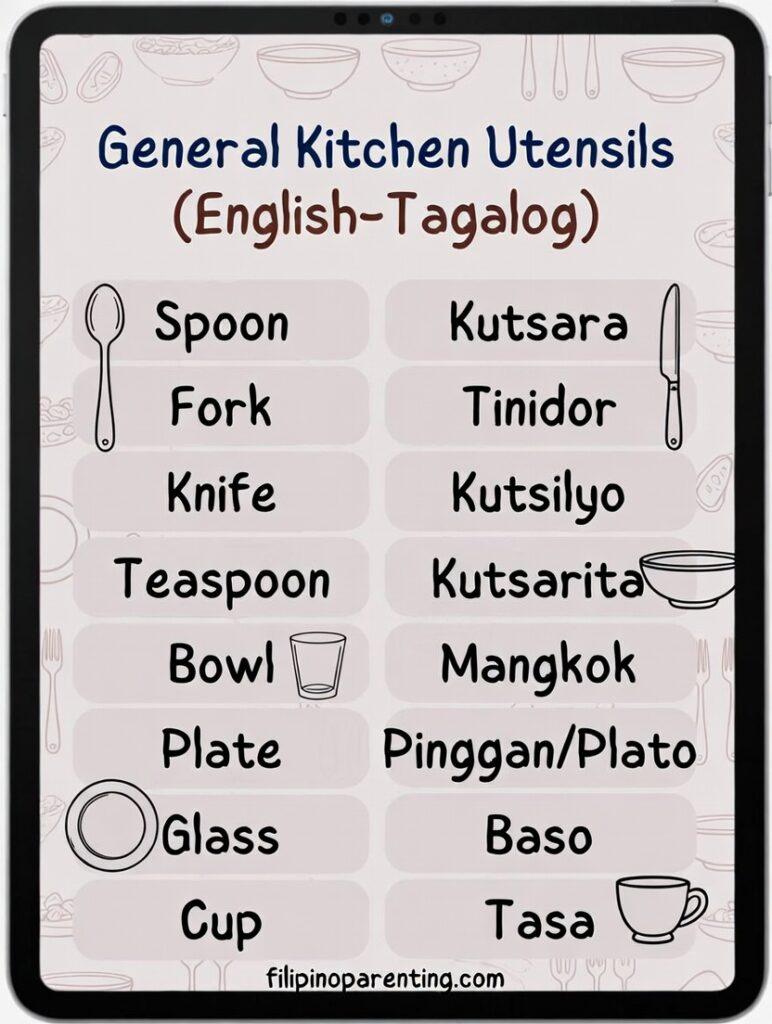
Mastering Tagalog kitchen utensils and mga kasangkapan sa kusina helps you:
- Follow household instructions
- Participate in family routines
- Teach children practical vocabulary
- Feel comfortable inside Filipino homes
Pro-Tip for Language Learners: To memorize these Tagalog kitchen utensils faster, try placing small sticky labels on the items in your own home. Seeing the word for “Sangkalan” every time you reach for your cutting board is one of the best ways to master Tagalog kitchen utensils through daily repetition.
Frequently Asked Questions
What are kitchen utensils in Tagalog called?
Kitchen utensils in Tagalog are called mga kasangkapan sa kusina. This phrase is commonly used in Filipino homes when talking about cooking, cleaning, and everyday kitchen tasks.
What is stove and refrigerator in Tagalog?
- Stove – kalan
- Refrigerator – pridyeder
What is a traditional Filipino cooking pot?
A traditional Filipino cooking pot is called a palayok. It is often made of clay and is still used in many homes, especially for slow-cooked dishes and soups.
How can I practice these words naturally?
You can practice by naming utensils while cooking, labeling kitchen items at home, forming simple sentences during daily routines, or using the words when helping prepare meals with family members.
Where can I find a list of Tagalog kitchen utensils?
You can find a complete guide to Tagalog kitchen utensils right here, covering everything from the stove to the dining table. This guide includes common kitchen items, example sentences, and cultural context to help you use the vocabulary naturally in everyday Filipino life. during daily routines.
Conclusion
Learning Tagalog kitchen utensils connects language with everyday Filipino life in a very personal and meaningful way. Inside the home, the kusina is where the rhythm of the day begins and ends—where breakfast is prepared at dawn, merienda is shared in the afternoon, and family dinners bring everyone together after a long day. By learning the words used in this space, you are learning the language as it is truly lived, spoken, and passed on.
Filipino food culture is deeply tied to routine and togetherness. With five daily eating moments—almusal, segundo almuerzo, pananghalian, merienda, and hapunan—the kitchen is almost always active. From preparing pandesal and sinangag in the morning to serving rice, soup, and ulam for lunch and dinner, kitchen utensils are constantly in use. These everyday objects naturally appear in conversations, instructions, and shared responsibilities, making them some of the most practical words to learn.
Meals in the Philippines are not rushed or served in strict courses. Instead, food is laid out all at once and enjoyed together, with everyone helping themselves using familiar utensils. Condiments and dipping sauces are placed on the table, and family members eat with a spoon and fork, sometimes even with their hands. Afterward, cleanup becomes a shared task—another moment where language, cooperation, and family life come together.
Food also plays a central role in Filipino hospitality. Guests are always invited to eat, celebrations are marked by generous spreads, and no one is expected to dine alone. Learning kitchen-related vocabulary helps you understand not just how food is prepared, but how relationships are built around it. These words carry warmth, generosity, and the unspoken rule that food is meant to be shared.
Whether you are studying Tagalog, traveling to the Philippines, sharing traditions with the younger generation, or simply exploring Filipino culture, understanding Tagalog kitchen utensils and mga kasangkapan sa kusina helps you move beyond textbook language. It allows you to connect with real homes, real families, and real moments. In learning these words, you are not just building vocabulary—you are stepping into a way of life where food, family, and togetherness are always at the center.