In daily life in the Philippines, tools are essential for simple home repairs, carpentry, gardening, and even large community projects. From hammers and saws to power drills and concrete mixers, it’s important to know the Tagalog names of these tools so you can communicate easily with local workers, shop confidently at hardware stores, and understand the terminology used in Filipino homes and workshops.
Whether you’re a DIY enthusiast, traveler, or teaching children Tagalog vocabulary, this guide will help you learn the most common tools in Tagalog and English. With the right knowledge of these tools, your work becomes more efficient, usage safer, and you’ll gain a deeper appreciation for the skill and diligence Filipinos bring to their craft.
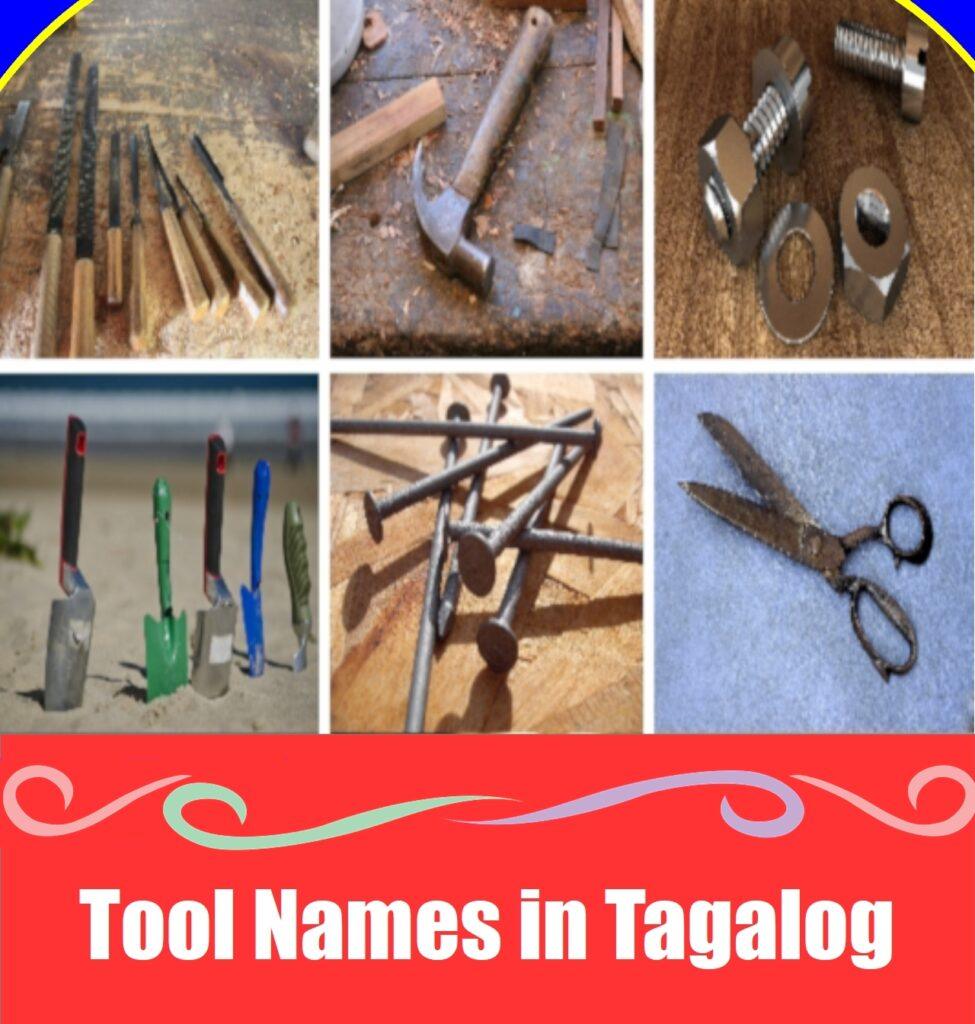
Master List: Tools in Tagalog by Category
We’ve categorized these tools to help you find exactly what you need for your next project.
Hand Tools (Mga Kamay na Kasangkapan) – Tools in Tagalog
Hand tools are the foundation of any DIY project, home repair, or woodworking task in the Philippines. From martilyo (hammer) to distornilyador (screwdriver), these tools are indispensable for everyday tasks, whether you’re fixing a loose hinge, assembling furniture, or shaping wood. Knowing the Tagalog names for hand tools helps you communicate effectively with local craftsmen, follow instructions, and shop confidently at hardware stores across the country.
| Tagalog / Filipino | English | Use Case |
|---|---|---|
| Martilyo | Hammer | Nailing or breaking |
| Lagari | Hand Saw | Cutting wood |
| Distornilyador | Screwdriver | Turning screws |
| Tang / Plays | Pliers | Gripping or cutting wires |
| Liyabe | Wrench | Loosening bolts |
| Pait | Chisel | Shaping wood or stone |
| Bareta / Baras | Crowbar | Prying boards open |
| Katam | Wood Plane | Smoothing wood |
| Masilya | Putty Knife | Applying filler |
| Kikil | Metal File | Smoothing rough edges |
| Pamutol ng Kable | Wire Cutter | Cutting cables/wires |
| Panukot | Measuring Stick / Ruler | Measuring lengths |
| Kutsilyo | Knife | Cutting small materials |
| Akyatan | Ladder | Reaching high places |
Mastering hand tools in Tagalog gives you the confidence to handle basic repairs and projects safely and efficiently. With this knowledge, you can tackle household fixes, woodworking projects, and general maintenance while appreciating the Filipino approach to craftsmanship and practical problem-solving.
Power Tools (Mga Kasangkapang Pangkuryente) – Tools in Tagalog
Power tools are essential for speeding up construction, woodworking, metalwork, and other heavy-duty projects in the Philippines. From barena (power drill) to welding machine (makina ng pag-su-solda), these tools make challenging tasks easier, faster, and more precise. Learning the Tagalog names of power tools allows DIY enthusiasts, craftsmen, and travelers to communicate clearly with local workers, follow instructions, and shop confidently at hardware stores across the country.
Using the right Tagalog terminology for power tools helps improve safety, efficiency, and project accuracy while giving you a better appreciation for Filipino craftsmanship.
| Tagalog / Filipino | English | Use Case |
|---|---|---|
| Barena | Power Drill | Drilling holes |
| Grinder / Panggiling | Angle Grinder | Cutting metal or stone |
| Sander / Pang-ukit | Electric Sander | Smoothing surfaces |
| Martilyong Pangsira / Jackhammer | Jackhammer | Breaking concrete |
| Makina ng Pag-su-solda / Welding Machine | Welding Machine | Fusing metals |
| Pangporma ng Kahoy / Router | Wood Router | Shaping edges |
| Pangpisil ng Pako / Nail Gun | Nail Gun | Rapid fastening of nails |
| Lagaring Bilog / Circular Saw | Circular Saw | Fast cutting of wood |
| Lagaring Pandekor / Jigsaw | Jigsaw | Curved wood cuts |
| Distornilyador Pang-Mabigat / Impact Wrench | Impact Wrench | Heavy-duty bolting |
Why Learn These Power Tools in Tagalog?
- Communicate confidently with Filipino carpenters, masons, and construction workers.
- Shop smarter at hardware stores by knowing both English and Tagalog terms.
- Work safely and efficiently by understanding the tools and their proper usage.
- Appreciate Filipino craftsmanship, which blends skill, resourcefulness, and practical knowledge.
Mastering power tools in Tagalog ensures that whether you’re a DIY enthusiast, traveler, or teaching children, you can handle heavy-duty projects safely while connecting better with local workers and materials.
Measuring & Layout Tools (Mga Panukat) – Tools in Tagalog
Accurate measurements are the foundation of any successful project, whether it’s carpentry, construction, or DIY tasks in the Philippines. Measuring and layout tools, or Mga Panukat, such as metrong panukat (tape measure), iskwala (carpenter square), and plomada (plumb bob), ensure precision and proper alignment. Knowing the Tagalog names of these tools allows you to follow instructions, communicate clearly with local craftsmen, and achieve professional results in every project.
| Tagalog / Filipino | English | Use Case |
|---|---|---|
| Metrong Panukat | Tape Measure | Measuring length or distance |
| Nibel / Panukat ng Pantay | Spirit Level | Checking flatness of surfaces |
| Iskwala / Panukat ng Karpintero | Carpenter Square | Ensuring 90° angles in woodwork |
| Plomada | Plumb Bob | Checking vertical alignment |
| Linyang Tisa / Chalk Line | Chalk Line | Marking straight lines |
| Hulog / Pantimbang na Linya | Leveling Line | Gravity-based leveling for accuracy |
| Kalipers / Panukat na Caliper | Calipers | Measuring precise thickness or diameter |
| Ruler / Linya | Ruler | Small measurements |
| Protractor / Panukat ng Anggulo | Protractor | Measuring angles |
| Compass / Panukat ng Bilog | Compass | Drawing circles or arcs |
Why Learn Measuring & Layout Tools in Tagalog?
- Ensure project accuracy by using the correct tools for marking, leveling, and measuring.
- Communicate effectively with Filipino carpenters, masons, and DIY enthusiasts.
- Shop confidently for tools at local hardware stores by knowing both Tagalog and English terms.
- Work safely and efficiently, avoiding mistakes caused by mismeasured lines or uneven surfaces.
Mastering measuring and layout tools in Tagalog gives you the confidence to tackle projects with precision. From marking straight lines to checking vertical and horizontal alignment, understanding these tools improves the quality of your work while making collaboration with Filipino workers easier and more efficient.y of your work while making collaboration with Filipino workers easier and more efficient.
Gardening & Farming Tools (Paghahalaman at Pagsasaka) – Tools in Tagalog
Gardening and farming are integral parts of daily life in the Philippines, from backyard vegetable patches to expansive rice fields. Using the right tools, or Mga Kasangkapan sa Paghahalaman at Pagsasaka, such as pala (shovel), kalaykay (rake), asarol (hoe), and karit (sickle), makes planting, cultivating, and harvesting more efficient and safer. Learning the Tagalog names of these tools helps you communicate clearly with local farmers, follow Filipino instructions, and manage your garden or farm with precision.
| Tagalog / Filipino | English | Use Case |
|---|---|---|
| Pala | Shovel | Digging soil or moving earth |
| Kalaykay | Rake | Clearing leaves or leveling soil |
| Asarol | Hoe | Breaking soil, weeding, or preparing fields |
| Karit | Sickle | Cutting grass, tall plants, or crops |
| Piko / Pambato ng Lupa | Pickaxe | Breaking hard ground or compact soil |
| Gunting-Pananim | Pruning Shears | Trimming and shaping plants |
| Dulos / Pananim na Kutsilyo | Hand Trowel | Small-scale planting and digging |
| Rigadera | Watering Can | Manual irrigation of plants |
| Harrow / Panlinis ng Lupa | Harrow | Leveling and smoothing fields |
| Espada / Itak | Machete | Clearing brush or cutting thick vegetation |
Why Learn Gardening & Farming Tools in Tagalog?
- Boost efficiency in planting, trimming, or clearing land.
- Communicate effectively with local farmers and gardeners.
- Shop confidently at local markets or hardware stores by knowing the Tagalog terms.
- Ensure safety when handling sharp or heavy tools.
Mastering gardening and farming tools in Tagalog empowers you to work more confidently and productively. Whether you are tending a home garden, maintaining a farm, or assisting in larger agricultural projects, knowing these tools helps you connect with Filipino agricultural practices and respect the skill involved in cultivating the land.
Masonry & Concrete Tools (Paggawa ng Semento) – Tools in Tagalog
Masonry and concrete work are essential in Filipino construction, from building homes to community structures and public facilities. Using the correct tools, or Mga Kasangkapan sa Paggawa ng Semento, such as kutsara ng panday (trowel), mixer (concrete mixer), baldosa cutter (tile cutter), and martilyong pangsira (sledgehammer), ensures your work is precise, durable, and efficient. Learning the Tagalog names of these tools allows you to communicate effectively with local masons, follow construction instructions, and manage projects with confidence.
| Tagalog / Filipino | English | Use Case |
|---|---|---|
| Kutsara ng Panday | Trowel | Spreading mortar or cement |
| Hulmahan | Formworks | Shaping and supporting concrete structures |
| Pang-Rod / Panali ng Bakal | Rebar Tier | Tying steel reinforcement bars |
| Mixer / Panghalo ng Semento | Concrete Mixer | Mixing cement, sand, gravel, and water |
| Baldosa Cutter | Tile Cutter | Slicing tiles to fit surfaces |
| Martilyong Pangsira | Sledgehammer | Heavy demolition or breaking concrete |
| Timba | Bucket | Carrying wet cement, sand, or gravel |
| Paleta | Float | Smoothing and finishing concrete surfaces |
| Pang-ukit ng Bato | Stone Chisel | Carving masonry or shaping stone |
| Kariton | Wheelbarrow | Transporting materials across the site |
Why Learn Masonry & Concrete Tools in Tagalog?
- Work efficiently on construction or DIY projects.
- Communicate clearly with Filipino masons and construction workers.
- Ensure safety when handling heavy or sharp tools.
- Follow instructions accurately using Tagalog terminology.
Mastering masonry and concrete tools in Tagalog not only improves your construction skills but also enhances job site safety and professionalism. From spreading mortar to finishing concrete, knowing the proper tools allows you to complete projects effectively while respecting the craftsmanship and diligence of Filipino builders.
Automotive & Mechanic Tools (Mekaniko) – Tools in Tagalog
Automotive maintenance and repair are essential skills in the Philippines, whether for professional mechanics, car owners, or DIY enthusiasts. Using the right tools, or Mga Kasangkapan sa Mekaniko, such as gato (car jack), susi ng gulong (lug wrench), socket set, and multimetro (multimeter), ensures repairs are safe, precise, and efficient. Learning the Tagalog names of these tools helps you communicate clearly with local workshops, follow instructions, and perform vehicle repairs confidently.
| Tagalog / Filipino | English | Use Case |
|---|---|---|
| Gato | Car Jack | Lifting vehicles for maintenance or repairs |
| Susi ng Gulong | Lug Wrench | Removing or tightening wheel nuts |
| Socket Set | Socket Set | Fastening or loosening bolts |
| Torque Wrench | Torque Wrench | Precision tightening of bolts |
| Pang-oil Filter | Oil Filter Wrench | Removing or installing oil filters |
| Compressor | Air Compressor | Inflating tires and powering pneumatic tools |
| Multimetro | Multimeter | Checking electrical circuits and voltage |
| Scanner | Diagnostic Tool | Reading error codes from car systems |
| Liyabe de Tubo | Pipe Wrench | Heavy-duty gripping for pipes or bolts |
| Funnel | Funnel | Pouring fluids into small openings |
Why Learn Automotive & Mechanic Tools in Tagalog?
- Perform vehicle repairs safely using the correct tools.
- Communicate clearly with Filipino mechanics and auto technicians.
- Handle precision tasks like torque tightening and diagnostics.
- Follow repair instructions accurately in local workshops or manuals.
Mastering mechanic tools in Tagalog ensures that you can tackle automotive tasks efficiently and safely. From changing oil to diagnosing engine problems, knowing the correct tool names allows you to work confidently alongside Filipino mechanics while understanding every step of the repair process.ps you navigate garages, work alongside Filipino mechanics, and maintain your vehicle like a pro.
Kitchen & Baking Tools (Kusina at Panaderya) – Tools in Tagalog
Cooking and baking are central to Filipino daily life, bringing families together and preserving traditional recipes. Using the right tools, or Mga Kasangkapan sa Kusina at Panaderya, such as sandok (ladle), kawali (frying pan), batirol (whisk/frother), and timbangan (kitchen scale), ensures that your dishes are prepared efficiently, safely, and authentically. Learning the Tagalog names of these tools helps you follow recipes, shop confidently for kitchenware, and cook traditional Filipino dishes with ease.
| Tagalog / Filipino | English | Use Case |
|---|---|---|
| Sandok | Ladle | Serving soups, stews, or broths |
| Siyanse | Spatula / Turner | Flipping or turning food while cooking |
| Kawali | Frying Pan | Cooking or sautéing dishes |
| Palayok | Clay Pot | Preparing traditional Filipino recipes |
| Batirol | Whisk / Frother | Mixing chocolate, eggs, or batters |
| Pinagulong | Rolling Pin | Flattening dough for pastries or bread |
| Timbangan | Kitchen Scale | Measuring ingredient weight accurately |
| Oven | Oven | Baking, roasting, or broiling food |
| Salandra | Strainer / Sieve | Draining liquids or sifting flour |
| Parilya | Grill Rack | Roasting meat or vegetables |
Why Learn Kitchen & Baking Tools in Tagalog?
- Cook confidently using the proper tools for each recipe.
- Understand Filipino recipes that use native kitchen terms.
- Shop for kitchenware at local markets or hardware stores without confusion.
- Preserve Filipino culinary traditions by using the tools correctly.
Mastering kitchen and baking tools in Tagalog enhances your culinary skills, making cooking more efficient, enjoyable, and authentically Filipino. From stirring and flipping to measuring and roasting, knowing these tools ensures every dish you prepare is a success. tools make cooking more efficient, enjoyable, and authentically Filipino.
Electrical Tools (Mga Gamit sa Kuryente) – Tools in Tagalog
Electrical work in the Philippines, whether at home, in workshops, or on construction sites, requires the right tools for safety, accuracy, and efficiency. Using the correct tools, or Mga Gamit sa Kuryente, such as pang-hakot ng wire (wire stripper), pang-suri ng kuryente (voltage tester), pang-solder (soldering iron), and pang-ikid ng tubo (conduit bender), ensures that electrical tasks are done properly. Learning the Tagalog names of these tools allows you to communicate with electricians, follow instructions confidently, and perform DIY electrical projects safely.
| Tagalog / Filipino | English | Use Case |
|---|---|---|
| Pang-hakot ng Wire | Wire Stripper | Stripping insulation from wires |
| Pang-suri ng Kuryente | Voltage Tester | Checking for live electricity |
| Electrical Tape | Electrical Tape | Insulating wires and connections |
| Pang-solder | Soldering Iron | Repairing electronics and circuits |
| Tang na Pang-ilong (Long-nose Pliers) | Long-nose Pliers | Reaching tight spaces in wiring |
| Fish Tape | Fish Tape | Pulling wires through conduits |
| Pang-ikid ng Tubo (Conduit Bender) | Conduit Bender | Shaping pipes for wiring installation |
| Crimping Tool | Crimping Tool | Attaching wire connectors securely |
| Utility Knife | Utility Knife | Cutting insulation or wire jackets |
| Flashlight | Flashlight | Illuminating dark work areas |
Why Learn Electrical Tools in Tagalog?
- Work safely by using the right tools for electrical tasks.
- Communicate clearly with local electricians and technicians.
- Follow instructions confidently, whether in a manual or Filipino DIY guide.
- Complete projects efficiently with proper tools and techniques.
Mastering electrical tools in Tagalog ensures that all your wiring, repairs, and installations are safe, accurate, and professional. Whether you’re performing simple home fixes or complex construction wiring, knowing these tools makes your work efficient and reliable.
Plumbing Tools (Mga Kasangkapan sa Tubero) – Tools in Tagalog
Plumbing in the Philippines, whether for household repairs or large construction projects, requires the right tools for handling pipes, drains, and fittings. Knowing the Tagalog names of essential plumbing tools—Mga Kasangkapan sa Tubero—such as susi ng tubo (pipe wrench), plunger (plunger), teflon tape (teflon tape), and plumbing snake (drain auger) helps you communicate clearly with local plumbers, follow DIY instructions, and shop confidently at hardware stores.
| Tagalog / Filipino | English | Use Case |
|---|---|---|
| Susi ng Tubo | Pipe Wrench | Turning metal pipes |
| Plunger | Plunger | Unclogging drains |
| Teflon Tape | Teflon Tape | Sealing pipe threads |
| Hacksaw | Hacksaw | Cutting PVC or metal pipes |
| Panghiwa ng Tubo (Pipe Cutter) | Pipe Cutter | Making clean pipe slices |
| Basin Wrench | Basin Wrench | Reaching hard-to-access sink nuts |
| Drain Auger | Plumbing Snake | Clearing deep drain clogs |
| Threader | Pipe Threader | Creating pipe grooves for fittings |
| Torch / Propane Torch | Propane Torch | Soldering copper pipes |
| Tang de Tubo (Tongue & Groove Pliers) | Adjustable Pliers | Gripping and turning pipes |
Why Learn Plumbing Tools in Tagalog?
- Perform plumbing tasks efficiently with the right tools.
- Ensure safety while cutting, soldering, or unclogging pipes.
- Communicate effectively with local plumbers or hardware store staff.
- Handle household and construction projects confidently.
Mastering the names and uses of plumbing tools in Tagalog makes your work safer, faster, and more precise. From cutting pipes and sealing threads to clearing drains, understanding these tools ensures you can tackle any plumbing task with confidence and skill.ols makes every plumbing task smoother and helps you work confidently alongside Filipino professionals.
Office & Stationery Tools (Mga Gamit sa Opisina) – Tools in Tagalog
Whether at home, in school, or at an office in the Philippines, having the right office and stationery tools is essential for productivity, organization, and smooth workflow. Knowing the Tagalog names of common office tools—Mga Gamit sa Opisina—like estapler (stapler), pantasa (sharpener), kalkulador (calculator), and pandikit (tape/glue) helps you communicate clearly, shop confidently, and manage paperwork efficiently.
| Tagalog / Filipino | English | Use Case |
|---|---|---|
| Estapler | Stapler | Binding paper |
| Pantasa | Sharpener | Sharpening pencils |
| Gunting | Scissors | Cutting paper |
| Kalkulador | Calculator | Computing numbers |
| Folder | Folder | Organizing files |
| Pandikit | Tape/Glue | Sticking items |
| Panulat | Pen | Writing |
| Lapis | Pencil | Sketching or writing |
| Puncher | Hole Puncher | Making holes for files |
| Clip | Paper Clip | Temporary binding |
Why Learn Office & Stationery Tools in Tagalog?
- Stay organized and efficient while working or studying.
- Communicate effectively in Filipino workplaces or classrooms.
- Shop with confidence at local office supply stores.
- Handle paperwork and office tasks smoothly, from writing and calculating to filing and binding.
Mastering these office and stationery tools in Tagalog ensures productivity, accuracy, and clarity in any environment. Knowing the correct names allows you to navigate Filipino offices and schools confidently while managing daily tasks efficiently.
Common Tool Phrases in Tagalog
| English | Tagalog / Filipino |
|---|---|
| Use a hammer to drive a nail. | Gamitin ang martilyo sa pagpukpok ng pako. |
| A saw is used to cut wood. | Ang lagari ay gamit sa pagputol ng kahoy. |
| The chisel is for carving wood. | Ang pait ay para sa paglilok ng kahoy. |
| Wear safety glasses for eye protection. | Magsuot ng salaming pangkaligtasan para sa proteksyon ng mata. |
Frequently Asked Questions (FAQs) – Tools in Tagalog
1. Why should I learn the Tagalog names of tools?
Learning the Tagalog names helps you communicate clearly with local workers, craftsmen, and hardware store staff, and prevents confusion when following DIY guides or construction instructions. It also gives you a deeper appreciation for Filipino craftsmanship and resourcefulness.
2. Are all Tagalog tool names native or borrowed from English/Spanish?
Many tools have borrowed terms, especially for modern power tools or specialized instruments (like barena for power drill or estapler for stapler). Others are native Tagalog words developed for everyday tools (like martilyo for hammer or pala for shovel). Knowing which words are native helps in conversations with locals and in cultural understanding.
3. Can I use this guide for both home and professional projects?
Yes! Whether you’re a DIY enthusiast, traveler, student, or professional, understanding these tools in Tagalog makes your work safer, faster, and more accurate, whether in a Filipino household, workshop, or construction site.
4. How do Filipino families or communities use tools differently?
Filipinos often combine traditional skills with modern tools. For example, farmers may use a kalaykay alongside motorized equipment, or carpenters may use a hand plane before finishing wood with a power sander. Understanding the local terminology helps you blend seamlessly into these practices.
5. Are tools in the Philippines easy to find in hardware stores?
Yes! Most tools are available in local hardware stores, but knowing both Tagalog and English names ensures you buy the right tool, size, or brand. For specialized tools, asking with the correct Tagalog term often earns you faster and more accurate guidance from store staff.
6. Can children or beginners learn these tools safely?
Absolutely. Start with hand tools and simple gardening tools under supervision. Learning the names in Tagalog can be a fun way for children to connect language learning with practical life skills while staying safe.
Conclusion – Embracing Filipino Tool Culture
Tools are not just objects—they reflect Filipino ingenuity, practicality, and care. From simple hand tools like martilyo (hammer) to modern power tools like barena (power drill), understanding their names in Tagalog allows you to participate fully in everyday Filipino life, whether at home, in a workshop, or on a community project.
Knowing these tools promotes efficiency, safety, and confidence, while also connecting you to the rich cultural and practical traditions of the Philippines. Just as food brings people together in Filipino homes, tools bring people together through shared effort, craftsmanship, and collaboration.
With this knowledge, you can confidently tackle DIY projects, assist in farming or construction, and navigate hardware stores without hesitation. Beyond the practical benefits, learning the Tagalog names of tools opens a window into Filipino problem-solving, resourcefulness, and respect for skilled work.
Mastering these tools—like mastering any craft—is about connection, competence, and curiosity. It’s not just about what you can build; it’s about how you engage with people, culture, and daily life in the Philippines.