Learning the parts of the head and face in Tagalog is a fantastic way to build your basic Filipino vocabulary. Whether you are a parent teaching the younger generation, a student, or a traveler, these words are used every single day.
In Tagalog, the phrase “Parts of the Head” is translated as Mga Bahagi ng Ulo, while “Parts of the Face” is Mga Bahagi ng Mukha.
This guide includes essential vocabulary, common search queries like panga meaning or noo in English, and practice sentences to help you master the language.
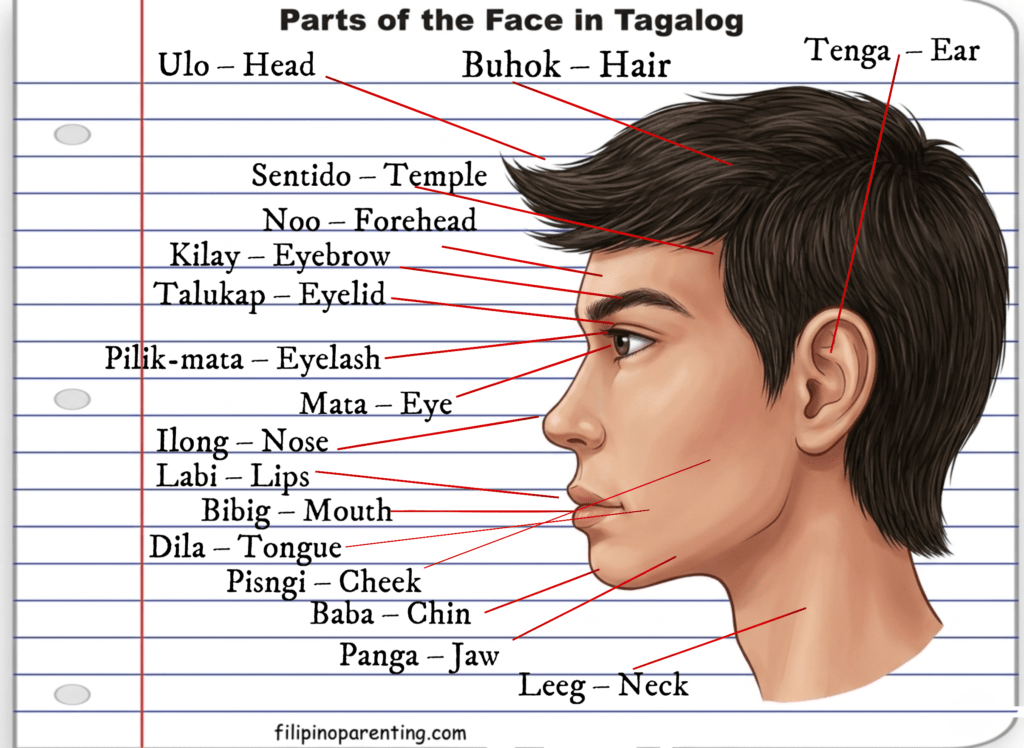
Table of Contents
Vocabulary: Parts of the Head and Face
Here are the most common Tagalog words for the parts of the head and face. Mastering these terms will help you describe people or explain specific areas of the body to a manggagamot (doctor).
| Tagalog Word | English Meaning | Pronunciation Tip |
| Ulo | Head | (OO-lo) |
| Buhok | Hair | (boo-HOK) |
| Mukha | Face | (mook-HA) |
| Noo | Forehead | (no-OH) |
| Mata | Eye | (MA-ta) |
| Kilay | Eyebrow | (KEE-lay) |
| Pilik-mata | Eyelash | (pee-lik-MA-tah) |
| Takipmata | Eyelid | (ta-kip-MA-tah) |
| Ilong | Nose | (ee-LONG) |
| Tainga | Ear | (ta-ee-NGA) |
| Pisngi | Cheek | (pis-NGEE) |
| Panga | Jaw | (pa-NGA) |
| Baba | Chin | (ba-BA) |
| Bunganga / Bibig | Mouth | (boo-NGA-nga / bee-BIG) |
| Labi | Lips | (la-BEE) |
| Ngipin | Teeth | (NGEE-pin) |
| Dila | Tongue | (DEE-lah) |
| Leeg | Neck | (le-EG) |
| Sentido / Templo | Temple | (sen-TEE-do/ TEMP-lo) |
Why Learn These Terms?
Many people search for terms like “panga in face” or “noo meaning in English”. In Tagalog, panga refers to the jaw, while noo is the forehead. Understanding these specific parts is crucial when discussing symptoms in Tagalog or visiting a hospital in Tagalog.
For example, if you have a toothache, you might need to describe pain in your panga (jaw) or ngipin (teeth) to a dentist. Identifying the exact location of discomfort helps a medical professional provide the right care.
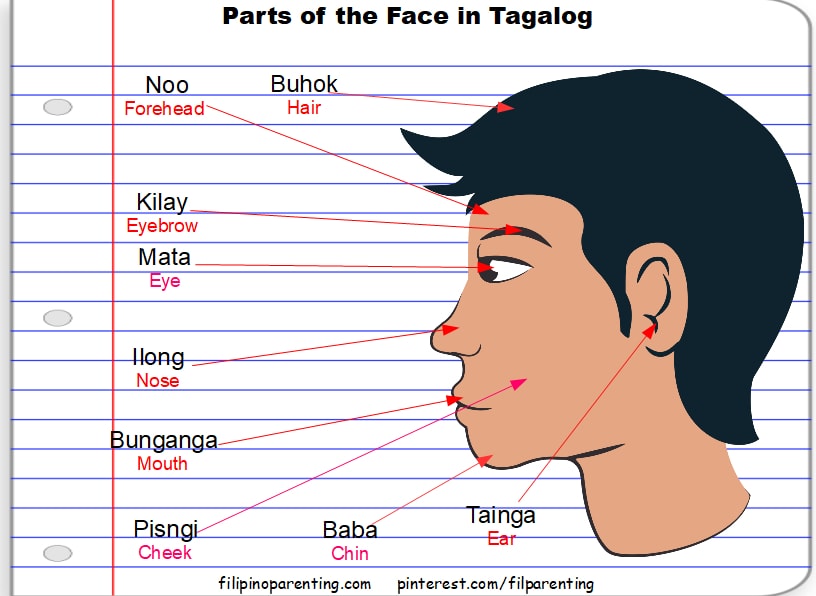
Practice Sentences in Tagalog
Use these examples to see how parts of the head and face in Tagalog are used in real-life descriptions:
- “Siya ay may maamong mukha.” (She has a kind face.)
- “Ang kanyang noo ay malapad.” (He has a wide forehead.)
- “Masakit ang aking panga.” (My jaw hurts.)
- “Ang sanggol ay may mamula-mulang mga pisngi.” (The baby has rosy cheeks.)
- “Siya ay may matangos na ilong.” (She has a sharp/pointed nose.)
- “Ang aking lolo ay may puting buhok.” (My grandfather has white hair.)
Expanding Your Knowledge: From the Body to Parts of the Head and Face in Tagalog
In Tagalog, the word for “body” is katawan. Once you’ve mastered the parts of the head and face in Tagalog, you can move on to other important body parts vocabulary to improve your overall fluency. Learning how the parts of the head and face in Tagalog connect to the rest of the katawan is essential for describing physical sensations or medical concerns.
Below is a quick-reference list to help you transition from the parts of the head and face in Tagalog to the rest of the body:
Key Body Parts Vocabulary Reference:
- Ulo – (See: Scalp in Tagalog)
- Noo – (See: Forehead in Tagalog)
- Mata – (See: Eye in Tagalog)
- Kilay – (See: Eyebrow in Tagalog)
- Tainga – (See: Ear in Tagalog)
- Ilong – (See: Nose in Tagalog)
- Pisngi – (See: Cheeks in Tagalog)
- Panga – (See: Jaw in Tagalog or Jawline in Tagalog)
- Bibig – (See: Mouth in Tagalog)
- Labi – (See: Lips in Tagalog)
- Baba – (See: Chin in Tagalog)
- Leeg – (See: Neck in Tagalog)
- Kamay – (See: Hand in Tagalog or Wrist in Tagalog)
- Siko – (See: Elbow in Tagalog)
- Binti – (See: Leg in Tagalog or Thigh in Tagalog)
- Paa – (See: Foot in Tagalog or Ankle in Tagalog)
FAQ: Common Questions About Face Parts
What is “panga” in English?
Panga translates to “jaw” or “mandible.”
How do you say “rosy cheeks” in Tagalog?
You can say “mamula-mulang pisngi.”
What is the difference between “bibig” and “bunganga”?
Both mean mouth, but bibig is the more polite, formal term. Bunganga is often used more colloquially or can refer to the physical opening of the mouth.
How do I describe a headache?
You would say, “Masakit ang ulo ko.” (My head hurts.)
Conclusion: Mastering Parts of the Head and Face in Tagalog
Building a strong foundation in parts of the head and face in Tagalog makes everyday communication—especially regarding health—much easier. Whether you are identifying a panga (jaw) issue or describing a sugat sa noo (wound on the forehead), knowing these specific Mga Bahagi ng Mukha ensures you are understood by both family and medical professionals.
To achieve fluency, practice these parts of the head and face in Tagalog by pointing to them daily or using them in the practice sentences provided above. For those looking to expand their vocabulary beyond the face, the Cleveland Clinic offers excellent resources on human anatomy that you can use as a reference while learning the Tagalog equivalents.
To stay prepared for any situation, combine your knowledge of parts of the head and face in Tagalog with our guides on Tagalog medical emergency words and Tagalog days of the week to help you schedule your next check-up. For more global health information and terminology, you can also explore the World Health Organization (WHO) website.