Tagalog fruit names are commonly referred to as mga prutas in the Filipino language. Learning these words is an essential step in building your everyday Tagalog vocabulary.
In this post, you will discover common fruits vocabulary words in Tagalog along with clear example sentences to help you understand how they are used in daily conversation. Whether you are a beginner or reviewing basic vocabulary, this guide will make learning easier and more practical.
Learning fruits in Tagalog is especially helpful for grocery shopping, market conversations, school lessons, and everyday communication in the Philippines. Many Filipino fruits are enjoyed fresh, served as desserts or snacks, or used in traditional recipes and drinks.
From sweet tropical favorites like mangga and rambutan to sour fruits like kalamansi and kamias, expanding your Tagalog fruit vocabulary allows you to speak more naturally and confidently.
Botanically, fruits are fleshy, seed-bearing structures that grow from flowering plants. In daily life, however, they are simply delicious, nutritious foods that are an important part of Filipino culture and cuisine.
Start learning these Tagalog fruit names today and improve your Filipino vocabulary one word at a time! 🍍🍉🍌
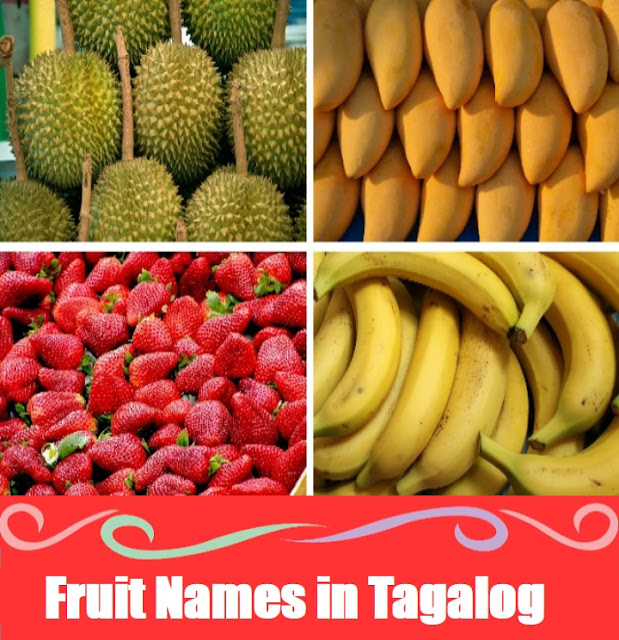
Table of Contents: Tagalog Fruit Names and Mga Prutas Vocabulary Guide
🍎 26 Tagalog Fruit Names with English Translation
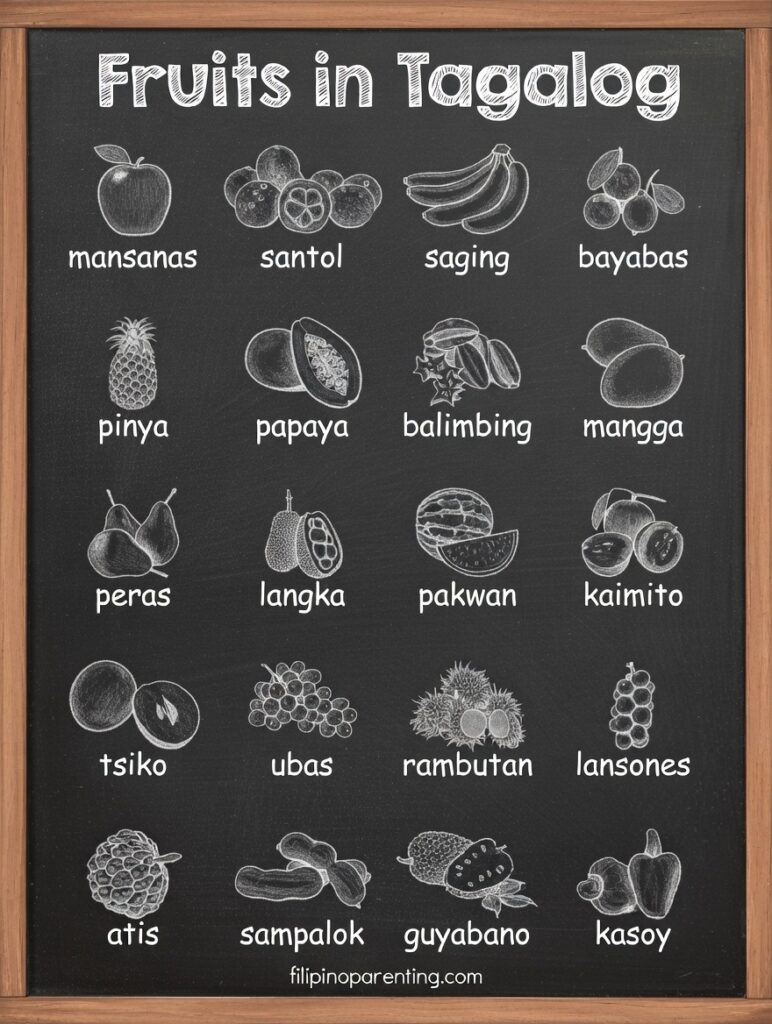
Listed below are common Tagalog fruit names and related vocabulary words that are frequently used in everyday conversations. These fruits include both local tropical varieties found in the Philippines and internationally known fruits that you may see in grocery stores and markets.
Learning these Tagalog fruit names will help you confidently identify fruits while shopping at the palengke (market), talking with friends and family, or reading Filipino recipes. Each word includes its English translation to make memorization easier and to help beginners quickly expand their Filipino vocabulary.
Use this list as a practical reference guide as you study, practice pronunciation, and build simple sentences using fruits in Tagalog.
| # | English | Tagalog |
|---|---|---|
| 1 | Fruit | Prutas |
| 2 | Cherry | Seresa |
| 3 | Apple | Mansanas |
| 4 | Grape | Ubas |
| 5 | Watermelon | Pakwan |
| 6 | Banana | Saging |
| 7 | Mango | Mangga |
| 8 | Avocado | Abokado |
| 9 | Pomegranate | Granada |
| 10 | Fig | Igos |
| 11 | Jackfruit | Langka |
| 12 | Pineapple | Pinya |
| 13 | Guava | Bayabas |
| 14 | Strawberry | Presa |
| 15 | Pumpkin | Kalabasa |
| 16 | Bilimbi | Kamias |
| 17 | Rose Apple | Makopa |
| 18 | Durian | Durian |
| 19 | Java Plum | Duhat |
| 20 | Sapodilla | Chico |
| 21 | Soursop | Guyabano |
| 22 | Rambutan | Rambutan |
| 23 | Langsat | Lanzones |
| 24 | Cotton Fruit | Santol |
| 25 | Sugar Apple / Custard Apple | Atis |
| 26 | Calamansi | Kalamansi |
| 27 | Lemon | Limon |
These fruits are widely enjoyed across the Philippines. Some are sweet and eaten fresh, while others like kamias and calamansi are often used to add sour flavor to dishes and drinks.
🗣 Tagalog Fruit Names Used in Example Sentences
Learning Tagalog fruit names becomes easier when you see how they are used in real conversations. Below are practical example sentences that show how common fruits vocabulary words are used in everyday Tagalog. These examples will help you understand sentence structure, improve pronunciation, and build confidence when speaking Filipino.
These apples are colored red.
Ang mga mansanas na ito ay kulay pula.
These avocados are unripe.
Ang mga abokado na ito ay hilaw pa.
A banana is rich in Vitamin A.
Ang saging ay mayaman sa Bitamina A.
These cherries are freshly picked off the tree.
Ang mga seresa na ito ay kapipitas lamang sa puno.
My grandmother loves to make jam out of ripe guava fruits.
Ang aking lola ay mahilig gumawa ng minatamis na gawa sa hinog na bayabas.
A ripe jackfruit has a sweet-smelling aroma.
Ang hinog na langka ay may matamis na amoy.
A green mango is still unripe and has a sour taste.
Ang berdeng mangga ay hindi pa hinog at may maasim na lasa.
These pineapples are sold at the market.
Ang mga pinya na ito ay ibinibenta sa palengke.
I love to eat a watermelon during summer time.
Gusto kong kumain ng pakwan tuwing tag-init.
My favorite fruit is grapes.
Ang paborito kong prutas ay ubas.
By practicing these example sentences, you’ll become more comfortable using Tagalog fruit names naturally in conversation. Try reading them aloud, substituting different fruits, and creating your own simple sentences. The more you practice using fruits vocabulary in context, the faster your Tagalog speaking skills will improve.
Why Learn Fruits in Tagalog?
Learning fruits vocabulary in Tagalog helps:
- Improve daily conversational skills
- Prepare for travel to the Philippines
- Communicate confidently in markets
- Expand your Filipino vocabulary
If you’re serious about language learning, mastering common food vocabulary is an excellent starting point. Filipino markets are full of colorful tropical fruits like durian, rambutan, lanzones, and atis, making them great vocabulary words to learn and practice.
Conclusion
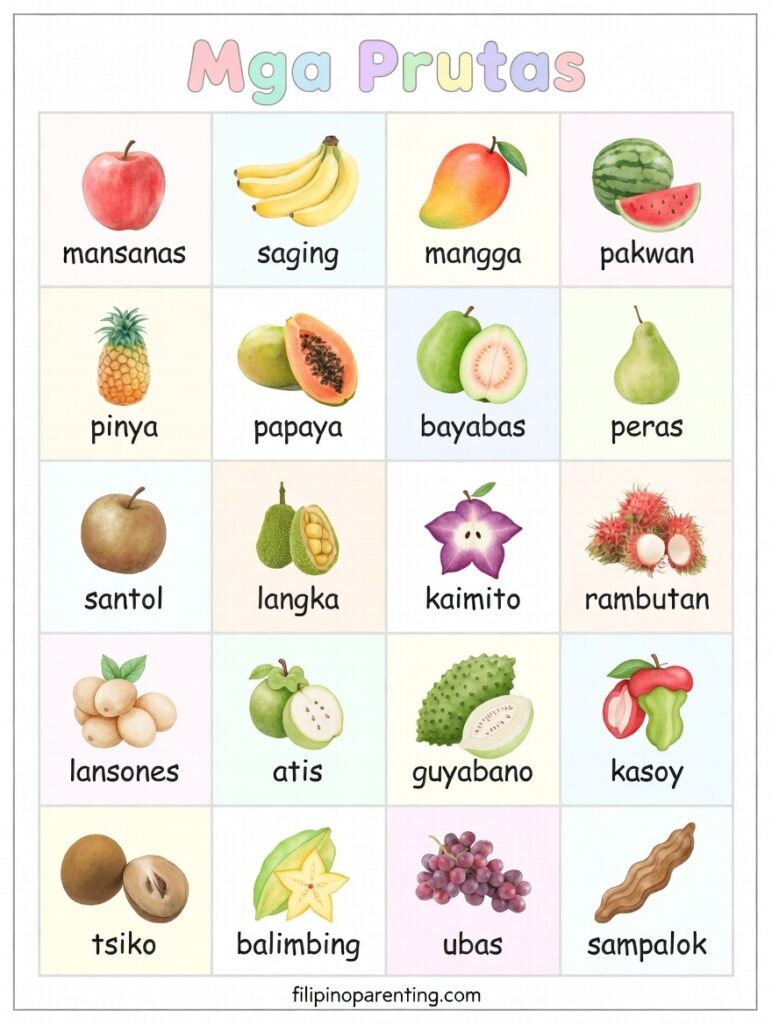
This Fruits Word List in Tagalog provides essential vocabulary words and example phrases to help you learn faster and remember better.
From common fruits like apples and bananas to tropical favorites like mangga, guyabano, and santol, learning these words will help you communicate more naturally in Tagalog.
Practice saying these words aloud and try using them in simple sentences. The more you use Tagalog fruit names in real conversations, the more confident you will become.
Keep learning and enjoy expanding your Tagalog vocabulary! 🍍🍉🍌
In Tagalog, fruits are called mga prutas.
In this post, you will learn common fruits vocabulary words in Tagalog along with example sentences to help you understand how they are used in daily conversation.
Learning fruits in Tagalog is helpful for grocery shopping, market conversations, and everyday communication in the Philippines.