Mango in Tagalog is called mangga.
If you are learning Filipino, knowing how to say mango in Tagalog is very useful because mangoes are one of the most popular fruits in the Philippines. In fact, the mango (Mangifera indica) is the national fruit of the Philippines.
In this guide, you will learn mango-related vocabulary words, example sentences, key varieties, common terms, quick facts, and FAQs.
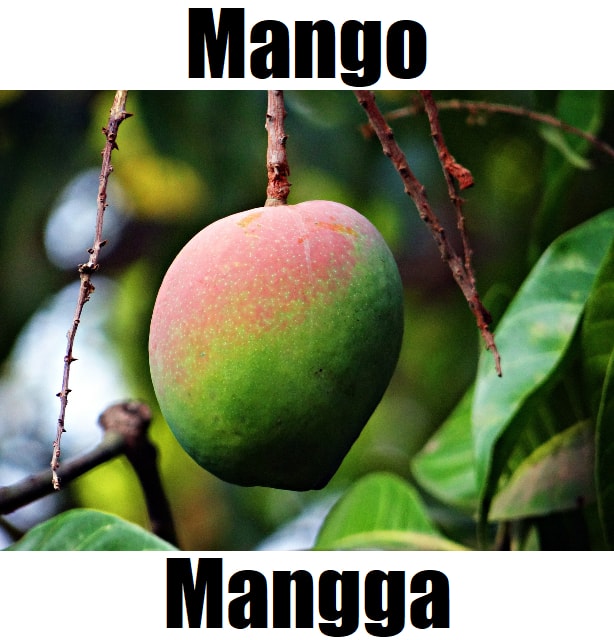
Table of Contents
What Is Mango in Tagalog?
The Tagalog word for mango is mangga.
Mangoes are enjoyed both ripe (hinog) and unripe (hilaw) in the Philippines. They are eaten fresh, added to desserts, or paired with savory condiments like shrimp paste (bagoong or alamang).
Mango Vocabulary Words in Tagalog
Learning mango-related vocabulary in Tagalog helps you speak more naturally when talking about fruits, farming, gardening, nutrition, and everyday meals. Since mangga is one of the most popular fruits in the Philippines, these words are commonly used in daily conversations—whether you’re shopping at the market, discussing healthy food, or learning about agriculture in school.
| # | English | Tagalog |
|---|---|---|
| 1 | Mango | Mangga |
| 2 | Fruit | Prutas |
| 3 | Seed | Buto |
| 4 | Plant | Halaman |
| 5 | Crop | Tanim |
| 6 | Vitamin C | Bitamina C |
| 7 | Healthy | Masustansya |
| 8 | Food | Pagkain |
| 9 | Orchard | Lagwerta |
| 10 | Yellow | Dilaw |
| 11 | Garden | Hardin |
| 12 | Farm | Bukid |
| 13 | Planting | Pagtatanim |
| 14 | Farming | Pagsasaka |
| 15 | Tree | Puno |
By familiarizing yourself with these mango vocabulary words, you build a stronger foundation in Tagalog, especially when discussing fruits, nutrition, and farming topics. Try using these terms in simple sentences to improve retention and fluency. The more you practice using words like mangga, prutas, dilaw, and bukid, the more confident and natural your Tagalog conversations will become. 🥭
Common Mango Terms in Tagalog
When buying mangoes in the Philippines, you’ll often hear specific descriptive words that refer to their ripeness. Knowing these terms helps you choose the right type of mangga depending on whether you prefer it sweet, sour, or somewhere in between. These words are especially useful in markets, grocery stores, and everyday conversations about food.
- Hinog – ripe mango
- Hilaw – green or unripe mango
- Manibalang – nearly ripe mango (between green and yellow)
These terms are commonly used when selecting mangoes based on taste and texture. If you want a sweet mango for dessert, you’ll likely ask for hinog. If you prefer something sour for dipping in salt or bagoong, you might choose hilaw. Understanding these simple but practical words makes shopping and conversations much easier—and helps you sound more natural in Tagalog. 🥭
Popular Mango Varieties in the Philippines
The Philippines is known for several mango varieties:
- Carabao Mango – also known internationally as the “Philippine Mango,” famous for its sweetness
- Pico – smaller and slightly tangy variety
- Paho – aromatic mango often eaten before fully ripe
The Carabao mango is especially recognized worldwide for its rich flavor and smooth texture.
Mango Example Phrases in Tagalog
One of the best ways to remember new vocabulary is by seeing it used in complete sentences. These mango example phrases will help you understand how mangga is naturally used in everyday Tagalog conversations. Whether you’re talking about taste, cooking, desserts, or buying fruit at the market, these examples make learning practical and easy.
Here are your example sentences, refined for natural flow:
- A mango is sour when it is still green.
Ang mangga ay maasim kapag ito ay hilaw pa. - A ripe mango is yellow and tastes sweet.
Ang hinog na mangga ay kulay dilaw at may matamis na lasa. - Mango is used in making sweet desserts.
Ang mangga ay ginagamit sa paggawa ng matatamis na panghimagas. - My favorite dessert is mango ice cream.
Ang paborito kong panghimagas ay sorbetes na mangga. - I like to eat green mangoes with shrimp paste.
Gusto kong kumain ng berdeng mangga na may alamang. - My mom loves to eat raw mango with anchovies.
Ang aking ina ay mahilig kumain ng hilaw na mangga na may bagoong. - My aunt is picking ripe mangoes in the garden.
Ang aking tita ay namimitas ng hinog na mangga sa hardin. - Use a sharp knife to remove the peel of the mango.
Gumamit ng matalim na kutsilyo sa pag-alis ng balat ng mangga. - Mango is rich in Vitamin C.
Ang mangga ay mayaman sa Bitamina C. - I ate sour mango with salt and vinegar.
Kumain ako ng maasim na mangga na may asin at suka.
By practicing these example sentences, you’ll improve both your vocabulary and sentence structure in Tagalog. Try reading them aloud, writing your own versions, or using them in simple conversations. The more you apply what you learn, the more confident and fluent you’ll become when speaking about fruits, food, and everyday life in Filipino. 🥭
Why Learn “Mango” in Tagalog?
Learning how to say mango in Tagalog helps you:
- Communicate better in Filipino markets
- Order desserts confidently
- Understand local food culture
- Expand your fruit vocabulary
- Improve daily conversation skills
Because mango is the national fruit of the Philippines, mangga is an important and commonly used word.
Frequently Asked Questions (FAQ)
1. What is mango in Tagalog?
Mango in Tagalog is mangga.
2. What is the national fruit of the Philippines?
The mango (Mangifera indica) is the national fruit of the Philippines.
3. What is a ripe mango called in Tagalog?
A ripe mango is described as hinog na mangga.
4. What is a green mango called in Tagalog?
A green or unripe mango is called hilaw na mangga.
5. What is the sweetest mango variety in the Philippines?
The Carabao mango is widely known for its sweetness.
Conclusion
Now you know that mango in Tagalog is mangga. You’ve also learned useful vocabulary words, common mango terms like hinog and hilaw, and popular varieties such as the famous Carabao mango.
Practice using mangga in daily conversation, especially when talking about fruits, desserts, or market shopping. The more you use these words, the more confident your Tagalog will become.
Keep learning and enjoy expanding your Filipino vocabulary! 🥭