Rambutan in Tagalog is spelled rambutan, since the word is the same in both English and Filipino. There is no separate translation, which makes it easier for language learners to recognize and remember.
Rambutan is a popular tropical fruit in the Philippines, especially during harvest season. Known for its bright red, hairy shell and soft spines, this tropical fruit is loved for its sweet, juicy, and slightly tangy flesh. Many Filipino families enjoy eating rambutan fresh as a refreshing snack, especially during the summer months when tropical fruits are abundant in local markets.
Aside from being delicious, rambutan is also versatile. It is commonly used in desserts, fruit salads, beverages, jams, and traditional Filipino treats, making it both flavorful and valuable in everyday meals. In addition to its sweet taste, Rambutan in Tagalog is appreciated for its Vitamin C content, antioxidants, and natural energy-boosting properties, making it a nutritious addition to a balanced Filipino diet.
Learning about Rambutan in Tagalog not only helps expand your Filipino vocabulary but also deepens your understanding of tropical fruits commonly enjoyed in the Philippines.
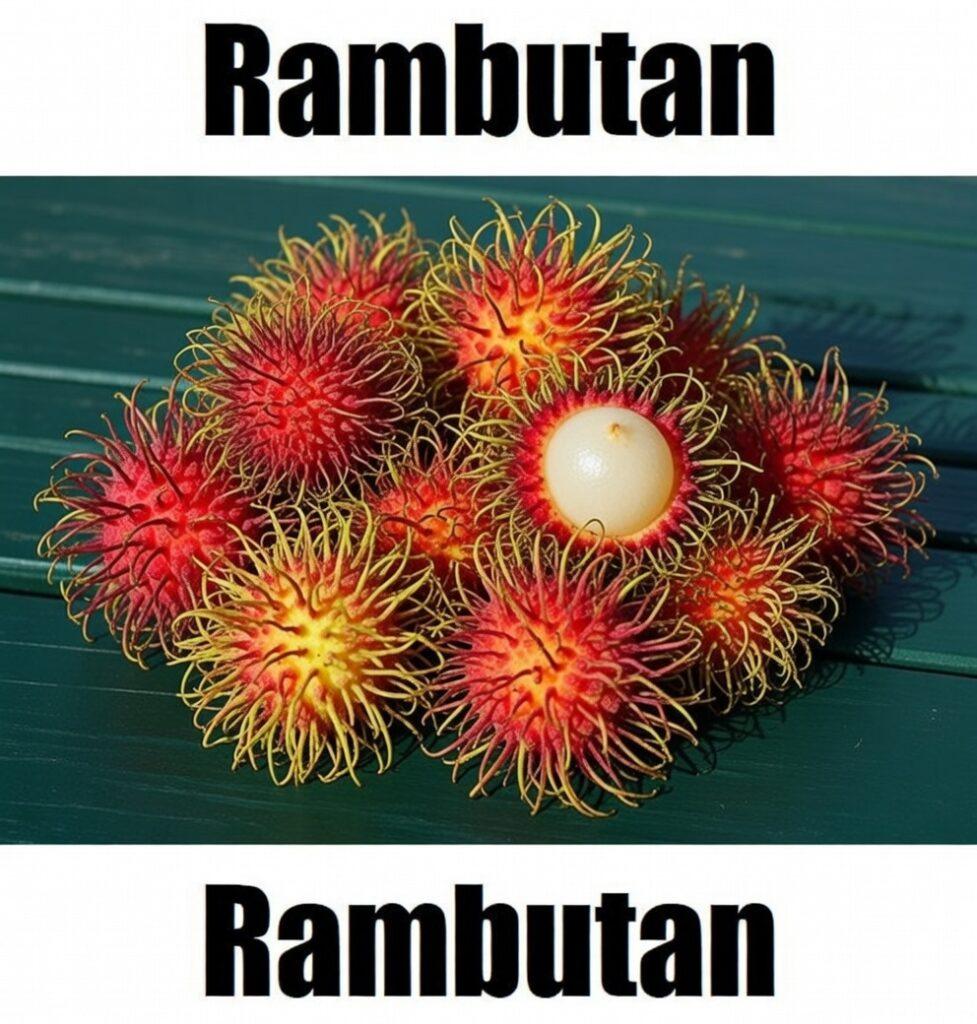
Table of Contents
What Is Rambutan?
Rambutan is a small, round tropical fruit covered in soft, hair-like spines. Once peeled, it reveals a translucent white flesh that is juicy and mildly sweet.
Scientific Name: Nephelium lappaceum
Rambutan is native to Southeast Asia and thrives in warm climates. It is closely related to lychee and longan but has its own unique texture and flavor.
Color: Red, yellow, or orange outer skin; white translucent flesh
Taste: Sweet with a slightly tangy flavor
Common Nickname: Hairy fruit
Rambutan Vocabulary Words
Learning Rambutan in Tagalog vocabulary words helps expand your Filipino language skills while understanding how this popular tropical fruit is described in everyday conversation. From basic terms like prutas (fruit) and balat (skin) to nutrition-related words such as Bitamina C, hibla (fiber), and antioxidant, these translations allow learners to confidently talk about taste, texture, health benefits, and common food uses.
Whether you are a student, parent, traveler, or Filipino language learner, mastering these Rambutan in Tagalog vocabulary words will help you describe this sweet tropical fruit in markets, at home, or in casual conversations across the Philippines.
| # | English | Tagalog |
|---|---|---|
| 1 | Rambutan | Rambutan |
| 2 | Fruit | Prutas |
| 3 | Sweet | Matamis |
| 4 | Sour | Maasim |
| 5 | Seed | Buto |
| 6 | Skin | Balat |
| 7 | Tree | Puno |
| 8 | Harvest | Ani |
| 9 | Fresh | Sariwa |
| 10 | Juice | Katas |
| 11 | Smoothie | Inuming prutas |
| 12 | Ice Cream | Sorbetes |
| 13 | Dessert | Panghimagas |
| 14 | Fiber | Hibla |
| 15 | Vitamin C | Bitamina C |
| 16 | Tropical | Tropikal |
| 17 | Antioxidant | Antioxidant |
| 18 | Snack | Meryenda |
| 19 | Salad | Ensalada |
| 20 | Candy | Kendi |
By practicing these Rambutan in Tagalog vocabulary words, you improve both your English-to-Tagalog translation skills and your understanding of Filipino food culture. Knowing the correct terms for flavor, nutrition, and preparation makes it easier to discuss rambutan in real-life situations — from buying fresh fruit at the palengke to enjoying it in desserts, salads, and refreshing drinks.
Keep reviewing and using these words regularly to build fluency and confidence. The more you learn about Rambutan in Tagalog, the more naturally you can speak about tropical fruits, healthy snacks, and everyday Filipino cuisine.
How Is Rambutan Used?
Rambutan is enjoyed in many ways in Filipino cuisine.
1. Eaten Fresh
The most common way to enjoy rambutan is fresh.
- Peel off the outer skin
- Remove the seed
- Eat the juicy flesh
It is refreshing and naturally sweet.
2. Added to Desserts
Rambutan is often used in Filipino desserts.
- Added to fruit salad
- Mixed into ice cream
- Included in Halo-halo
It adds sweetness and texture to treats.
3. Made into Juice
Rambutan can be blended into juice.
The flesh is mixed with water and sugar to create a hydrating tropical drink.
4. Used in Jams
Rambutan can be cooked into jam.
- Spread on toast
- Used as pastry filling
This preserves its flavor longer.
5. Made into Candies
Rambutan is sometimes preserved in syrup or sugar.
- Used in sweet snacks
- Turned into chewy candy
This allows enjoyment even off-season.
Health Benefits of Rambutan
Rambutan is not only tasty but also nutritious.
Rich in Vitamin C
Helps strengthen the immune system.
Contains Antioxidants
Protects the body from free radical damage.
High in Fiber
Supports digestion and gut health.
Boosts Energy
Natural sugars provide quick energy.
Hydrating
High water content helps prevent dehydration.
Supports Heart Health
Fiber may help manage cholesterol levels.
How to Use Rambutan at Home
Here are simple ways to enjoy rambutan:
Method 1: Peel and eat fresh.
Method 2: Add to fruit salads.
Method 3: Blend into juice or smoothies.
Method 4: Cook into jam or syrup.
Method 5: Freeze peeled fruit for desserts.
Commonly Used Example Phrases in Tagalog
Practicing example sentences is one of the best ways to understand how Rambutan in Tagalog is used in everyday conversation. These natural and easy-to-follow phrases help learners see how the word rambutan fits into common Filipino sentence structures. From describing taste and health benefits to talking about buying fruit at the palengke (market), these examples make vocabulary learning practical and memorable.
If you are studying Filipino or teaching children basic fruit vocabulary, these Rambutan in Tagalog example sentences will help improve pronunciation, grammar awareness, and conversational confidence.
- The rambutan is sweet.
Matamis ang rambutan. - I bought rambutan at the market.
Bumili ako ng rambutan sa palengke. - The rambutan tree is tall.
Mataas ang puno ng rambutan. - Peel the rambutan before eating.
Balatan ang rambutan bago kainin. - Remove the seed of the rambutan.
Tanggalin ang buto ng rambutan. - Rambutan is a tropical fruit.
Ang rambutan ay isang tropikal na prutas. - I like rambutan juice.
Gusto ko ang katas ng rambutan. - Rambutan is good for health.
Mabuti sa kalusugan ang rambutan. - We harvested rambutan yesterday.
Umanni kami ng rambutan kahapon. - Rambutan is delicious in desserts.
Masarap ang rambutan sa panghimagas.
By reviewing and practicing these example phrases regularly, you will become more comfortable using Rambutan in Tagalog in real-life situations. Simple sentences like these strengthen your ability to describe tropical fruits, talk about food preferences, and communicate naturally in Filipino.
Keep practicing aloud and try creating your own sentences about rambutan. The more you use Rambutan in Tagalog in context, the faster your fluency and confidence will grow.
Frequently Asked Questions (FAQ)
1. What is Rambutan in Tagalog?
Rambutan in Tagalog is also called rambutan.
2. What is the scientific name of Rambutan?
Its scientific name is Nephelium lappaceum.
3. Can it replace something similar?
Yes, it can replace lychee or longan in recipes.
4. Is it healthy?
Yes. It contains Vitamin C, fiber, and antioxidants.
5. How do you prepare or use it?
Peel the skin, remove the seed, and eat fresh or use in desserts and drinks.
Conclusion
Rambutan in Tagalog refers to the same tropical fruit loved across Southeast Asia and the Philippines. Although it is spelled the same in both English and Filipino, the word rambutan is widely used in everyday Tagalog conversations, markets, and local food culture.
Its sweet, juicy flesh and bright red, hairy shell make it one of the most recognizable tropical fruits in the country. Whether eaten fresh, added to fruit salads, blended into refreshing drinks, or served as a dessert ingredient, rambutan continues to be a favorite snack among Filipino families.
Beyond its delicious flavor, Rambutan in Tagalog is valued for its Vitamin C content, antioxidants, and natural energy-boosting nutrients. This makes it not only a tasty treat but also a healthy addition to everyday Filipino meals.
By learning more about Rambutan in Tagalog, including its vocabulary words and example sentences, you gain both language skills and a deeper appreciation of tropical fruits in Filipino cuisine and culture.