Cotton Fruit in Tagalog is spelled santol.
In many Filipino households, santol is a familiar seasonal favorite known for its distinct sweet-sour flavor. From backyard trees to local markets, it remains a nostalgic part of childhood snacks and traditional meals.
Because of its versatility and nutritional value, santol continues to be used in fresh preparations, preserved treats, and even savory Filipino dishes. Understanding Cotton Fruit in Tagalog helps learners connect the English name with the commonly used Filipino term, santol.
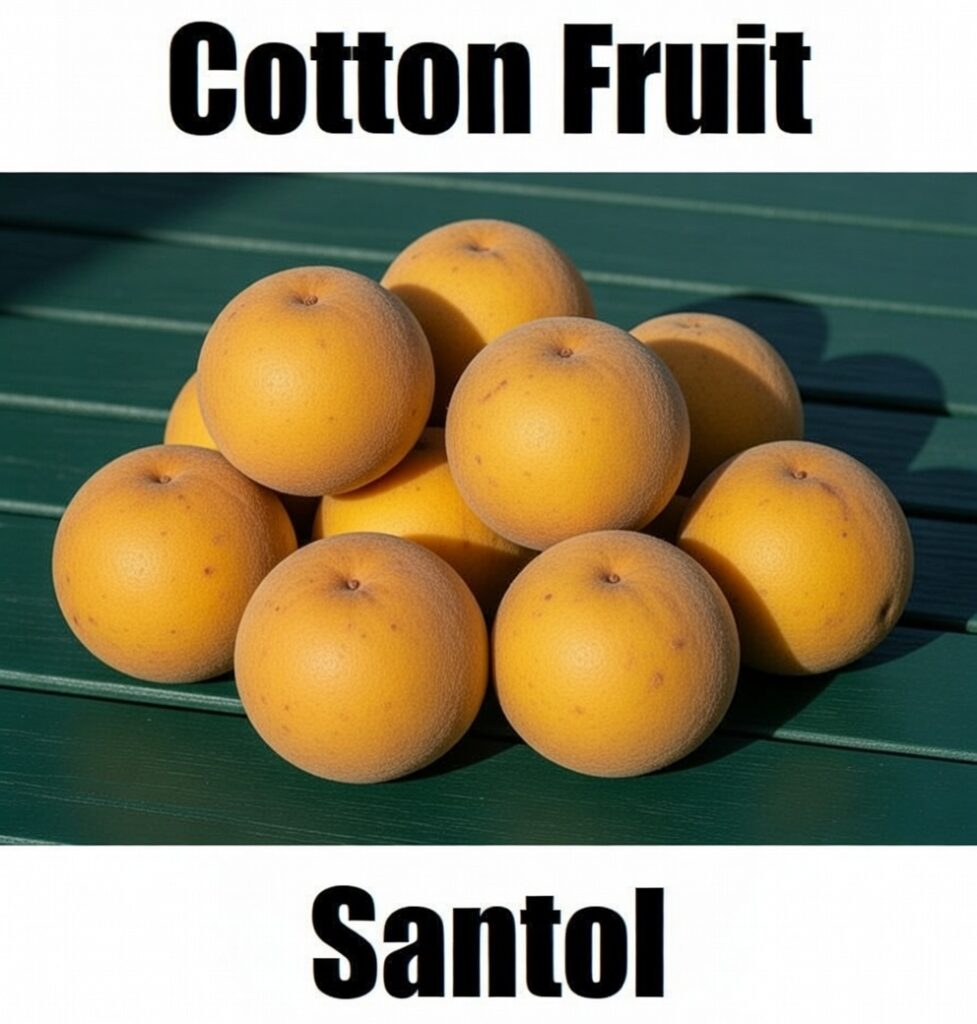
Table of Contents
What Is Cotton Fruit in Tagalog?
Cotton Fruit in Tagalog is called santol. It is a round tropical fruit with a thick rind and soft pulp inside. Its flavor ranges from sour to sweet depending on ripeness, making it both refreshing and bold in taste.
Its scientific name is Sandoricum koetjape.
Santol is native to Southeast Asia and grows abundantly in the Philippines, especially in rural provinces.
Color: Yellow to orange rind, white to pale pulp
Taste: Sweet-sour and slightly tangy
Common Nickname: Wild mangosteen
Cotton Fruit in Tagalog Vocabulary Words
Below are common English words related to santol and their Tagalog translations. Learning these terms improves your understanding of Cotton Fruit in Tagalog and helps you describe its taste, preparation, and cultural uses more naturally.
| # | English | Tagalog |
|---|---|---|
| 1 | Santol | Santol |
| 2 | Fruit | Prutas |
| 3 | Sour | Maasim |
| 4 | Sweet | Matamis |
| 5 | Seed | Buto |
| 6 | Peel | Balat |
| 7 | Pulp | Laman |
| 8 | Tree | Puno |
| 9 | Harvest | Ani |
| 10 | Market | Palengke |
| 11 | Jam | Minatamis |
| 12 | Candy | Kendi |
| 13 | Pickle | Atsara |
| 14 | Soup | Sabaw |
| 15 | Salt | Asin |
| 16 | Sugar | Asukal |
| 17 | Shrimp Paste | Bagoong |
| 18 | Fresh | Sariwa |
| 19 | Season | Panahon |
| 20 | Healthy | Masustansya |
Mastering these vocabulary words makes it easier to talk about Cotton Fruit in Tagalog in both casual and formal settings.
How Is Cotton Fruit in Tagalog Used?
Santol can be enjoyed in a variety of traditional and modern ways.
1. Eaten Fresh
One of the simplest ways to enjoy santol is to peel it and eat the pulp inside.
- Sprinkle with salt
- Dip in bagoong
- Add a little sugar
This enhances its natural sweet-sour flavor.
2. Used in Sour Soups
Santol can be added to sour broths such as sinigang.
- Adds fruity tartness
- Enhances broth depth
It provides a unique twist to traditional soup recipes.
3. Made into Jam or Marmalade
Santol can be cooked with sugar to create spreads.
The natural tanginess balances sweetness, making it ideal for bread or pastries.
4. Preserved as Candy
In many provinces, santol is preserved in sugar syrup.
- Dried santol candy
- Sweet preserved slices
This allows enjoyment even outside harvest season.
5. Pickled or Used in Salads
Santol can be grated and mixed with vinegar and spices.
- Pickled santol
- Fresh grated salad
This creates a tangy side dish that pairs well with grilled meals.
Health Benefits of Cotton Fruit in Tagalog
Santol is not only flavorful but also nutritious. Learning about Cotton Fruit in Tagalog also includes understanding its health value.
- Rich in Vitamin C
Supports immunity and skin health. - High in Antioxidants
Helps protect cells from free radical damage. - Supports Digestion
Contains fiber that aids bowel movement. - Promotes Hydration
High water content helps maintain fluid balance. - Anti-inflammatory Properties
May help reduce swelling and discomfort. - Supports Heart Health
Antioxidants may help manage cholesterol levels.
Commonly Used Example Phrases in Tagalog
Learning vocabulary is easier when you see how a word is naturally used in real-life conversations. The examples below show how santol (Cotton Fruit in Tagalog) appears in everyday speech, whether talking about food, seasons, cooking, or family activities. These simple sentence pairs help learners understand both structure and context.
Here are 10 natural everyday sentences using santol (Cotton Fruit in Tagalog):
I bought fresh santol at the market.
Bumili ako ng sariwang santol sa palengke.
Santol tastes sweet and sour.
Matamis at maasim ang santol.
Peel the santol before eating it.
Balatan mo ang santol bago kainin.
Santol is in season this month.
Panahon ng santol ngayong buwan.
My grandmother made santol jam.
Gumawa ang lola ko ng minatamis na santol.
Add santol to the soup for sourness.
Lagyan ng santol ang sabaw para umasim.
The santol tree is very tall.
Mataas ang puno ng santol.
I like santol with salt.
Gusto ko ang santol na may asin.
Santol is healthy and nutritious.
Masustansya at mabuti sa kalusugan ang santol.
We harvested santol from our backyard.
Umani kami ng santol sa aming bakuran.
Practicing these example sentences regularly can improve pronunciation, sentence flow, and vocabulary retention. By using santol in everyday contexts, learners build confidence in forming simple Tagalog sentences. Over time, repeating and applying these phrases in real conversations will make speaking Filipino feel more natural and effortless.
Cotton Fruit in Tagalog FAQ
1. What is Cotton Fruit in Tagalog?
Cotton Fruit in Tagalog is spelled santol.
2. What is the scientific name of Cotton Fruit?
Its scientific name is Sandoricum koetjape.
3. Can it replace something similar?
It can sometimes substitute other souring ingredients in soups and preserves.
4. Is it healthy?
Yes. It contains Vitamin C, fiber, and antioxidants.
5. How do you prepare or use it?
Peel the rind, remove the pulp, and eat fresh or use in cooking and preserves.
Conclusion
Cotton Fruit in Tagalog, known as santol, remains a cherished seasonal favorite in the Philippines. Known for its sweet-sour flavor and versatility in both fresh and cooked dishes, santol plays an important role in Filipino food traditions.
From soups and salads to jams and candies, Cotton Fruit in Tagalog continues to add a refreshing twist to many recipes. With its nutritional benefits and cultural significance, santol is enjoyed across generations in Filipino homes.