Blog

  • Tagalog Sea Creatures: Learn Filipino Names of Ocean Animals ✅

    Tagalog Sea Creatures

    body {
    font-family: Verdana, sans-serif;
    color: #333;
    background-color: #f9f9f9;
    }

    .container {
    max-width: 90%;
    margin: 40px auto;
    padding: 20px;
    background-color: #fff;
    border: 1px solid #ddd;
    border-radius: 10px;
    box-shadow: 0 0 10px rgba(0, 0, 0, 0.1);
    }

    .header {
    background-color: #2E4053;
    color: #fff;
    padding: 10px;
    text-align: center;
    border-radius: 10px 10px 0 0;
    }

    .header h1 {
    font-size: 24px;
    margin: 0;
    }

    .content {
    padding: 20px;
    }

    .content img {
    max-width: 100%;
    height: auto;
    margin: 10px auto;
    border: 1px solid #ddd;
    border-radius: 10px;
    display: block;
    }

    .content table {
    border-collapse: collapse;
    width: 100%;
    table-layout: fixed;
    word-wrap: break-word;
    margin: 20px auto;
    }

    .content table th,
    .content table td {
    border: 1px solid #ddd;
    padding: 10px;
    text-align: left;
    }

    .content table th {
    background-color: #3498DB;
    }

    .content table tr:nth-child(even) {
    background-color: #f9f9f9;
    }

    .content table tr:hover {
    background-color: #f2f2f2;
    }

    /* Responsive table layout */
    .content table {
    display: block;
    overflow-x: auto;
    }

    .content table th,
    .content table td {
    display: table-cell;
    }

    @media only screen and (max-width: 768px) {
    .container {
    margin: 20px auto;
    max-width: 95%;
    }

    .content table tbody,
    .content table thead {
    display: block;
    }

    .content table th,
    .content table td {
    display: block;
    width: 100%;
    box-sizing: border-box;
    }

    .content table thead tr {
    display: none;
    }

    .content table tbody tr {
    margin-bottom: 10px;
    }

    .content table td:before {
    content: attr(data-label);
    font-weight: bold;
    display: inline-block;
    width: 100%;
    }
    }

    .content p:hover > span { /* Target spans within p elements on hover */
    background-color: #f2f2f2; /* Change background color on hover */
    border-radius: 5px; /* Add rounded corners */
    padding: 2px 5px; /* Add padding for visual effect */
    transition: background-color 0.3s ease; /* Add smooth transition */
    }

    Tagalog Sea Creatures: Filipino Names of Ocean Animals (Mga Hayop sa Dagat sa Tagalog)

    Welcome to the fascinating world of Philippine marine life! The Philippines, an archipelago of over 7,000 islands, boasts incredible biodiversity. In this post, we’ll explore the Tagalog names for common and unique sea creatures, helping you expand your Filipino vocabulary while appreciating the beauty of the underwater world.

    Common Fish (Mga Karaniwang Isda)

    English Name Tagalog Name Pronunciation
    Fish Isda is-DA
    Milkfish Bangus ba-NGOOS
    Round scad Galunggong ga-loong-GONG
    Tilapia Tilapia tee-LAP-ya
    Anchovy Dilis DEE-lees

    Marine Mammals (Mga Mamalya sa Dagat)

    English Name Tagalog Name Pronunciation
    Whale Balyena bal-YEH-nah
    Dolphin Dolpin DOL-peen
    Dugong Dugong DOO-gong

    Shellfish and Crustaceans (Mga Kabibe at Krustaseo)

    English Name Tagalog Name Pronunciation
    Crab Alimasag a-lee-MA-sag
    Shrimp Hipon HEE-pon
    Oyster Talaba ta-la-BA
    Mussel Tahong ta-HONG

    Other Sea Creatures (Iba Pang Nilalang sa Dagat)

    English Name Tagalog Name Pronunciation
    Shark Pating pa-TING
    Turtle Pagong pah-GONG
    Octopus Pugita poo-GEE-tah
    Jellyfish Dikya DEEK-yah

    Sea-related Phrases (Mga Katagang Nauugnay sa Dagat)

    “Ang dagat ay buhay.” The sea is life.

    “Lumangoy ka sa karagatan ng mga posibilidad.” Swim in the ocean of possibilities.

    “Ang mga pawikan ay may dalang karunungan sa kanilang likod.” Sea turtles carry wisdom on their backs.

    “Nasa dagat kami.” We are at sea.

    “Magdaragat siya.” He is a seafarer or a person whose livelihood comes from the sea.

    “Tabíng-dagat ang pupuntahan namin.” We are going to the beach or seashore.

    “Túbig-dagat ang nagsasaboy sa aking kamay.” Seawater is splashing on my hand.

    “Lupaing dagatan ng Pilipinas.” Territorial waters of the Philippines.

    “Kapatagan ng dagat.” Sea level.

    “Nasa ibayong dagat ang kanyang trabaho.” His job is overseas, literally “across the sea”.

    “Kami ay naglalakad sa baybaying-dagat.” We are walking along the coastline or seashore.

    Example Sentences (Mga Halimbawang Pangungusap)

    “Ang dolpin ay lumalangoy sa karagatan.” The dolphin is swimming in the ocean.

    “Ang mga bahura ay tahanan ng maraming isda.” Coral reefs are home to many fish.

    “Ang mga balyena ay kumakanta ng magagandang awitin.” Whales sing beautiful songs.

    “Naglalangoy kami sa dagat.” We are swimming in the sea.

    “Ang mga alon ay malalaki ngayon.” The waves are big today.

    “Ang dagat ay malalim.” The sea is deep.

    “Ang dugong ay kumakain ng damong-dagat.” The manatee eats seaweed.

    “Ang mga pawikan ay naglalayag sa dagat.” Sea turtles are sailing in the sea.

    “Ang mga tao ay naglalangoy sa dagat.” People are swimming in the sea.

    “Ang dagat ay napakaganda.” The sea is very beautiful.

    Learning Activities (Mga Gawain sa Pag-aaral)

    “Ano ang kulay ng isda?” What color is the fish?

    “Ilang paa mayroon ang alimango?” How many legs does a crab have?

    “Ano ang kinakain ng pawikan?” What does a sea turtle eat?

    “Ano ang tawag sa malalaking isda?” What are big fish called?

    “Ano ang tawag sa mga hayop sa dagat?” What are sea animals called?

    Tips for Learning Tagalog Sea Creatures

    Start with common fish and marine mammals, and then move on to shellfish and crustaceans.

    Practice pronunciation by listening to native speakers or watching videos.

    Use flashcards or create a vocabulary list to help you remember new words.

    Learn about the different habitats of sea creatures, such as coral reefs and estuaries.

    Watch documentaries or videos about sea creatures to learn more about their behavior and characteristics.

  • Tagalog Science Vocabulary: Learn Filipino Terms for Science and Technology ✅

    Tagalog Science Vocabulary: Learn Filipino Terms for Science and Technology ✅

    Tagalog Science Vocabulary: Explore Filipino Terms for Science & Tech

    body {
    font-family: Verdana, sans-serif;
    font-size: 16px;
    line-height: 1.6;
    color: #333;
    background-color: #f9f9f9;
    margin: 0;
    padding: 0;
    }

    .container {
    max-width: 800px;
    margin: 20px auto;
    padding: 20px;
    background-color: #fff;
    border-radius: 10px;
    box-shadow: 0 0 10px rgba(0, 0, 0, 0.1);
    }

    h1, h2, h3, h4 {
    font-weight: bold;
    color: #222;
    }

    h1 {
    font-size: 28px;
    text-align: center;
    margin-bottom: 20px;
    }

    h2 {
    font-size: 22px;
    margin-top: 30px;
    }

    h3 {
    font-size: 18px;
    margin-top: 20px;
    }

    p {
    text-align: justify;
    margin-bottom: 15px;
    }

    img {
    display: block;
    margin: 20px auto;
    max-width: 100%;
    height: auto;
    border-radius: 5px;
    }

    table {
    border-collapse: collapse;
    margin: 20px auto;
    width: 100%;
    max-width: 600px;
    font-size: 14px;
    box-shadow: 0 2px 4px rgba(0,0,0,0.1);
    }

    th {
    background-color: #1b90bb;
    color: #fff;
    font-weight: bold;
    padding: 10px;
    border: 1px solid #ddd;
    text-align: left;
    }

    td {
    padding: 10px;
    border: 1px solid #ddd;
    word-break: break-word; /* Allow words to break within cells */
    }

    tr:nth-child(even) {
    background-color: #f2f2f2;
    }

    tr:hover {
    background-color: #e9ecef;
    }

    .tips-section,
    .conclusion-section {
    background-color: #f7f7f7;
    padding: 20px;
    border-radius: 10px;
    margin-top: 30px;
    }

    ul {
    list-style-type: disc;
    margin-left: 40px;
    }

    li {
    margin-bottom: 10px;
    }

    .tagalog-ending {
    margin-top: 30px;
    font-style: italic;
    text-align: center;
    }

    Tagalog Science Vocabulary: Learn Filipino Terms for Science and Technology

    Science Word List in Tagalog

    In Tagalog, Science is called Siyensiya or Agham. In this post, you’ll learn essential vocabulary words related to Science and some example phrases to boost your Tagalog knowledge.

    Science Vocabulary Words

    Here are common words for Science and related concepts:

    # English Tagalog
    1 Science Siyensya o Agham
    2 Bacteria Bakterya
    3 Cell Selula
    4 Chemistry Kimika
    5 Physics Pisika
    6 Biology Biyolohiya
    7 Experiment Eksperimento
    8 Microscope Mikroskopyo
    9 Astronomy Astronomiya
    10 Moon Buwan
    11 Comet Kometa
    12 Shooting Star Bulalakaw
    13 Earth Daigdig
    14 Galaxy Ariwanas
    15 Planet Planeta
    16 Sun Araw
    17 Space Kalawakan
    18 Telescope Teleskopyo
    19 Weather Panahon
    20 Fog Hamog
    21 Rain Ulan
    22 Snow Niyebe
    23 Wind Hangin
    24 Ice Yelo
    25 Storm Bagyo
    26 Tornado Buhawi
    27 Landslide Pagguho ng lupa
    28 Hailstorm Pag-ulan ng yelo
    29 Volcanic Eruption Pagputok ng Bulkan
    30 Earthquake Lindol
    31 Blizzard Bagyo ng Niyebe
    32 Thunderstorm Baygo
    33 Hurricane Unos
    34 Typhoon Malakas na Unos
    35 Evaporation Ebaporasyon o Pagsingaw
    36 Condensation Kondensasyon o Paghalay
    37 Precipitation Pag-ulan
    38 Plant Halaman
    39 Life Cycle Sirkulo ng Buhay
    40 Anatomy Anatomya
    41 Animal Hayop

    Science Example Phrases

    English Tagalog
    Science is one of my subjects at school. Ang Siyensya o Agham ay isa sa aking mga asignatura sa eskuwelahan.
    My favorite subject is Biology. Ang paborito kong asignatura ay Biyolohiya.
    We had an experiment in Chemistry. Kami ay may eksperimento sa Kimika.
    We used a microscope to study the parts of a bacteria. Kami ay gumamit ng mikroskopyo sa pag-aaral ng mga parte ng bakterya.
    A cell is considered the basic unit of an organism. Ang selula ay itinuturing na pangunahing yunit ng isang organismo.
    I seen a shooting star falling from the dark sky. May nakita akong bulalakaw na nahuhulog sa madilim na kalangitan.
    The Earth is shaped like a sphere. Ang daigdig ay may hugis na parang espero o globo.
    I used a telescope to observe the stars. Gumamit ako ng teleskopyo sa pagmamasid sa mga bituin.
    Meteorology is the study of weather. Ang Meteyorologo ay ang pag-aaral ng panahon.
    There is a storm coming tomorrow. May bagyong darating bukas.

    Tips for Learning Tagalog Science Words

    • Use flashcards or a language learning app to memorize new words.
    • Practice using the words in sentences to improve your pronunciation and grammar.
    • Watch Tagalog movies or TV shows and try to identify the science words you hear.
    • Find a language partner who can practice speaking Tagalog with you.

    Maraming salamat sa pagbabasa! Sana ay marami kang natutunan tungkol sa mga salitang pang-agham sa Tagalog. Hanggang sa susunod!

  • Traditional Filipino Food for All Saints’ Day: A Guide to Holiday Favorites ✅

    Traditional Filipino Food for All Saints’ Day: A Guide to Holiday Favorites ✅

    All Saints’ Day Food in the Philippines

    body {
    font-family: ‘Georgia’, serif;
    line-height: 1.6;
    color: #333;
    background-color: #f8f8f8;
    margin: 0;
    padding: 0;
    }

    header {
    background-color: #1b90bb;
    color: white;
    padding: 20px;
    text-align: center;
    }

    h1, h2, h3, h4 {
    color: #333;
    }

    h1 {
    font-size: 2.5em;
    margin-bottom: 1em;
    }

    h2 {
    font-size: 2em;
    margin-bottom: 0.8em;
    }

    h3 {
    font-size: 1.5em;
    margin-bottom: 0.6em;
    }

    h4 {
    font-size: 1.2em;
    margin-bottom: 0.4em;
    }

    p {
    text-align: justify;
    margin-bottom: 1em;
    }

    img {
    max-width: 100%;
    height: auto;
    margin-bottom: 1em;
    }

    table {
    border: 1px solid #000000;
    border-collapse: collapse;
    margin: 0 auto;
    padding: 0px;
    table-layout: fixed;
    min-width: 100%;
    width: 100%;
    }

    table th {
    text-align: center;
    padding: 8px;
    border: 1px solid #000000;
    background: #1b90bb;
    color: #FFFFFF;
    font-weight: bold;
    text-align: center;
    }

    table td {
    padding: 8px;
    border: 1px solid #000000;
    }

    table tr {
    background-color: #dddddd;
    color: #000000;
    text-align: left;
    }

    table .mobile-head {
    display: none;
    }

    @media screen and (max-width: 600px) {
    table {
    border: 1px solid #000000;
    border-collapse: collapse;
    margin: 0 auto;
    padding: 0px;
    table-layout: fixed;
    min-width: 100%;
    }

    table td {
    padding: 8px;
    border: 1px solid #000000;
    display: block;
    text-align: right;
    width: 100% 9;
    float: left 9;
    }

    table tr {
    background-color: #dddddd;
    color: #000000;
    text-align: right;
    margin: 8px;
    }

    table tr:first-child {
    display: none;
    }

    table tr {
    display: block;
    }

    table td:not(:first-child) {
    border-top: 0px;
    }

    table .mobile-head {
    font-weight: bold;
    color: #000000;
    float: left;
    text-align: left;
    display: block;
    }
    }

    .separator {
    clear: both;
    text-align: justify;
    margin-bottom: 20px;
    }

    .tips-section,
    .conclusion-section {
    background-color: #f2f2f2;
    padding: 20px;
    margin-bottom: 20px;
    }

    .tips-section h3,
    .conclusion-section h3 {
    color: #1b90bb;
    }

    .tips-section p,
    .conclusion-section p {
    text-align: left;
    }

    .image-container {
    margin-bottom: 20px;
    text-align: center;
    }

    .image-container img {
    border-radius: 10px;
    box-shadow: 0 4px 8px rgba(0, 0, 0, 0.1);
    }

    .food-items {
    margin-bottom: 20px;
    }

    .food-items h4 {
    margin-top: 0;
    }

    .food-items p {
    text-align: left;
    }

    All Saints’ Day Food in the Philippines


    All Saints’ Day Word List in Tagalog

    In Tagalog, All Saints’ Day is called Undas.

    In this post, you will learn the vocabulary words related to All Saints’ Day and some example phrases.

    All Saints’ Day Vocabulary Words

    Listed below are common words for All Saints’ Day, and related concepts:


    table {border: 1px solid #000000;border-collapse: collapse; margin: 0 auto; padding: 0px;table-layout: fixed;min-width: 100%;}table th {text-align: center;padding: 8px;border: 1px solid #000000;background:#1b90bb;color:#FFFFFF;font-weight:bold;text-align:center}table td{padding: 8px;border: 1px solid #000000;}table tr{background-color: #dddddd;color:#000000;text-align:left;}table .mobile-head {display:none;}@media screen and (max-width: 600px) {table {border: 1px solid #000000;border-collapse: collapse; margin: 0 auto; padding: 0px;table-layout: fixed;min-width: 100%;}table td{padding: 8px;border: 1px solid #000000;display: block;text-align: right;width: 100%9; float: left9;}table tr{background-color: #dddddd;color:#000000;text-align:right;margin:8px}table tr:first-child {display:none;}table tr{display: block;}table td:not(:first-child){border-top:0px;}table .mobile-head{font-weight:bold;color:#000000;float:left;text-align:left;display:block}}

    1 All Saints’ Day Undas
    2 Halloween Undas
    3 Occasion Okasyon
    4 Celebration Pagdiriwang
    5 Holiday Bakasyon
    6 Vacation Pahinga
    7 Happy Masaya
    8 Scary Nakakatakot
    9 Party Salu-salo
    10 Halloween Costume Kasuotan para sa Undas
    11 Halloween Food Pagkain para sa Undas
    12 Halloween Treats Mga Panghimagas para sa Undas
    13 Candy Kendi
    14 Food Pagkain
    15 Offering Alay

    All Saint’s Day is just around the corner so if you are planning to cook a memorable meal for the whole family to enjoy, then come and take a quick look at these Filipino foods that you can prepare for this special Holiday Season.

    All Saints’ Day Philippines

    The celebration and observance of All Saints’ Day in the Philippines is always fun and exciting.  During this special Holiday, a lot of Filipinos visit their loved ones who have passed away by going to the cemetery.  They show their sacrifice by walking and searching for the grave of their family members who have passed away.  Then they spend their time cleaning, painting, and beautifying the tombstone of their dead family members.  Afterwards, they pray for their loved ones while placing lighted candles of different colors and sizes, arranging vibrant flowers, fresh fruits, and authentic Filipino food that they cooked as offerings to the dead.  They take their time to celebrate All Saints’ Day by feasting with their whole family, relatives, and friends.

    Top 10 Food for All Saints’ Day in Philippines


    Here is my list of the Top 10 Filipino food that is prepared by most Pinoys in celebration of All Saints’ Day in the Philippines:

    1. Pancit

    This Filipino noodle dish originated from the early Chinese people who migrated to the Philippines.  There is more than one way to cook pancit and there are a variety of noodles that are used to make different kinds of pancit recipes.  According to a lot of Filipino pamahiin, pancit helps a person to have a longer life span. This Pinoy dish is a must in a lot of Filipino birthday celebrations, special occasions, and Holidays.

    2.  Pork Barbecue

    For most Filipinos who love and enjoy eating, there is nothing else more satisfying than smelling the sweet and pungent aroma of pork meat in bamboo skewers sizzling with smoke on an outdoor grill.  This Grilled Pork Barbecue or Inihaw Na Baboy is surely a way to unite families and friends as they all cook together and eat together for the celebration of All Saint’s Day.

     3.  Lechon Manok

    Lechon na Manok or rotisserie chicken is surely a wonderful family meal that can be shared and savored together on special Holiday celebrations such as All Saints’ Day.  This Filipino food is more affordable than buying or cooking lechon na baboy.  Preparing a rotisserie chicken is easier and cooking the chicken meat in its own fats and juices gives the chicken meat a wonderful taste and flavor that is perfect for any special Holiday celebration.

    4. Spaghetti

    Most Filipino kids love the taste of Pinoy spaghetti because it combines a unique blend of local aromatic spices with sweet ground pork meat, juicy hotdogs, mild tarty flavor of banana ketchup, and topped with salty shredded Cheddar cheese.  Your little chikitings will surely love the taste of this spaghetti with toasted garlic bread on the side.

    5.  Chicken Adobo

    Adobo is considered as the National Dish of the Philippines.  This chicken adobo is marinated and cooked in cane vinegar and soy sauce along with spices like laurel or bay leaves and peppercorns.  Filipinos love to cook their adobo with different meats including but not limited to fish, seafood, pork, beef, and chicken.

    6.  Pork Menudo

    This Pork Menudo is a very tasty pork stew recipe that is simmered in rich Del Monte tomato sauce and colorful vegetables such as potatoes, carrots, and green bell peppers.  It is a perfect Filipino dish recipe that combines a perfect balance between sweet pork meat and healthy veggies combined together in a tomato stew.  This Filipino dish will surely provide warmth for the body and joy to the soul.

    7.  Lumpia

    The link to this lumpiang shanghai recipe is made out of simple ingredients such as canned tuna flakes with finely chopped garlic, white onions, and parsley, and spices that are stuffed and folded neatly inside lumpia wrappers and then deep fried until golden brown.  Most Filipino enjoy eating deep fried lumpia with their favorite sawsawan or lumpia sauce.  The most common lumpiang shanghai is usually made out of ground pork, ground beef, or shredded chicken meat.  Lumpia is surely a delightful treat or simple tasty snack that you can serve for merienda or lunch during All Saint’s Day.


    8.  Arroz Caldo

    This Arroz Caldo is a Filipino dish that is made out of chicken pieces that are sautéed with minced garlic, white onions, and fresh ginger.  The chicken is then simmered in chicken broth or water with sticky glutinous rice then garnished with fresh green onions and boiled eggs.  The soothing aroma of this congee will definitely soothe your senses while providing warmth to your family and loved ones. 

    9.  Chicken Caldereta

    This chicken caldereta or kalderetang manok is a chicken stew made with the unique combination of peanut butter and tomato sauce that is then simmered with fried chicken meat, spices, and colorful vegetables such as potatoes, carrots, and salty green olives.  This very tasty Filipino chicken recipe will surely captivate the heart and soul of your family guests and visitors.

    10.  Chicken Mechado

    If you are looking for a simple yet delicious meal to prepare for this coming All Saints’ Day, try making this chicken mechado or mechadong manok.  This Filipino chicken recipe is made out of chicken pieces that are fried until golden brown, sautéed with spices, then simmered in a tomato-based stew with colorful vegetables such as potatoes, carrots, and small beads of green peas.

    We hope that you enjoyed reading this simple Filipino Parenting blog on Food for All Saints’ Day in the Philippines to help you decide on what to prepare, cook, and serve on this special Holiday celebration for your guests, visitors, family, and friends.
  • Tagalog Poem for Family: Heartwarming Tula Para Sa Pamilya ✅

    Tagalog Poem for Family: Heartwarming Tula Para Sa Pamilya ✅

    Poem for Family

    body {
    font-family: Verdana, sans-serif;
    line-height: 1.6;
    color: #333;
    background-color: #f9f9f9;
    padding: 20px;
    margin: 0;
    }
    h1, h2, h3, h4 {
    color: #222;
    text-align: center;
    }
    p {
    text-align: justify;
    }
    .container {
    max-width: 800px;
    margin: 0 auto;
    background-color: #fff;
    padding: 20px;
    border-radius: 8px;
    box-shadow: 0 4px 8px rgba(0, 0, 0, 0.1);
    }
    .table-container {
    margin: 20px 0;
    overflow-x: auto;
    }
    table {
    width: 100%;
    border-collapse: collapse;
    margin: 0 auto;
    }
    th, td {
    border: 1px solid #ddd;
    padding: 10px;
    text-align: left;
    word-wrap: break-word;
    }
    th {
    background-color: #1b90bb;
    color: #fff;
    font-weight: bold;
    }
    tr:nth-child(even) {
    background-color: #f2f2f2;
    }
    tr:hover {
    background-color: #e2e2e2;
    }
    .tips, .conclusion {
    background-color: #e6f7ff;
    padding: 15px;
    border-radius: 8px;
    margin: 20px 0;
    }
    img {
    display: block;
    margin: 0 auto;
    max-width: 100%;
    height: auto;
    }
    @media screen and (max-width: 600px) {
    table, th, td {
    display: block;
    width: 100%;
    }
    th, td {
    text-align: left;
    padding: 10px;
    }
    th {
    background-color: #1b90bb;
    color: #fff;
    font-weight: bold;
    }
    td {
    border-top: none;
    }
    td:before {
    content: attr(data-label);
    float: left;
    font-weight: bold;
    margin-right: 10px;
    }
    }

    Poem for Family

    Tula Para Sa Pamilya

    Poem for Family Word List in Tagalog

    In Tagalog, Poem for Family is called Tula Para sa Pamilya.

    In this post, you will learn the vocabulary words related to Poem for Family and some example phrases.

    Poem for Family Vocabulary Words

    Listed below are common words for Poem for Family, and related concepts:

    # English Tagalog
    1 Poem for Family Tula para sa Pamilya
    2 Literature Literatura
    3 Reading Pagbasa
    4 Family Pamilya
    5 Poetry Mga Tula
    6 Expression Ekspresyon
    7 Speech Pananalita
    8 Saying Kasabihan
    9 Sentence Pangungusap
    10 Language Wika

    Isang Tula Para Sa Pamilya

    A family is the most basic unit that makes up a society. A nuclear family is consisting of a father, a mother, and the children. An extended family is consisting of the main family unit including the grandparents, uncles, aunties, cousins, and other distant relatives. Here is a simple poem about a family or pamilya.

    Ang pamilya ay ang pangunahing pundasyon ng isang komunidad. Ang isang pamilya ay binubuo ng isang ama, isang ina, at ng kanilang mga anak. Sila ay pinagbubuklod ng pagmamahalan, respeto, pagkakaisa, at pagdadamayan.

    Tula Para Sa Pamilya

    Ang isang pamilya, sadyang mahalaga

    Para sa payapang lipunan at buong bansa.

    Pamilya ang simbolo ng pagkakaisa,

    Tahanan ng pusong may isang lahi’t salita.

    Ang aking ama, kahit matanda na,

    Haligi ng tahanan ang tawag sa kanya.

    Nirerespeto at tinitingala ng kapwa,

    May takot sa Panginoon, siya’y pinagpala.

    Ang aking ina, Filipinang maganda,

    Ilaw ng tahanan, ngiti niya’y naaalala.

    Mapagpakumbaba, maamo, at mapagparaya,

    Ani niya’y nasa Diyos and awa, nasa tao ang gawa.

    Ang aking mga kapatid, dalawa lang sila,

    Ang isa’y tahimik, ang pangalawa’y isa ring makata.

    Kinabukasa’y puno ng sigla at pag-asa,

    Trabaho dito, doon, gabi hanggang umaga.

    Ako ang panganay na anak sa aming pamilya,

    Lumayo, humiwalay, at naghanap ng asawa.

    Biniyayaan ng dalawang anak na banyaga,

    Pero sila’y Filipino sa puso at diwa.

    Kahit na mawalay ka sa iyong pamilya,

    Huwag malumbay at mag-alala.

    Manalangin at ilagay sa Diyos ang tiwala,

    Siya ang aakay sa iyo sa daan na tama.

    Huwag kang matakot magkaroon ng sariling pamilya,

    Suporta ng iyong ama, ina, at mga kapatid ay kasama.

    Tutulong at dadamay sa iyo kapag ika’y nadapa,

    Bumangon at tumayo, magsumikap ka.

    Thank you for reading! We hope you enjoyed this poem about family and learned some new vocabulary words in Tagalog.

    Now, have fun and try writing your own poem about family! Use the vocabulary words you learned from this post and express your feelings and thoughts about your loved ones.

    Don’t be afraid to get creative and make it your own. You can write about your parents, siblings, grandparents, or even your favorite family traditions.

  • 12 Essential Tagalog Phrases to Know for a Merry Filipino Christmas ✅

    12 Essential Tagalog Phrases to Know for a Merry Filipino Christmas ✅

    Christmas in the Philippines: A Time for Family, Food, and Festivities

    /* General Styles */
    body {
    font-family: Arial, sans-serif;
    line-height: 1.6;
    margin: 0;
    padding: 0;
    }

    .container {
    max-width: 800px;
    margin: auto;
    padding: 20px;
    }

    /* Title and Headings */
    h1, h2, h3 {
    color: #333;
    margin-bottom: 10px;
    }

    h1 {
    font-size: 28px;
    }

    h2 {
    font-size: 22px;
    }

    h3 {
    font-size: 18px;
    }

    /* Table Styles */
    table {
    width: 100%;
    border-collapse: collapse;
    table-layout: fixed; /* Prevents words from wrapping onto multiple lines */
    }

    th, td {
    border: 1px solid #ddd;
    padding: 10px;
    text-align: left;
    }

    th {
    background-color: #f0f0f0;
    }

    tr:nth-child(even) {
    background-color: #f9f9f9;
    }

    tr:hover {
    background-color: #e5e5e5;
    }

    /* Image and Separator Styles */
    .separator img {
    width: 100%;
    height: auto;
    margin: 10px 0;
    border-radius: 5px;
    box-shadow: 0 0 10px rgba(0,0,0,0.1);
    }

    /* Link Styles */
    a {
    text-decoration: none;
    color: #337ab7;
    }

    a:hover {
    text-decoration: underline;
    }

    /* Responsive Design */
    @media (max-width: 768px) {
    .container {
    padding: 10px;
    }
    table {
    font-size: 14px;
    }
    }

    /* Spacing and Margins */
    p, ul, ol {
    margin-bottom: 15px;
    }

    /* Justified Text */
    p {
    text-align: justify;
    }

    /* Background Colors for Tips and Conclusion */
    .tips-section, .conclusion-section {
    background-color: #f9f9f9;
    padding: 15px;
    border-radius: 5px;
    box-shadow: 0 0 10px rgba(0,0,0,0.1);
    }

    /* Modern Look – Rounded Corners and Shadows */
    .container, .highlight {
    border-radius: 5px;
    box-shadow: 0 0 10px rgba(0,0,0,0.1);
    }

    .highlight {
    background-color: #dff0d8;
    padding: 10px;
    margin-bottom: 20px;
    }

    Christmas in the Philippines: A Time for Family, Food, and Festivities

    As a Filipino, I’m excited to share with you our unique Pinoy Christmas Traditions and essential Tagalog vocabulary words and phrases. In the Philippines, Christmas is known as “Pasko,” and it is a wonderful time for family reunions, delicious Filipino Christmas Food Recipes, and joyful celebrations.

    12 Essential Tagalog Phrases to Know for a Merry Filipino Christmas

    Essential Tagalog Vocabulary Words and Phrases

    Here are some essential Tagalog words and phrases to get you in the holiday spirit:

    English Tagalog Example Phrase
    Christmas Day Pasko Maligayang Pasko (Merry Christmas)
    Merry Christmas Maligayang Pasko Sa maligayang pasko (To a Merry Christmas!)
    Occasion Okasyon Isang magandang okasyon ang Pasko. (Christmas is a beautiful occasion.)
    Celebration Pagdiriwang Puno ng pagdiriwang ang Pasko sa Pilipinas. (Christmas in the Philippines is full of celebration.)
    Holiday Bakasyon Masaya ang bakasyon ng Pasko. (Christmas holiday is fun.)
    Vacation Pahinga Magbabakasyon kami ngayong Pasko. (We will go on vacation this Christmas.)
    Christmas Tree Puno ng Pasko Maganda ang mga palamuti sa puno ng Pasko. (The decorations on the Christmas tree are beautiful.)
    Birth of Jesus Kapanganakan ni Hesus Ipinagdiriwang natin ang kapanganakan ni Hesus tuwing Pasko. (We celebrate the birth of Jesus every Christmas.)
    Christmas Feast Noche Buena Masarap ang handa sa Noche Buena. (The food at Noche Buena is delicious.)
    Christmas Presents Mga Pamaskong Regalo Nakatanggap ako ng maraming pamaskong regalo. (I received a lot of Christmas presents.)
    Christmas Carol Karoling Tuwing Pasko Masaya ang mag-caroling tuwing Pasko. (It’s fun to go caroling during Christmas.)
    Christmas Party Pamaskong Salu-salo May pamaskong salu-salo kami sa opisina. (We have a Christmas party at the office.)
    12 Essential Tagalog Phrases to Know for a Merry Filipino Christmas

    Filipino Christmas Traditions

    Simbang Gabi and Misa de Gallo

    The formal Christmas celebrations begin on December 16 with the first of nine pre-dawn or early morning masses known as Simbang Gabi or Misa de Gallo. These masses, which run for nine consecutive days, are deeply rooted in Filipino culture and are a way of preparing for the birth of Jesus Christ.

    Filipino Christmas Delicacies

    After attending the Simbang Gabi, Filipinos reward themselves with traditional Pinoy delicacies such as puto bumbong and bibingka. Puto bumbong is a purple rice cake steamed in bamboo tubes, served with butter, grated coconut, and brown sugar. Bibingka is a Filipino cake made with ground rice, coconut milk, and eggs, cooked using a clay pot and served in banana leaves.

    Noche Buena

    Christmas Eve (Bisperas ng Pasko) is celebrated with a grand feast known as Noche Buena. Family members gather together for a midnight feast that includes traditional dishes like lechon (roasted pig), ham, keso de bola, fruit salad, and various kakanin (rice delicacies). This feast is followed by the exchange of gifts and merrymaking that often lasts until the early hours of Christmas Day.

    Parol

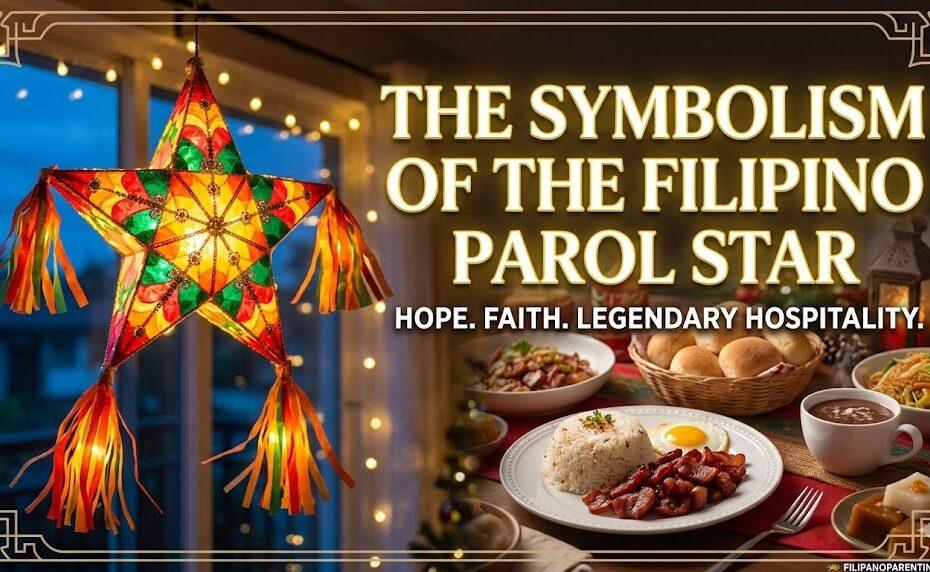
    The parol is a colorful, star-shaped lantern that symbolizes the Star of Bethlehem. It is traditionally made from bamboo strips and colored Japanese paper or cellophane paper. The parol is the most popular Christmas decoration in the Philippines and adds to the festive atmosphere.

    Caroling

    Filipinos love singing during the Christmas season. Equipped with homemade musical instruments, people of all ages take to the streets to sing Christmas carols. This tradition involves visiting homes and singing in exchange for small gifts or tokens.

    Role of Ninong and Ninang

    The godparents (Ninong and Ninang) play a vital role in Filipino Christmas traditions. They present their godchildren (inaanak) with gifts, known as Aguinaldo, which symbolize affection and care. This tradition reinforces the bond between godparents and godchildren.

    Family Reunions and Respect

    Christmas Day is primarily a family affair. Filipinos visit their extended family to pay their respects to senior relatives through a custom known as págmamáno. This involves children and younger family members seeking the blessing of their elders by taking their hands and bringing them to their foreheads as a sign of respect.

    New Year’s Eve and Epiphany

    The celebrations continue beyond Christmas Day. On New Year’s Eve (Bisperas ng Bagong Taón), Filipino families gather for another feast known as Media Noche. The Christmas season culminates on the first Sunday in January with the Epiphany or the Feast of the Three Kings.

    12 Essential Tagalog Phrases to Know for a Merry Filipino Christmas

    The Spirit of Christmas in the Philippines

    Christmas Day is the most exciting holiday in the Philippines, and we meticulously plan and organize everything to make it special. Our hospitality ensures that everyone feels welcome and included in the festivities. The spirit of Christmas in the Philippines can be felt as early as September, marking the beginning of the longest Christmas celebration in the world.

    Conclusion

    I hope you’ve enjoyed learning about our Christmas traditions and essential Tagalog vocabulary words and phrases. Maligayang Pasko!

    If you found this post informative and engaging, please consider sharing it on your social media platforms. Your shares help spread the joy and traditions of Filipino Christmas celebrations.

    For more insights into Filipino culture and traditions, follow our blog for regular updates.

  • Tagalog Love Quotes: Sweet Filipino Phrases for Your Special Someone ✅

    Tagalog Love Quotes: Sweet Filipino Phrases for Your Special Someone ✅

    Express Your Love with These Sweet Tagalog Phrases

    body {
    font-family: Arial, sans-serif;
    line-height: 1.6;
    color: #333;
    max-width: 800px;
    margin: 0 auto;
    padding: 20px;
    background-color: #f5f5f5;
    }
    h1, h2, h3 {
    color: #2c3e50;
    }
    h1 {
    font-size: 2.5em;
    border-bottom: 2px solid #3498db;
    padding-bottom: 10px;
    }
    h2 {
    font-size: 1.8em;
    margin-top: 30px;
    }
    h3 {
    font-size: 1.3em;
    margin-bottom: 5px;
    }
    p, ul {
    margin-bottom: 20px;
    }
    img {
    max-width: 100%;
    height: auto;
    border-radius: 8px;
    box-shadow: 0 4px 8px rgba(0,0,0,0.1);
    }
    .separator {
    margin: 30px 0;
    }
    ul {
    list-style-type: none;
    padding-left: 0;
    }
    li {
    margin-bottom: 15px;
    background-color: #fff;
    padding: 15px;
    border-radius: 8px;
    box-shadow: 0 2px 4px rgba(0,0,0,0.05);
    }
    .conclusion {
    background-color: #e8f4f8;
    padding: 20px;
    border-radius: 8px;
    margin-top: 30px;
    }
    @media (max-width: 600px) {
    body {
    padding: 10px;
    }
    }

    Express Your Love with These Sweet Tagalog Phrases

    Are you looking for ways to express your love and affection to your special someone in Tagalog? Look no further! In this post, we’ll share some sweet Tagalog love quotes and Filipino phrases to help you tell your loved one how much they mean to you.

    Tagalog Love Quotes: Sweet Filipino Phrases for Your Special Someone

    Thank You Word List in Tagalog

    Before we dive into the love quotes, let’s start with some basic thank you phrases in Tagalog. After all, gratitude is an essential part of any relationship.

    • Salamat

      SA-LA-MAT (Thank you.)

    • Maraming salamat

      MA-RA-MING-SA-LA-MAT (Thank you very much.)

    • Nagpapasalamat ako sa iyo

      NAG-PA-PA-SA-LA-MAT-A-KO-SA-I-YO (I am thankful to you.)

    Tagalog Love Quotes: Sweet Filipino Phrases for Your Special Someone

    Romantic Phrases in Tagalog

    Now, let’s move on to some romantic phrases in Tagalog to help you express your love and affection.

    • Mahal kita

      MA-HAL-KI-TA (I love you.)

    • Ikaw ang buhay ko

      I-KAW-ANG-BU-HAY-KO (You are my life.)

    • Walang iba kundi ikaw

      WA-LANG-I-BA-KUN-DI-I-KAW (No one else but you.)

    • Mahal na mahal kita

      MA-HAL-NA-MA-HAL-KI-TA (I love you very much.)

    • Ikaw ang aking magpakailanman

      I-KAW-ANG-A-KING-MAG-PA-KAI-LAN-MAN (You are my forever.)

    Tagalog Love Quotes: Sweet Filipino Phrases for Your Special Someone

    Tagalog Love Quotes

    Filipinos are romantic and loving people. Read some of the best Pinoy Love Quotes that you can share with your loved ones, family, and friends. Here are some sweet Tagalog love quotes to inspire you:

    • Ang pag-ibig ko sa iyo ay walang hanggan

      ANG-PAG-I-BIG-KO-SA-I-YO-AY-WA-LANG-HANG-GAN (My love for you is endless.)

    • Ikaw ang aking pag-asa

      I-KAW-ANG-A-KING-PAG-A-SA (You are my hope.)

    • Mahal kita ngayon at habambuhay

      MA-HAL-KI-TA-NGA-YON-AT-HA-BAM-BU-HAY (I love you now and forever.)

    • Ikaw ang aking lahat

      I-KAW-ANG-A-KING-LA-HAT (You are my everything.)

    • Ang pag-ibig ko sa iyo ay tunay

      ANG-PAG-IBIG-KO-SA-I-YO-AY-TU-NAY (My love for you is true.)

    Tagalog Love Quotes: Sweet Filipino Phrases for Your Special Someone

    Using Tagalog Love Quotes in Your Relationship

    Expressing your love and affection through words can strengthen your relationship and make it more special. Here are some ways to use these Tagalog love quotes in your relationship:

    • Write them in a love letter or text message.
    • Say them during a romantic dinner date.
    • Use them as captions for your couple photos on social media.

    Conclusion

    Love is a beautiful thing, and expressing it through words can make it even more special. We hope these Filipino love quotes and phrases help you tell your special someone how much they mean to you. Remember, gratitude and affection are essential in any relationship, so don’t hesitate to express your feelings. Share these beautiful Tagalog phrases with your loved ones and spread the love!

  • Tagalog Vocabulary: List of Words Starting with Letter A✅

    Tagalog Vocabulary: List of Words Starting with Letter A✅

    Mastering Tagalog Vocabulary: A Comprehensive Guide to Words Starting with Letter A

    body {
    font-family: Arial, sans-serif;
    margin: 0;
    padding: 0;
    background-color: #f4f4f4;
    color: #333;
    line-height: 1.6;
    }
    .container {
    max-width: 800px;
    margin: auto;
    padding: 20px;
    background-color: #fff;
    box-shadow: 0 2px 4px rgba(0,0,0,0.1);
    border-radius: 10px;
    }
    .container h1 {
    color: #007bff;
    text-align: center; /* Center the title */
    }
    .container h2, .container h3 {
    color: #6c757d;
    }
    .container ul {
    list-style: none;
    padding: 0;
    margin: 0;
    }
    .container li {
    margin-bottom: 10px;
    }
    .container img {
    width: 100%;
    height: auto;
    margin: 10px 0;
    border-radius: 10px;
    }
    .container a {
    text-decoration: none;
    color: #007bff;
    }
    .container a:hover {
    color: #0056b3;
    }
    table {
    width: 100%;
    border-collapse: collapse;
    margin-bottom: 20px;
    table-layout: fixed; /* Fix table layout */
    }
    th, td {
    border: 1px solid #ddd;
    padding: 8px;
    text-align: left;
    word-break: break-word; /* Allow words to break within cells */
    }
    th {
    background-color: #f4f4f4;
    }
    tr:nth-child(even) {
    background-color: #f9f9f9;
    }
    tr:hover {
    background-color: #f2f2f2;
    }
    @media (max-width: 768px) {
    .container {
    margin: 20px;
    }
    table {
    font-size: 12px; /* Reduce font size on mobile */
    }
    th, td {
    overflow-wrap: break-word; /* Allow words to break within cells on mobile */
    }
    }
    .tips {
    background-color: #f9f9f9;
    padding: 20px;
    border-radius: 10px;
    margin-bottom: 20px;
    }
    .tips h2 {
    margin-top: 0;
    }
    .conclusion {
    background-color: #f9f9f9;
    padding: 20px;
    border-radius: 10px;
    margin-bottom: 20px;
    }
    .conclusion h2 {
    margin-top: 0;
    }
    article p {
    text-align: justify;
    }
    .table-responsive {
    overflow-x: auto; /* Enable horizontal scrolling for table */
    }
    /* Social Sharing Styles */
    .social-share {
    margin-top: 20px;
    text-align: center;
    }
    .social-share a {
    display: inline-block;
    margin: 0 5px;
    }
    .social-share img {
    width: 30px;
    height: 30px;
    }

    Mastering Tagalog Vocabulary: A Comprehensive Guide to Words Starting with Letter A

    Are you eager to learn the beautiful Tagalog language? Starting with the basics is crucial, and today we’ll delve into the fascinating world of Tagalog vocabulary words beginning with the letter A. From common words like Ahas (Snake) to more nuanced terms, this guide will help you understand and use these words in context.

    Tagalog Words Starting with the Letter A

    Letter A Vocabulary Words

    In Tagalog, Letter A is called Letra A. Here are some vocabulary words related to Letter A along with their meanings and example phrases.

    Animals and Objects

    • Ahas 👴 (Snake)
    • Agila 🦅 (Eagle)
    • Aso 🐶 (Dog)
    • Asul 🔵 (Blue)
    • Abo ⚫️ (Ash or Color Gray)
    • Araw ☀️ (Sun)
    • Apoy 🔥 (Fire)

    Numbers and Food

    • Apat 📊 (Four)
    • Anim 📊 (Six)
    • Anak 👧 (Child)
    • Abokado 🥑 (Avocado)
    • Ampalaya 🥒 (Bitter Gourd)
    • Atis 🍉 (Sugar Apple)

    General & Everyday Words

    • Aba 👴 (Poor, humble, subservient)
    • Aam 🍲 (Broth made from boiled rice)
    • Aanga-anga 🤯 (Remaining agape for some time)
    • Aapa-apa 🤔 (Groping around)

    People and Relationships

    • Abang 👀 (Watcher)
    • Abay 👫 (Best man at a wedding, maid of honour)
    • Abay na babae 👰 (Bridesmaid)
    • Abay na lalaki 👨 (Best man)

    Actions and Verbs

    • Abahin 📣 (Notify, pay attention to, take care of)
    • Abala 🤯 (Occupied, busy, engaged)
    • Abalang-abala 🤯 (Occupied, busy)
    • Abanderado 🏴 (Flag-bearer, standard-bearer)

    Example Phrases

    • Ang ahas na kobra ay makamandag. (A cobra snake is poisonous.)
    • Ang agila ay may matalas na mga kuko. (An eagle has sharp talons)
    • Ang aso ay tumatahol. (The dog is barking.)
    • Ang karagatan ay kulay asul. (The ocean is colored blue.)
    • Ang kanyang kamiseta at kulay abo. (His shirt is colored gray.)
    • Ang araw ay sumikat na. (The sun has already risen.)
    • Ang apoy ay nagbibigay ng init. (The fire is giving off heat.)

    Tips for Learning Tagalog Vocabulary

    To enhance your learning experience, here are some tips:

    • Practice Regularly: Practice speaking and listening to Tagalog as much as possible.
    • Use Flashcards: Create flashcards to help you memorize new words.
    • Watch Tagalog Media: Watch Tagalog movies, TV shows, and listen to Tagalog music to get used to the sounds and rhythms of the language.
    • Read Tagalog Texts: Read books, articles, and news in Tagalog to improve your reading comprehension.

    Conclusion

    Maraming salamat (Thank you very much) for reading this post on Tagalog vocabulary words starting with the letter A. If you have any questions or need further clarification on any of the words, please don’t hesitate to ask.

    Paalam (Goodbye) for now, and I’ll see you in the next post.

    If you want to learn more about the Tagalog language, you can check out our other posts on Tagalog vocabulary, grammar, and phrases.

  • Tagalog Toolbox: Learn Essential Tool Names in Filipino ✅

    Tagalog Toolbox: Learn Essential Tool Names in Filipino ✅

    /* Color Scheme */
    body {
    background-color: #f7f7f7;
    font-family: Verdana, sans-serif;
    color: #333;
    }

    /* Headings */
    h1, h2, h3, h4 {
    color: #1b90bb;
    margin-bottom: 10px;
    }

    /* Table Styles */
    table {
    border: 1px solid #000000;
    border-collapse: collapse;
    margin: 20px auto;
    padding: 0;
    width: 100%;
    max-width: 800px;
    box-sizing: border-box;
    table-layout: auto;
    }

    table th {
    text-align: center;
    padding: 12px 8px;
    border: 1px solid #000000;
    background: #1b90bb;
    color: #FFFFFF;
    font-weight: bold;
    }

    table td {
    padding: 10px 8px;
    border: 1px solid #000000;
    white-space: normal;
    word-wrap: break-word;
    }

    table tr {
    background-color: #f2f2f2;
    color: #000000;
    }

    table tr:nth-child(even) {
    background-color: #ffffff;
    }

    table tr:hover {
    background-color: #e6e6e6;
    }

    /* Mobile Styles */
    @media screen and (max-width: 600px) {
    table {
    font-size: 14px;
    }

    table td, table th {
    padding: 8px 4px;
    }
    }

    /* Image Styles */
    img {
    border: none;
    margin: 20px auto;
    max-width: 100%;
    height: auto;
    display: block;
    }

    /* Tips and Conclusion Styles */
    .tips, .conclusion {
    background-color: #f2f2f2;
    padding: 20px;
    border: 1px solid #ddd;
    margin: 20px 0;
    border-radius: 8px;
    box-shadow: 0 2px 4px rgba(0,0,0,0.1);
    }

    /* Justified text */
    .justify-text {
    text-align: justify;
    }

    Tools Word List in Tagalog: Essential Vocabulary for DIY Enthusiasts

    Various tools used in carpentry and construction, labeled in Tagalog

    Understanding Tools in Tagalog

    In Tagalog, the general term for tools is “Mga Gamit sa Pagkukumpuni.” Learning these terms can greatly enhance your ability to communicate about DIY projects or home improvements in the Philippines.

    Basic Tools (Mga Pangunahing Kasangkapan)

    English Tagalog
    Wire Cutter Pamutol ng Kable
    Pliers Plays
    Screw Tornilyo
    Drill Barena
    Nail Pako

    Hand Tools (Mga Kasangkapang Kamay)

    English Tagalog
    Shovel Pala
    Wrench Liyabe
    Screwdriver Distornilyador
    Hammer Martilyo
    Rake Kalaykay
    Tape Measure Metrong Panukat

    Woodworking Tools (Mga Kasangkapan sa Pagkakarpintero)

    English Tagalog
    Axe Palakol
    Saw Lagari
    Chisel Pait
    Clamp Kasingay
    Plane Katam

    Measuring and Safety Tools (Mga Kasangkapan sa Pagsukat at Kaligtasan)

    English Tagalog
    Safety Glasses Salaming Pangkaligtasan
    Scissors Gunting
    Knife Kutsilyo
    Ladder Akyatan

    Common Tool Phrases in Tagalog

    English Tagalog
    Use a hammer to drive a nail. Gamitin ang martilyo sa pagpukpok ng pako.
    A saw is used to cut wood. Ang lagari ay gamit sa pagputol ng kahoy.
    The chisel is for carving wood. Ang pait ay para sa paglilok ng kahoy.
    Wear safety glasses for eye protection. Magsuot ng salaming pangkaligtasan para sa proteksyon ng mata.

    Tips for Learning Tool Names in Tagalog

    • Practice using these words in context when discussing home improvement projects.
    • Create flashcards with the English and Tagalog names of tools.
    • Try to use Tagalog names when shopping for tools in the Philippines.
    • Watch Filipino DIY or home improvement videos to hear these terms in use.

    Conclusion

    Learning Tagalog names for common tools is invaluable for anyone planning to work on projects or communicate with local craftsmen in the Philippines. While it may take time to memorize all these terms, consistent practice and usage will help you become more comfortable with them. This vocabulary not only aids in practical situations but also deepens your understanding of Filipino culture and craftsmanship.

    // Make sure images are not clickable
    document.querySelectorAll(‘img’).forEach(function(img) {
    img.style.pointerEvents = ‘none’;
    });

  • Tagalog Toolbox: Learn Essential Tool Names in Filipino ✅

    Tagalog Toolbox: Learn Essential Tool Names in Filipino ✅

    /* Color Scheme */
    body {
    background-color: #f7f7f7;
    font-family: Verdana, sans-serif;
    color: #333;
    }

    /* Headings */
    h1, h2, h3, h4 {
    color: #1b90bb;
    margin-bottom: 10px;
    }

    /* Table Styles */
    table {
    border: 1px solid #000000;
    border-collapse: collapse;
    margin: 20px auto;
    padding: 0;
    width: 100%;
    max-width: 800px;
    box-sizing: border-box;
    table-layout: auto;
    }

    table th {
    text-align: center;
    padding: 12px 8px;
    border: 1px solid #000000;
    background: #1b90bb;
    color: #FFFFFF;
    font-weight: bold;
    }

    table td {
    padding: 10px 8px;
    border: 1px solid #000000;
    white-space: normal;
    word-wrap: break-word;
    }

    table tr {
    background-color: #f2f2f2;
    color: #000000;
    }

    table tr:nth-child(even) {
    background-color: #ffffff;
    }

    table tr:hover {
    background-color: #e6e6e6;
    }

    /* Mobile Styles */
    @media screen and (max-width: 600px) {
    table {
    font-size: 14px;
    }

    table td, table th {
    padding: 8px 4px;
    }
    }

    /* Image Styles */
    img {
    border: none;
    margin: 20px auto;
    max-width: 100%;
    height: auto;
    display: block;
    }

    /* Tips and Conclusion Styles */
    .tips, .conclusion {
    background-color: #f2f2f2;
    padding: 20px;
    border: 1px solid #ddd;
    margin: 20px 0;
    border-radius: 8px;
    box-shadow: 0 2px 4px rgba(0,0,0,0.1);
    }

    /* Justified text */
    .justify-text {
    text-align: justify;
    }

    Tools Word List in Tagalog: Essential Vocabulary for DIY Enthusiasts

    Various tools used in carpentry and construction, labeled in Tagalog

    Understanding Tools in Tagalog

    In Tagalog, the general term for tools is “Mga Gamit sa Pagkukumpuni.” Learning these terms can greatly enhance your ability to communicate about DIY projects or home improvements in the Philippines.

    Basic Tools (Mga Pangunahing Kasangkapan)

    English Tagalog
    Wire Cutter Pamutol ng Kable
    Pliers Plays
    Screw Tornilyo
    Drill Barena
    Nail Pako

    Hand Tools (Mga Kasangkapang Kamay)

    English Tagalog
    Shovel Pala
    Wrench Liyabe
    Screwdriver Distornilyador
    Hammer Martilyo
    Rake Kalaykay
    Tape Measure Metrong Panukat

    Woodworking Tools (Mga Kasangkapan sa Pagkakarpintero)

    English Tagalog
    Axe Palakol
    Saw Lagari
    Chisel Pait
    Clamp Kasingay
    Plane Katam

    Measuring and Safety Tools (Mga Kasangkapan sa Pagsukat at Kaligtasan)

    English Tagalog
    Safety Glasses Salaming Pangkaligtasan
    Scissors Gunting
    Knife Kutsilyo
    Ladder Akyatan

    Common Tool Phrases in Tagalog

    English Tagalog
    Use a hammer to drive a nail. Gamitin ang martilyo sa pagpukpok ng pako.
    A saw is used to cut wood. Ang lagari ay gamit sa pagputol ng kahoy.
    The chisel is for carving wood. Ang pait ay para sa paglilok ng kahoy.
    Wear safety glasses for eye protection. Magsuot ng salaming pangkaligtasan para sa proteksyon ng mata.

    Tips for Learning Tool Names in Tagalog

    • Practice using these words in context when discussing home improvement projects.
    • Create flashcards with the English and Tagalog names of tools.
    • Try to use Tagalog names when shopping for tools in the Philippines.
    • Watch Filipino DIY or home improvement videos to hear these terms in use.

    Conclusion

    Learning Tagalog names for common tools is invaluable for anyone planning to work on projects or communicate with local craftsmen in the Philippines. While it may take time to memorize all these terms, consistent practice and usage will help you become more comfortable with them. This vocabulary not only aids in practical situations but also deepens your understanding of Filipino culture and craftsmanship.

    // Make sure images are not clickable
    document.querySelectorAll(‘img’).forEach(function(img) {
    img.style.pointerEvents = ‘none’;
    });

  • Tagalog Toolbox: Learn Essential Tool Names in Filipino ✅

    Tagalog Toolbox: Learn Essential Tool Names in Filipino ✅

    /* Color Scheme */
    body {
    background-color: #f7f7f7;
    font-family: Verdana, sans-serif;
    color: #333;
    }

    /* Headings */
    h1, h2, h3, h4 {
    color: #1b90bb;
    margin-bottom: 10px;
    }

    /* Table Styles */
    table {
    border: 1px solid #000000;
    border-collapse: collapse;
    margin: 20px auto;
    padding: 0;
    width: 100%;
    max-width: 800px;
    box-sizing: border-box;
    table-layout: auto;
    }

    table th {
    text-align: center;
    padding: 12px 8px;
    border: 1px solid #000000;
    background: #1b90bb;
    color: #FFFFFF;
    font-weight: bold;
    }

    table td {
    padding: 10px 8px;
    border: 1px solid #000000;
    white-space: normal;
    word-wrap: break-word;
    }

    table tr {
    background-color: #f2f2f2;
    color: #000000;
    }

    table tr:nth-child(even) {
    background-color: #ffffff;
    }

    table tr:hover {
    background-color: #e6e6e6;
    }

    /* Mobile Styles */
    @media screen and (max-width: 600px) {
    table {
    font-size: 14px;
    }

    table td, table th {
    padding: 8px 4px;
    }
    }

    /* Image Styles */
    img {
    border: none;
    margin: 20px auto;
    max-width: 100%;
    height: auto;
    display: block;
    }

    /* Tips and Conclusion Styles */
    .tips, .conclusion {
    background-color: #f2f2f2;
    padding: 20px;
    border: 1px solid #ddd;
    margin: 20px 0;
    border-radius: 8px;
    box-shadow: 0 2px 4px rgba(0,0,0,0.1);
    }

    /* Justified text */
    .justify-text {
    text-align: justify;
    }

    Tools Word List in Tagalog: Essential Vocabulary for DIY Enthusiasts

    Various tools used in carpentry and construction, labeled in Tagalog

    Understanding Tools in Tagalog

    In Tagalog, the general term for tools is “Mga Gamit sa Pagkukumpuni.” Learning these terms can greatly enhance your ability to communicate about DIY projects or home improvements in the Philippines.

    Basic Tools (Mga Pangunahing Kasangkapan)

    English Tagalog
    Wire Cutter Pamutol ng Kable
    Pliers Plays
    Screw Tornilyo
    Drill Barena
    Nail Pako

    Hand Tools (Mga Kasangkapang Kamay)

    English Tagalog
    Shovel Pala
    Wrench Liyabe
    Screwdriver Distornilyador
    Hammer Martilyo
    Rake Kalaykay
    Tape Measure Metrong Panukat

    Woodworking Tools (Mga Kasangkapan sa Pagkakarpintero)

    English Tagalog
    Axe Palakol
    Saw Lagari
    Chisel Pait
    Clamp Kasingay
    Plane Katam

    Measuring and Safety Tools (Mga Kasangkapan sa Pagsukat at Kaligtasan)

    English Tagalog
    Safety Glasses Salaming Pangkaligtasan
    Scissors Gunting
    Knife Kutsilyo
    Ladder Akyatan

    Common Tool Phrases in Tagalog

    English Tagalog
    Use a hammer to drive a nail. Gamitin ang martilyo sa pagpukpok ng pako.
    A saw is used to cut wood. Ang lagari ay gamit sa pagputol ng kahoy.
    The chisel is for carving wood. Ang pait ay para sa paglilok ng kahoy.
    Wear safety glasses for eye protection. Magsuot ng salaming pangkaligtasan para sa proteksyon ng mata.

    Tips for Learning Tool Names in Tagalog

    • Practice using these words in context when discussing home improvement projects.
    • Create flashcards with the English and Tagalog names of tools.
    • Try to use Tagalog names when shopping for tools in the Philippines.
    • Watch Filipino DIY or home improvement videos to hear these terms in use.

    Conclusion

    Learning Tagalog names for common tools is invaluable for anyone planning to work on projects or communicate with local craftsmen in the Philippines. While it may take time to memorize all these terms, consistent practice and usage will help you become more comfortable with them. This vocabulary not only aids in practical situations but also deepens your understanding of Filipino culture and craftsmanship.

    // Make sure images are not clickable
    document.querySelectorAll(‘img’).forEach(function(img) {
    img.style.pointerEvents = ‘none’;
    });