Tagalog days of the week worksheets are a vital resource for anyone looking to build a strong foundation in the Filipino language. Mastering the names of the days is a major milestone for any language learner. On my mission to provide high-quality resources for the Filipino-American community and heritage learners, I’ve put together this collection of resources for our mga araw ng linggo.
These help beginners, parents, and the younger generation build confidence in spelling and sequencing. Understanding these names is essential for daily life and connecting with Filipino culture. Using these Tagalog days of the week worksheets ensures that the spelling of words like Huwebes and Miyerkules becomes second nature.
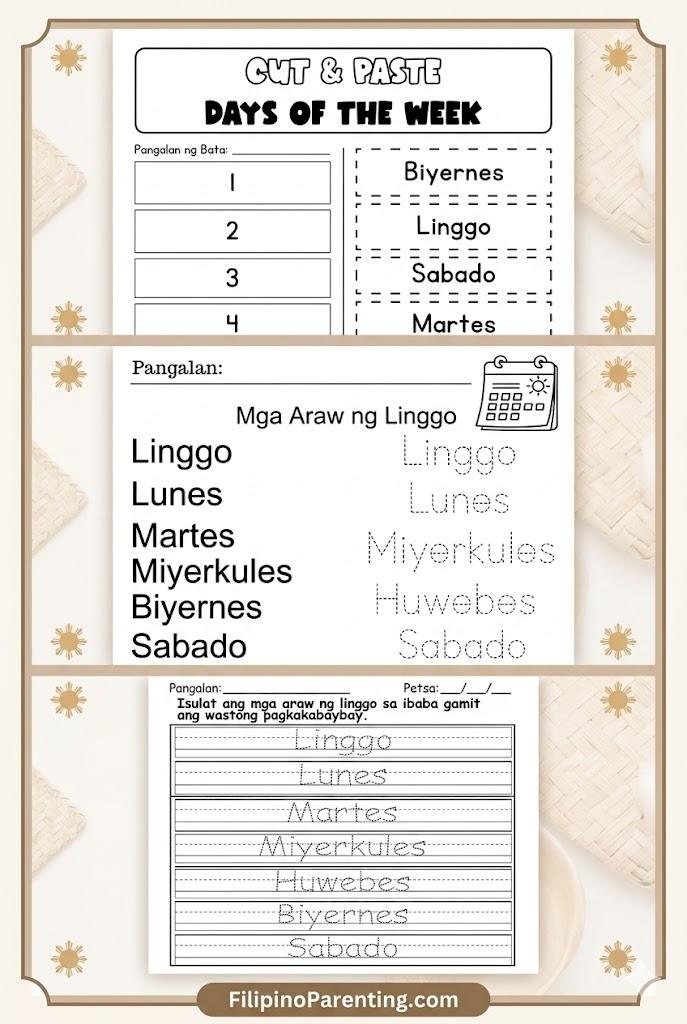
Table of Contents
What’s Included in This Resource Bundle?
We focus on three main areas of learning: Recognition, Spelling, and Sequencing. By moving through these levels, learners can internalize the Spanish-influenced names while perfecting their Tagalog orthography. Using these materials alongside your Tagalog morning routine makes the language feel like a natural part of your day.
In Filipino culture, time is often shared and celebrated. Whether you are planning a weekend gathering or a simple family dinner, knowing your schedule in the local tongue creates a deeper sense of belonging.
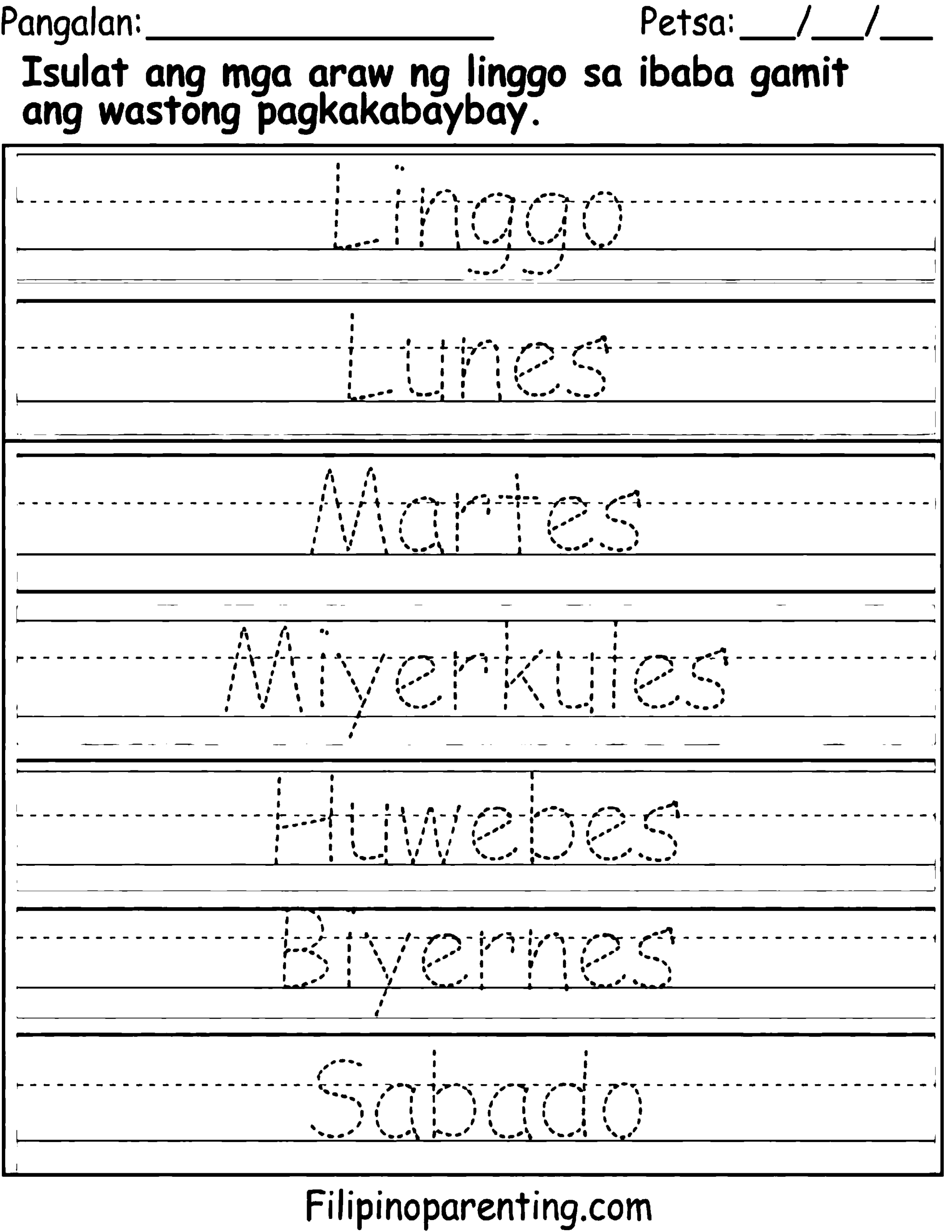
1. Tagalog Handwriting & Tracing Practice
For many, the hardest part of learning is getting the spelling right. Our tracing guides help learners get comfortable with the visual look of the words. These Tagalog days of the week worksheets provide the repetition needed for long-term retention.
- Focus: Fine motor skills and letter recognition.
- Pro-Tip: As you trace, say the word out loud using our pronunciation guide below.
2. Sequencing: Mga Araw ng Linggo Cut & Paste
In the Philippines, the week traditionally centers around Linggo (Sunday)—the day for family, church, and rest. This activity challenges learners to arrange the names in the correct order, starting from the day of worship. This is one of the most interactive Tagalog days of the week worksheets in our collection.
- Focus: Logical order and memory recall.
- Fact: Linggo means both “Sunday” and “Week” in Filipino!

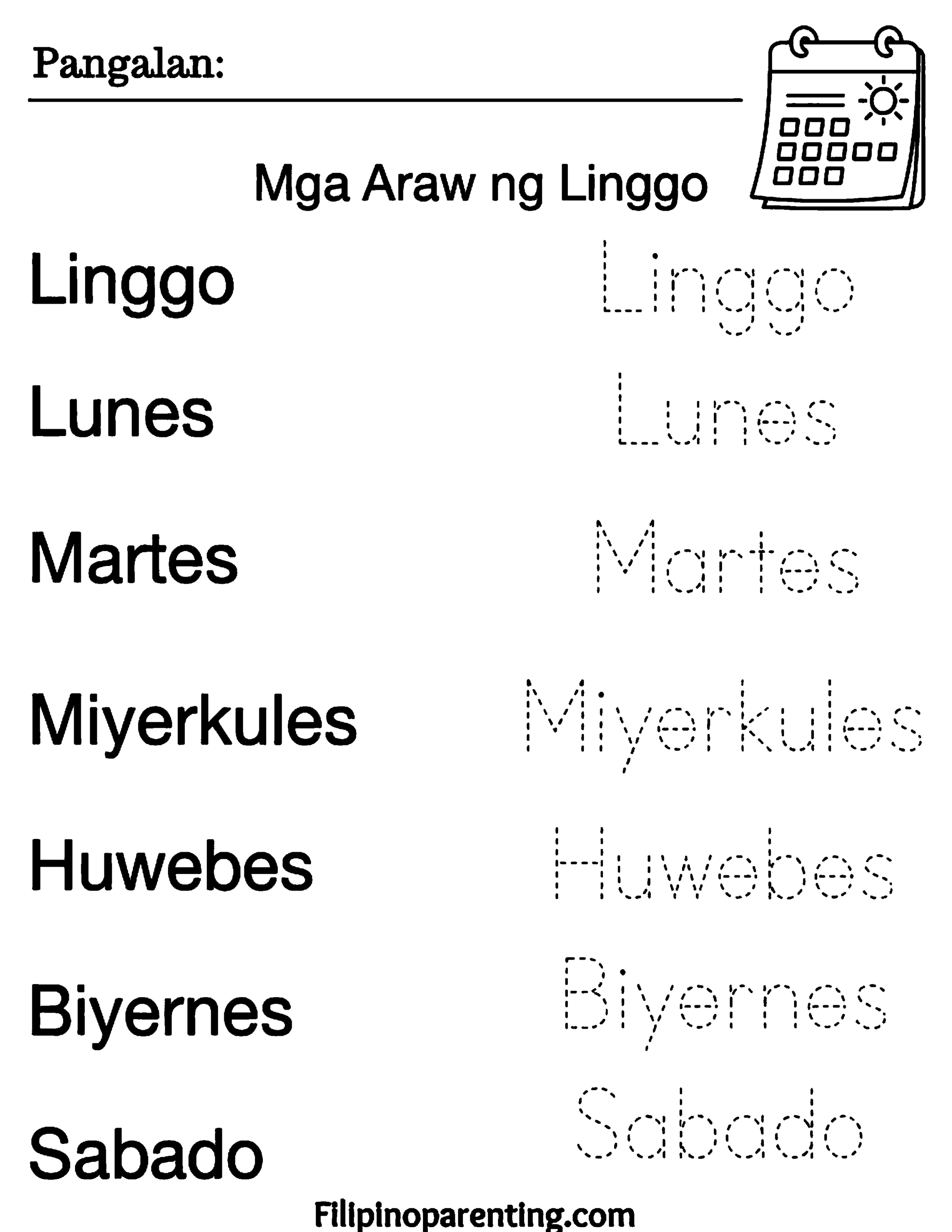
3. Tagalog Spelling & Vocabulary Mastery
Once they’ve mastered the basics, this section moves into independent writing. This is perfect for those who want to write the date in their journals or practice Tagalog words that start with B. This specific worksheet encourages learners to move away from tracing and toward active recall.
- Focus: Independent spelling and retention.
Essential Pronunciation Guide
To truly master the language, you must hear the rhythm of the words. You can find excellent audio examples at Omniglot or Tagalog.com, which are fantastic external resources for any serious learner.
- Linggo (LEENG-goh) — Sunday
- Lunes (LOO-nes) — Monday
- Martes (MAR-tes) — Tuesday
- Miyerkules (mee-YER-koo-les) — Wednesday
- Huwebes (hoo-WEH-bes) — Thursday
- Biyernes (bee-YER-nes) — Friday
- Sabado (SAH-bah-doh) — Saturday
How to Use These Resources
Learning is a journey that requires patience and consistency. To get the most out of these Tagalog days of the week worksheets, consider the following steps:
- Consistency: Try to practice one day at a time.
- Daily Phrases: Don’t just write them! Use them. Start your morning by saying, “Biyernes na!” or check our guide on Tagalog coffee phrases to kickstart your day.
- Step-by-Step: Once they know the days, move on to learning Tagalog numbers 1-10 to help them understand the full calendar.
- Celebrate: Learning is a way to celebrate your Pinoy emotions and cultural roots.
Download Your Free Tagalog Days of the Week Worksheets
- Tagalog Days of the Week Tracing Worksheet
- Tagalog Days of the Week Cut and Paste Activity
- Tagalog Handwriting Practice Sheet
👉 DOWNLOAD: Days of the Week in Tagalog Worksheet Bundle (PDF)]
Frequently Asked Questions
Is it difficult to learn the days of the week in Tagalog?
Because the names are based on Spanish, they are very easy for English speakers to recognize and memorize.
What is the first day of the week in the Philippines?
Culturally, many Filipinos consider Linggo (Sunday) the start of the week because it is the day of family and rest.
Why does Linggo have two meanings?
In Tagalog, Linggo refers to both the specific day of Sunday and the seven-day period of a week.
Do these worksheets help with Filipino culture?
Yes! They use the standard modern spellings used in schools throughout the Philippines today.
Master Your Tagalog Journey: Beyond the Worksheet
Learning the names of the days opens up a world of conversation. It allows you to plan meetings, talk about your favorite day of the week, and share your schedule with loved ones. We hope these Tagalog days of the week worksheets make your learning journey exciting and effective!
If you want to dive deeper into how these words are used in real-life conversations—including common greetings like “Maligayang Lunes!” (Happy Monday!) or planning a “Sabado na, relax na!” (It’s Saturday, time to relax!)—be sure to check out our comprehensive guide on Days of the Week in Tagalog (Mga Araw ng Linggo). Combining our printable worksheets with these practical phrases is the best way to move from simple memorization to confident speaking.
Bringing “Mga Araw ng Linggo” into Your Daily Life
Mastering the Tagalog days of the week is more than just a vocabulary exercise; it is a bridge to the Filipino way of life. In our culture, time is not just a schedule—it is an opportunity for pakikisama (harmonious togetherness) and shared moments with family. By using these Tagalog Days of the Week Worksheets, you are giving the younger generation and beginners the tools they need to navigate their daily rhythms in the language of their heritage.
Whether you are marking a “Linggo” (Sunday) family dinner or a “Biyernes” (Friday) celebration, these small acts of learning keep our vibrant culture alive in your home. These Tagalog Days of the Week Worksheets are designed to make that connection easy, practical, and fun.
Ready to explore more? Pair these calendar skills with our guide on Tagalog Numbers 1-10 to start writing full dates in Filipino!