In a Filipino kitchen, we often cook with our hearts—the famous tantiyahin method—but when it’s time to follow a specific recipe or teach the younger generation how to bake, precision and Filipino cooking conversions matter. I often joke that I’ve used up all the file space in my brain, so I rely on notes, calendars, and printed cheat sheets to remember most things.
This is especially true in the kitchen: whether I’m converting recipes, checking how many teaspoons are in a tablespoon, or figuring out how much avocado to use as a butter substitute, these Filipino cooking conversions are my “secret weapon.”
Whether you’re prepping adobo, baking ube cake, or whipping up a quick pancit, having these Kitchen Cheat Sheets on hand helps you manage Filipino cooking conversions like a pro without breaking a sweat. I always refer to them to toss old food, simplify recipe measurements, and keep the kitchen organized.
Table of Contents
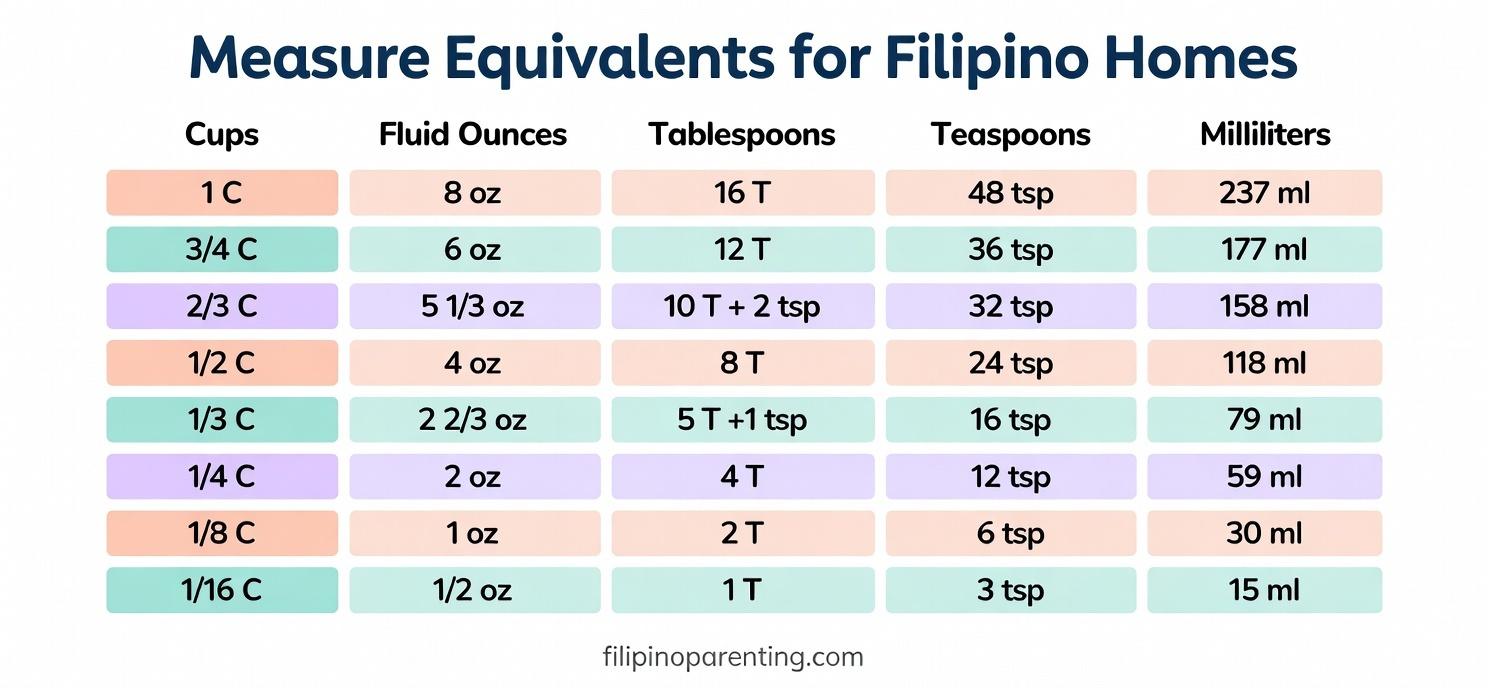
1. Quick Measurement Equivalents for Filipino Cooking Conversions
Stop second-guessing your Filipino cooking conversions mid-recipe. Keep this table handy—it’s perfect for printing or pinning in your kitchen.
| Cup (C) | Fluid Ounces (oz) | Tablespoon (T) | Teaspoon (tsp) | Milliliter (ml) |
|---|---|---|---|---|
| 1 C | 8 oz | 16 T | 48 tsp | 237 ml |
| 3/4 C | 6 oz | 12 T | 36 tsp | 177 ml |
| 2/3 C | 5 1/3 oz | 10 T + 2 tsp | 32 tsp | 158 ml |
| 1/2 C | 4 oz | 8 T | 24 tsp | 118 ml |
| 1/3 C | 2 2/3 oz | 5 T + 1 tsp | 16 tsp | 79 ml |
| 1/4 C | 2 oz | 4 T | 12 tsp | 59 ml |
| 1/8 C | 1 oz | 2 T | 6 tsp | 30 ml |
| 1/16 C | 1/2 oz | 1 T | 3 tsp | 15 ml |
Pro Tip: Keep a small laminated copy in your kitchen for easy reference while teaching Filipino cooking conversions to learners.
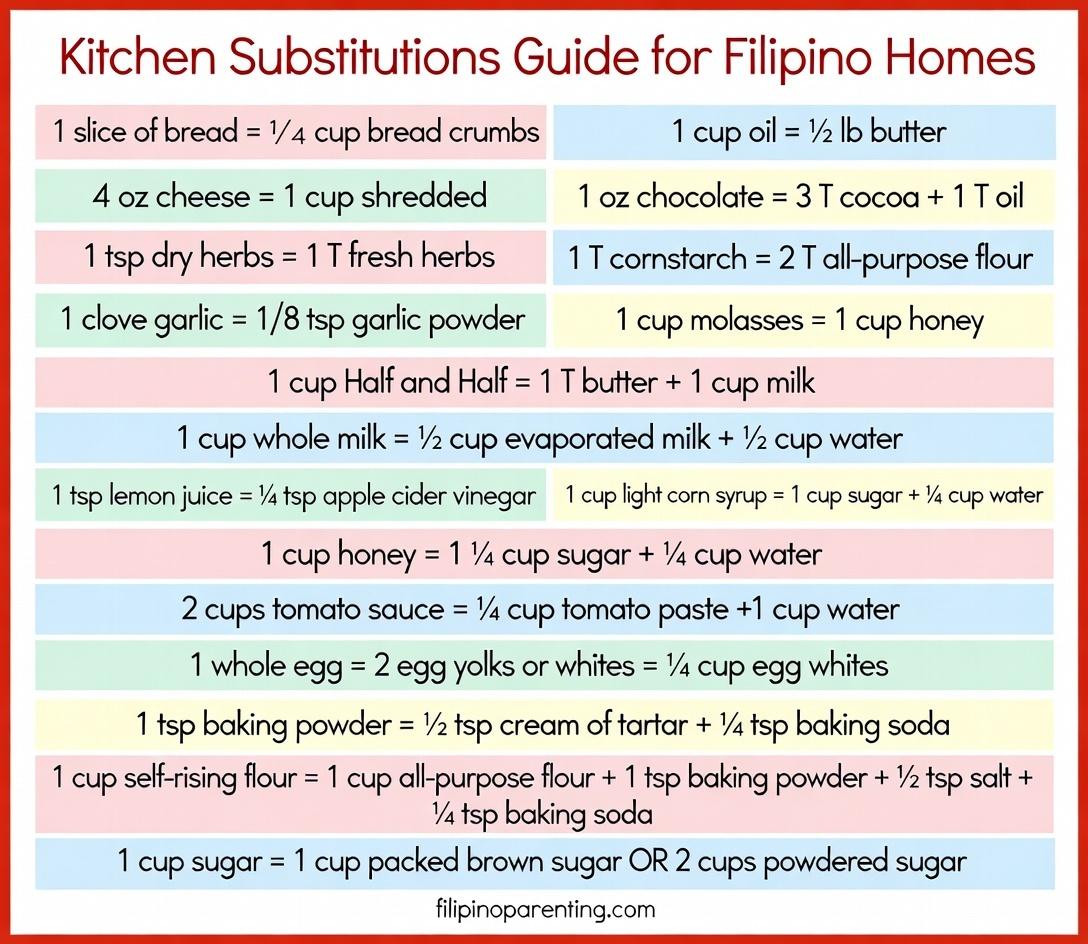
2. The “Emergency” Substitution Guide
Ran out of an ingredient? Don’t panic. These smart swaps save you a trip to the palengke and keep your Filipino cooking conversions on track.
- Garlic Crisis: 1 clove = 1/8 tsp garlic powder
- Herb Ratio: 1 tsp dry herbs = 1 T fresh herbs
- Milk Swap: 1 cup whole milk = 1/2 cup evaporated milk + 1/2 cup water
- Egg Math: 1 whole egg = 2 yolks OR 2 whites OR 1/4 cup egg whites
- Baking Lift: 1 tsp baking powder = 1/2 tsp cream of tartar + 1/4 tsp baking soda
- Sugar Fix: 1 cup sugar = 1 cup packed brown sugar OR 2 cups powdered sugar
- Sauce Secret: 2 cups tomato sauce = 3/4 cup tomato paste + 1 cup water
- Sweetener Swap: 1 cup molasses = 1 cup honey
- Butter/Oil: 1 cup oil = 1/2 lb butter
- Cornstarch: 1 T = 2 T all-purpose flour
Pinay Mom Hack: These swaps are lifesavers for last-minute dishes, helping the younger generation improvise while mastering their Filipino cooking conversions before big fiestas.
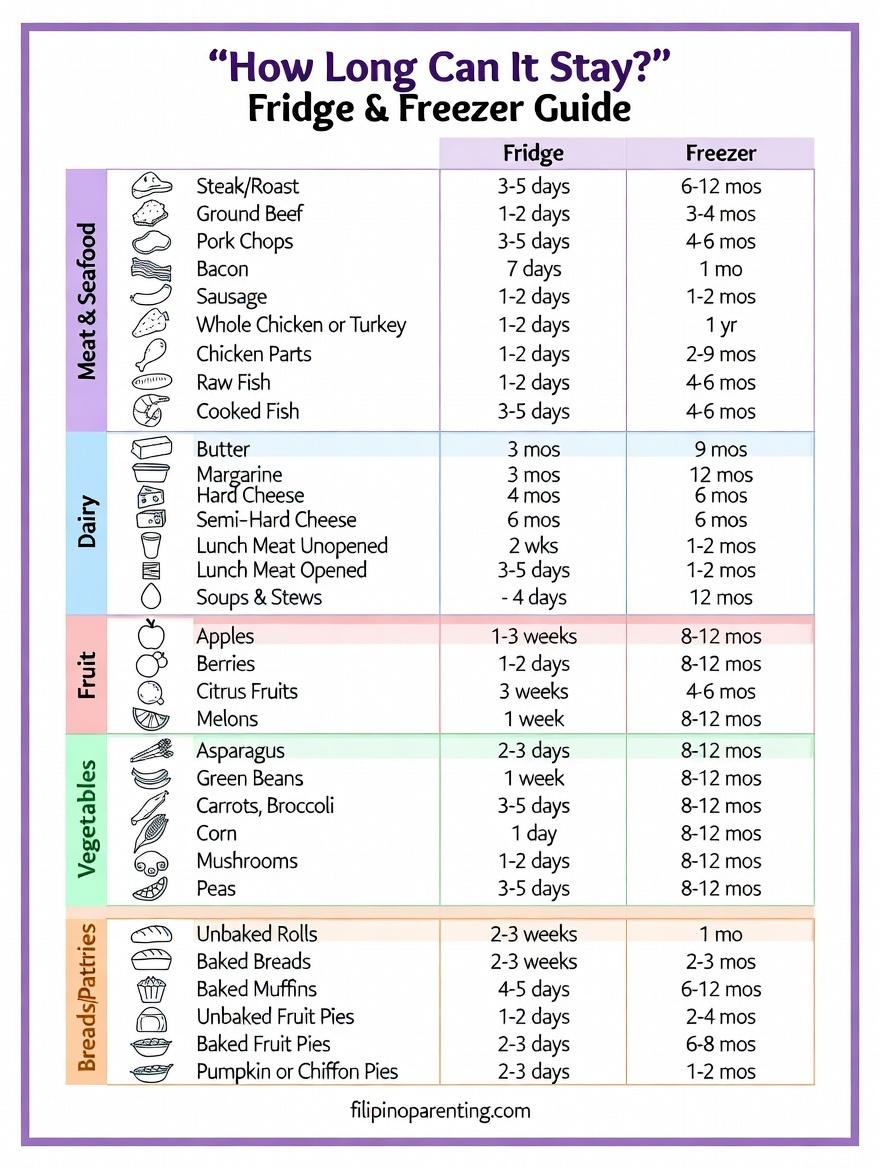
3. Fridge & Freezer Shelf Life Guide
Waste less and keep your family safe. While Filipino cooking conversions help you get the recipe right, proper storage ensures the ingredients are fresh.
Meat & Seafood
- Ground Beef: 1-2 days (Fridge) | 3-4 months (Freezer)
- Pork Chops: 3-5 days (Fridge) | 4-6 months (Freezer)
- Bacon: 7 days (Fridge) | 1 month (Freezer)
- Raw Fish: 1-2 days (Fridge) | 2-3 months (Freezer)
- Chicken (Whole): 1-2 days (Fridge) | 1 year (Freezer)
Vegetables & Fruit
- Carrots & Broccoli: 3-5 days (Fridge) | 8-12 months (Freezer)
- Green Beans: 1 week (Fridge) | 8-12 months (Freezer)
- Apples: 1-3 weeks (Fridge) | 8-12 months (Freezer)
- Citrus Fruits: 3 weeks (Fridge) | 4-6 months (Freezer)
Tip: Label leftovers with dates. Filipino kitchens thrive on organization—it keeps adobo, sinigang, and your frozen liempo safe and delicious.
Final Thoughts on Filipino Cooking Conversions
Cooking in a Filipino kitchen is about love, creativity, and a little ingenuity. With these Filipino cooking conversions and cheat sheets, you’ll:
- Convert measurements with total confidence.
- Make smart ingredient substitutions when the palengke is closed.
- Keep your fridge and freezer organized.
- Teach the younger generation to cook with skill and heart.
These practical Filipino cooking conversions make everyday meals and family gatherings easier. Grab a printed copy, stick it on your fridge, and let your Pinay Mom magic shine!