Filipino backyard gardens are more than just a hobby—they’re a source of fresh, nutritious, and affordable ingredients for everyday meals. From leafy greens to climbing vegetables and vibrant spices, growing your own food brings the flavors of home right to your table. Whether you have a spacious backyard, a small patio, or even just a few containers by the window, Filipino backyard gardens offer endless opportunities to cultivate 10 easy-to-grow Filipino vegetables, perfect for beginners and seasoned gardeners alike.
In this guide, you’ll learn Filipino backyard garden tips for planting, harvesting, and maximizing productivity. We cover everything from fast-growing leafy greens like pechay and talbos ng kamote to climbing crops like sitaw and ampalaya. You’ll also discover insider “pro tips” that ensure your garden thrives while saving time, effort, and money.
Table of Contents
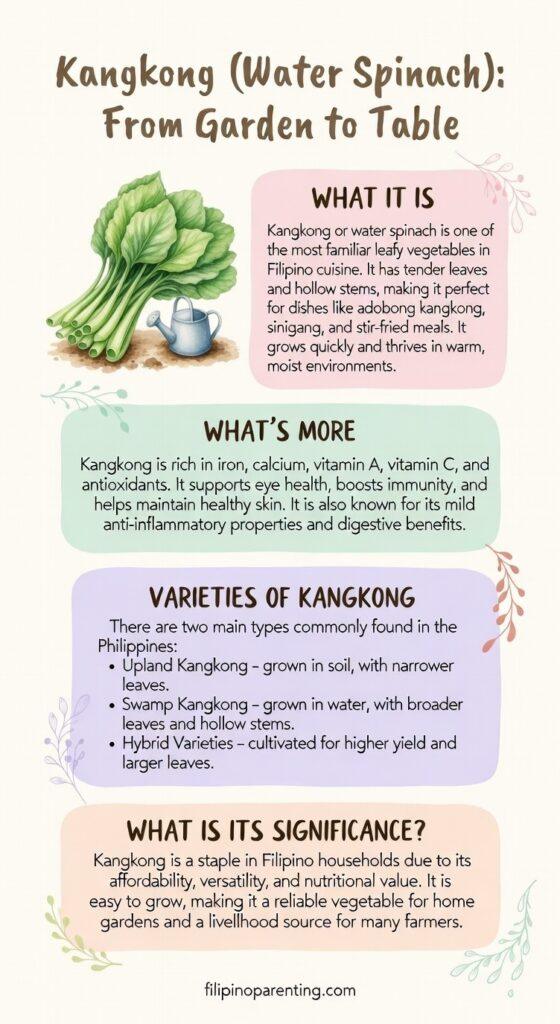
Kangkong (Water Spinach) 🌿 – Filipino Vegetable Gardening
Why It’s Great
Kangkong is a fast-growing, resilient leafy green and a staple in Filipino kitchens. Commonly used in traditional dishes like sinigang and adobong kangkong, it highlights the heart of everyday Filipino cooking. Beyond its culinary importance, kangkong is highly nutritious, beginner-friendly, and perfect for anyone starting their Filipino vegetable gardening journey.
Growing Conditions
Thriving in warm climates, kangkong grows rapidly and tolerates consistently moist or even waterlogged soil. This makes it ideal for Filipino backyard gardens, small patios, urban containers, or self-watering setups. Kangkong can be propagated easily from seeds or store-bought stem cuttings, making it accessible for first-time gardeners.
How to Grow
Start by selecting healthy stems with at least two nodes. Root them in water for a few days before transplanting into moist soil or containers. Kangkong grows exceptionally well in shallow pots, buckets, or raised beds. Place your plant in a sunny location and keep the soil consistently moist for fast, vibrant growth.
Harvesting Tips
Leaves and tender stems can be harvested in just 3–4 weeks after planting. Use the cut-and-come-again method—regularly trimming the outer stems encourages continuous regrowth, providing a steady supply of fresh greens for your Filipino kitchen.
Pro Tip
Kangkong is the ultimate “survival crop” for Filipino backyard gardens. It grows aggressively, recovers quickly from neglect, and can provide fresh, nutritious greens nearly year-round. Ideal for beginners, busy parents, or families teaching children about sustainability, kangkong is a dependable and productive addition to any Filipino vegetable garden.
Learn More
Detailed growing guide and tips: 👉 MomTraNeur – How to Grow Water Spinach (Kangkong) & Kailan
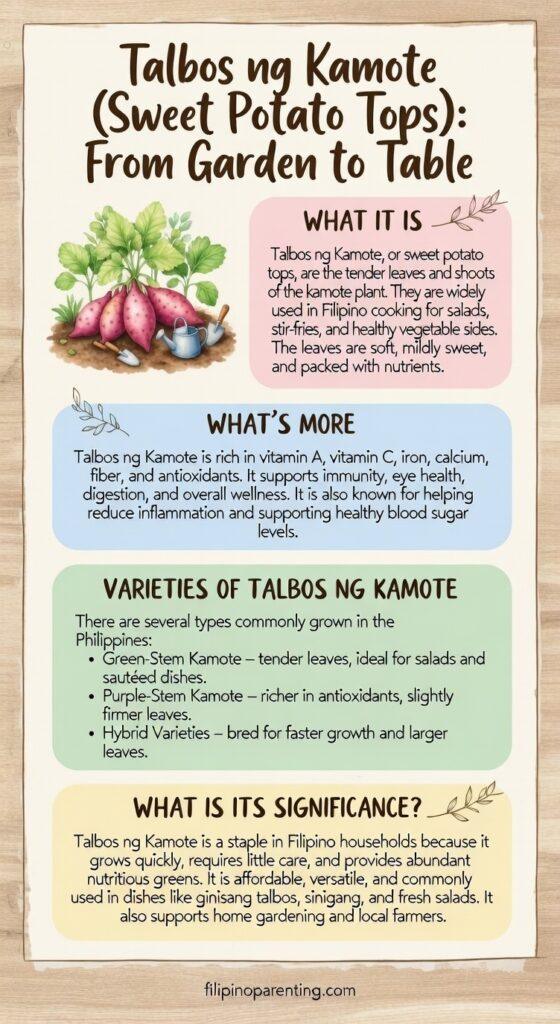
Talbos ng Kamote (Sweet Potato Tops) 🍃 – Filipino Vegetable Gardening
Why It’s Great
Talbos ng kamote are nutrient-rich, fast-growing leafy greens and a staple in Filipino kitchens. Frequently used in dishes like ginisang talbos ng kamote and pinakbet, they bring authentic Filipino flavors straight from your garden to your table. Beyond the leaves, the plant also produces sweet potato tubers, giving gardeners two harvests from a single crop.
These resilient greens grow quickly, spread easily, and can double as a natural ground cover, making them perfect for Filipino backyard gardens, container gardening, or raised beds. Their versatility and reliability are highlighted in traditional Filipino recipes and cooking guides:
👉 Kawaling Pinoy – Ensaladang Talbos ng Kamote
How to Grow
Kick off your Filipino vegetable gardening adventure by planting vine cuttings directly into well-draining soil. Choose healthy, mature cuttings and bury a portion of the vine so the nodes can root efficiently.
Talbos ng kamote thrives in full or partial sunlight and adapts effortlessly to backyards, raised beds, and pots. Once established, it requires minimal care and continues to spread on its own, making it ideal for beginners.
Harvesting Tips
Leaves can be harvested in just 3–4 weeks. Pick mature leaves selectively while leaving enough foliage on the vine to encourage ongoing growth. This ensures a constant supply of fresh, nutritious greens for your Filipino kitchen.
Pro Tip
Talbos ng kamote is a true “survival crop” for Filipino backyard gardens. Even if neglected for a short period, it recovers quickly, making it ideal for busy families, first-time gardeners, or anyone wanting a productive, low-maintenance vegetable garden.
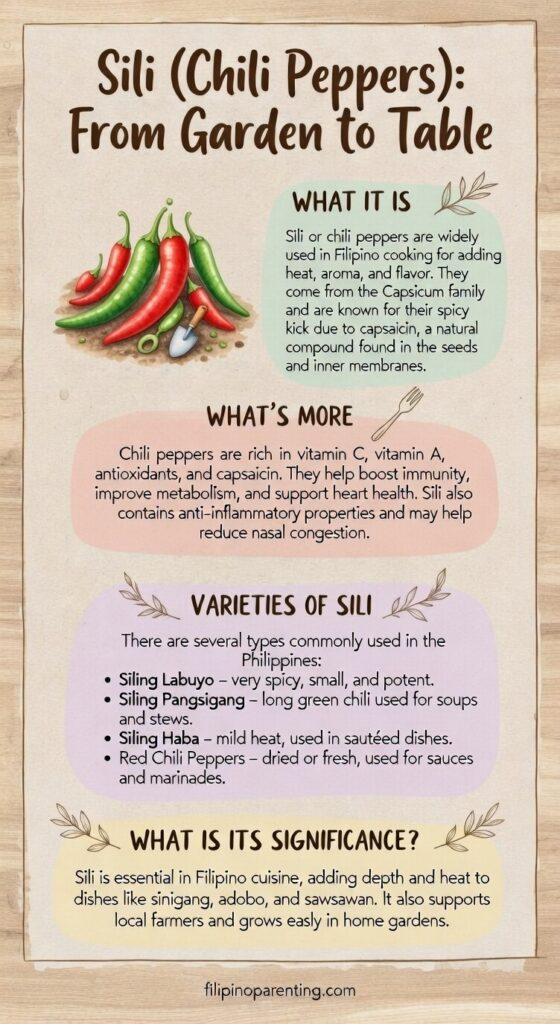
Sili (Chili Peppers) 🌶️ – Filipino Vegetable Gardening
Why It’s Great
Sili are a must-have in Filipino backyard gardens, bringing authentic spice and flavor to classic dishes like Bicol Express, Laing, and Spicy Adobo. Beyond culinary uses, these vibrant peppers are perfect for Filipino vegetable gardening, thriving in pots, balcony containers, or backyard beds. Their colorful fruits also add visual appeal, making your garden both productive and decorative. For inspiration, traditional and modern Filipino uses of sili can be explored in recipes like Chili Garlic Oil:
👉 Panlasang Pinoy – Chili Garlic Oil Recipe
How to Grow
Kickstart your Filipino vegetable gardening by planting seeds from dried or fresh chili fruits in well-drained soil under full sun. Water consistently but avoid waterlogging to prevent root rot. Sili flourish in warm, sunny conditions typical of the Philippines, and for container gardening, pots at least 8–10 inches deep support healthy root development.
Harvesting Tips
Chili fruits are ready to harvest in 60–90 days. Regular picking of ripe chilies encourages more flowers and pods, keeping your Filipino backyard garden productive throughout the growing season.
Pro Tip
Companion planting is highly effective in Filipino vegetable gardening. Pair sili with sun-loving crops like tomatoes or basil in pots or raised beds. This strategy shares nutrients efficiently, helps repel pests naturally, and maximizes overall garden productivity. With proper care, your Filipino vegetable garden can provide a continuous supply of fresh, spicy peppers all year round.
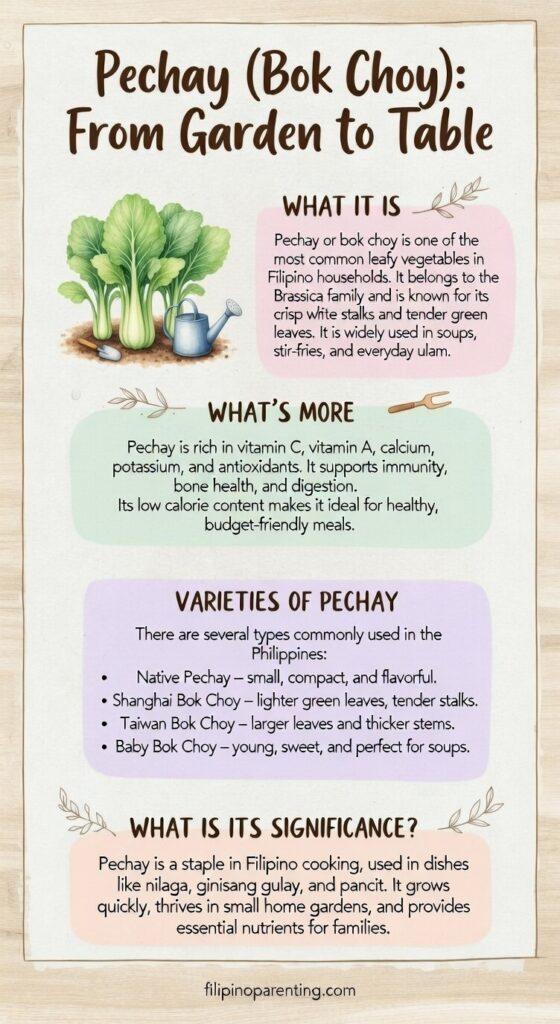
Pechay (Bok Choy) 🥬 – Filipino Vegetable Gardening
Why It’s Great
Pechay is a fast-growing, beginner-friendly leafy green that’s a staple in Filipino backyard gardens and kitchens. Commonly used in dishes like Sinigang, Ginisang Pechay, and stir-fries, its tender leaves are perfect for soups, sautés, and even fresh salads. Pechay’s versatility and quick growth make it an essential choice for Filipino vegetable gardening, whether in backyard beds, patio containers, or urban balcony gardens.
Traditional Filipino recipes highlight Pechay’s importance, such as this flavorful dish:
👉 Ginisang Pechay at Giniling – Krizkitch
How to Grow
Start your Filipino vegetable gardening journey by sowing Pechay seeds directly into well-drained soil or containers. Keep the soil consistently moist and provide partial sunlight—excessive direct sun may make leaves bitter. Pechay thrives in raised beds, backyard gardens, and pots, making it ideal for small-space Filipino vegetable gardening.
Harvesting Tips
Baby leaves are ready in about 3 weeks, while full heads mature in 5–6 weeks. Harvest the outer leaves first to allow the plant to keep producing, ensuring a continuous supply of fresh greens for your Filipino backyard garden and kitchen.
Pro Tip
Companion planting enhances productivity in Filipino vegetable gardens. Pechay grows well alongside carrots, radishes, or sili, helping prevent overcrowding and maximizing space. Its fast growth and ease of care make it perfect for first-time gardeners, busy families, or anyone looking to maintain a reliable source of fresh, homegrown greens.
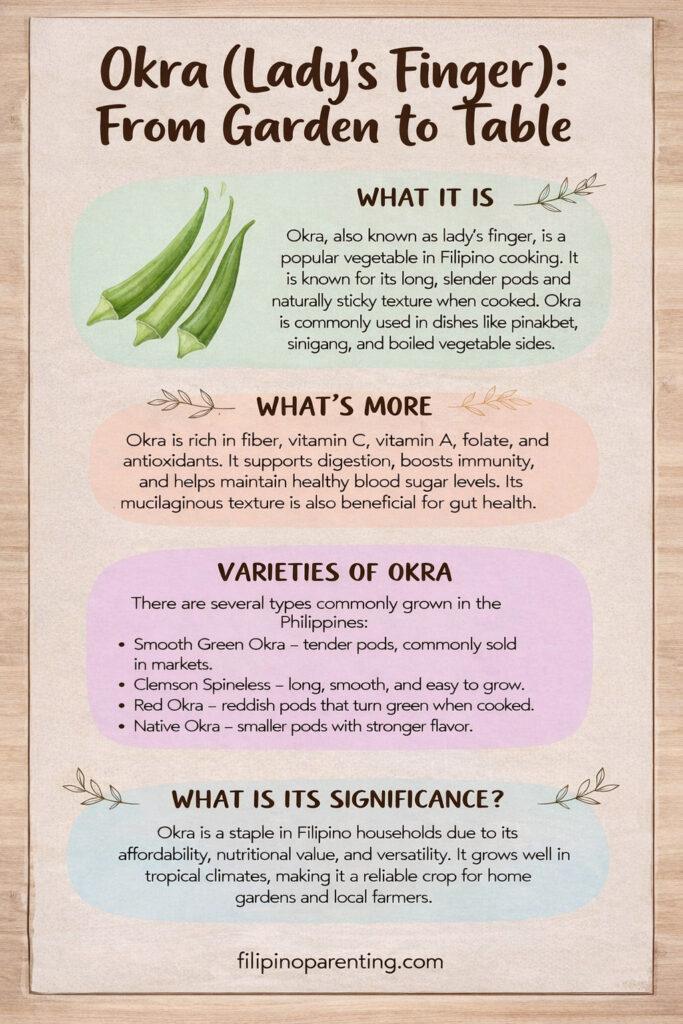
Okra (Lady’s Finger) 🟢 – Filipino Vegetable Gardening
Why It’s Great
Okra is a heat-loving, drought-tolerant vegetable that produces both tender pods and vibrant hibiscus-like flowers. It’s a staple in Filipino backyard gardens and kitchens, featuring prominently in dishes like pinakbet, ginataang okra, and sautéed vegetable mixes. Its resilience, high yield, and low-maintenance growth make okra perfect for Filipino vegetable gardening, whether you have a backyard, a small plot, or container setups in tropical climates.
For traditional Filipino cooking inspiration, try this recipe:
👉 Ginataang Okra – Ang Sarap
How to Grow
Begin your Filipino vegetable gardening journey by sowing okra seeds directly into warm, well-drained soil. Provide full sun exposure and mulch around the plants to retain moisture and regulate soil temperature. Once established, okra thrives with minimal care, making it ideal for beginners and busy gardeners alike.
Harvesting Tips
Pods are best harvested when young and tender (2–3 inches long) for optimal flavor and texture. Frequent harvesting stimulates continuous flowering and pod production, keeping your Filipino backyard garden productive all season long.
Pro Tip
Okra pairs well with companion plants such as eggplant, peppers, or sitaw (yardlong beans). These combinations maximize space, improve nutrient sharing, enhance pest management, and boost overall productivity in Filipino vegetable gardens. Its vigorous growth and versatility make okra a must-have for homegrown Filipino greens.
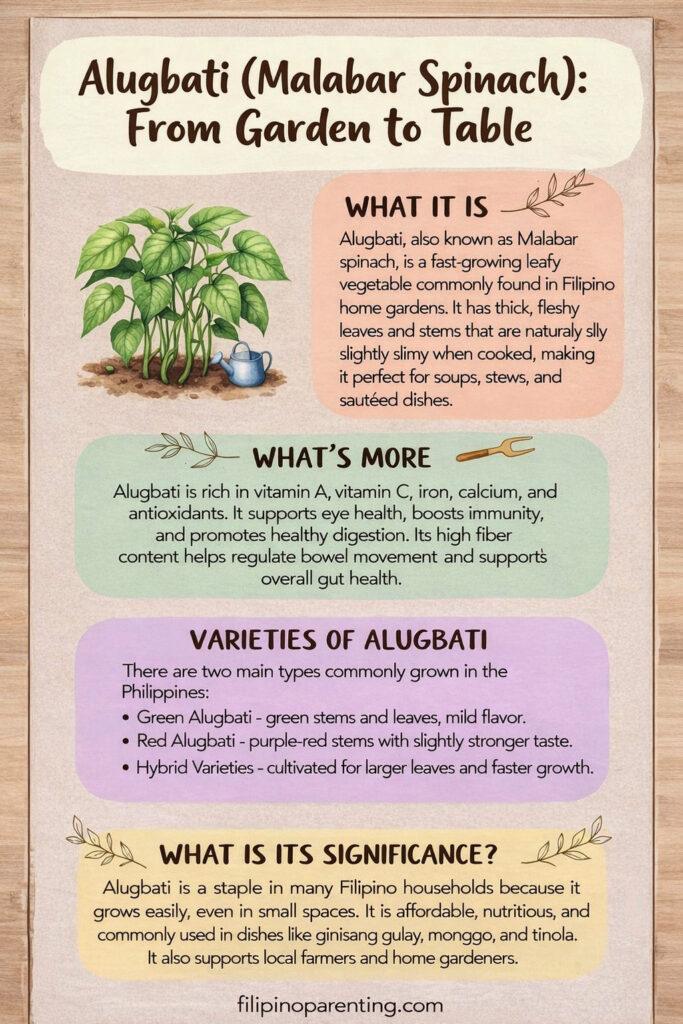
Alugbati (Malabar Spinach) 🌿 – Filipino Vegetable Gardening
Why It’s Great
Alugbati is a tropical, heat-loving vine with succulent, edible leaves and stems, making it a versatile staple in Filipino backyard gardens. It’s perfect for Filipino dishes like Ginataang Alugbati, sautéed vegetables, and fresh salads. Its climbing habit adds vertical interest to trellises, fences, or container gardens, allowing small-space gardeners to maximize yield.
Traditional Filipino recipes highlight its flavor and nutritional value:
👉 Ensaladang Alugbati – Garden Chefs Needle and Pen
How to Grow
Start your Filipino vegetable gardening journey by propagating alugbati from stem cuttings. Plant cuttings with nodes directly into well-drained soil, and water moderately. Alugbati thrives in full sun but tolerates partial shade in hot climates. Its low-maintenance growth makes it ideal for beginners, backyard gardens, patio containers, or urban Filipino vegetable setups.
Harvesting Tips
Regularly pick tender leaves and stems to encourage continuous growth. Frequent harvesting keeps your Filipino backyard garden productive throughout the warm months, providing a steady supply for your favorite dishes.
Pro Tip
Alugbati pairs well with climbing vegetables like ampalaya or sitaw. These crops share vertical space without overcrowding, maximizing your Filipino vegetable gardening yield while keeping plants healthy and productive year-round.
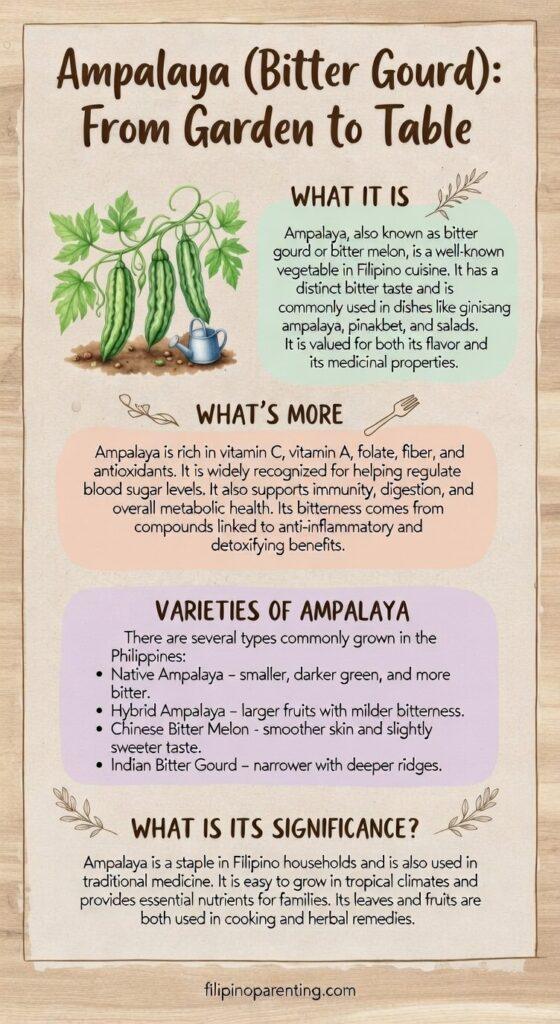
Ampalaya (Bitter Gourd) 🍈 – Filipino Vegetable Gardening
Why It’s Great
Ampalaya is a staple in Filipino kitchens, prized for its bitter yet highly nutritious fruits and edible leaves. Perfect for dishes like Pinakbet, Ginisang Ampalaya, or herbal teas, ampalaya supports health benefits such as blood sugar management. Its vigorous climbing habit adds vertical interest to trellises, fences, or backyard supports, making it a standout in Filipino backyard gardens. Traditional Filipino recipes highlight its versatility and flavor:
👉 Ginisang Ampalaya with Toyomansi – The Cooking Pinay
How to Grow
Start your Filipino vegetable gardening by sowing ampalaya seeds in rich, well-draining soil under full sun. Provide vertical support like a trellis or fence for the climbing vines. Keep the soil consistently moist with regular watering and mulching, but avoid waterlogging to prevent root rot. Ampalaya’s low-maintenance yet productive nature makes it ideal for backyard gardens, patio beds, or container setups in urban Filipino homes.
Harvesting Tips
Young fruits are ready in 50–60 days after planting, while tender leaves can be picked earlier for sautéed dishes or soups. Regular harvesting encourages continuous flowering and fruiting, keeping your Filipino backyard garden productive all season long.
Pro Tip
Prune side shoots and excess leaves to channel the plant’s energy into producing healthy fruits. Ampalaya grows well alongside sitaw and other climbing vegetables, maximizing vertical space and boosting yield in small or large Filipino vegetable gardens.
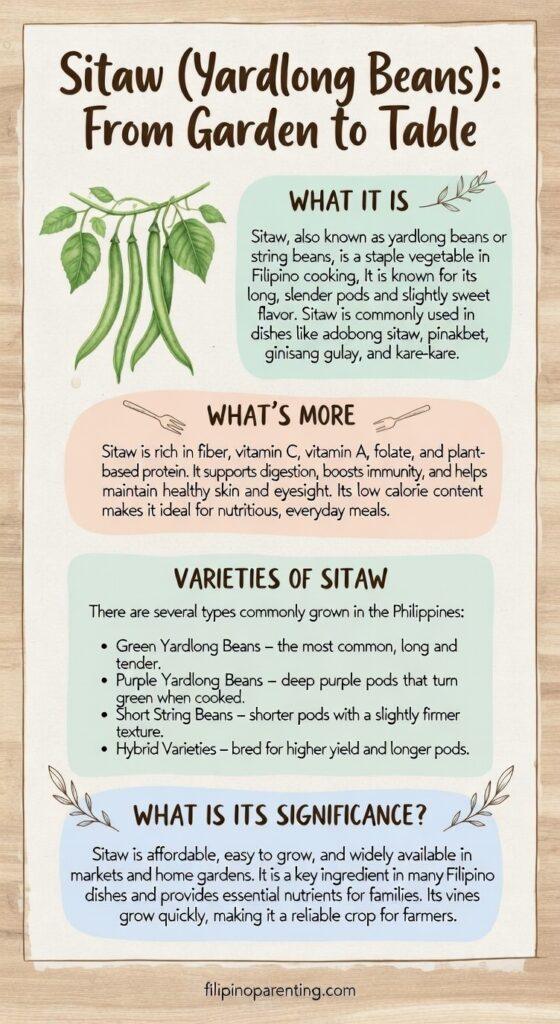
Sitaw (Yardlong Beans) 🌱 – Filipino Vegetable Gardening
Why It’s Great
Sitaw is a highly productive climbing bean commonly used in Filipino dishes like Ginataang Sitaw at Kalabasa and Pinakbet. Beyond its culinary value, it enriches the soil by fixing nitrogen, acting as a natural fertilizer for neighboring plants. Its vigorous growth and vertical habit make it perfect for Filipino backyard gardens, trellises, or container setups. Traditional Filipino recipes highlight its versatility and flavor:
👉 Pinakbet (Filipino Vegetable Stew with Sitaw) – Panlasang Pinoy
How to Grow
Start your Filipino vegetable gardening by sowing Sitaw seeds directly into fertile, well-draining soil. Provide vertical support such as trellises, bamboo poles, or stakes to allow the vines to climb. Sitaw thrives in full sun and warm climates, making it ideal for backyard beds, balcony gardens, or small urban containers. Regular watering and mulching help retain soil moisture and suppress weeds.
Harvesting Tips
Pods are ready to pick when they reach 12–18 inches long. Frequent harvesting encourages continuous pod production, keeping your Filipino backyard garden productive throughout the season.
Pro Tip
Sitaw grows harmoniously alongside other climbing vegetables like ampalaya and alugbati. These crops can share vertical space without excessive shading, maximizing yield and efficiency in Filipino vegetable gardening. Its fast growth and easy maintenance make it a must-have for beginner and experienced gardeners alike.
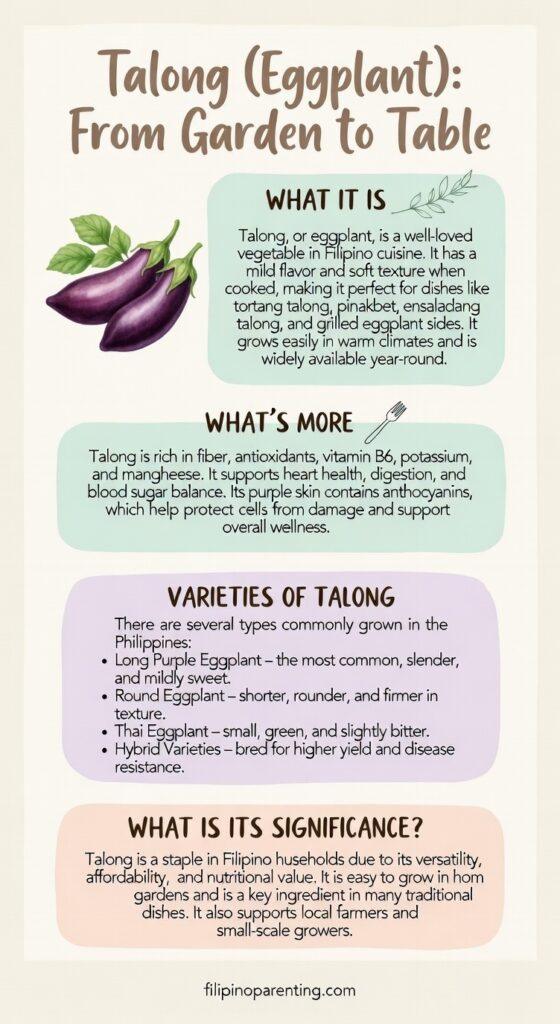
Talong (Eggplant) 🍆 – Filipino Vegetable Gardening
Why It’s Great
Talong is a heat-tolerant staple in Filipino kitchens, used in popular dishes like Tortang Talong, Pinakbet, or grilled vegetable sides. Its long, purple fruits are highly versatile in Filipino recipes and thrive in tropical climates, making it a perfect addition to Filipino backyard gardens, container setups, or small urban patios. Traditional Filipino recipes highlight its flavor and adaptability:
👉 Tortang Talong (Stuffed Grilled Eggplant Omelet) – Pinoy Food Blog
How to Grow
Begin your Filipino vegetable gardening journey by sowing Talong seeds directly in sunny garden spots or deep containers. Use well-draining, nutrient-rich soil and water consistently to promote healthy growth. Support heavy fruits with stakes or trellises, and apply mulch to retain soil moisture, suppress weeds, and maintain overall plant health.
Harvesting Tips
Talong fruits are ready to pick in 60–80 days. Regular harvesting encourages continuous flowering and fruiting, while leaving mature fruits too long may slow new growth.
Pro Tip
For small-space Filipino vegetable gardening, dwarf varieties like Patio Baby or Little Finger thrive in pots, balconies, or container gardens. Talong is ideal for urban gardeners seeking space-efficient crops without sacrificing yield or flavor.
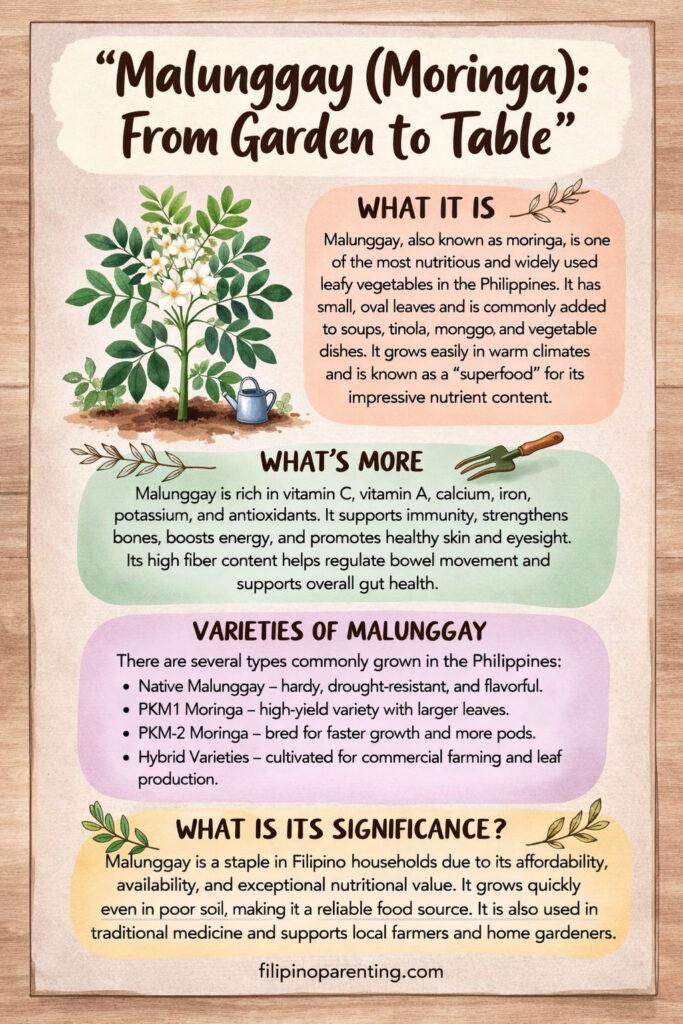
Malunggay (Moringa) 🌳 – Filipino Vegetable Gardening
Why It’s Great
Known as the “Miracle Tree,” Malunggay is a nutritional powerhouse packed with vitamins, minerals, and antioxidants. Its leaves are a staple in Filipino dishes like Tinola, can be blended into smoothies, or brewed as herbal teas. Beyond culinary uses, Malunggay supports family wellness and is an essential plant for year-round Filipino backyard gardens, providing a continuous supply of fresh, nutrient-rich greens. Traditional recipes showcase its versatility:
👉 Malunggay Pandesal – Foxy Folksy
How to Grow
Start your Filipino vegetable gardening journey by planting a large branch cutting (truncheon) directly in soil. Choose a sunny, well-draining location—Malunggay thrives in full sun and is low-maintenance once established. For urban or container gardening, large pots placed near sunny windows work well, making it perfect for small-space Filipino gardens.
Harvesting Tips
Leaves can be harvested just a few weeks after planting. Trim every 2–3 months to encourage bushier growth and maintain a steady supply of fresh leaves. Young shoots are the tenderest and ideal for cooking.
Pro Tip
Malunggay makes a great vertical centerpiece in Filipino backyard gardens. Pair it with climbing vegetables like sitaw or ampalaya to maximize vertical space, improve overall productivity, and maintain a healthy, sustainable garden year-round.
The “Tantiyahin” Method of Composting ♻️
In a true Filipino household, nothing goes to waste. Long before commercial fertilizers existed, Filipino families practiced tantiyahin—using intuition, observation, and everyday kitchen scraps to nourish the soil. Instead of buying expensive products, you can turn what you already have into black gold for your Filipino vegetable garden.
- Rice Water (Hugas-Bigas): Never pour it down the drain. Rice water feeds beneficial soil bacteria and gently enriches the soil, making it especially good for leafy greens like pechay and kangkong.
- Eggshells: Crushed eggshells add calcium to the soil, helping prevent blossom end rot in fruiting vegetables like talong and sili.
- Fish Scraps: After preparing fish for ulam, bury the scraps deep in the soil near malunggay or sitaw. As they break down, they release nitrogen that promotes strong leaf and stem growth.
💡 Pro Tip:
Let children help with composting. It teaches sustainability, patience, and traditional Filipino values while helping them understand where food really comes from.
Maximizing Space with Vertical Gardening 🌿
Limited space doesn’t mean limited harvest. Filipino vegetable gardening has always been creative, especially in urban homes where space is precious. By growing upward instead of outward, even balconies and small patios can become productive gardens.
- “Buhay na Bakod” (Living Fence): Use malunggay as a natural post to support climbing vegetables like ampalaya or sitaw. This method saves space and creates a lush, edible fence.
- Hanging Kangkong: Kangkong isn’t limited to muddy plots. It thrives in recycled hanging bottles, keeping your garden organized and your harvest clean.
💡 Pro Tip:
Alugbati, sitaw, and ampalaya grow well together vertically without crowding, allowing you to maximize sunlight and airflow while increasing yield.
Key Tips for Filipino Vegetable Gardening Success 🌱
To keep your garden productive and stress-free, focus on simple, proven practices:
- Start with resilient, high-yield crops such as kangkong, pechay, alugbati, and okra
- Use trellises or vertical supports for climbing vegetables
- Water deeply in the morning to strengthen roots and prevent disease
- Follow proper spacing so plants don’t compete for nutrients
- Adapt to your climate using containers, raised beds, or indoor starts when needed
Consistency matters more than perfection.
Expanding Your Edible Paradise: Filipino Vegetable Gardening at Home 🌱
Once you’ve mastered the basics, you can slowly expand your garden with more specialized crops like upo (bottle gourd), talong (eggplant), and other tropical staples. These vegetables not only provide nutritious ingredients for family meals but also give children a hands-on way to connect with Filipino culture through food and gardening.
With a steady routine and a focus on tried-and-true tropical vegetables, any backyard, balcony, or small patio can become a productive, “Pinay Mom”–approved source of fresh produce—even in limited space.
FAQ: Filipino Vegetable Gardening Tips
Which vegetables are easiest to grow indoors in the Philippines?
Leafy greens such as pechay, kangkong, talbos ng kamote, and sili grow well in containers and require minimal maintenance.
How often should I water indoor vegetables?
Water when the soil feels slightly dry. Overwatering can cause root rot. For self-watering containers, refill the reservoir as needed.
Do I need grow lights for indoor gardening?
If natural sunlight is limited, full-spectrum grow lights are recommended. Seedlings and fast-growing vegetables benefit the most.
Can I mix different Filipino vegetables in one container?
Yes. Companion planting works well. Ampalaya pairs with sitaw and alugbati, while pechay grows well alongside radishes or carrots—as long as spacing is respected.
How do I deal with pests naturally?
Neem oil mixed with a few drops of dishwashing liquid is effective for small-scale gardens. Regular inspection helps catch problems early.
Final Thoughts 🌿
Starting a Filipino vegetable garden doesn’t require perfect timing, expensive tools, or expert knowledge—just consistency, observation, and care. With practical techniques like tantiyahin composting and vertical gardening, even the smallest space can become a productive, cultural, and sustainable food source.
With patience and love for your plants, your backyard, balcony, or indoor garden can truly become an edible paradise—one harvest at a time. 🌱