Mornings in the Philippines are warm, practical, and full of small rituals — the soft clatter of Pandesal being toasted, the hiss of hot water for kape or tsokolate, the splash of cold water on the face, and quiet greetings of “Magandang Umaga.” These everyday habits form a classic Tagalog morning routine, where simple actions are expressed through meaningful, practical language.
If you’re learning Tagalog, understanding the words used in a Tagalog morning routine is one of the easiest ways to start speaking naturally every day. Daily routine vocabulary helps you build real-life conversation skills instead of memorizing random phrases.
In this post, you’ll learn essential Tagalog morning routine words, useful beginner phrases, and common breakfast vocabulary used in Filipino homes. Whether you’re a beginner, heritage learner, or simply want to expand your everyday Tagalog, these morning routine phrases will help you build confidence through practical, daily language.
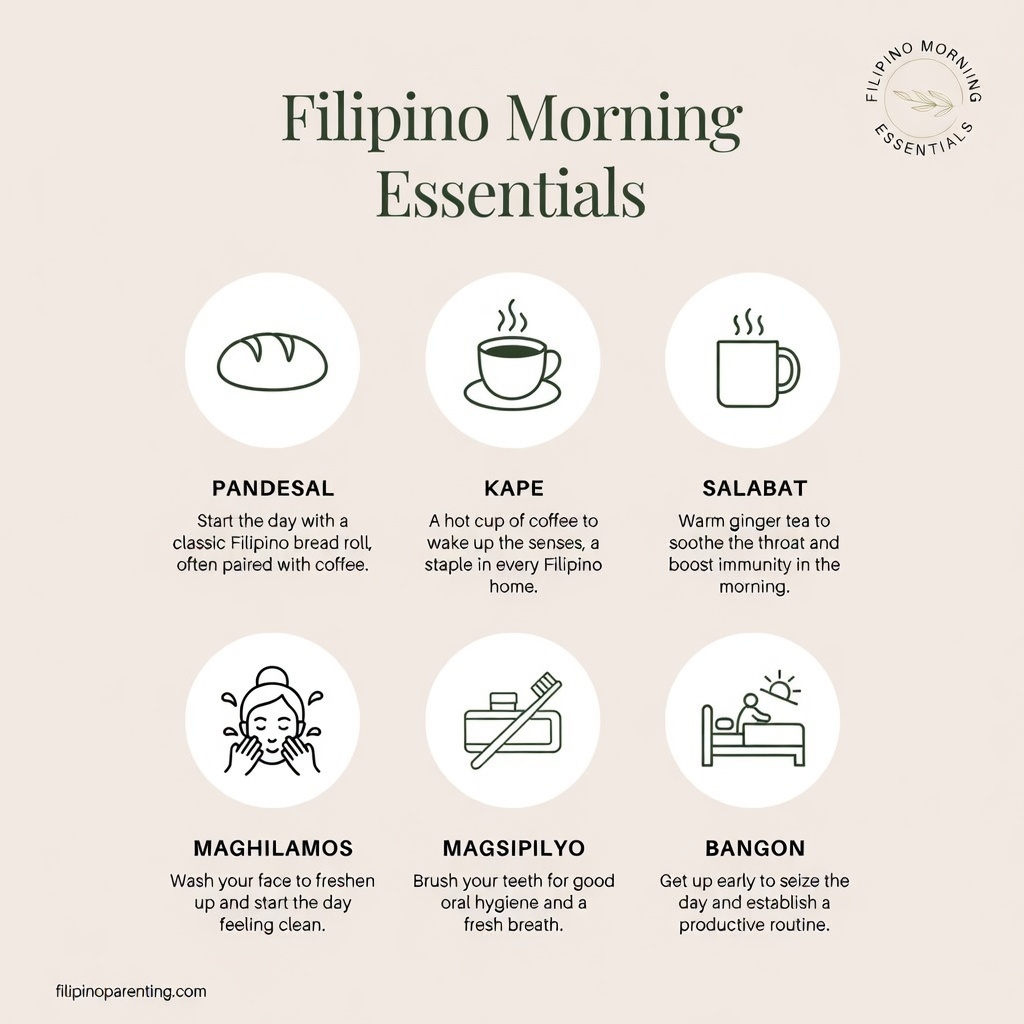
Table of Contents
🌅 Waking Up & Getting Ready Phrases in Tagalog
These are common Tagalog morning routine words used at home.
Get Up – Bangon
To get up from bed.
Alarm Clock – Orasan ng alarma
The sound that starts the day.
Good morning. – Magandang umaga.
Standard morning greeting.
Stretch – Mag-inat
Gentle stretching in bed or standing.
Wash face – Maghilamos / Maglinis ng mukha
Splash water or cleanse the face.
Brush teeth – Magsipilyo ng ngipin
Morning tooth-brushing routine.
Shower / Bathe – Maligo
Morning bath or shower.
Towel – Tuwalya
Cloth used to dry face or body.
Comb – Suklay
To comb or brush hair.
Mirror – Salamin
Used to check appearance before leaving.
Example Morning Sentences in Tagalog
- Bangon na, magandang umaga! – Wake up, good morning!
- Mag-inat muna ako bago bumangon. – I’ll stretch first before getting up.
- Maghilamos ako ng malamig na tubig. – I’ll wash my face with cold water.
- Magsipilyo na ako ng ngipin. – I’m going to brush my teeth now.
- Maligo ako nang mabilis. – I’ll take a quick shower.
☕ Tagalog Breakfast & Morning Food Vocabulary
Food is an important part of a Filipino morning routine.
Bread Roll – Pandesal
Soft bread rolls, often eaten warm.
Coffee – Kape
Hot brewed coffee.
Hot Chocolate – Tsokolate
Traditional Filipino thick hot chocolate.
Ginger Tea – Salabat
Warm ginger tea.
Packed Snack / Lunch – Baon
Food brought to work or school.
Garlic Rice – Sinangag na may bawang
Fried rice with toasted garlic.
Egg – Itlog
Fried, boiled, or scrambled egg.
Dried Fish – Tuyo
Crispy dried fish.
Tomato – Kamatis
Fresh sliced tomato.
Spoon & Fork – Kutsara at tinidor
Common breakfast utensils.
Example Breakfast Sentences in Tagalog
- Magpiprito ako ng mga itlog. – I’ll fry some eggs.
- Gusto ko ng kape na mainit. – I want hot coffee.
- May baon na ako para sa trabaho. – I already have packed snacks for work.
- Masarap ang sinangag na may itlog at tuyo. – Garlic rice with egg and tuyo is delicious.
- Magdagdag ako ng kamatis sa plato. – I’ll add tomato to the plate.
🧴 Morning Self-Care Vocabulary in Tagalog
These daily routine words are helpful for beginners practicing practical conversation.
Moisturizer – Pahid sa balat
Lotion or cream after washing the face.
Sunscreen – Pahid laban sa araw
SPF protection before going outside.
Face Wash – Panglinis ng mukha
Facial cleanser.
Toothbrush – Sipilyo
Brush used for teeth.
Comb – Suklay
To fix hair.
Deodorant – Pabango sa kilikili
Roll-on or spray.
Lip Balm – Pahid sa labi
For soft lips.
Hair Tie – Lastiko ng buhok
For ponytails or buns.
Face Towel – Tuwalya sa mukha
For patting dry.
Cold Water Splash – Malamig na tubig sa mukha
Refreshing wake-up splash.
Example Self-Care Sentences in Tagalog
- Magpahid ako ng pahid sa balat pagkatapos maghilamos. – I’ll apply moisturizer after washing my face.
- Kailangan ko ng pahid laban sa araw bago lumabas. – I need sunscreen before going out.
- Maglagay ako ng lip balm sa labi ko. – I’ll put lip balm on my lips.
- Malamig ang tubig sa mukha ko, nakakagising! – The cold water on my face is refreshing!
- Suklayin ko muna ang buhok ko. – I’ll comb my hair first.
☀️ Why Learn Tagalog Morning Routine Phrases?
Learning daily routine vocabulary helps beginners:
- Practice natural sentence structure
- Build confidence in everyday conversations
- Speak with family members more comfortably
- Create simple daily language habits
Using phrases like bangon, maghilamos, pandesal, and baon every day reinforces memory much faster than memorizing random vocabulary lists.
❓ FAQ: Tagalog Morning Routine for Beginners
What is “Good morning” in Tagalog?
“Good morning” in Tagalog is Magandang umaga.
How do you say “I’m going to shower” in Tagalog?
You can say Maliligo ako or Maligo ako (I will shower/bathe).
What does “baon” mean in Tagalog?
Baon refers to food you bring with you — usually packed lunch or snacks for school or work.
What is a traditional Filipino breakfast?
A traditional Filipino breakfast often includes garlic rice (sinangag), egg (itlog), dried fish (tuyo), and coffee (kape).
Is Tagalog and Filipino the same?
Filipino is the national language of the Philippines and is largely based on Tagalog, with influences from other Philippine languages.
🌞 Final Thoughts
Maraming salamat for exploring Tagalog morning routine words and daily phrases. These simple terms — bangon, maghilamos, pandesal, kape, baon — reflect more than actions. They represent the warmth, rhythm, and intention that shape mornings in Filipino homes.
Because in the Philippines, mornings aren’t rushed — they’re prepared, shared, and savored.