The Anahaw leaf meaning is deeply rooted in Filipino culture and heritage. The Anahaw (scientific name: Saribus rotundifolius) is a type of palm tree native to the Philippines, known for its distinctive fan-shaped leaves. While it is sometimes referred to as the national leaf, it does not have official national status. Nevertheless, it remains a powerful symbol of Filipino resilience, simplicity, and natural beauty.
Thriving across the country in tropical climates, the Anahaw is a true representation of the Philippine landscape. Its strength, adaptability, and elegance reflect the enduring spirit of the Filipino people. In this post, we will explore the history, physical characteristics, cultural uses, symbolism, and why the anahaw leaf meaning continues to hold deep significance today..
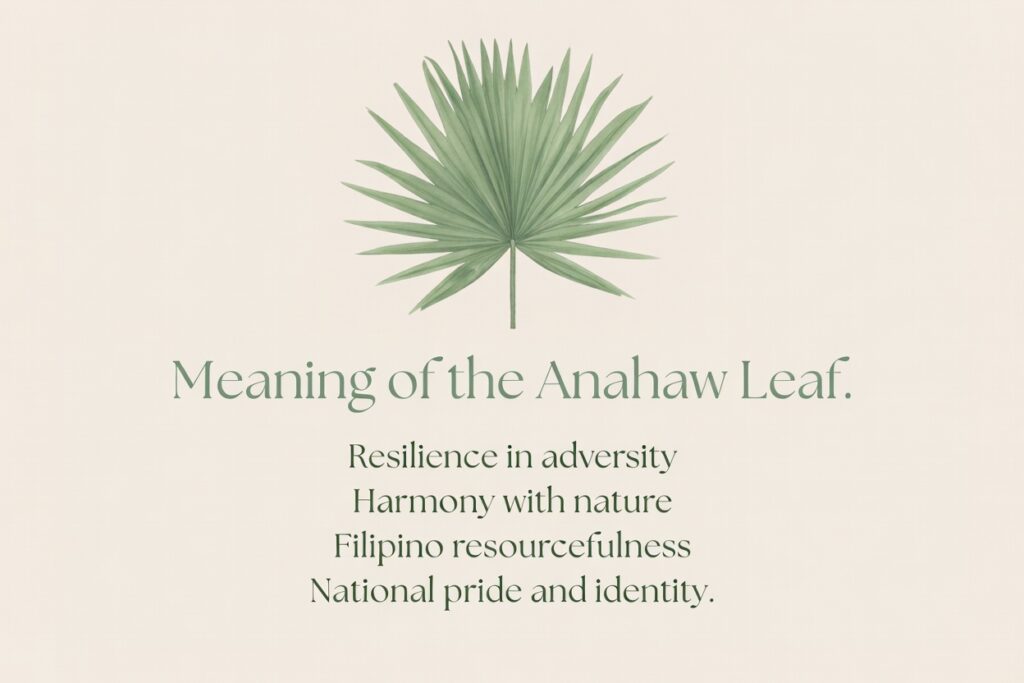
Table of Contents
What Is the Anahaw? Understanding the Anahaw Leaf Meaning and Symbolism
The Anahaw is a tall palm tree easily recognized by its:
- Large, round, fan-shaped leaves
- Slender and smooth trunk
- Small flowers and fruits
It grows naturally in:
- Lowland forests
- Coastal areas
- Mountain slopes
- Rural communities
Its adaptability to various environments has made it a common and beloved plant throughout the Philippines.

🌿 The Powerful Symbolism Behind the Anahaw Leaf Meaning
Although not officially declared the national leaf, the Anahaw is often associated with Filipino values such as:
- Strength and endurance – bends but rarely breaks in storms
- Adaptability – grows in diverse environments
- Simplicity and natural beauty – fan-shaped leaves are elegant and functional
Its resilience mirrors the Filipino spirit, especially in the face of adversity and natural disasters.
🌴 Physical Characteristics of the Anahaw and Its Leaf Meaning
Some of the key features of the Anahaw include:
- Large, fan-shaped green leaves – often used for practical and decorative purposes
- Smooth and slender trunk – can grow several meters tall
- Flowers and fruits – small but important for reproduction
These leaves are not only visually striking but also practical, traditionally used for:
- Roofing material in traditional houses
- Handheld fans
- Decorations during fiestas and celebrations
- Wrapping and covering items
🏡 Cultural and Traditional Uses of the Anahaw Leaf Meaning in Filipino Life
The Anahaw has been a part of Filipino daily life and culture for generations:
- Roofing and shelter – especially in rural areas
- Fiesta decorations – symbolizing festivity and natural beauty
- Handmade crafts – fans, mats, and other traditional items
- Art and architecture – often featured in logos, carvings, and cultural designs
Its durable, flexible leaves make it a practical and iconic plant in Filipino heritage.
🌟 The Symbolism Behind the Anahaw Leaf Meaning
The Anahaw is more than just a plant—it symbolizes:
- Resilience in adversity
- Harmony with nature
- Filipino resourcefulness
- National pride and identity
Its spreading, fan-shaped leaves can be seen as a metaphor for openness, unity, and strength, reflecting the enduring spirit of the Filipino people.
🌏 Why the Anahaw Still Matters Today
Even in modern times, the Anahaw continues to hold cultural and environmental significance:
- Promotes awareness of native Philippine plants
- Represents cultural heritage and tradition
- Encourages environmental appreciation and sustainability
- Connects Filipinos to nature and rural life
Although urbanization increases, preserving the Anahaw reminds Filipinos of their roots, resilience, and connection to the land.
❓ Frequently Asked Questions (FAQ) About the Anahaw
1. What is the Anahaw?
The Anahaw is a palm tree native to the Philippines with large, fan-shaped leaves, symbolic of resilience and Filipino culture.
2. Is the Anahaw the official national leaf?
No. The Anahaw is not officially recognized as the national leaf but is widely considered a symbol of Filipino heritage.
3. Where does the Anahaw grow?
It grows in tropical areas throughout the Philippines, including forests, mountains, coastal regions, and rural communities.
4. What are the traditional uses of Anahaw leaves?
Anahaw leaves are used for roofing, decoration, handheld fans, crafts, and ceremonial purposes.
5. Why is the Anahaw culturally important?
It symbolizes resilience, simplicity, national pride, and harmony with nature, making it a key part of Filipino identity.
📌 Final Thoughts
The Anahaw, while not officially the national leaf, is a timeless symbol of the Philippines. Its beauty, resilience, and practical uses reflect the strength and resourcefulness of the Filipino people.
By preserving and appreciating the Anahaw, Filipinos honor their heritage and connection to nature, ensuring that future generations recognize its cultural and symbolic importance.