Pamahiin in Tagalog is spelled exactly as pamahiin. But for many Filipinos, it represents much more than just a word; it is a way of life.
Filipino pamahiin refers to the traditional superstitions and ancient beliefs passed down from our ancestors (ninuno) through generations. These cultural “rules” were formed long before modern science was widely accessible in the Philippines. They served as a practical and spiritual framework to explain luck, misfortune, health, and the mysteries of the unseen world.
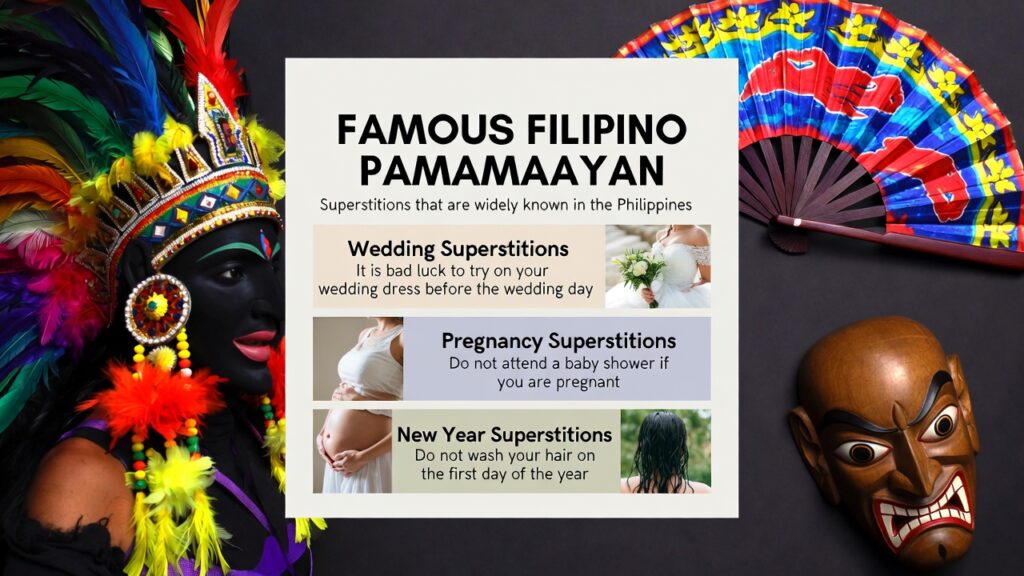
Table of Contents
Defining Pamahiin: Root Words and Origins
What exactly is pamahiin? In a “Real-Talk” sense, Filipino pamahiin are traditional beliefs or superstitions that guide behavior based on the idea that certain actions attract either swerte (good luck) or malas (bad luck).
These are most commonly observed during major life transitions, such as weddings, pregnancy, childbirth, and funerals.
The Meaning Behind the Word
The word pamahiin is derived from the root word hinuha, which means “assumption” or “inference.” This highlights that Filipino pamahiin are not necessarily proven facts, but intuitive beliefs passed down through oral storytelling and daily reminders from our elders.
Our unique superstitions are a “halo-halo” of influences, originating from:
- Pre-colonial Animism (respect for nature and spirits)
- Spanish Catholicism
- Chinese and Indian Trade Traditions
- Western Cultural Influences
Quick Facts About Filipino Pamahiin
| Category | Details |
| Concept Type | Cultural Belief / Folk Tradition |
| Primary Use | Explaining luck, fate, health, and life events |
| Common Context | Rituals, Filipino Culture, and family milestones |
| Root Word | Hinuha (Assumption or Belief) |
Filipino Pamahiin Vocabulary Words
For learners and parents looking to expand their Tagalog, here is a breakdown of the most common terms used when discussing superstitions.
| # | English | Tagalog |
| 1 | Superstition | Pamahiin |
| 2 | Belief | Paniniwala |
| 3 | Tradition | Tradisyon |
| 4 | Ritual | Ritwal |
| 5 | Luck | Swerte |
| 6 | Bad Luck | Malas |
| 7 | Fate | Kapalaran |
| 8 | Omen / Sign | Palatandaan |
| 9 | Ancestors | Ninuno |
| 10 | Spirit | Espiritu |
| 11 | Soul | Kaluluwa |
| 12 | Tradition Keeper | Tagapagmana ng Kultura |
How Filipino Pamahiin Are Used in Everyday Life
Filipino pamahiin act as a traditional guide for major life transitions. For many parents and families, following these isn’t just about superstition—it’s about honoring the wisdom of our ninuno (ancestors).
1. Filipino Wedding Superstitions
In Filipino culture, weddings are more than just a ceremony; they are the foundation of a new family. Common Filipino pamahiin for weddings include:
- Sukob: Avoiding siblings marrying in the same year to prevent “splitting” the luck.
- The Gown: Many believe the bride should never fit her actual wedding dress before the big day to avoid the wedding being canceled.
- The Groom’s Arrival: Ensuring the groom arrives at the church before the bride to signify he is ready for the commitment.
2. Pregnancy and Childbirth Beliefs
Expectant parents often follow specific Filipino pamahiin to ensure a safe delivery.
- Avoid Funerals: Pregnant women are often discouraged from attending wakes to protect the unborn from “heavy” spirits.
- Don’t Block Doorways: Sitting on the stairs or blocking a doorway is believed to cause a “blocked” or difficult labor.
- The Placenta: Traditionally, the placenta is buried carefully to ensure the newborn grows up to be well-adjusted.
3. Caring for the Younger Generation
Even after birth, Filipino pamahiin guide how we care for the newest members of the family.
- Intelligence: Placing books under a newborn’s pillow is a popular tradition to encourage a love for learning and high intelligence.
- Avoiding Usog: We often say “Pwera usog” when giving a compliment to prevent a mysterious illness caused by an “overload” of energy. For more on this, see our list of Pinoy Emotions and Feelings.
4. Funerals and Death Rituals
Respecting the dead is a pillar of our culture. Filipino pamahiin surrounding death focus on the soul’s journey and the safety of the living:
- Pagpag: This is the most famous “Real-Talk” rule—never go straight home after a wake. Stop at a store or gas station first so the spirit doesn’t follow you home.
- No Red: Avoid wearing red at a funeral, as it is seen as a sign of celebration rather than mourning.
5. Daily Life and Household Habits
Some Filipino pamahiin are so ingrained in our daily routine we don’t even realize they are superstitions:
Dropping Utensils: Dropping a spoon means a female visitor is coming; a fork means a male visitor.
Sweeping at Night: Don’t do it! It is believed you are sweeping away the household’s wealth.
Itchy Palms: If your palm itches, money is coming your way!
The Modern Practice of Filipino Pamahiin
It is a common “Real-Talk” truth: Filipino pamahiin are not always rigid rules followed out of fear. Instead, they function as cultural guides that subtly shape our habits and social behavior. Many parents and adult learners practice these beliefs selectively—often out of respect for elders, family harmony, and a desire to stay connected to our Filipino culture.
1. Everyday Caution and Mindfulness
Many Filipino pamahiin remind us to be mindful in our daily routine. For example, avoiding sweeping at night to preserve good fortune or refraining from opening umbrellas indoors are still commonly observed in homes where elders are present. These beliefs encourage attentiveness, patience, and intentional behavior in the household.
2. Money, Luck, and Prosperity
Superstitions strongly influence Pinoy financial habits. Actions like keeping money neatly inside a wallet, never placing bags on the floor (so money doesn’t “run away”), and interpreting itchy palms as financial signs reflect how Filipino pamahiin blends with money management. These practices reinforce a deep respect for wealth and an optimistic outlook toward abundance.
3. Health, the Body, and “Pasma”
Health-related Filipino pamahiin often revolve around the concept of balance. Common beliefs include:
- Avoiding wet hair at bedtime: Believed to cause blindness or severe headaches.
- Fearing Pasma: The belief that exposing “hot” hands to cold water causes tremors.
- Resting before washing: Always resting after work before washing your hands.
While not always scientifically proven, these beliefs promote rest, moderation, and body awareness.
4. Relationships, Love, and Marriage
From avoiding sukob to the belief that gifting shoes might cause a partner to “walk away,” Filipino pamahiin aim to protect relationships from conflict. They emphasize the importance of emotional readiness and harmony between couples.
5. Special Occasions and Milestones
Birthdays and New Year celebrations are rich with tradition. Whether it’s eating long noodles for a long life or making loud noises to drive away bad spirits at midnight, these Filipino pamahiin mark important transitions and reinforce shared family values.
6. Cultural Respect as “Social Glue”
Many of us follow these customs as an act of cultural courtesy. Saying “Tabi-tabi po” or practicing pagpag after a wake are ways we show respect for the unseen and our ancestors. Filipino pamahiin functions as a “social glue”—connecting the younger generation to their roots and preserving our unique identity.
The True Importance and Practical Value of Filipino Pamahiin
Beyond just “being superstitious,” Filipino pamahiin continues to hold deep relevance in modern life. Whether you are a Tagalog learner or a parent raising the younger generation, these beliefs offer several practical and cultural benefits.
1. A Bridge for Family Communication
Filipino pamahiin serves as a natural conversation starter between elders and the younger generation. It allows grandparents and parents to pass down wisdom, stories, and caution in a way that feels personal and culturally significant.
2. Preserving Cultural Identity
In a globalized world, practicing Filipino pamahiin is a way to preserve our unique heritage. It keeps us connected to our ninuno (ancestors) and ensures that our Filipino culture remains distinct and vibrant, even for those living in the diaspora.
3. A Window into the Filipino Worldview
For adult learners, these beliefs provide a “Learning Advantage.” By studying Filipino pamahiin, you gain a deeper understanding of Filipino values like paggalang (respect), pagtitimpi (self-control), and our deep-seated optimism for the future.
4. Practical Life Habits
Believe it or not, many superstitions have a practical side!
- Health: Avoiding sleeping with wet hair promotes better rest and prevents illness.
- Safety: Staying away from doorways or stairs during pregnancy reduces the risk of accidents.
- Awareness: Beliefs about black cats or broken mirrors encourage us to be more observant of our surroundings.
5. Strengthening Social and Community Bonds
Following these customs acts as a “Social Glue.” Whether it is practicing pagpag or avoiding sukob, these shared traditions strengthen relationships and build a sense of belonging within the Filipino community.
Commonly Used Example Sentences in Tagalog
If you are a parent or adult learner trying to use the word in conversation, here are some helpful ways to discuss Filipino pamahiin in both English and Tagalog. These sentences show how superstitions are still a big part of our Filipino culture today.
| English | Tagalog |
| Superstitions are still followed in the province. | May mga pamahiin pa ring sinusunod sa probinsya. |
| She believes in old superstitions. | Naniniwala siya sa mga lumang pamahiin. |
| That belief is only a superstition. | Pamahiin lang ang paniniwalang iyon. |
| Elders teach pamahiin to the younger generation. | Itinuturo ng matatanda ang pamahiin sa mga nagsisimulang matuto. |
| Not all pamahiin are true. | Hindi lahat ng pamahiin ay totoo. |
| Weddings have many pamahiin. | Maraming pamahiin sa kasal. |
| That pamahiin came from our ancestors. | Galing sa ating mga ninuno ang pamahiing iyon. |
| Modern youth rarely follow pamahiin. | Bihira nang sundin ng kabataan ang pamahiin. |
| Pamahiin reflect Filipino culture. | Sumasalamin sa kulturang Pilipino ang pamahiin. |
| She respects pamahiin even if she doesn’t believe in them. | Iginagalang niya ang pamahiin kahit hindi siya naniniwala. |
Using these sentences will help you sound more natural when discussing traditions with your family or other learners. Whether you are skeptical or a true believer, knowing how to talk about Filipino pamahiin is an essential step in mastering the Tagalog language.
Frequently Asked Questions (FAQ)
Here are the most common questions adult learners and parents ask about the origins and usage of Filipino pamahiin.
1. What is the meaning of “Pamahiin” in Tagalog?
In the Tagalog language, pamahiin refers to traditional Filipino superstitions or folk beliefs. It is a neutral term used in both formal writing and everyday “Real-Talk” conversations to describe the “unwritten rules” of our culture.
2. What does “Pamahiin” mean in English?
The closest English translation for pamahiin is “superstition” or “folk belief.” It specifically refers to actions or signs believed to bring good or bad luck (swerte or malas).
3. Is “Pamahiin” a formal or informal word?
It is a versatile, neutral word. You will hear it used by elders in casual family settings, but it is also a key subject for the National Commission for Culture and the Arts (NCCA), which is the official government agency responsible for preserving Philippine arts and cultural heritage.
4. When should you use the word “Pamahiin”?
Use pamahiin when discussing Filipino traditions, cultural practices, or the specific rituals families follow during major life events like weddings, funerals, or moving into a new home.
5. Where can I find official information on Filipino traditions?
For those interested in the academic and historical side of our customs, the NCCA Official Facebook Page provides regular updates on the preservation of our nation’s intangible heritage and traditional folk arts.
Conclusion: Honoring Our Roots Through Tradition
Filipino pamahiin are an essential part of our heritage, reflecting how ancient traditions continue to shape our modern beliefs, family values, and everyday life. While many of these practices are rooted in folklore rather than modern science, they serve as a powerful “social glue” that connects the younger generation to their ninuno (ancestors) through shared respect and custom.
Understanding these beliefs enriches your journey in learning Tagalog and deepens your cultural awareness. Whether you follow them strictly or simply out of respect for your elders, Filipino pamahiin remains a vibrant thread in the fabric of our identity.
If you are ever in Manila and want to see where these traditions are formally archived, you can visit the National Commission for Culture and the Arts located in the historic walled city of Intramuros.nal Commission for Culture and the Arts in the historic walled city of Intramuros. You can also follow the NCCA Official Facebook Page for more insights into our nation’s living traditions.