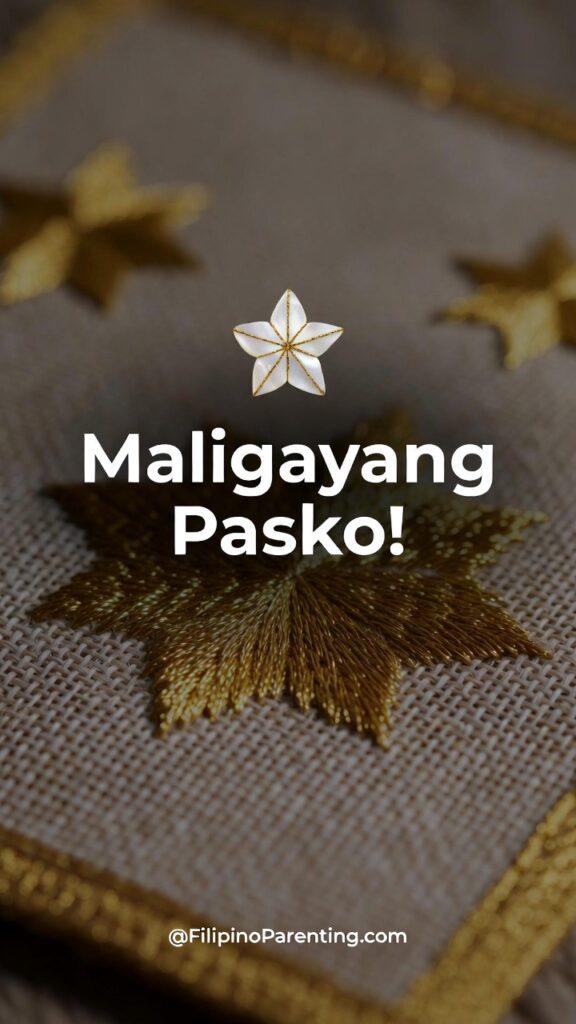
For many families, a refined Paskong Pinoy is synonymous with our traditional fabrics and the elegance of our heritage. This image, featuring a white star and gold embroidery on a woven background, honors the beauty of Piña (pineapple fiber) and Jusi (silk or banana fiber)—fabrics often used when we share our most formal Maligayang Pasko greetings. These materials are more than just textiles; they represent the sophistication of Filipino artistry.
For parents, teaching the younger generation about these artisanal treasures shows them that our culture is woven with patience, skill, and pride. When we ask, “What is the true essence of Maligayang Pasko greetings for the Filipino people?” the answer often lies in these fine details. It is about presenting our best selves to our community—whether by wearing a Barong Tagalog to Simbang Gabi or by sending a carefully crafted greeting card that reflects our high-end craftsmanship and sincere Maligayang Pasko greetings.
Mom-to-Mom Tip: Real talk—authenticity matters. When you are sharing these Maligayang Pasko greetings, try mentioning a specific Filipino tradition to make the message more personal. If you want to dive deeper into the history of these symbols, see our cultural guide on The Symbolism of the Filipino Parol: A Star of Hope to help your learners understand the “why” behind the “what.”
Table of Contents
The Elegance of Traditional Maligayang Pasko Greetings
In a Filipino home, the holiday season is the peak time for showcasing our heritage through more than just words. When we share our Maligayang Pasko greetings, we often do so surrounded by the textures and symbols that define our culture. For many families, a refined Paskong Pinoy is synonymous with our traditional fabrics and the quiet sophistication of our artisanal history.
Weaving Tradition into Your Maligayang Pasko Greetings
This image honors the beauty of Piña (pineapple fiber) and Jusi (banana or silk fiber)—the “Queen of Philippine Fabrics.” For parents, teaching the younger generation about these treasures shows them that our heritage is woven with patience, skill, and pride.
When we ask, “What makes Maligayang Pasko greetings truly special for the Filipino people?” the answer lies in these details. It is about presenting our best selves—whether by wearing a Barong Tagalog to Simbang Gabi or by sending a high-end greeting card that reflects our craftsmanship. By using these heartfelt Maligayang Pasko greetings, you aren’t just saying “Merry Christmas”; you are inviting your loved ones into a legacy of elegance and faith.
Nawa’y magdala ng init at saya sa iyong puso ang Pasko.
(May Christmas bring warmth to your heart.)
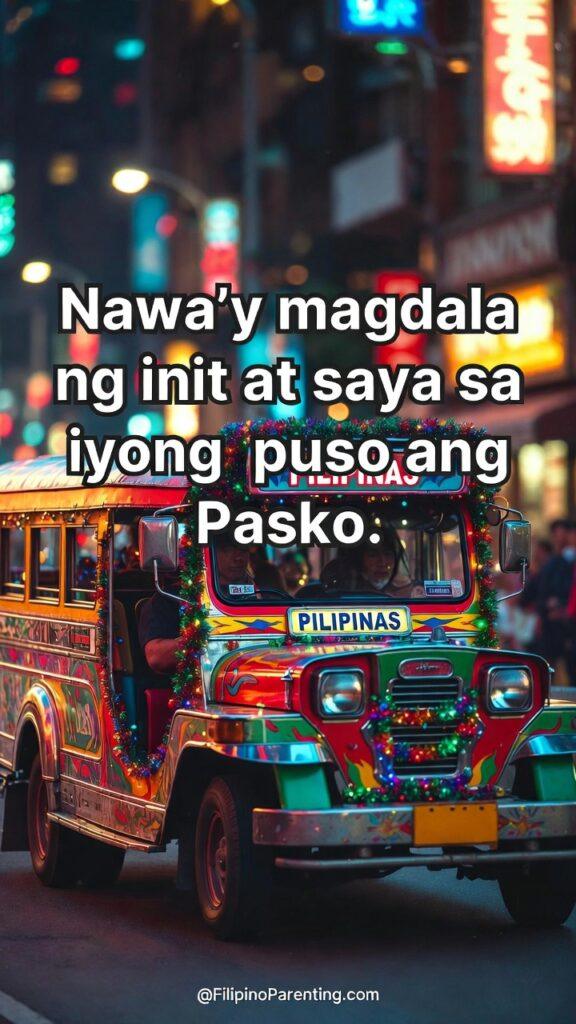
This specific phrase is one of the most beloved Maligayang Pasko greetings because it embodies the true Filipino spirit of the holidays. In our culture, we don’t just wish for “happiness”—we wish for the comforting warmth (init) and deep joy (saya) that can only be found when being with loved ones during the festive season.
For parents and adult learners, using these types of Maligayang Pasko greetings is a “Real-Talk” way to express emotional depth. While many Western greetings focus on the “merry” aspect, this Tagalog sentiment focuses on the feeling of home. When you are teaching the younger generation how to write cards, explaining that init ng puso (warmth of heart) is what we feel during Noche Buena is a great way to build their Tagalog vocabulary while sharing our cultural values. These Maligayang Pasko greetings serve as a bridge between language and the heart, ensuring that the essence of a Filipino Christmas is felt, not just heard.
Maligayang Pasko sa ating lahat
(Merry Christmas to all of us.)

This phrase is a staple among Maligayang Pasko greetings because it perfectly highlights the Filipino spirit of Kapwa—the concept of a shared identity and togetherness. Unlike a singular greeting, using the word ating (our) makes the sentiment inclusive. It reminds the younger generation and adult learners alike that Christmas is a collective celebration meant for the entire community, not just the individual.
In our “Real-Talk” cultural guides, we emphasize that a Paskong Pinoy is never a solo event. When you use these Maligayang Pasko greetings in a group setting—whether at a family reunion or a community gathering—you are reinforcing the bond that ties us all together as Filipinos. This is the perfect phrase for parents to use when leading a toast at the Noche Buena table, as it teaches the younger generation that in our culture, joy is best when shared (sama-sama). Incorporating these inclusive Maligayang Pasko greetings into your holiday traditions ensures that everyone feels a sense of belonging and cultural pride.
Maligayang Pasko at Manigong Bagong Taon
(Merry Christmas and a Prosperous New Year. 🎄✨)
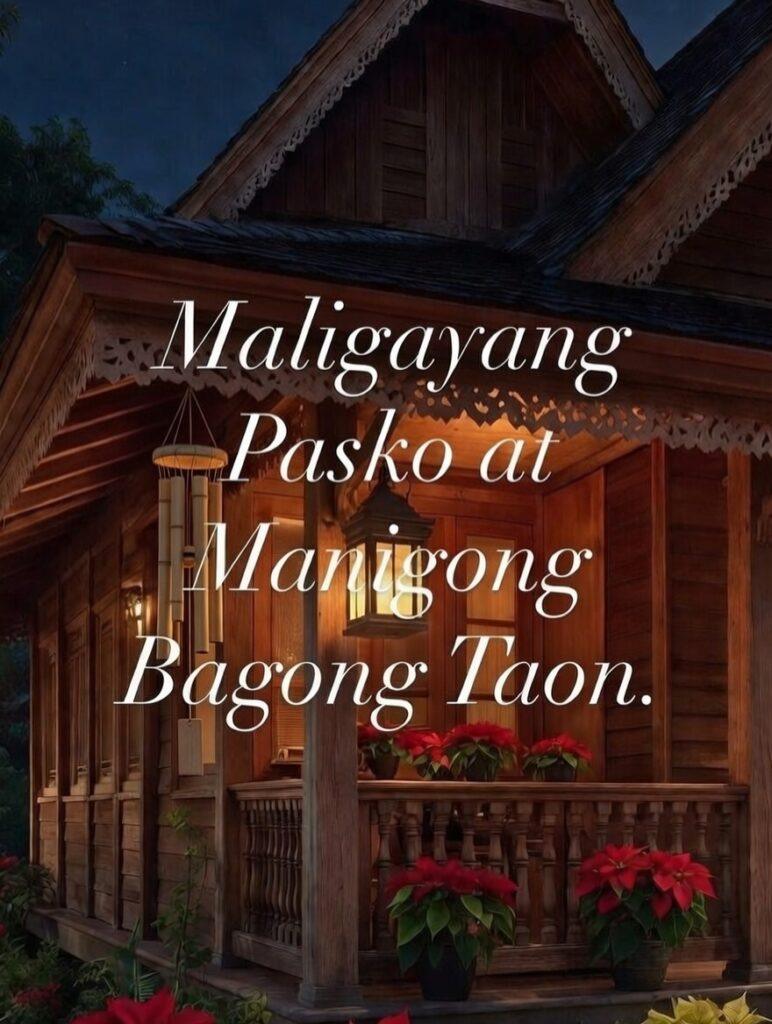
This is perhaps the most iconic of all Maligayang Pasko greetings because it bridges the two most important celebrations in the Filipino calendar. It combines the immediate joy of the Nativity (Maligayang Pasko) with a forward-looking wish for abundance and prosperity (Manigong Bagong Taon). For adult learners and parents, understanding the word manigo (prosperous/fortunate) is key to mastering traditional Maligayang Pasko greetings. Because this phrase is so versatile, it is widely used in holiday cards, social media captions, and formal messages, making it an essential part of any “Ultimate Guide” to Paskong Pinoy.
In our “Real-Talk” tradition, we don’t just wish for a “Happy” New Year; we wish for a “Prosperous” one because we want our families to thrive in every way. When teaching the younger generation these Maligayang Pasko greetings, it is important to explain that Manigo is about more than just financial wealth—it represents a harvest of blessings in health, peace, and love. Using these Maligayang Pasko greetings allows you to share a comprehensive blessing that carries your loved ones from the warmth of Noche Buena all the way into a successful year ahead.
Maligayang Pasko: The Heart of Pagmamano and Respect
(Merry Christmas.)
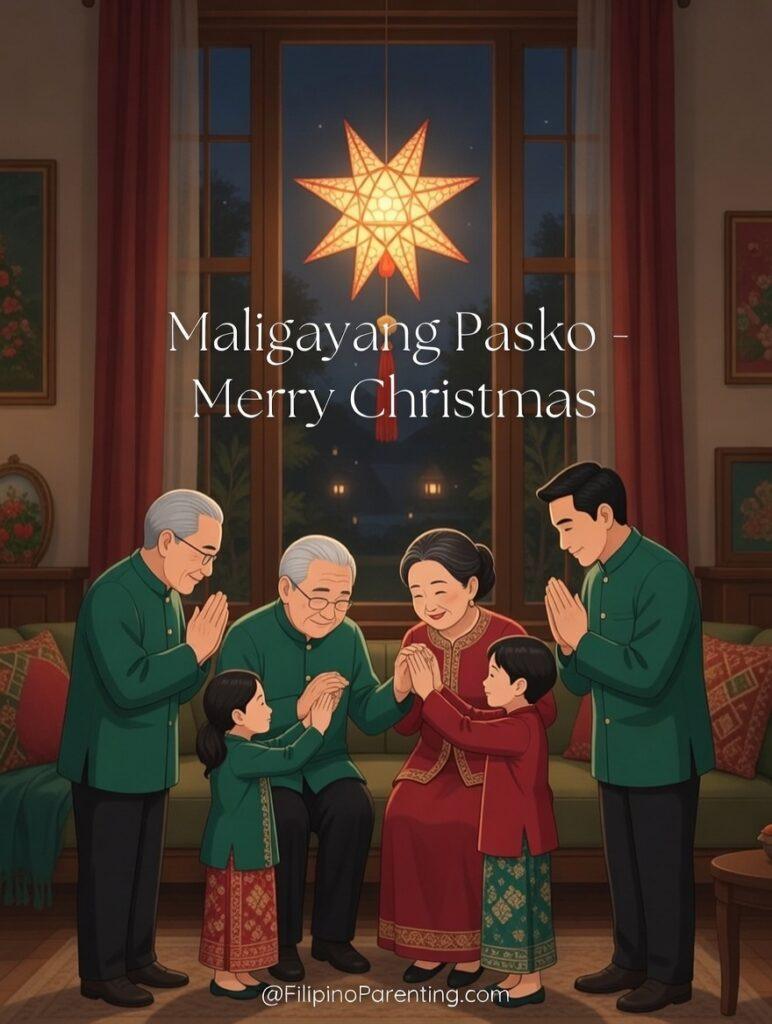
In a Filipino home, the holiday season is the peak time for the beautiful tradition of Pagmamano. As seen in our cultural illustrations, a multi-generational family comes together under the light of the Parol to honor their elders. For parents, teaching the younger generation to take the hand of a grandparent and press it to their forehead is more than just a gesture—it is a way of receiving a blessing for the year ahead.
When we exchange Maligayang Pasko greetings in Tagalog, they are almost always accompanied by this profound act of respect. For adult learners, understanding that Maligayang Pasko greetings are often physical as well as verbal is key to mastering the “Real-Talk” nuances of our culture. By saying the words while performing Mano Po, you are signaling your deep connection to your roots and your paggalang (respect) for those who came before you. It is also helpful to teach the younger generation the traditional response to this gesture; when an elder says, “Kaawaan ka ng Diyos” (May God bless you), it completes the exchange and makes your Maligayang Pasko greetings even more authentic and meaningful.
Maligayang Pasko galing sa aking puso
(Merry Christmas from my heart.❤️🎄)
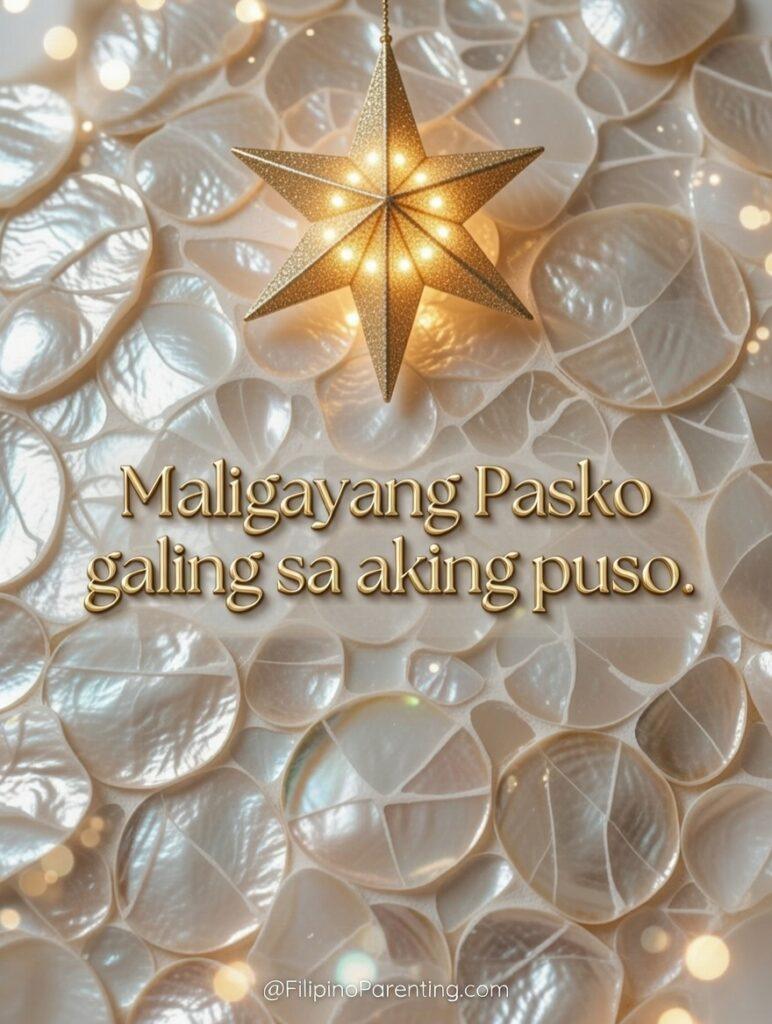
This greeting is a warm and deeply personal Filipino expression that conveys love, joy, and sincere holiday wishes. In our “Ultimate Guide” to Maligayang Pasko greetings, this phrase stands out because it emphasizes katapatan (sincerity). It is perfect for sharing with family, friends, or in festive messages, capturing the true spirit of a Paskong Pinoy—celebrating togetherness, generosity, and a genuine emotional connection.
For parents and adult learners, using these types of Maligayang Pasko greetings adds a layer of “Real-Talk” authenticity to your holiday cards. It moves beyond a simple “Merry Christmas” by specifying that the wish is coming galing sa puso (from the heart), which is a value highly esteemed in Filipino culture. When the younger generation writes their Christmas cards this year, encouraging them to use these Maligayang Pasko greetings for grandparents or godparents (ninong and ninang) is a beautiful way for learners to express that their gratitude for their elders is sincere and deep. By focusing on the “heart” of the message, you are teaching the next generation that the most meaningful Maligayang Pasko greetings are those that reflect true pagpapahalaga (appreciation).
Maligayang Pasko sa iyo.
(Merry Christmas to you.)

While we often celebrate in large, vibrant groups (sama-sama), there is a distinct beauty in using individual Maligayang Pasko greetings like this one. This specific phrase turns the focus entirely to the person in front of you. In our “Ultimate Guide,” we use the image of a brilliant golden Parol against a festive green backdrop to represent the light we share with one person at a time.
For parents, teaching the younger generation to look someone in the eye and say “sa iyo” (to you) is a vital lesson in presence and intentionality. In the hustle and bustle of a typical Paskong Pinoy, it is easy for learners to just say a general greeting to the room. However, taking a moment for personal Maligayang Pasko greetings for each auntie or uncle is what makes the season truly makahulugan (meaningful). It teaches the younger generation that while the community is important, the individual connection is where the heart of the holiday lives. By using these personalized Maligayang Pasko greetings, you are making a small change that makes a huge difference in showing pagpapahalaga (appreciation).
Maligayang Pasko sa iyong pamilya.
(Merry Christmas to your family.)

In the Philippines, we rarely do anything alone—especially during the holidays! When you share these Maligayang Pasko greetings, you are acknowledging the deep bond that connects every Filipino to their roots. This specific phrase, “Maligayang Pasko sa iyong pamilya,” is a staple in our “Ultimate Guide” because it recognizes that a person’s joy is inextricably tied to their household.
For parents raising the younger generation abroad, using these Maligayang Pasko greetings is a “Real-Talk” essential. It teaches learners that in our culture, family isn’t just the people living in your house; it includes the aunties, uncles, and cousins who make up your entire support system. When sending a message to a friend, always extending your Maligayang Pasko greetings to their whole family is a subtle but powerful way to show the younger generation that we value the “extended” part of our extended families. By including the entire household in your Maligayang Pasko greetings, you are honoring the collective spirit and the sense of pagkakaisa (unity) that defines a true Paskong Pinoy.
Nawa’y mapuno ng kapayapaan at saya ang iyong Pasko.
(Wishing you peace and joy this Christmas.)

While many of our traditions are loud and vibrant—filled with the noise of karaoke and fireworks—there is also a deep appreciation for the quiet, sacred moments of the season. The phrase “Nawa’y mapuno ng kapayapaan at saya ang iyong Pasko” is one of the most elegant Maligayang Pasko greetings because it reflects the essential balance between outward celebration and inward reflection.
For parents, using these types of Maligayang Pasko greetings is a beautiful way to teach learners that joy (saya) is most meaningful when it is accompanied by peace (kapayapaan). In the middle of the holiday rush, it’s easy for the younger generation to get overwhelmed by the festivities. By teaching them that kapayapaan starts at home, you are sharing a “Real-Talk” truth: a peaceful heart is the best gift you can give your families. Using these Maligayang Pasko greetings for a friend who has had a busy year shows you truly care about their well-being, not just their holiday plans. Ultimately, by sharing these Maligayang Pasko greetings, you are wishing for a harmony that lasts long after the parties end, ensuring the spirit of Christmas stays with them throughout the year.
Maligayang Pasko at pagpalain ka ng Diyos.
(Merry Christmas and God bless you.)
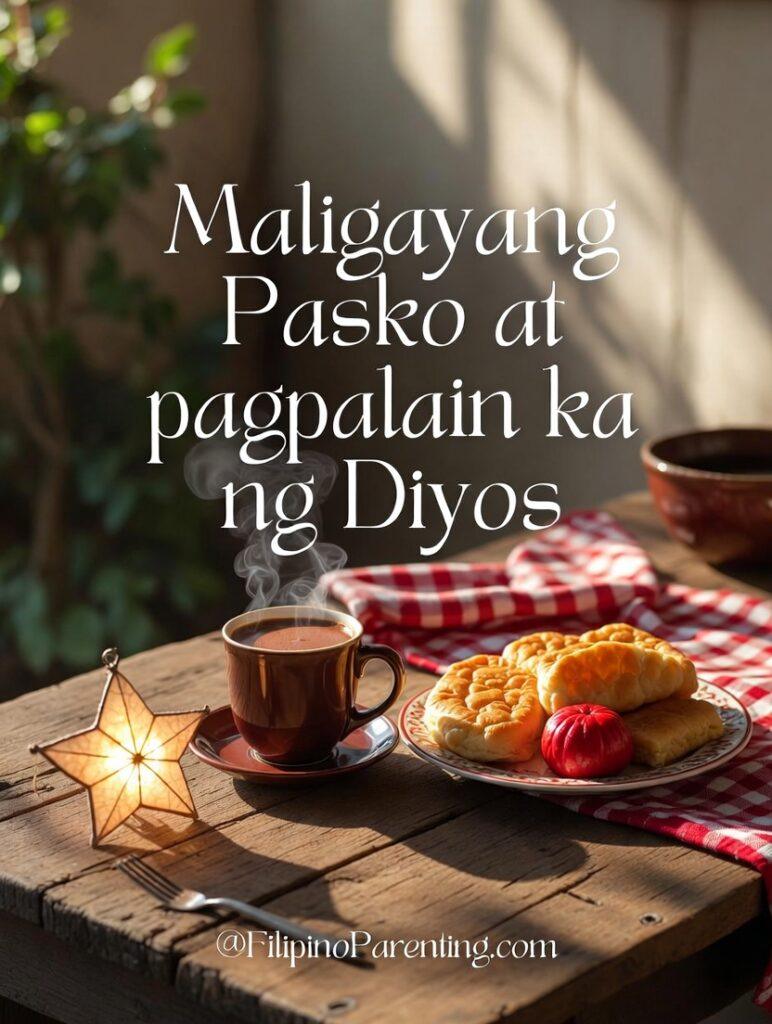
There is no experience quite like the first light of Christmas morning in a Filipino home. Before the house fills with the angkan (extended clan) for the midday handaan (feast), there is a peaceful, sacred window of time. For parents, these quiet sensory moments—the deep, earthy aroma of brewing Kapeng Barako (Batangas coffee) and the gentle glow of morning light—become lifelong memories for the younger generation.
When we greet loved ones with “Maligayang Pasko at pagpalain ka ng Diyos,” we are using one of the most traditional Maligayang Pasko greetings to blend holiday joy with a sincere prayer for protection. These types of Maligayang Pasko greetings gently remind learners that a Filipino Christmas is deeply anchored in pananampalataya (faith) and the simple belief that every shared meal is a pagpapala (blessing). For adult learners, mastering these faith-based Maligayang Pasko greetings is essential for participating in the spiritual heart of the season, showing that our celebrations are about more than just the festivities—they are a recognition of divine grace within the family.
Nawa’y mapuno ng pagmamahal ang iyong Pasko.
(May your Christmas be full of love.)
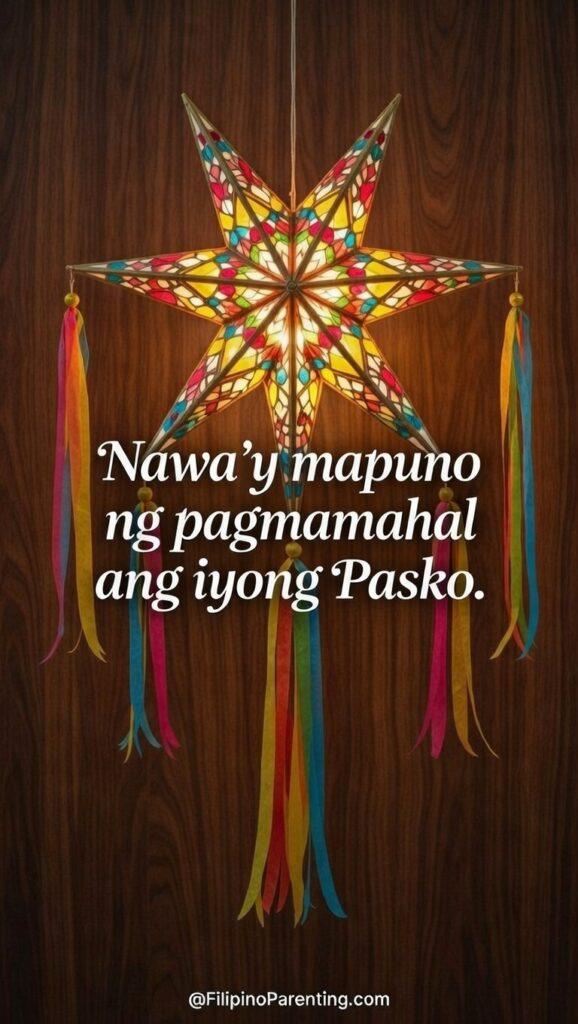
No Filipino home is truly ready for the holidays without a Parol hanging in the window. This star-shaped lantern is more than just a decoration; it represents the star that guided the Three Kings, symbolizing hope and the light of a mother’s love in the tahanan (home). When we say, “Nawa’y mapuno ng pagmamahal ang iyong Pasko,” we are wishing for that same light to fill the lives of our loved ones.
For parents, teaching learners about the Parol is a way to bridge the gap between physical traditions and emotional expressions like these Maligayang Pasko greetings. In our culture, pagmamahal (love) is the fuel that keeps the lantern glowing through the night. Using these Maligayang Pasko greetings allows adult learners to express a deep, selfless kind of love that is central to the Filipino family unit. It reminds the younger generation that while the Parol is beautiful to look at, the true warmth of the season comes from the love we share within our four walls. By incorporating these Maligayang Pasko greetings into your holiday cards or social media posts, you are sharing a piece of that iconic Filipino light with the world.
Maligayang Pasko sa inyong lahat.
(Merry Christmas to everyone.)
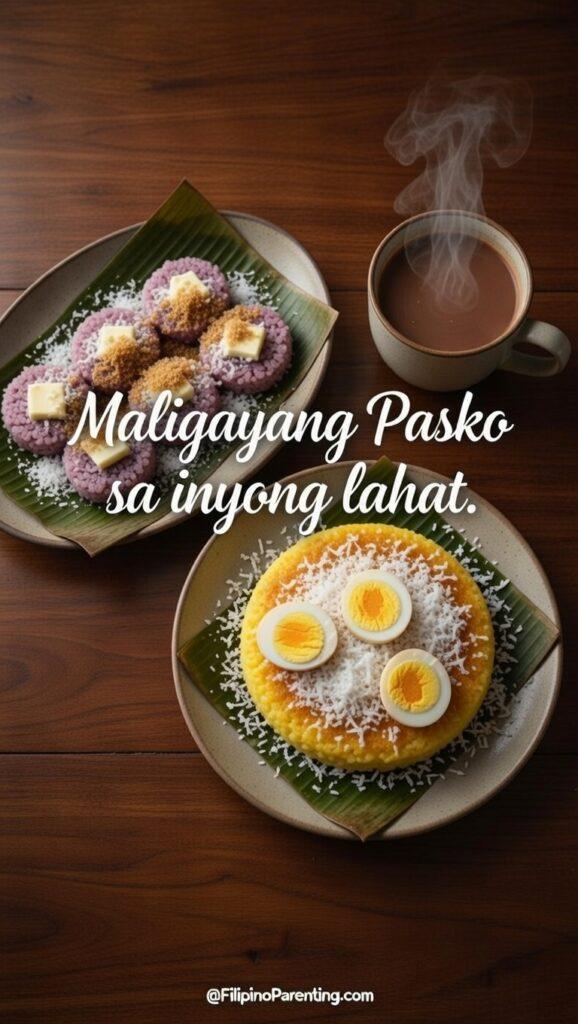
A Filipino Christmas morning begins with a quiet, comforting rhythm. Before the house fills with the angkan (extended family) for the midday handaan, there is a serene moment to savor simple joys—what we call init ng tahanan (warmth of the home). Picture a steaming cup of coffee and a plate of freshly baked pandesal on a rustic wooden table, a red checkered napkin beside them, and the soft glow of a star-shaped parol illuminating the room.
Saying “Maligayang Pasko sa inyong lahat” during this time wraps everyone in a shared feeling of peace, faith (pananampalataya), and gratitude for life’s everyday blessings. For parents and adult learners, these Maligayang Pasko greetings are essential because they use the plural “everyone” (inyong lahat), making the blessing inclusive of the entire household. In our cultural guides, we emphasize that these Maligayang Pasko greetings turn a simple morning meal into a communal celebration. It reminds the younger generation that in a Filipino home, no one is left out of the holiday joy. By mastering these inclusive Maligayang Pasko greetings, you are speaking directly to the heart of the Filipino family—where the smallest moments of togetherness are the greatest pagpapala (blessings).
Mainit na pagbati ng Maligayang Pasko sa iyo.
(Warm Christmas greetings to you.)

In the Philippines, while the loudest celebrations happen at midnight, the most cherished moments are often found in the calm of Christmas morning. Before the house fills with relatives for the midday handaan (feast), there is a quiet window to savor reflection, gratitude, and the simple joys of family. Imagine a warm, rustic Filipino breakfast scene: a steaming cup of coffee and a plate of freshly baked pandesal rest on a wooden table with a red checkered napkin. A glowing, star-shaped parol illuminates the room with soft morning light, embodying the init ng tahanan (warmth of the home).
When we use Maligayang Pasko greetings like this one, we are offering more than words; we are sharing a heartfelt blessing. This specific greeting reminds learners and loved ones that Filipino culture is deeply rooted in pasasalamat (gratitude) and the belief that every simple morning is a gift to be shared. For parents, teaching the younger generation these Maligayang Pasko greetings is a “Real-Talk” way to bridge the gap between language and the cozy, welcoming feeling of a Pinoy household. By mastering these Maligayang Pasko greetings, you aren’t just reciting Tagalog—you are inviting someone into the warmth of your heart and home.
Nawa’y magdala ng pag-asa ang Paskong ito.
(May this Christmas bring hope. ✨)
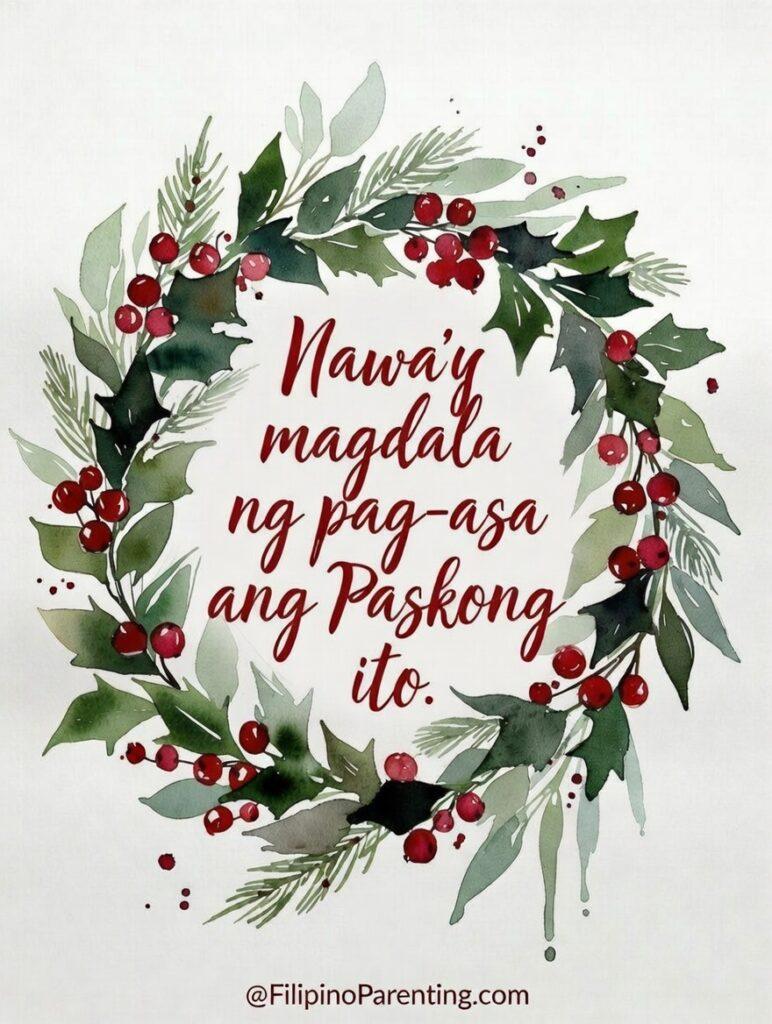
This festive and elegant wreath embodies pag-asa (hope), a core Filipino value during the holiday season. Designed for parents and learners, it represents the promise of brighter days ahead, the warmth of family, and the resilience of the Filipino spirit. In the Philippines, even the simplest decorations carry deep meaning. A wreath on the door is more than ornamentation—it symbolizes unity, continuity, and the collective hope of the tahanan (home).
When we use Maligayang Pasko greetings like this one, we are sharing more than just words. We are sending a heartfelt wish for perseverance, joy, and renewed faith. For adult learners, practicing these Maligayang Pasko greetings connects them to the spiritual depth of a Paskong Pinoy and the tradition of expressing hope through meaningful language. Seeing a glowing circle of lights reminds families to pause and embrace the blessings of the season. By incorporating these Maligayang Pasko greetings into your holiday repertoire, you are teaching the younger generation that no matter the challenges of the past year, the Filipino heart always looks forward with pag-asa.
Ipinapadala ko sa iyo ang masasayang pagbati ng Pasko.
(Sending you joyful Christmas wishes.)

This cozy and heartfelt Tagalog greeting is perfect for parents to share with loved ones, whether near or far. Imagine a snowy winter village under a starry night sky—the perfect backdrop for expressing the joy and warmth of a Paskong Pinoy. Beyond words, this greeting carries love, cheer, and a sense of togetherness across any distance.
For adult learners, using these types of Maligayang Pasko greetings helps bridge the gap between simple vocabulary and emotional expression. It helps learners understand how Filipino greetings convey both deep emotion and cultural meaning, making every message feel personal. If you are just starting your language journey, you might want to pair these holiday wishes with our Complete Beginners Guide to Learning Tagalog to help you navigate conversations with the angkan (extended family) more confidently. By mastering these Maligayang Pasko greetings, you are ensuring that your holiday wishes resonate with the “Real-Talk” authenticity that defines our culture.
Maligayang Pasko at mapagpalang pagdiriwang.
(Merry Christmas and a blessed celebration. 🙏)
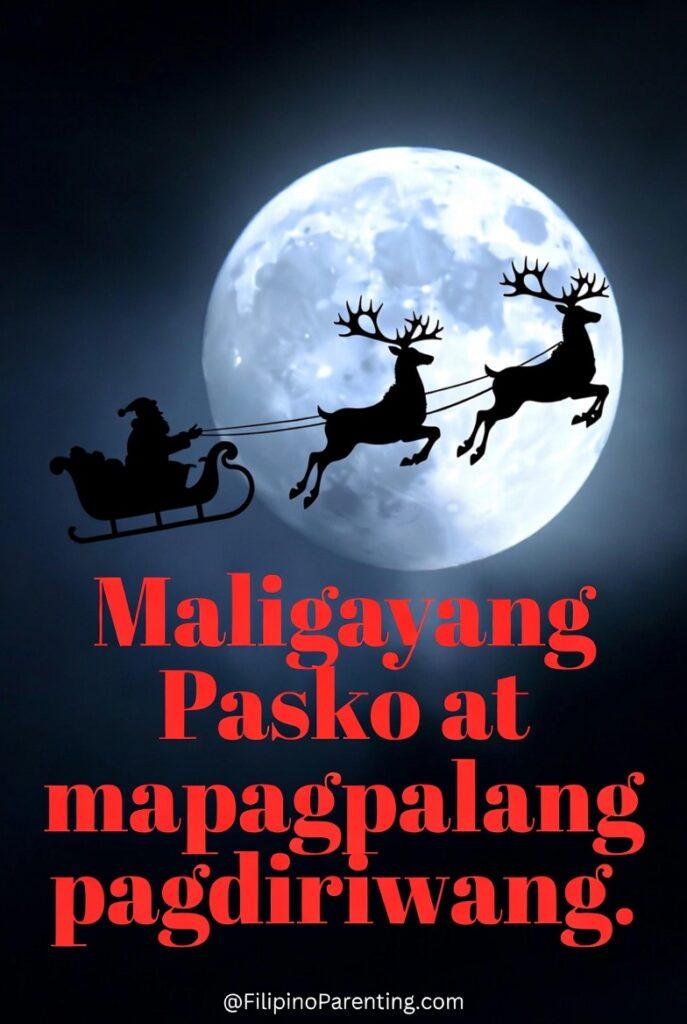
In a Filipino household, the celebration doesn’t end at midnight—it extends into the first light of Christmas morning. This quiet, sacred window, before relatives gather for the midday handaan, offers a moment of calm reflection. The soft morning light streaming through the windows, combined with the comforting aroma of steaming Kapeng Barako, creates a cherished heritage memory that stays with the younger generation for a lifetime. If you want to master the art of the Filipino morning, you can check out our guide on Tagalog Coffee Phrases for Your Morning Routine to add more “Real-Talk” flavor to your daily life.
Using these Maligayang Pasko greetings transforms a simple phrase into a heartfelt, spiritual wish. It helps adult learners understand that pagpapala (blessing) is central to Filipino culture, showing how faith and tradition are intertwined in every Paskong Pinoy. By choosing these specific Maligayang Pasko greetings, you are acknowledging that the holiday is not just a party, but a pagdiriwang (celebration) of grace and family. For parents, teaching the younger generation to use these Maligayang Pasko greetings reinforces the value of pananampalataya (faith), ensuring they understand the deeper meaning behind the festivities.
Nawa’y maging masaya at payapa ang iyong Pasko.
(Wishing you a joyful and peaceful Christmas. 🕊️)

While many Paskong Pinoy traditions are lively and vibrant—echoing with karaoke and the laughter of a large handaan—Filipinos place equal value on kapayapaan (peace). These types of Maligayang Pasko greetings beautifully capture the balance between joyful celebration and serene reflection. For parents, teaching the younger generation this phrase is a lesson in mindfulness; it reminds learners that while high-energy festivities are cherished, the true spirit of the season is found when homes are filled with both joy and tranquility.
For adult learners, understanding the nuance between masaya (happy/joyful) and payapa (peaceful) is a great way to expand your emotional range in Tagalog. You can dive deeper into these sentiments with our Tagalog Emotions Vocabulary Word List, which provides more “Real-Talk” ways to express how you feel. By using these balanced Maligayang Pasko greetings, you are offering a more profound wish that touches on the overall well-being of your loved ones. Ultimately, including payapa in your Maligayang Pasko greetings acknowledges that a peaceful heart is the greatest gift one can receive during the busy holiday rush.
Nawa’y mapuno ng kagalakan ang iyong tahanan ngayong Pasko.
(May your home be filled with Christmas joy. 🏠✨)
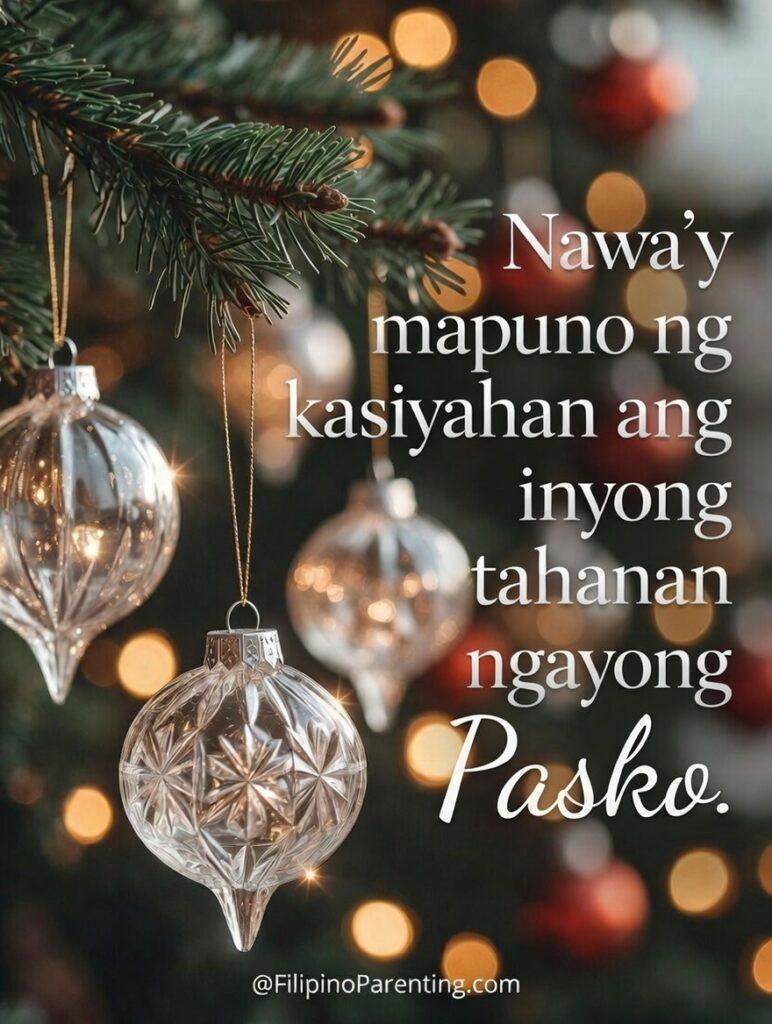
n Filipino culture, the tahanan (home) is more than just a physical house—it’s a sanctuary of warmth, love, and hospitality. Decorated with twinkling lights and festive ornaments, it reflects a family’s joy as they prepare for the most important night of the year: Noche Buena. Sharing Maligayang Pasko greetings in Tagalog helps pass down these traditions and the spirit of togetherness to the younger generation.
For adult learners, understanding the words that describe the heart of the home is a great way to build your “Real-Talk” fluency. You can explore more about the Filipino living space in our Tagalog Household Items Word List, which bridges the gap between holiday decor and daily life. When you use these Maligayang Pasko greetings, you are specifically wishing for kagalakan (joy) to resonate within the very walls of a loved one’s home. For parents, teaching the younger generation these Maligayang Pasko greetings reinforces the idea that the home is the center of our cultural universe, making every festive wish feel deeply personal and grounded in our roots.
Maligayang Pasko na puno ng pagmamahal at biyaya.
(Merry Christmas with love and blessings. ❤️✨)

In Filipino culture, the tahanan (home) is more than just a house—it is a sanctuary of warmth, love, and hospitality. Adorned with glowing lights and elegant ornaments, it captures the quiet beauty of a family preparing for the most important night of the year. Whether hosting a large handaan or an intimate gathering, the goal is always the same: to share the true spirit of Maligayang Pasko greetings, where everyone feels welcomed and part of the family.
For parents and adult learners, the home is also where cherished traditions are passed to the younger generation. Displaying these Maligayang Pasko greetings in Tagalog—on walls, cards, or digital messages—immerses learners in both the language of their ancestors and the warmth of Filipino holiday culture. Understanding how to address each family member properly is key to expressing these sentiments, and you can master those titles in our Guide to Family Members in Tagalog. Using these Maligayang Pasko greetings ensures that the “Real-Talk” value of biyaya (blessings) is felt by every cousin, auntie, and grandparent, bridging the gap between holiday decor and deep cultural connection.
Nawa’y makamtan mo ang kasiyahan ngayong panahon ng Pasko.
(Wishing you happiness this Christmas season. 🥥🌴)

There is a special kind of magic in a Christmas celebrated in the lalawigan (province). This image of a decorated Bahay Kubo reminds us that you don’t need a mansion to have a home filled with warmth and light. For parents, teaching the younger generation about the Bahay Kubo helps ground them in their history and highlights the simple beauty of a traditional, tropical Filipino Christmas. To help the younger generation visualize this humble holiday spirit, you can download our free Bahay Kubo Coloring Pages and Cultural Guide.
Whether you are in a snowy city or a tropical town, the spirit of the season lives in the home we create with our loved ones. By sharing Maligayang Pasko greetings in Tagalog, you invite that humble, heartfelt Filipino warmth into your own space—no matter where in the world you celebrate. For adult learners, using these types of Maligayang Pasko greetings is a “Real-Talk” way to honor our roots and express kasiyahan (happiness) that isn’t tied to material things, but to family and tradition. Incorporating these Maligayang Pasko greetings into your holiday repertoire ensures that the core values of the lalawigan—simplicity, joy, and community—stay alive in your household.
Maligayang Pasko at taos-pusong pagbati sa iyo.
(Merry Christmas and heartfelt wishes to you. ✨)
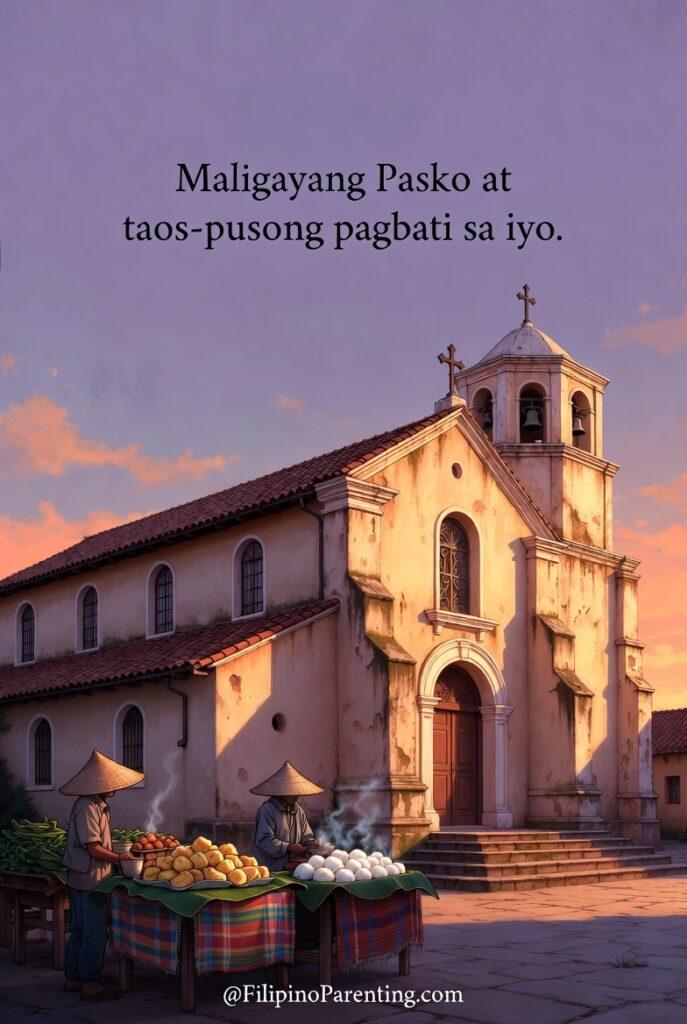
The 4:00 AM hush in the Philippines carries a quiet, enchanting magic—the gentle rustle of leaves in the cool morning breeze, the distant chime of church bells, and the shared, unspoken excitement that hums through every waiting family. This is the true heart of a Paskong Pinoy—when entire neighborhoods rise in the dark to walk toward the glow of a centuries-old stone church for Simbang Gabi, united in pananampalataya (faith) and the promise of a new dawn. If you’re teaching the younger generation about these early holiday traditions, our guide on Tagalog Morning Routine Vocabulary is a perfect “Real-Talk” resource to help them describe their own day-to-day habits in Tagalog.
For parents and adult learners, using these Maligayang Pasko greetings brings that specific Philippine warmth into your own tahanan (home), regardless of where you are in the world. It’s not just about the words; it’s about the pagpapahalaga (appreciation) we have for one another and the care we take to keep our traditions alive. By choosing these heartfelt Maligayang Pasko greetings, you are signaling that your wish comes from a place of katapatan (sincerity). Incorporating these Maligayang Pasko greetings into your holiday cards is a beautiful way to ensure that the sacred, quiet magic of a Filipino Christmas morning is felt by everyone you love.
Nawa’y madama mo ang pagmamahal at saya ngayong Pasko.
(May you feel love and joy this Christmas. ❤️🍴)
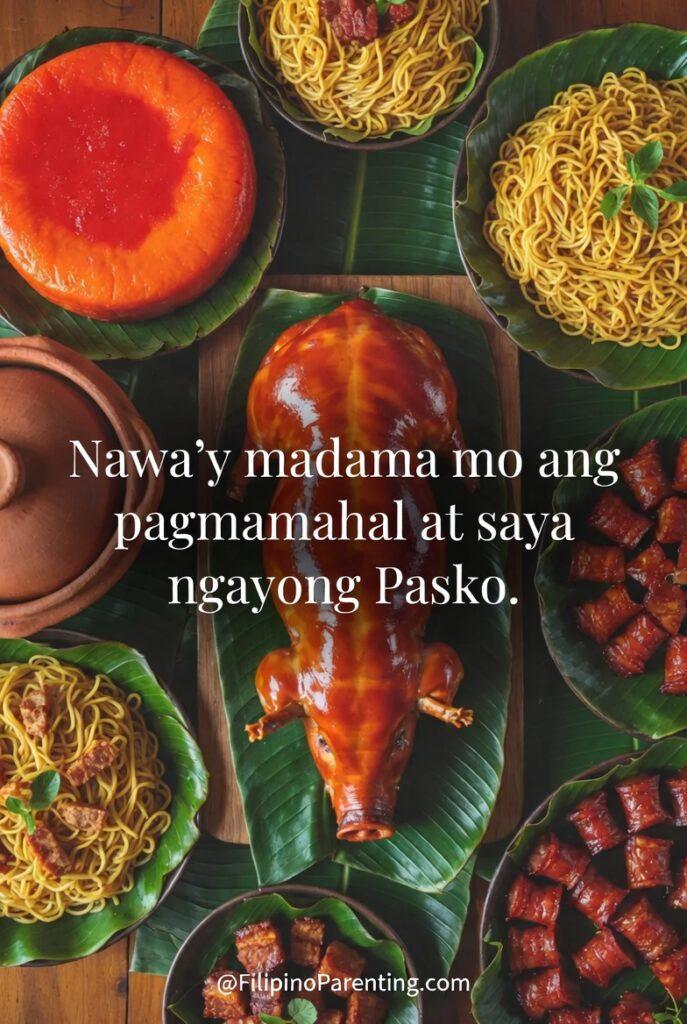
In the Philippines, Christmas doesn’t truly begin when the clock strikes midnight—it begins when families gather around the table for Noche Buena. Long after the gifts are wrapped and the house is decorated, it’s this shared moment of food, laughter, and late-night togetherness that leaves the deepest imprint on the heart. For the younger generation, Noche Buena becomes a core memory. It’s the joy of staying up past bedtime, the comfort of familiar dishes, and the feeling of being surrounded by people who love you.
Beyond the spaghetti or lechon, serving a favorite like our Canned Tuna Lumpia is a “Real-Talk” way to keep traditions alive without spending all day in the kitchen. Using these Maligayang Pasko greetings reminds us that while the food is important, the magic isn’t in how full the table looks—it’s in how full the room feels. Years from now, learners won’t remember the centerpiece, but they will remember the laughter, the stories, and the warmth of being together at midnight. By sharing these Maligayang Pasko greetings, you are teaching the younger generation that Christmas is about presence—showing up for one another, year after year. Incorporating these Maligayang Pasko greetings into your feast ensures that the focus remains on pagmamahal (love) and saya (joy).
Ipinapadala ko ang kapayapaan at pagpapala ngayong Pasko.
(Sending peace and blessings this Christmas. 🕊️✨)
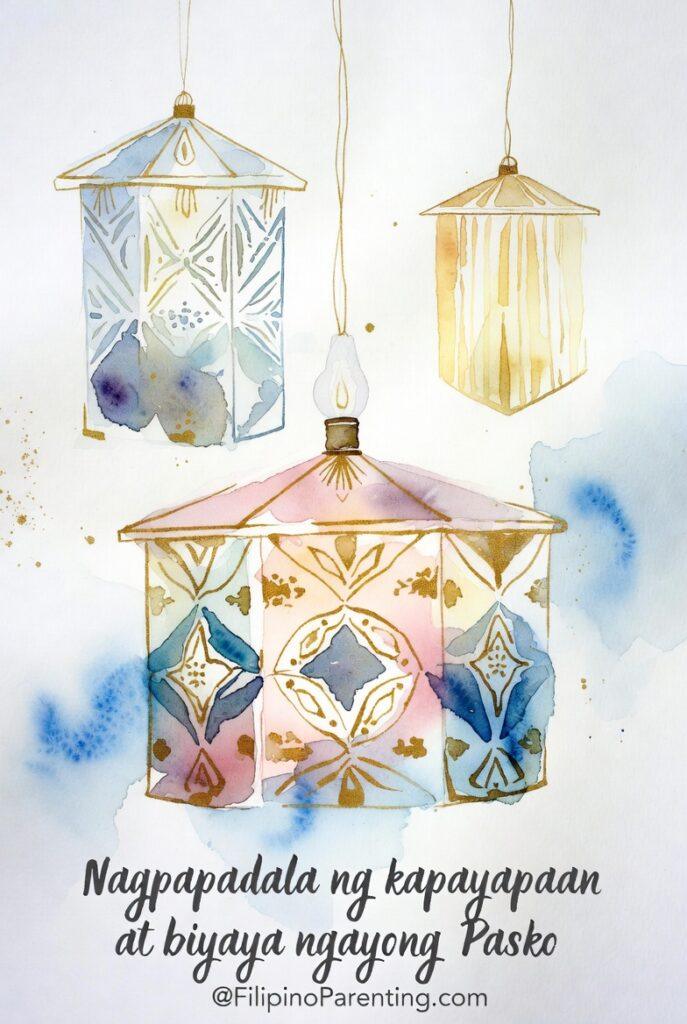
One of the most beautiful aspects of a Filipino Christmas is that the guest list is never truly closed. Whether it’s a neighbor stopping by for Puto Bumbong or a distant relative joining the family group chat from overseas, Maligayang Pasko greetings in Tagalog always find a way to include everyone. This “open-door” tradition is deeply rooted in the concept of Kapwa (shared identity) and hospitality.
For parents, teaching the younger generation to extend their Maligayang Pasko greetings to the entire community—not just immediate family—is a meaningful way to pass down our cultural heritage. It reminds learners that in a Filipino home, there is always room for one more at the table. If you are looking to expand your conversational skills beyond the holidays, our Tagalog Greetings Vocabulary Word List is a “Real-Talk” essential for mastering everyday interactions. By using these types of Maligayang Pasko greetings, you are practicing the values of pagkabukas-palad (generosity) and ensuring that the spirit of peace and blessing reaches every corner of your social circle.
Maligayang Pasko at mainit na pagbati sa iyong mga mahal sa buhay.
(Merry Christmas and warm greetings to your loved ones. ❤️✨)
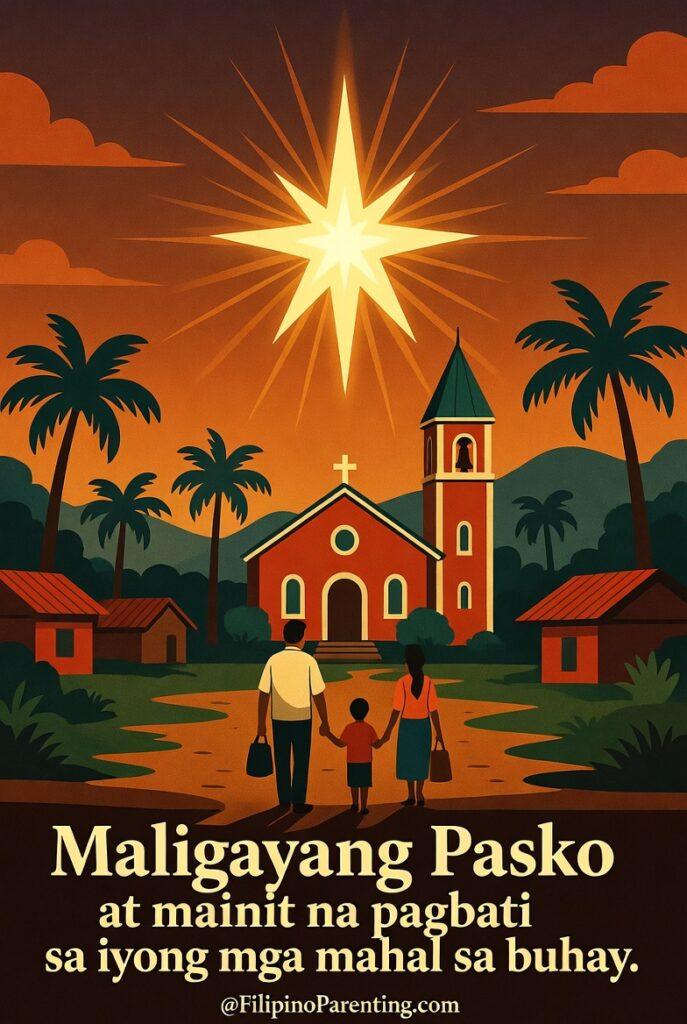
For many families, the holiday season can sometimes feel like a whirlwind of shopping and parties. Yet in Filipino culture, we aim for a Makahulugang Pasko—a truly meaningful Christmas. This celebration isn’t just about the gifts (regalo); it’s about the pagpapala (blessings) we share and the pananampalataya (faith) that grounds us. Teaching the younger generation to focus on these deeper Maligayang Pasko greetings in Tagalog helps them understand that our culture values people over things.
When we send Maligayang Pasko greetings to our mahal sa buhay (loved ones), we are making a conscious effort to strengthen our relational bonds. For adult learners, mastering the language of affection is just as important as holiday vocabulary; you can explore more ways to express your care in our guide to Tagalog Love Phrases and Terms of Endearment. By choosing these specific Maligayang Pasko greetings, you are shifting the focus from the “whirlwind” of the season back to the “Real-Talk” priority of family and heart-to-heart connection. It reminds everyone involved that a truly masaganang Pasko (abundant Christmas) is measured by the love we give to those closest to us.
Nawa’y maging tunay na makahulugan ang iyong Pasko.
(Wishing you a truly meaningful Christmas. ✨)

This greeting embodies the heart of Paskong Pinoy—a celebration that goes beyond gifts and decorations. It reminds us that the true spirit of the season lies in family, faith, and togetherness. In our culture, a Makahulugang Pasko (Meaningful Christmas) is rooted in two core values: Pagpapala (Blessings), which acknowledges grace and abundance, and Pagkakaisa (Togetherness), which strengthens the bond between the community and the pamilya.
When you use these Maligayang Pasko greetings, you’re offering more than words—you’re giving a blessing and including someone in your life and community. As the “Real-Talk” saying goes: “Kahit maliit ang handa, basta’t sama-sama” (Even if the feast is small, as long as we are together). For parents and learners, understanding these values is the first step toward cultural fluency; you can dive deeper into these traditions in our guide to Essential Elements of Filipino Culture.
For families living abroad, Noche Buena becomes a living memory where these Maligayang Pasko greetings take center stage. It’s not just about the food—it’s about staying together as a unit to welcome Christmas Day with a peaceful heart. By practicing these Maligayang Pasko greetings, you are ensuring that the younger generation understands that the most important part of the holiday is the connection we share, sending peace and blessings (kapayapaan at biyaya) to everyone you hold dear.
Nawa’y maging tunay na makahulugan ang iyong Pasko.
(Wishing you a truly meaningful Christmas. ✨🇵🇭)
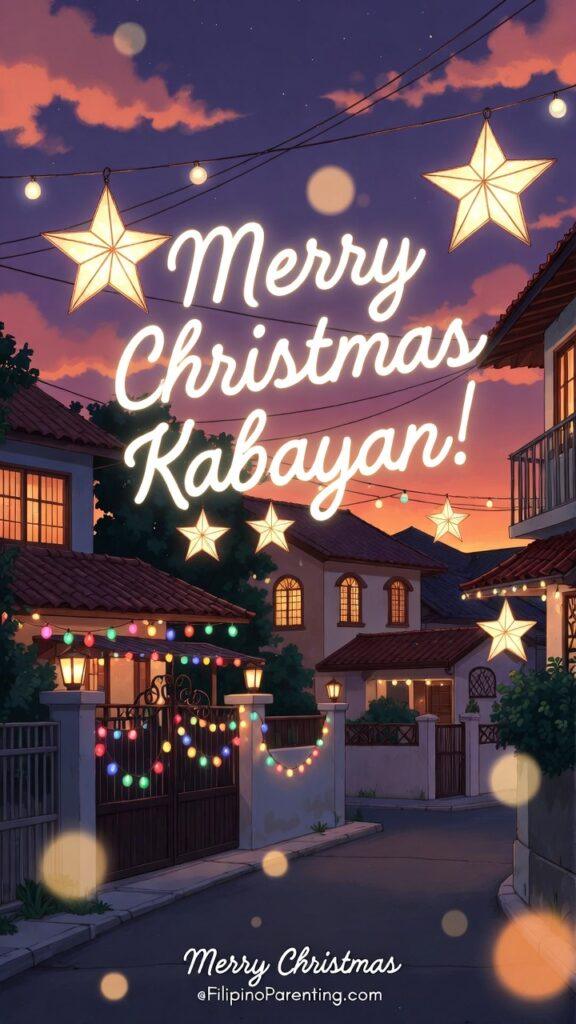
This greeting embodies the absolute heart of a Paskong Pinoy—a celebration that goes far beyond any regalo (gift) or fancy handaan (feast). It reminds us that the true spirit of a Makahulugang Pasko (Meaningful Christmas) lies in the simple, profound joys of family (pamilya), faith (pananampalataya), and togetherness (pagkakaisa).
Imagine a Filipino neighborhood at dusk: a soft, warm glow begins to spread from house to house as families switch on their star-shaped Parols and colorful string lights. For adult learners, understanding that the Parol is more than just a decoration—it’s a symbol of the light that leads us home—provides essential cultural context. When you use these Maligayang Pasko greetings, you aren’t just reciting words; you are offering a deep, heartfelt wish for someone to experience that same inner warmth. If you want to pair this wish with more emotional depth, you can explore our collection of Tagalog Love Quotes for Family and Relationships to find the perfect “Real-Talk” sentiment.
For parents, teaching the younger generation to focus on these meaningful Maligayang Pasko greetings is a powerful way to shift their attention from the commercial side of the season to the deeper value of pagpapala (blessings). For families celebrating abroad, sending these specific Maligayang Pasko greetings across the miles ensures that every loved one feels the glow of togetherness that defines our heritage. It is the ultimate expression of Kabayan holiday wishes, bridging the distance between your current home and your roots.
Maligayang Pasko Greetings
(Merry Christmas Greetings. ✨🇵🇭)

In the Philippines, the holiday season is more than just a date on the calendar; it is a season of light, faith, and unbreakable family bonds. Whether you are far from home or gathering around a Noche Buena feast, sharing these Maligayang Pasko greetings in our native tongue carries a unique weight and warmth. Imagine a golden “Merry Christmas and a Happy New Year” script framed by glowing fairy lights and delicate snowflakes on a deep red background—this visual represents the “Real-Talk” blend of tropical tradition and modern celebration.
For parents, teaching the younger generation these specific Maligayang Pasko greetings is a way to bridge the distance between our heritage and our current homes. It’s not just about the words; it’s about the pagpapahalaga (appreciation) we have for one another. Since the centerpiece of any Filipino holiday is the food, you can explore our Guide to Filipino Food for Christmas to find the perfect dishes to pair with your heartfelt wishes. By mastering these Maligayang Pasko greetings, you are ensuring that the spirit of pagkakaisa (togetherness) remains the focus of your celebration. Whether shared through a hand-written card or a quick digital message, these Maligayang Pasko greetings serve as a beacon of hope and love for every Kabayan around the world.
FAQ: Maligayang Pasko Greetings
How can I teach the younger generation Tagalog Christmas greetings? Use simple phrases like “Maligayang Pasko po” and visual aids or printable cards.
How do you say “Merry Christmas” in Tagalog? Maligayang Pasko
What does “Maligayang Pasko” mean? It means “Joyful Christmas.” Maligaya = happy; Pasko = Christmas
How do you say “Merry Christmas and a Happy New Year”? Maligayang Pasko at Manigong Bagong Taon! (Manigong = prosperous)
Should I add “po” to greetings? Yes, Maligayang Pasko po shows respect to elders.
Is Paskong Pinoy different from Christmas in other countries? Yes. It’s longer, starting in September, with traditions like Simbang Gabi, Parol, and Mano Po.
Wrapping Up: A Truly Makahulugang Pasko
In the Philippines, Christmas is far more than a holiday—it is a season of family, faith, and community. From the glow of a handcrafted Parol to the shared laughter around the Noche Buena table, every tradition, greeting, and gesture is imbued with meaning. Saying Maligayang Pasko greetings is not just a formality; it is a “Real-Talk” invitation to spread warmth, love, and blessings, connecting people across generations and distances.
Whether you are teaching the younger generation to honor elders through Pagmamano, or celebrating with a simple Bahay Kubo in the province, the spirit of Filipino Christmas lies in the sincerity of every moment. The iconic star-shaped lantern remains the ultimate symbol of this season. In fact, San Fernando, Pampanga, is known as the “Christmas Capital of the Philippines” because of the Giant Lantern Festival, a century-old tradition (locally known as Ligligan Parul) that showcases the world-class artistry of the Filipino Parol.
As the country enters the cool dry season in December, the weather becomes perfect for the world’s longest holiday celebration, with crisp evenings that make Simbang Gabi (dawn mass) even more magical. As you embrace this season, let your Maligayang Pasko greetings carry your pagmamahal (love), kapayapaan (peace), and pag-asa (hope) to family, friends, and community. May your holidays be truly meaningful, leaving memories that linger long after the lights of the Parol dim. By consistently using these Maligayang Pasko greetings, you are keeping the flame of our heritage alive for the younger generation to carry forward.