In Tagalog, household items are called mga gamit sa bahay, while furniture is known as muwebles. These are the everyday objects that quietly shape our routines — the kama we fall asleep on after a long day, the mesa where stories are shared, and the walis we reach for every weekend.
In Filipino homes, household items are more than functional objects. They hold memories. They witness family dinners, birthday celebrations, deep conversations, and even small misunderstandings about who forgot to wash the dishes. Learning household items in Tagalog helps language learners speak naturally while connecting to the warmth of Filipino home life.
Let’s explore the most common mga gamit sa bahay, complete with vocabulary and real-life example sentences (with English translations).
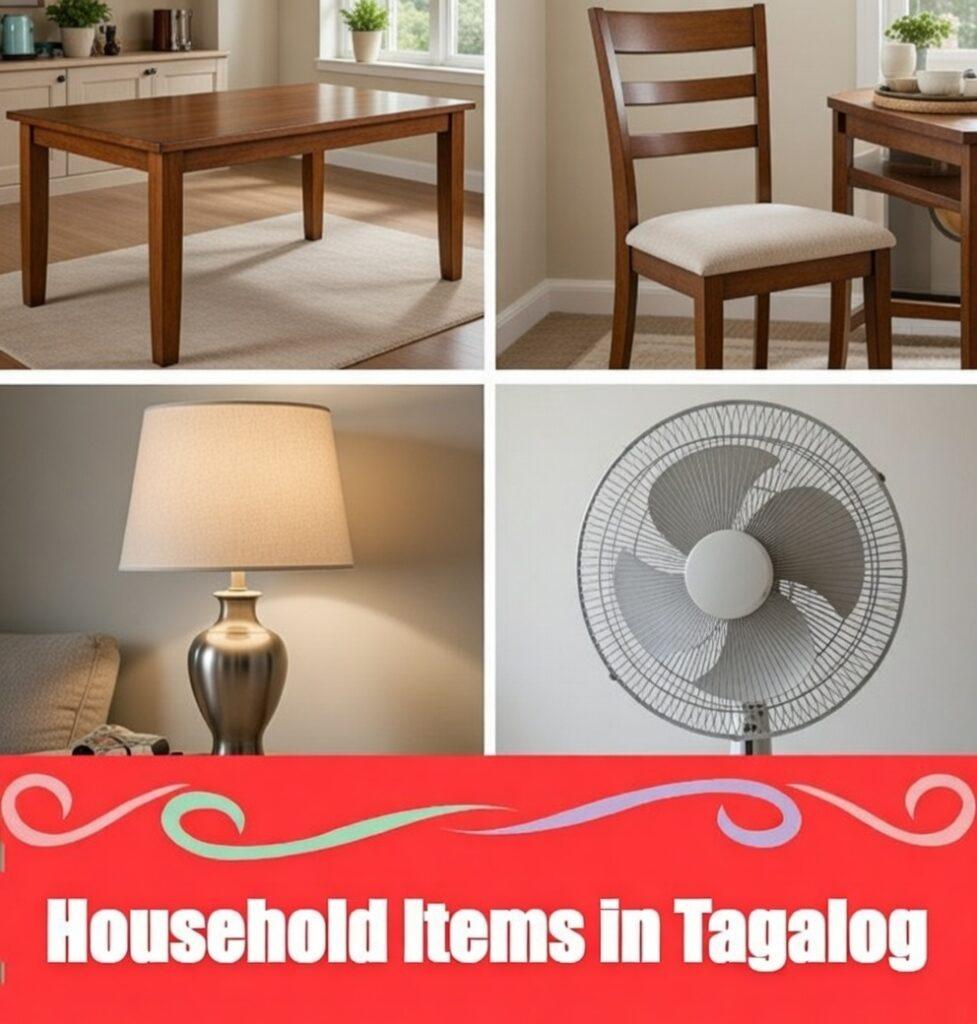
Table of Contents
🏠 Furniture Vocabulary in Tagalog (Muwebles)
When learning household items in Tagalog, furniture — or muwebles — is one of the most essential categories to start with. These are the items you see the moment you walk into a home. They are part of daily routines: where you sit, sleep, eat, study, and welcome guests.
Whether you’re describing your living room, organizing your bedroom, or shopping for new pieces, knowing furniture vocabulary in Tagalog helps you speak naturally and confidently.
📚 Vocabulary List: Furniture (Muwebles)
| English | Tagalog |
|---|---|
| Furniture | Muwebles |
| Chair | Upuan / Silya |
| Table | Mesa |
| Dining Table | Hapag-kainan |
| Bed | Kama |
| Sofa | Sopa |
| Cabinet | Aparador |
| Shelf | Istante |
| Dresser | Tokador |
| Small Table | Mesita |
| Bookshelf | Lalagyan ng libro |
| Carpet | Karpet |
Why Learning Furniture Terms in Tagalog Matters
Furniture-related household items in Tagalog are commonly used in everyday conversations. You’ll hear phrases like “Nasaan ang upuan?” (Where is the chair?) or “Ayusin mo ang kama.” (Fix the bed.)
Because these objects are part of daily life, they’re easy to practice at home. Try describing each room using these words. The more you use them naturally, the more comfortable and fluent you’ll become in Tagalog.
🏠 10 Example Sentences (Furniture in Tagalog)
When learning household items in Tagalog, furniture vocabulary (muwebles) is one of the most practical categories to master. These are the words you’ll use when describing your home, rearranging a room, shopping for new pieces, or simply telling everyday stories. Below are natural, conversational example sentences to help you use common furniture terms confidently.
1. Ang aming sopa ang paboritong tambayan ng buong pamilya tuwing gabi.
Our sofa is the family’s favorite hangout every evening.
2. Inayos ko ang mga upuan bago dumating ang mga bisita.
I arranged the chairs before the guests arrived.
3. Sa hapag-kainan kami sabay-sabay kumakain tuwing Linggo.
We eat together at the dining table every Sunday.
4. Ang bagong kama ko ay mas malambot kaysa sa dati.
My new bed is softer than the old one.
5. Inilagay ni Nanay ang mga plato sa ibabaw ng mesa.
Mom placed the plates on top of the table.
6. Ang aparador ng lola ko ay puno ng lumang larawan.
My grandmother’s cabinet is full of old photos.
7. Nilinis ko ang karpet dahil may natapong kape kanina.
I cleaned the carpet because coffee spilled earlier.
8. Ang mga libro ko ay nakaayos sa istante sa sala.
My books are arranged on the shelf in the living room.
9. May maliit na mesita sa tabi ng kama ko.
There is a small table beside my bed.
10. Ang lumang tokador ni Ate ay gawa pa sa narra.
My sister’s old dresser is made of narra wood.
Why These Furniture Sentences Matter
Using furniture-related household items in Tagalog in full sentences helps you sound more natural and confident. Instead of just memorizing words like mesa (table) or kama (bed), you begin using them in real-life situations — the way they’re actually spoken in Filipino homes.
The more you practice describing your muwebles in Tagalog, the easier it becomes to talk about your space, your routines, and your everyday life. And that’s how vocabulary truly sticks — when it feels personal and real. Whether you are describing these household items or simply telling a story, these words are part of everyday Filipino conversation.
🍳 Kitchen Household Items in Tagalog (Vocabulary List)
When learning household items in Tagalog, kitchen vocabulary is one of the most practical and frequently used categories. The kitchen — or kusina — is where daily life happens. From preparing breakfast early in the morning to washing dishes after dinner, these items are used every single day.
If you want to speak naturally about cooking, eating, or helping around the house, mastering these kitchen household items in Tagalog will make a big difference.
📚 Vocabulary List: Kitchen Items (Mga Gamit sa Kusina)
| English | Tagalog |
|---|---|
| Spoon | Kutsara |
| Fork | Tinidor |
| Knife | Kutsilyo |
| Plate | Plato / Pinggan |
| Bowl | Mangkok |
| Cup | Tasa |
| Glass | Baso |
| Pot | Kaldero |
| Pan | Kawali |
| Ladle | Sandok |
Why Learning Kitchen Vocabulary in Tagalog Is Important
These kitchen-related household items in Tagalog are part of everyday conversations at home. Whether someone says, “Pakikuha ang kutsara” (Please get the spoon) or “Nasaan ang kawali?” (Where is the pan?), you’ll hear these words often in real-life situations.
Because they’re used daily, they’re also some of the easiest vocabulary words to remember. Practice by labeling items in your kitchen or using them in simple sentences while cooking. The more you use them naturally, the more confident your Tagalog will become.
10 Example Sentences (Kitchen Items)
- Kumuha ako ng kutsara para tikman ang sabaw.
I got a spoon to taste the soup. - Pakihugas ang mga plato pagkatapos kumain.
Please wash the plates after eating. - Inilagay ni Tatay ang kanin sa mangkok.
Dad placed the rice in the bowl. - Mainit pa ang sabaw sa loob ng kaldero.
The soup is still hot inside the pot. - Ginamit ko ang kawali sa pagprito ng isda.
I used the pan to fry the fish. - Nasaan ang tinidor? Hindi ko makita.
Where is the fork? I can’t find it. - Uminom siya ng tubig sa malamig na baso.
He drank water from a cold glass. - Nagkape si Nanay gamit ang paborito niyang tasa.
Mom drank coffee using her favorite cup. - Maingat niyang ginamit ang kutsilyo sa paghiwa ng gulay.
She carefully used the knife to slice vegetables. - Isinandal ni Ate ang sandok sa gilid ng kaldero.
My sister rested the ladle on the side of the pot.
Why Kitchen Vocabulary Is Essential
Kitchen items are used every single day. Knowing these Tagalog terms helps you follow instructions, cook confidently, and participate naturally in family conversations.
🧹 Cleaning Items in Tagalog (Mga Panlinis)
When learning household items in Tagalog, cleaning tools — or mga panlinis — are some of the most practical words you can master. In many Filipino homes, cleaning is not just a chore; it’s part of daily discipline and hospitality. Saturday mornings often mean general cleaning, and when guests are coming over, everyone helps tidy up.
The sight of a walis tambo or walis tingting leaning behind the door feels familiar in many households. These simple tools play a big role in everyday life.
📚 Vocabulary List: Cleaning Items (Mga Panlinis)
| English | Tagalog |
|---|---|
| Broom (soft) | Walis tambo |
| Broom (stick) | Walis tingting |
| Dustpan | Pandakot / Pala |
| Mop | Mop |
| Rag | Basahan |
| Trash | Basura |
| Trash Can | Basurahan |
📝 10 Example Sentences (Cleaning Items in Tagalog)
- Gumamit ako ng walis tambo sa paglinis ng sala.
I used a soft broom to clean the living room. - Pinulot niya ang kalat gamit ang pandakot.
She picked up the dirt using a dustpan. - Nilabhan ko ang maruming basahan.
I washed the dirty rag. - Itapon mo ang basura sa labas.
Throw the trash outside. - Puno na ang basurahan, kailangan na itong ilabas.
The trash can is full; it needs to be taken out. - Nag-mop ako ng sahig dahil madulas ito.
I mopped the floor because it was slippery. - Ginamit ni Kuya ang walis tingting sa bakuran.
My brother used the stick broom in the yard. - Araw-araw naming nililinis ang bahay gamit ang mga panlinis.
We clean the house daily using cleaning tools. - May nakatagong ekstrang basahan sa ilalim ng lababo.
There is an extra rag hidden under the sink. - Maaga kaming naglilinis tuwing Sabado ng umaga.
We clean early every Saturday morning.
Why Cleaning Vocabulary Is Useful
Cleaning-related household items in Tagalog are part of daily responsibility and routine. These are words you’ll hear at home all the time — especially when someone says, “Maglinis ka muna.” (Clean first.)
Because these terms are used regularly, they’re easy to practice and remember. The more you use cleaning vocabulary in real-life situations, the more natural and confident your Tagalog will become.sibility and routine. These practical words help you communicate clearly at home.
🚿 Bathroom Items in Tagalog (Mga Gamit sa Banyo)
When learning household items in Tagalog, bathroom vocabulary is both practical and essential. These are the words you use every single day — when getting ready in the morning, preparing for work or school, or winding down at night.
In many Filipino homes, especially traditional ones, you’ll almost always find a balde and tabo inside the bathroom. Simple but practical, these items are deeply rooted in Filipino daily life. Knowing these bathroom household items in Tagalog helps you describe routines naturally and confidently.
📚 Vocabulary List: Bathroom Items (Mga Gamit sa Banyo)
| English | Tagalog |
|---|---|
| Soap | Sabon |
| Towel | Tuwalya |
| Toothbrush | Sipilyo |
| Toothpaste | Pasta ng ngipin |
| Bucket | Balde |
| Dipper | Tabo |
| Mirror | Salamin |
📝 10 Example Sentences (Bathroom Items in Tagalog)
- Nasaan ang sabon? Maliligo na ako.
Where is the soap? I’m about to take a bath. - Kinuha ko ang malinis na tuwalya sa aparador.
I got a clean towel from the cabinet. - Araw-araw akong nagsisipilyo gamit ang aking sipilyo.
I brush my teeth every day using my toothbrush. - Naubos na ang pasta ng ngipin, kailangan na bumili.
The toothpaste is finished; we need to buy more. - May tubig sa loob ng balde.
There is water inside the bucket. - Ginamit niya ang tabo sa pagligo.
He used the dipper while bathing. - Tumingin ako sa salamin bago umalis.
I looked in the mirror before leaving. - Isinampay ko ang basang tuwalya sa likod ng pinto.
I hung the wet towel behind the door. - Nahulog ang sipilyo sa sahig.
The toothbrush fell on the floor. - Amoy mabango ang bagong bukas na sabon.
The newly opened soap smells good.
Why Bathroom Vocabulary Matters
Bathroom-related household items in Tagalog are part of daily hygiene, routines, and simple conversations at home. You’ll hear phrases like “Nasaan ang tuwalya?” or “Mag-toothbrush ka na.” regularly.
Because these words are tied to everyday habits, they’re easy to practice and remember. The more you use them naturally in your daily routine, the more fluent and confident your Tagalog will become.
Frequently Asked Questions (FAQ) About Household Items in Tagalog
1. What are household items in Tagalog?
Household items in Tagalog are called mga gamit sa bahay.
2. What does muwebles mean?
Muwebles means furniture in Tagalog.
3. Why is learning household items in Tagalog important?
These are everyday vocabulary words that help you describe your home, follow instructions, and speak more naturally in Filipino.
4. Are these words formal or informal?
Most household item terms like mesa, kama, walis, and plato are neutral and commonly used in everyday speech.
5. How can I practice household items vocabulary?
You can label items around your house, create simple sentences daily, or practice by describing your home in Tagalog.
6. What is the difference between gamit and muwebles?
Gamit means item or object used, while muwebles specifically refers to furniture.
7. Are household items vocabulary good for beginners?
Yes. These are beginner-friendly words because they are practical and used daily.
Conclusion: Household Items in Tagalog — Everyday Words That Feel Like Home
Household items in Tagalog — or mga gamit sa bahay — are part of everyday Filipino life. From the mesa where families gather to the walis used every weekend, these objects quietly support daily routines. They may seem ordinary, but inside a Filipino home, nothing is ever “just an object.” Every item has a function. Every item has a place. And every item becomes part of daily living.
Think about the furniture in your home. The kama is where the day begins and ends. The hapag-kainan is where meals are shared. The aparador keeps clothes neatly stored. The istante holds books, framed photos, and small reminders of milestones. These are simple household items in Tagalog, yet they shape how a home feels and functions.
Even the most basic tools matter. The kawali in the kitchen. The sandok resting beside the pot. The walis tambo tucked behind the door. The basurahan in the corner. The balde and tabo in the bathroom. Each one supports daily routines — cooking, cleaning, organizing, preparing, resting. Without them, home life would feel incomplete.
Learning household items in Tagalog vocabulary is not just about memorizing translations. It is about being able to describe your space naturally. It helps you give instructions clearly. It allows you to participate in everyday conversations — whether you’re rearranging furniture, cleaning a room, or setting the table.
If you want your Tagalog to sound natural and confident, start with your surroundings. Look around your home and name the objects you see. Say, “Ito ang mesa.” (This is the table.) “Narito ang kama.” (Here is the bed.) Practice small, simple sentences daily. The repetition will make the words stick.
Because language grows where life happens — and life happens at home.