Tagalog grocery words are the foundation of a well-run Filipino household. Pinoy grocery shopping and meal planning are full of strategy, love, and resourcefulness—the weekly palengke run with nanay or lola bargaining for the freshest isda and gulay, the careful division of the budget into “pang‑ulam”, “pang‑merienda”, and “pang‑baon”, and the mental list of “ano kaya ang ulam bukas?”.
Managing a kitchen involves more than just buying food; it’s about family budgeting and making sure the younger generation eats well. This guide collects the 10 most useful, everyday Tagalog grocery words and phrases for shopping and meal planning—short, natural, and easy to use at the palengke, sari‑sari store, or supermarket.
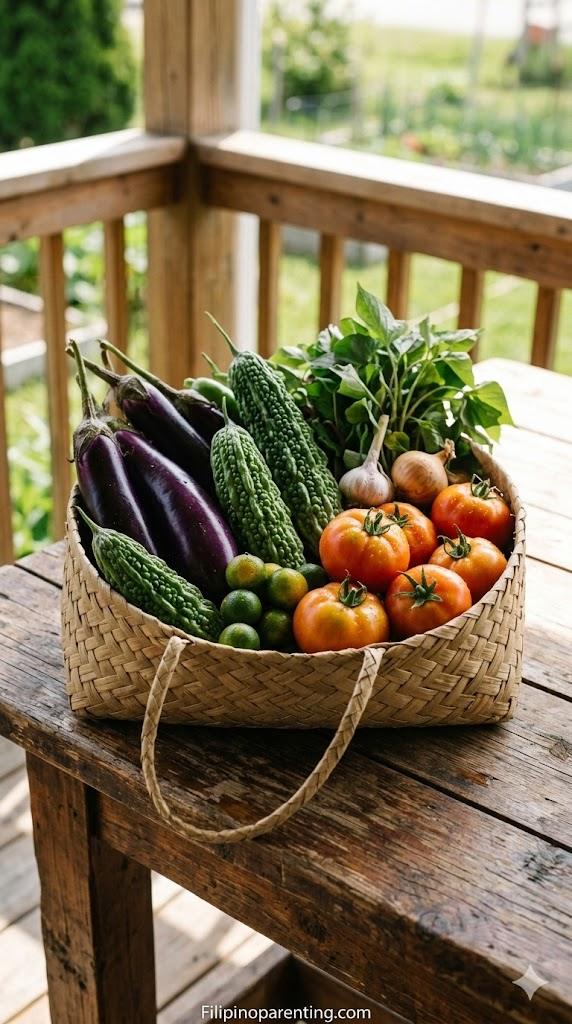
Table of Contents
1. Navigating the Palengke with Tagalog Grocery Words
The heart of Filipino food culture is the local market. Whether you are looking for fresh vegetables or the daily catch, knowing your Tagalog grocery words helps you communicate with vendors effectively. For those interested in the origins of Filipino produce, the [suspicious link removed] offers great insights into local farming, while Panlasang Pinoy provides recipes to use your haul.
🛒 Grocery Shopping Objects & Places
- Palengke – Wet market — Open‑air market for fresh meat, fish, and veggies.
- Supermarket – Supermarket — Air‑conditioned store with packaged goods.
- Sari‑sari store – Sari‑sari store — Small neighborhood shop for quick buys.
- Woven Bag – Bayong — Woven reusable shopping bag.
- Plastic bag – Plastik na supot — Small bags for separating items.
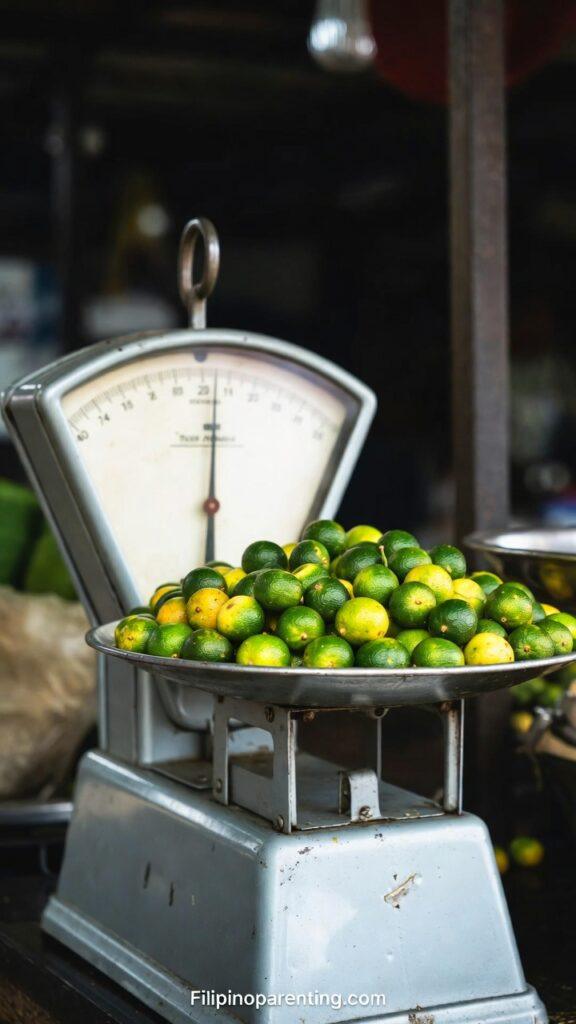
- Weighing scale – Timbangan — Scale for pricing by kilo.
- Fresh fish – Isda — Fresh catch sold early morning.
- Vegetable – Gulay — Produce like eggplant, okra, squash.
- Meat – Karne — Pork, beef, chicken.
- Fruits – Prutas — Mangoes, bananas, pineapples, calamansi.
Example Shopping Phrases
- Magpalengke tayo bukas para sa linggo. – Let’s go to the wet market tomorrow for the week.
- Magkano po ang isda per kilo? – How much is the fish per kilo?
- Pwede po bang tawad sa hipon? – Can we bargain on the shrimp?
- Ilagay mo sa bayong ang mga gulay. – Put the vegetables in the bayong.
- May sari‑sari store ba malapit dito? – Is there a sari‑sari store nearby?
2. Meal Planning & Budgeting
Effective meal planning is a skill passed down through families. By using specific Tagalog grocery words, you can organize your weekly menu sa linggo and keep your badyet on track.
- Meal – Ulam — Main viand for rice meals.
- Packed lunch – Baon — Packed lunch for work or school.
- Snack – Merienda — Afternoon snack.
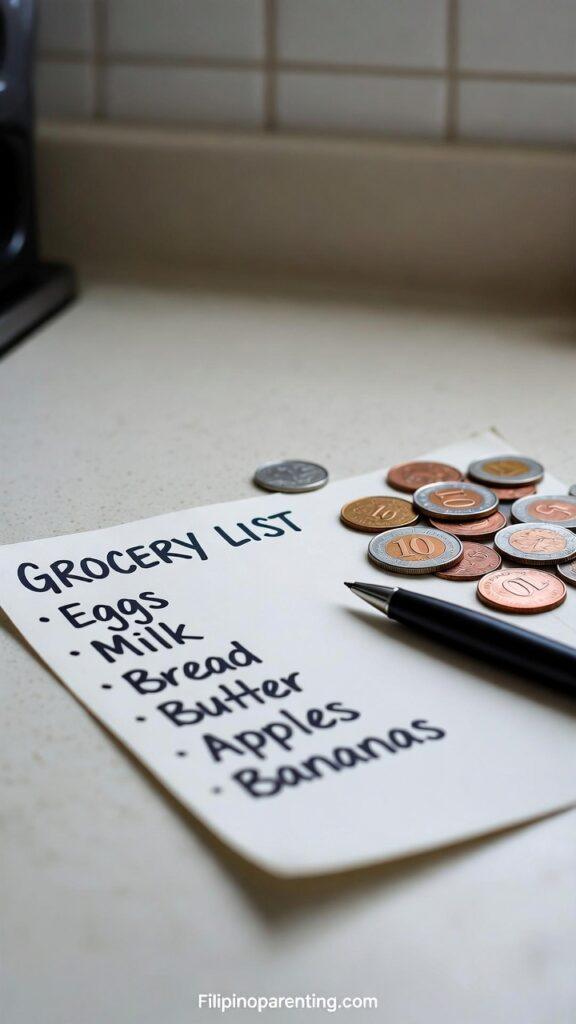
- Grocery list – Listahan ng bibilhin — Written or mental list.
- Budget – Badyet — Planned amount for shopping.
- Pang‑gastos – For expenses — Daily spending money.
- Pang‑ipon – For savings — Money set aside.
- Pang‑emergency – For emergencies — Extra budget for unexpected needs.
- Weekly menu – Menu sa linggo — Planned meals for the week.
- Leftovers – Kaning lamig / tira — Food to reuse.
Example Meal Planning Phrases
- Ano ulam natin bukas? – What’s our viand tomorrow?
- Gawin natin adobo para sa baon. – Let’s make adobo for packed lunch.
- Ilagay natin sa badyet ang pang‑merienda. – Let’s include merienda in the budget.
- May tira pa tayong adobo, gagamitin natin bukas. – We still have leftover adobo; we’ll use it tomorrow.
- Maglista muna tayo bago pumunta sa palengke. – Let’s make a list first before going to the market.
3. Mastering the Art of the “Tawad”
Bargaining is a cultural experience in the Philippines. Using Tagalog grocery words correctly shows respect for the vendor’s hard work while helping you save money. You can find many compliments in Tagalog to keep the conversation friendly while you shop.
- Magtawad – To bargain — Negotiating lower price.
- Presyo – Price — Cost of an item.
- Kilo – Kilo — Unit of measurement.
- Peso – Piso — Basic money unit.
- Barya – Coins — Small change.
- Sukli – Change — Money returned after paying.
- Diskwento – Discount — Price reduction.
- Fresh – Sariwa — Freshly caught or harvested.
- Frozen – Nagyelo — Packaged frozen meat or fish.
- Organic – Organiko — Chemical‑free produce.
Example Bargaining Phrases
- Tawad naman po! Pwede po bang magtawad? – Discount please! Can we bargain?
- Bawas naman po, magkano na lang? – Please lower it, how much can you give?
- Isang kilo po ng hipon, sariwa. – One kilo of fresh shrimp please.
- May barya po ba kayo para sa sukli? – Do you have coins for the change?
- May diskwento ba sa manok? – Is there a discount on chicken?
FAQ: Filipino Grocery Habits
What is a bayong?
A bayong is a traditional woven bag made from dried leaves like buri (common in Visayas) or pandan (common in Luzon). It is the ultimate eco-friendly way to carry heavy items from the palengke.
How do I ask for the freshest fish?
You can ask the vendor, “Sariwa ba ito?” (Is this fresh?). Vendors often take pride in their daily catch and will show you the gills or eyes to prove freshness.
What does “ulam” mean?
Ulam refers to any dish that is eaten with rice. In a Filipino home, the ulam is the center of the meal planning process.
🍲 Conclusion
Maraming salamat for exploring Tagalog grocery words for Pinoy grocery shopping and meal planning. These words — ulam, baon, badyet, tawad — capture the resourceful, family‑first way many Filipinos feed their homes and make daily life feel organized and abundant. Using these terms makes every trip to the store a chance to connect with culture and community.
Paalam for now — see you in the next Tagalog adventure! 🛒🍲💸