If you’re learning Tagalog, cooking authentic Filipino dishes, or exploring the rich flavors of Philippine food, the word for coconut milk in Tagalog is gata (pronounced GAH-tah, with stress on the first syllable). This is the standard, native, and most widely used Tagalog term—the creamy, flavorful liquid extracted from grated coconut flesh that forms the heart of countless Filipino recipes.
In kitchens, markets, and carinderias across the Philippines, gata is the everyday word you’ll hear: “Ginataang hipon” (shrimp in coconut milk), “Gata sa laing,” or simply “May gata ba?” (Do you have coconut milk?). Gata is more than an ingredient; it’s a cornerstone of Filipino cooking, adding richness, subtle sweetness, and silky texture to savory stews, desserts, and snacks.
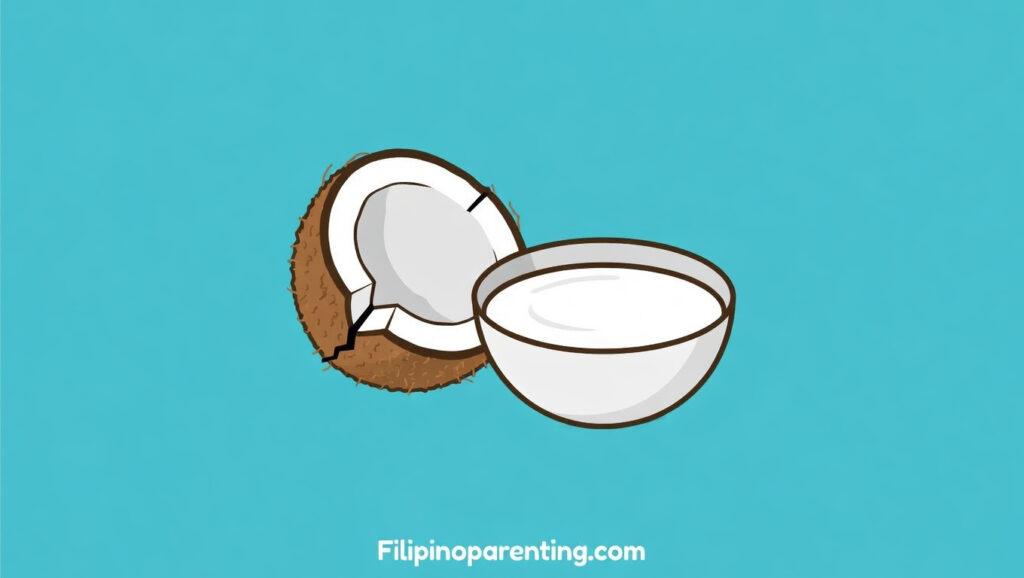
Table of Contents
What Is “Coconut Milk” in Tagalog? Pronunciation and Basics
Gata is the core Tagalog word for coconut milk—the thick, white liquid pressed from grated mature coconut meat. Pronunciation is GAH-tah—short, crisp, and easy to say. In everyday speech:
- Gata = coconut milk (the general term)
- Ginataan = cooked in coconut milk (e.g., ginataang hipon = shrimp in coconut milk)
- Manipis na gata = thin/first-press coconut milk (more watery, used in soups)
- Makapal na gata = thick/second-press coconut milk (creamy, used in desserts)
In the Philippines, gata is made fresh by grating coconut (niyog), soaking in warm water, and squeezing—or bought canned/boxed in supermarkets. Fresh gata has a richer flavor and aroma than packaged versions.
Fascinating Facts About Gata in Filipino Cooking & Culture
The Philippines is one of the world’s top coconut producers—gata is used in almost every region and meal type. It appears in savory dishes (ginataang gulay, laing, adobong manok sa gata) and sweet ones (ginataang bilo-bilo, suman sa gata, bibingka). Coastal and rural families often make gata fresh daily from backyard coconuts.
Gata symbolizes comfort and abundance—creamy, rich, and satisfying. During fiestas, family gatherings, and rainy days, ginataang dishes bring people together. In Bicol, gata is a defining flavor (Bicol Express, laing, pinangat). In desserts, gata pairs with glutinous rice, fruits like jackfruit, and tubers for creamy, comforting treats. This openness to sharing food creates an environment where relationships flourish.
How to Use “Gata” in Everyday Tagalog: 12 Example Sentences
Here are 12 practical sentences using gata and ginataan, with Tagalog first followed by English translation. Perfect for cooking, market shopping, or restaurant ordering.
- Gusto ko ng ginataang hipon na may kalabasa. (I want shrimp in coconut milk with squash.)
- Magluluto ako ng laing na may gata at malunggay. (I’m going to cook laing with coconut milk and malunggay.)
- Masarap ang pinakbet kapag may gata. (Pinakbet is delicious when made with coconut milk.)
- Paano mag-extract ng gata mula sa niyog? (How do you extract coconut milk from a coconut?)
- Sa Bicol, ang mga ulam ay halos lahat may gata. (In Bicol, almost all dishes have coconut milk.)
- Huwag kalimutan ang luya sa ginataang manok. (Don’t forget the ginger in chicken cooked in coconut milk.)
- Paborito ko ang ginataang bilo-bilo para sa merienda. (My favorite is glutinous rice balls in coconut milk for snack time.)
- Sa palengke, bumili ako ng makapal na gata para sa suman. (At the market, I bought thick coconut milk for suman.)
- Ang gata ay nagbibigay ng tamis at katas sa mga ulam. (Coconut milk adds sweetness and richness to dishes.)
- Nakakain ako ng masarap na ginataang alimango sa probinsya. (I ate delicious crab in coconut milk in the province.)
- Sa fiesta, laging may ginataang langka sa mesa. (During fiestas, there’s always jackfruit in coconut milk on the table.)
- Magdagdag ng konting sili sa ginataang hipon para mas masarap. (Add a little chili to the shrimp in coconut milk to make it tastier.)
Gata in Filipino Cuisine: Popular Dishes and Traditions
Gata transforms simple ingredients into comforting, flavorful meals:
- Ginataang Hipon — shrimp simmered in coconut milk with squash, eggplant, and chili.
- Laing — dried taro leaves cooked in thick gata with pork, shrimp, and bagoong.
- Bicol Express — spicy pork in coconut milk with chili and shrimp paste.
- Ginataang Bilo-Bilo — glutinous rice balls, sweet potatoes, and jackfruit in sweet coconut milk.
- Suman sa Gata — sticky rice wrapped in banana leaves, served with sweet coconut milk.
Filipino hospitality is genuine and heartfelt, and offering these rich dishes is a way to make others feel seen and valued. In rural areas, families grate fresh coconuts daily for gata. During fiestas and family gatherings, ginataang dishes are always present—rich, creamy, and crowd-pleasing. If you are preparing these at home, you can find more Filipino cooking conversions to help.
Related Tagalog Vocabulary for Coconut Milk & Cooking
- Coconut milk = gata
- Thick coconut milk = makapal na gata
- Thin coconut milk = manipis na gata
- Cooked in coconut milk = ginataan
- Coconut = niyog
- Grate coconut = kiskis ng niyog
- Squeeze coconut milk = piga ng gata
- Sweet gata dessert = ginataang matamis
Try saying: “Ang gata ang nagbibigay-buhay sa mga ginataang ulam.” (Coconut milk brings life to ginataang dishes.) For more culinary terms, you can check the Official Filipino Food Movement or Philippine Coconut Authority for industry facts.
FAQ About Gata in Tagalog
What is the Tagalog word for coconut milk?
Gata—the standard and most natural term.
How do you pronounce gata?
GAH-tah (stress on the first syllable).
What is the difference between makapal na gata and manipis na gata?
Makapal = thick, first-press (richer, used in desserts); manipis = thin, second-press (more watery, used in soups/stews).
How do you make gata from scratch?
Grate mature coconut (kiskis ng niyog), soak in warm water, squeeze (piga) to extract the milk.
Is gata healthy?
Yes—rich in healthy fats (MCTs), vitamins, and minerals; use in moderation due to calorie content.
Conclusion: Master the Creamy Soul of Filipino Flavor with Coconut Milk in Tagalog
Understanding the role of coconut milk in Tagalog is a fantastic gateway to discovering the heart of Filipino comfort food. As we’ve explored, gata is more than just a pantry staple—it is the creamy soul that transforms simple vegetables, seafood, and rice into rich, satisfying masterpieces. From the spicy kick of Bicol Express to the sweet, nostalgic warmth of ginataang bilo-bilo, coconut milk in Tagalog connects generations, regions, and celebrations across the Philippines.
With these 12 practical example sentences, you can now talk about coconut milk in Tagalog confidently, whether you are shopping at a local palengke or cooking a traditional feast for your family. By mastering the word gata, you are embracing a lifestyle rooted in togetherness and sincerity.
The next time you open a can of gata or catch the irresistible aroma of a simmering ginataan dish, remember that coconut milk in Tagalog represents the warmth of the Filipino people. Try saying, “Gata ang nagbibigay-lasang ito!” (Coconut milk gives this its flavor!) and savor the moment. Learning coconut milk in Tagalog through these deep-rooted food traditions makes your language journey warm, practical, and truly delicious. Keep practicing, experiment with new ginataang recipes, and share the richness of Filipino culture with the younger generation.