If you’re learning Tagalog, visiting an aquarium, or watching wildlife documentaries, knowing the term for Seal in Tagalog is incredibly useful. In Tagalog, the most authentic word for seal is leon-dagat. While seals are not common in tropical waters, expanding your knowledge of the leon-dagat helps you discuss global wildlife with confidence and pride.
Seals belong to the family Phocidae (true seals). They are distinguished by having no visible external ear flaps and large eyes. Their bodies are perfectly adapted for efficient swimming, though they move awkwardly on land by belly-sliding. This “Ultimate Guide” explores the word leon-dagat, including its pronunciation, cultural context, and practical example sentences.
Table of Contents
What Is Seal in Tagalog? Pronunciation and Basics
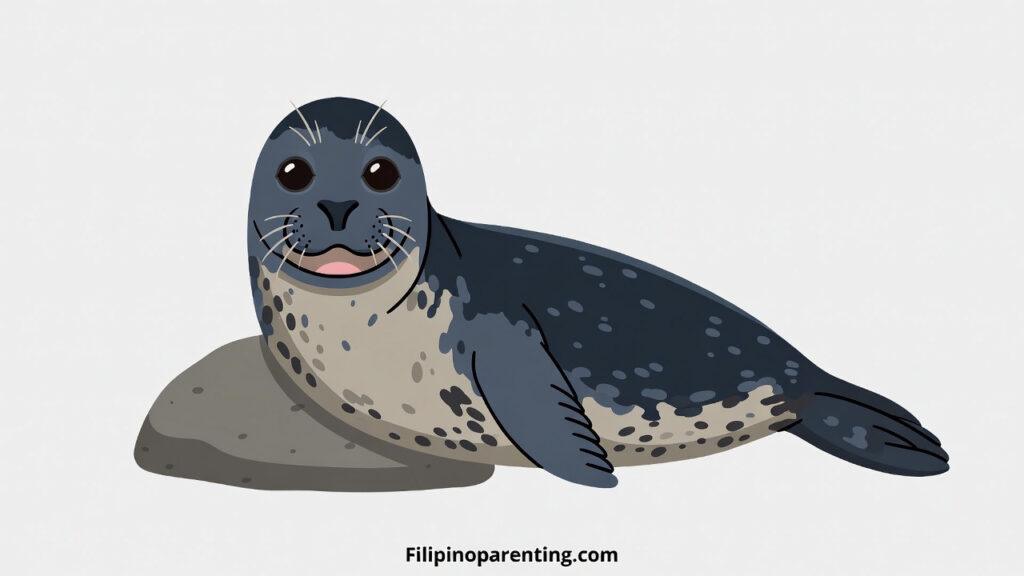
Leon-dagat is the everyday term for Seal in Tagalog. It literally translates to “lion of the sea.” While “selyo” is often used for postage stamps or official seals, leon-dagat is what you will hear in nature documentaries and see in Filipino textbooks.
Seals are excellent divers. Some species can hold their breath for over an hour and reach depths of 1,000 meters to hunt for isda (fish) or pusit (squid). They rely on thick blubber for insulation and sensitive whiskers to detect movement in dark waters. According to National Geographic, seals are vital indicators of ocean health.
Fascinating Facts About Leon-Dagat in Philippine Context
True seals are not native to the warm waters of the Philippines. Their natural habitats are typically colder temperate and polar seas. However, they are still a popular subject in Filipino wildlife education and media.
In the Philippines, most encounters with these animals happen at places like Manila Ocean Park or Subic Ocean Adventure. These venues often feature these marine mammals to teach families about marine life conservation. Understanding the term for Seal in Tagalog allows you to engage more deeply with these educational exhibits. Promoting awareness for these creatures is important for global ocean conservation efforts.
How to Use Leon-Dagat in Everyday Tagalog: 12 Example Sentences
Here are 12 practical sentences. Use these to practice your pronunciation and improve your vocabulary regarding a Seal in Tagalog.
- Ang leon-dagat ay walang tainga na makikita sa labas. (The seal has no visible external ears.)
- Nakakita ako ng leon-dagat sa aquarium sa Subic. (I saw a seal at the aquarium in Subic.)
- Ang leon-dagat ay mahusay sumisid para manghuli ng isda. (The seal is excellent at diving to catch fish.)
- Sa zoo, ang leon-dagat ay nagpapakita ng paglangoy. (At the zoo, the seal shows off its swimming.)
- Ano ang pagkakaiba ng leon-dagat sa sea lion? (What is the difference between a seal and a sea lion?)
- Ang leon-dagat ay may makapal na taba sa katawan. (The seal has thick blubber on its body.)
- Gusto kong panoorin ang leon-dagat na naglalaro. (I want to watch the seal playing.)
- Ang leon-dagat ay kumakain ng isda at pusit. (Seals eat fish and squid.)
- Sa palabas, ang leon-dagat ay pumapalakpak gamit ang palapa. (In the show, the seal claps using its flippers.)
- Ang leon-dagat ay mas tahimik kaysa ibang hayop sa dagat. (The seal is quieter than other sea animals.)
- Nakakatuwa ang leon-dagat kapag nagpapahinga ito. (The seal is cute when it rests.)
- Sa Pilipinas, makikita mo ang leon-dagat sa ocean park. (In the Philippines, you can see seals at ocean parks.)
Related Tagalog Vocabulary for Marine Life
To talk more like a local, try combining Seal in Tagalog with these related terms:
FAQ About Leon-Dagat in Tagalog
What is the Tagalog word for seal?
Leon-dagat is the standard term for the marine mammal. Avoid using “selyo,” which usually means postage stamp.
Are there wild seals in the Philippines?
No, they are not native to the Philippines, but they are studied in schools and seen in marine parks.
What do seals eat?
They primarily eat fish, squid, and crustaceans.
Conclusion: Master the term for Seal in Tagalog
While you won’t spot one at a local beach in the Philippines, knowing how to say Seal in Tagalog is a great way to round out your animal vocabulary. From their sleek movements to their impressive diving skills, seals are a fascinating part of the marine world. Using the word leon-dagat and these 12 example sentences will help you describe your next aquarium visit or educational lesson with ease.