If you are learning Tagalog, passionate about marine mammals, or planning an eco-tour in the Philippines, the word for Sea Cow in Tagalog is dugong (pronounced doo-GONG). This is the standard term for the Dugong dugon, a large, herbivorous marine mammal often called the “sea cow” because of its habit of grazing on underwater meadows.
While manatees are sometimes confused with this species, the dugong is the one native to the Indo-Pacific waters of the Philippines. You might also hear local names like duyong or baboy-dagat (literally “sea pig”), but dugong remains the most recognized name. These gentle creatures are a symbol of marine conservation and have inspired many cultural legends.
Table of Contents
What Is “Sea Cow” in Tagalog? Pronunciation and Basics
The primary word for Sea Cow in Tagalog is dugong. The term is believed to have origins meaning “lady of the sea.” In everyday conversation, Filipinos use this word for both casual and scientific discussions.
Dugongs are unique mammals that can grow up to 3 meters long and weigh up to 500 kg. Unlike the paddle-shaped tail of a manatee, a dugong has a fluked, dolphin-like tail. They also possess a specialized downturned snout, which is perfect for uprooting their favorite food.
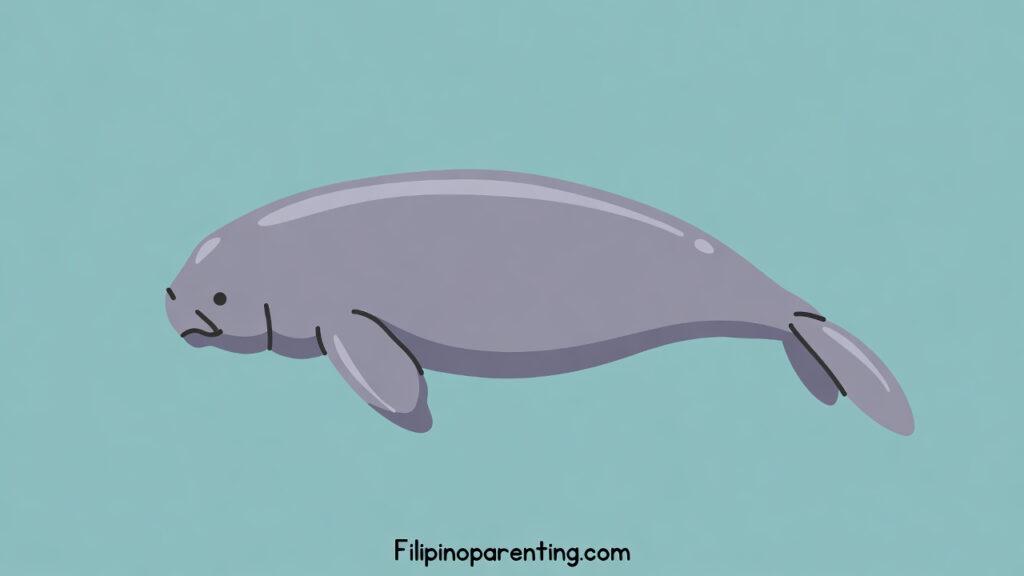
Fascinating Facts About Dugongs in Philippine Waters
The Philippines serves as a vital habitat for these animals, especially in areas like Palawan, Busuanga, and parts of Mindanao. They are strict herbivores that rely entirely on healthy seagrass beds to survive.
Unfortunately, they are currently critically endangered. Threats include habitat loss and accidental entanglement in fishing nets. Protecting the Sea Cow in Tagalog regions involves safeguarding the entire marine ecosystem. For more in-depth biological information, you can visit the World Wildlife Fund (WWF) Philippines or explore global sirenian research at Sirenian International.
How to Use “Dugong” in Everyday Tagalog: 12 Example Sentences
Practice these 12 practical sentences to help you refer to a Sea Cow in Tagalog during your next conversation or trip:
- Ang dugong ay tinatawag ding baboy-dagat sa Tagalog. (The sea cow is also called baboy-dagat in Tagalog.)
- Nakakita ako ng dugong sa Palawan habang nagdi-dive. (I saw a sea cow in Palawan while diving.)
- Ang dugong ay kumakain lamang ng seagrass sa dagat. (The sea cow eats only seagrass in the sea.)
- Sa Pilipinas, ang dugong ay protektado ng batas. (In the Philippines, the sea cow is protected by law.)
- Paano makita ang dugong sa ligaw? (How can you see a sea cow in the wild?)
- Ang ina at anak na dugong ay napakabihirang makita. (A mother and baby sea cow are very rare to see.)
- Ang dugong ay may mahabang nguso para sa pagkain nito. (The sea cow has a long snout for its food.)
- Sa Puerto Princesa Bay, may mga dugong na naninirahan. (In Puerto Princesa Bay, there are resident sea cows.)
- Huwag kang magtapon ng basura sa dagat para sa dugong. (Don’t throw trash in the sea for the sea cow.)
- Ang dugong ay isa sa mga pinakamabait na hayop sa dagat. (The sea cow is one of the gentlest animals in the sea.)
- Gusto kong sumali sa dugong conservation tour. (I want to join a sea cow conservation tour.)
- Nakakatuwa ang dugong kapag lumulutang ito sa ibabaw. (The sea cow is cute when it floats on the surface.)
Related Tagalog Vocabulary for Marine Mammals
To further your studies, here are a few related terms you can use alongside Sea Cow in Tagalog:
- Whale = Balyena
- Dolphin = Lumba-lumba
- Fish = Isda
- Sea Turtle = Pawikan
FAQ About Dugong in Tagalog
What is the Tagalog word for sea cow?
Dugong is the standard term used across the Philippines.
How do you pronounce dugong?
It is pronounced doo-GONG, with the stress on the second syllable.
What is the difference between a dugong and a manatee?
Dugongs have fluked tails and live in the Indo-Pacific, while manatees have rounded tails. Both are often referred to as a Sea Cow in Tagalog contexts.
Are dugongs endangered?
Yes, they are critically endangered in the Philippines due to habitat loss and accidental capture.
Why are they called sea cows?
They are called sea cows because they graze on underwater seagrass meadows just like cows graze on land.
Conclusion: Celebrate the Dugong and Protect Our Seas
Understanding the term for Sea Cow in Tagalog is more than just a language lesson; it is a step toward appreciating the natural wonders of the Philippines. These gentle giants remind us of the beauty within our oceans and the importance of stewardship. By using these 12 example sentences, you can advocate for their protection and share your passion for marine life.
Salamat for reading, and may you one day see a dugong gliding peacefully through the water!