Birds in Tagalog are called ibon, spelled I-B-O-N.
The word ibon means “bird” in English and is one of the most common animal vocabulary words in the Filipino language. When learning birds in Tagalog, this is the first and most important term to know. It is widely used in daily conversations when talking about animals, nature, farms, pets, and wildlife. Because birds are commonly seen in everyday life, children and beginners often learn this word early.
Understanding birds in Tagalog is helpful for expanding your vocabulary, especially if you are studying Filipino or teaching kids animal names. In the Philippines, birds such as maya, agila, and kalapati are commonly seen, making the word ibon culturally relevant. Learning birds in Tagalog allows you to describe nature more confidently and communicate more naturally in Filipino conversations.
Birds in Tagalog Table of Contents
What Is Ibon? (Birds in Tagalog Explained)
Ibon is the Tagalog word for bird, and it is the main term used when referring to birds in Tagalog. The word describes any feathered animal with wings, a beak, and the ability to lay eggs. When learning birds in Tagalog, ibon is the foundational vocabulary word you need to know.
In Filipino grammar, ibon is a singular noun. Its plural form is mga ibon, which means “birds” in English. This word is native to the Tagalog language and is commonly used in both formal and informal conversations. Whether you are talking about farm animals, wild birds, pets, or birds found in the Philippines such as the maya, agila, or kalapati, the general term used is ibon.
Understanding the meaning of ibon is essential for anyone studying birds in Tagalog because it serves as the base word for expanding your animal vocabulary and forming clear, natural sentences in Filipino.
Birds in Tagalog Vocabulary Words (Ibon Word List)
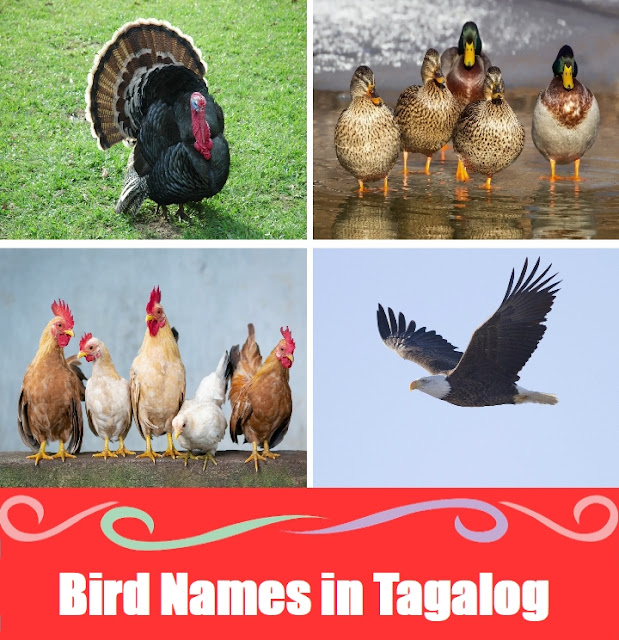
Below is a related vocabulary chart connected to ibon, the main word used for birds in Tagalog. This list includes common bird names in Tagalog along with related bird vocabulary words used in everyday conversation.
| # | English | Tagalog |
|---|---|---|
| 1 | Bird | Ibon |
| 2 | Chicken | Manok |
| 3 | Rooster | Tandang |
| 4 | Hen | Inahin |
| 5 | Chick | Sisiw |
| 6 | Eagle | Agila |
| 7 | Crow | Uwak |
| 8 | Owl | Kuwago |
| 9 | Parrot | Loro |
| 10 | Sparrow | Maya |
| 11 | Duck | Pato |
| 12 | Goose | Gansa |
| 13 | Quail | Pugo |
| 14 | Peacock | Paboreal |
| 15 | Turkey | Pabo |
| 16 | Swan | Sisne |
| 17 | Stork | Tagak |
| 18 | Feather/Wing | Pakpak |
| 19 | Egg | Itlog |
| 20 | Birdhouse | Bahay ng Ibon |
Learning these birds in Tagalog vocabulary words helps you describe animals, nature, and farm life more confidently in Filipino conversations.
How Is Ibon Used? (Birds in Tagalog Usage Guide)
The word ibon is commonly used when talking about birds in Tagalog, whether you are referring to birds in general or a specific type of bird. It is one of the most basic and essential animal vocabulary words in Filipino and is used in everyday conversations about nature, pets, wildlife, and farm animals.
1. General Reference to Birds in Tagalog
The word ibon is often used to talk about birds as a group. When speaking about more than one bird, the plural form mga ibon is used, which means “birds” in Tagalog.
Examples:
Ang ibon ay may pakpak.
The bird has wings.
Maraming ibon sa puno.
There are many birds in the tree.
Mahilig akong manood ng mga ibon.
I like watching birds.
This general use of ibon makes it easy to describe animals and nature in daily Filipino conversations. Understanding how to use birds in Tagalog correctly helps learners form simple and clear sentences naturally.
2. In Education and Learning
The word ibon is commonly used in schools and beginner lessons when teaching birds in Tagalog to children and language learners. It is often one of the first animal vocabulary words introduced in Filipino classes because it is simple, easy to pronounce, and frequently used in daily life.
Teachers use ibon when explaining basic science concepts, animal groups, and nature-related topics. It also appears in children’s books, flashcards, and early reading materials.
Examples:
Ang ibon ay nangingitlog.
Birds lay eggs.
Ang ibon ay may dalawang pakpak.
A bird has two wings.
Sa aralin ngayon, pag-uusapan natin ang mga ibon.
In today’s lesson, we will talk about birds.
Learning how to use ibon correctly helps students build a strong foundation in birds in Tagalog vocabulary, making it easier to expand into more specific bird names later on.
3. In Stories and Folklore
Birds in Tagalog are often featured in Filipino stories, myths, and folklore. The word ibon commonly appears in children’s tales, legends, and traditional narratives where birds symbolize freedom, wisdom, or mystery. Because birds are part of everyday life in the Philippines, they naturally became important characters in storytelling.
In many Filipino stories, an ibon may represent hope, guidance, or even magical power.
Halimbawa (Example):
Ang mahiwagang ibon ay lumipad sa malayo.
The magical bird flew far away.
Sa kuwento, tinulungan ng ibon ang batang bayani.
In the story, the bird helped the young hero.
Using ibon in storytelling helps learners understand how birds in Tagalog are used beyond simple vocabulary and into cultural and creative expression.
4. In Nature Conversations
The word ibon is frequently used when describing outdoor scenes and talking about nature. When discussing birds in Tagalog, this term helps people describe what they see in their surroundings, such as trees, rooftops, farms, or parks. It is commonly used in casual conversations about wildlife and the environment.
Whether you are pointing out a bird in the sky or hearing birds singing in the morning, ibon is the general word used in Filipino.
Examples:
May ibon sa bubong.
There is a bird on the roof.
May mga ibon sa hardin.
There are birds in the garden.
Naririnig ko ang ibon sa umaga.
I hear a bird in the morning.
Using ibon in nature conversations makes it easier to talk about everyday outdoor experiences while practicing birds in Tagalog vocabulary naturally.
5. In Symbolism and Expressions
Birds in Tagalog are not only used to describe animals but also carry symbolic meanings in conversations, literature, and cultural expressions. The word ibon can represent ideas such as freedom, peace, hope, or spirituality. Because birds can fly freely in the sky, they are often associated with independence and aspiration.
In Filipino culture and everyday speech, certain birds are linked to deeper meanings.
Example:
Ang kalapati ay isang ibon na simbolo ng kapayapaan.
The dove is a bird that symbolizes peace.
Ang ibon ay sumisimbolo ng kalayaan.
The bird symbolizes freedom.
Understanding how ibon is used symbolically helps learners see how birds in Tagalog go beyond basic vocabulary and become part of meaningful expressions and cultural language use.
Importance and Practical Value of Ibon
The word ibon is simple but very useful in everyday communication.
1. Communication Benefit
It allows you to talk about animals, pets, and nature easily.
2. Cultural Relevance
Birds appear in Filipino stories, songs, and rural life.
3. Learning Advantage
It is a beginner-friendly vocabulary word for Tagalog learners.
4. Practical Everyday Use
You can use it when describing what you see outdoors.
5. Social or Emotional Impact
Talking about birds can spark conversations about nature and travel.
6. Professional or Academic Value
It is useful in biology, environmental studies, and teaching.
How to Use Ibon in Daily Life
You can easily practice using the word ibon in daily conversations while learning more about birds in Tagalog. Because it is a common and practical word, you can naturally include it in everyday situations.
Describe the birds you see outside.
If you notice a bird on a tree or rooftop, try forming a simple sentence in Tagalog such as, “May ibon sa puno.”
Use it when reading children’s books.
Many beginner Filipino books introduce animals, including birds in Tagalog, making ibon an easy word to practice regularly.
Practice forming plural sentences.
Use mga ibon when talking about more than one bird to strengthen your grammar skills.
Combine it with colors or descriptions.
Examples include puting ibon (white bird), itim na ibon (black bird), or maliit na ibon (small bird).
Include it in storytelling practice.
Create simple stories using ibon to improve fluency and confidence in speaking Tagalog.
Practicing these simple techniques will help you use birds in Tagalog naturally and confidently in everyday communication.
Commonly Used Example Phrases in Tagalog
Below are commonly used sentences with ibon, the basic word for birds in Tagalog.
The bird is flying.
Lumilipad ang ibon.
I saw a bird this morning.
Nakakita ako ng ibon kaninang umaga.
The bird is on the tree.
Ang ibon ay nasa puno.
Birds have feathers.
May pakpak ang mga ibon.
The bird is small.
Maliit ang ibon.
That bird is colorful.
Makukulay ang ibon na iyon.
The bird laid an egg.
Nangitlog ang ibon.
We hear birds singing.
Naririnig namin ang mga ibon na umaawit.
The bird built a nest.
Gumawa ng pugad ang ibon.
The bird flew away.
Lumipad palayo ang ibon.
These example sentences show how birds in Tagalog are used naturally in everyday conversation. By practicing these phrases regularly, you can improve your sentence structure, pronunciation, and confidence when speaking Filipino.
Frequently Asked Questions (FAQ)
1. What is Ibon in Tagalog?
Ibon means “bird.”
2. What does Ibon mean in English/Tagalog?
It means a feathered animal that can usually fly and lays eggs.
3. Is Ibon formal or informal?
It is neutral and can be used in both formal and informal situations.
4. When should you use Ibon?
Use it when talking about birds in general or describing nature.
5. How do you properly use Ibon in a sentence?
Place it as the subject or object in a sentence, such as “Ang ibon ay lumilipad.”
Conclusion
The word ibon is a simple yet essential Tagalog vocabulary term that means “bird.” It is commonly used in daily conversations, school lessons, and discussions about nature.
By learning how to use ibon correctly in sentences, you strengthen your Tagalog communication skills and expand your understanding of animal-related vocabulary.