Guava in Tagalog is called bayabas.
Bayabas is a popular, nutrient-rich tropical fruit widely grown in the Philippines. It typically has green-to-yellow skin and pinkish or white flesh, depending on the variety. It is commonly eaten fresh, used in cooking, and even valued in traditional home remedies.
In this guide, you’ll learn not only the meaning of bayabas, but also its pronunciation, related vocabulary words, example sentences, health benefits, and cultural importance. Whether you’re expanding your Filipino fruit vocabulary or improving your everyday conversation skills, understanding common words like bayabas helps you speak more naturally and confidently in Tagalog.
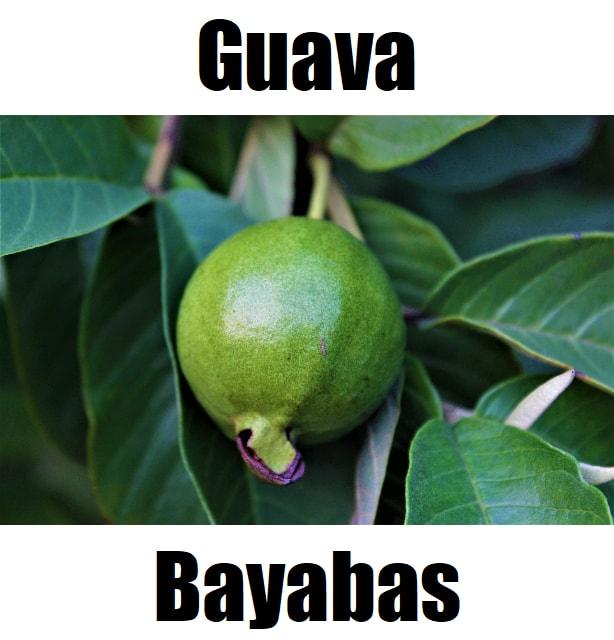
Table of Contents
What Is Guava in Tagalog?
The Tagalog word for guava is bayabas.
The scientific name of guava is Psidium guajava.
Bayabas trees are commonly found in provincial backyards across the Philippines and are often associated with childhood memories of picking fruit straight from the tree.
Key Details About Bayabas
- Common Name: Bayabas
- Scientific Name: Psidium guajava
- Skin Color: Green to yellow when ripe
- Flesh Color: White, pink, or light red
- Taste & Texture:
- Sweet and soft when ripe
- Crunchy and slightly tangy when unripe
- Uses:
- Eaten fresh
- Made into jam or jelly
- Used in juices and desserts
- Leaves used as a traditional antiseptic for cleaning wounds
Guava leaves are often boiled to make herbal tea and are traditionally used for washing minor cuts.
Guava Vocabulary Words in Tagalog
Expanding your vocabulary through themed word lists is a smart way to build fluency in Filipino. When you learn related words together, it becomes easier to describe ideas naturally and form complete sentences. In this section, you’ll explore common terms connected to bayabas, including words about farming, nutrition, gardening, and everyday food conversations.
Here are common vocabulary words related to guava:
| # | English | Tagalog |
|---|---|---|
| 1 | Guava | Bayabas |
| 2 | Fruit | Prutas |
| 3 | Seed | Buto |
| 4 | Plant | Halaman |
| 5 | Crop | Tanim |
| 6 | Vitamin C | Bitamina C |
| 7 | Healthy | Masustansya |
| 8 | Food | Pagkain |
| 9 | Orchard | Lagwerta |
| 10 | Green | Berde / Luntian |
| 11 | Garden | Hardin |
| 12 | Farm | Bukid |
| 13 | Planting | Pagtatanim |
| 14 | Farming | Pagsasaka |
| 15 | Tree | Puno |
By mastering these guava-related vocabulary words, you’ll be able to talk more confidently about fruits, agriculture, and healthy eating in Tagalog. Try using these words in your own example sentences or daily conversations to strengthen retention. The more you practice themed vocabulary like this, the faster your Filipino communication skills will improve.
Guava Example Phrases in Tagalog
Practicing full sentences is one of the most effective ways to improve your Filipino skills. Instead of memorizing single vocabulary words, reading and speaking complete phrases helps you understand grammar patterns, sentence flow, and natural expression. The examples below show how bayabas can be used in conversations about health, farming, family life, and food preparation.
Here are your sentences refined for smoother grammar and natural flow:
- The guava fruit has many small seeds.
Ang prutas ng bayabas ay may maraming maliliit na buto. - The wood of the guava tree is used for smoking meat.
Ang kahoy ng puno ng bayabas ay ginagamit sa pagpapausok ng karne. - Guava contains more fiber than pineapple.
Ang bayabas ay may mas maraming hibla kaysa sa pinya. - Guava has more Vitamin C than oranges.
Ang bayabas ay may mas maraming Bitamina C kaysa sa kahel. - Guava leaves are used to make tea.
Ang mga dahon ng bayabas ay ginagamit sa paggawa ng tsaa. - My grandma uses guava to make jam.
Ang aking lola ay gumagamit ng bayabas sa paggawa ng palaman. - I like the sweet taste of guava.
Gusto ko ang matamis na lasa ng bayabas. - My grandfather planted a guava tree in his backyard.
Ang aking lolo ay nagtanim ng puno ng bayabas sa kanyang bakuran. - Come help me harvest ripe guavas.
Halika at tulungan mo akong mamitas ng mga hinog na bayabas. - Wash the freshly picked guavas in cold water.
Hugasan mo ang mga kapipitas na bayabas sa malamig na tubig.
By reviewing and practicing these example phrases, you’ll become more confident using bayabas in real-life conversations. Try saying the sentences out loud to improve pronunciation and fluency. As you continue forming your own sentences about fruits, nutrition, and daily activities, your Tagalog communication skills will grow stronger and more natural over time.
Cultural Significance of Bayabas
Bayabas is one of the most common fruit trees in Filipino homes, especially in rural provinces. Many Filipinos remember climbing guava trees or eating slightly unripe bayabas with salt as children.
Because of its health benefits and availability, bayabas is considered both a nutritious fruit and a traditional household remedy.
Why Learn “Guava” in Tagalog?
Learning guava in Tagalog helps you:
- Expand your Filipino fruit vocabulary
- Talk about nutrition and health
- Understand traditional herbal practices
- Connect with Filipino culture and rural life
- Improve everyday conversational Tagalog
Frequently Asked Questions (FAQ)
1. What is guava in Tagalog?
Guava in Tagalog is bayabas.
2. What is the scientific name of guava?
The scientific name of guava is Psidium guajava.
3. Is bayabas healthy?
Yes. Bayabas is rich in Bitamina C, fiber, and antioxidants.
4. Are guava leaves medicinal?
Yes. Guava leaves are traditionally used as a natural antiseptic and brewed as herbal tea.
5. What does ripe guava taste like?
Ripe bayabas is sweet and soft, while unripe guava is crunchy and slightly tangy.
Conclusion
Now you know that guava in Tagalog is bayabas. You’ve learned its meaning, vocabulary words, example sentences, health benefits, and cultural importance in everyday Filipino life.
Keep practicing fruit names like bayabas to strengthen your Tagalog vocabulary and everyday conversation skills. Try incorporating new words into short sentences, casual conversations, or even labeling fruits at home to reinforce your learning.
Language growth happens through consistent practice. The more you review vocabulary, read example phrases, and use Tagalog in real-life situations, the more confident and fluent you’ll become. Keep building your word bank one topic at a time — and enjoy the journey of learning Filipino!