Bahay kubo vegetables are the heart of the most famous Filipino folk song, representing the simple and healthy lifestyle of a traditional Pinoy home. Whether you are living in the Philippines or are part of the Filipino community in Toronto, singing the song is a wonderful way to teach the younger generation about our rich food culture. The song celebrates a small nipa hut surrounded by a “sari-sari” or variety of 18 different vegetables that provide nutrition and flavor to our daily meals.
In this ultimate guide, we explore each of the Bahay kubo vegetables mentioned in the lyrics. You will find the Tagalog names, English translations, and scientific names. We also share interesting facts about their origins and how you can use them in your kitchen today. Let’s dive into this vibrant garden of knowledge!
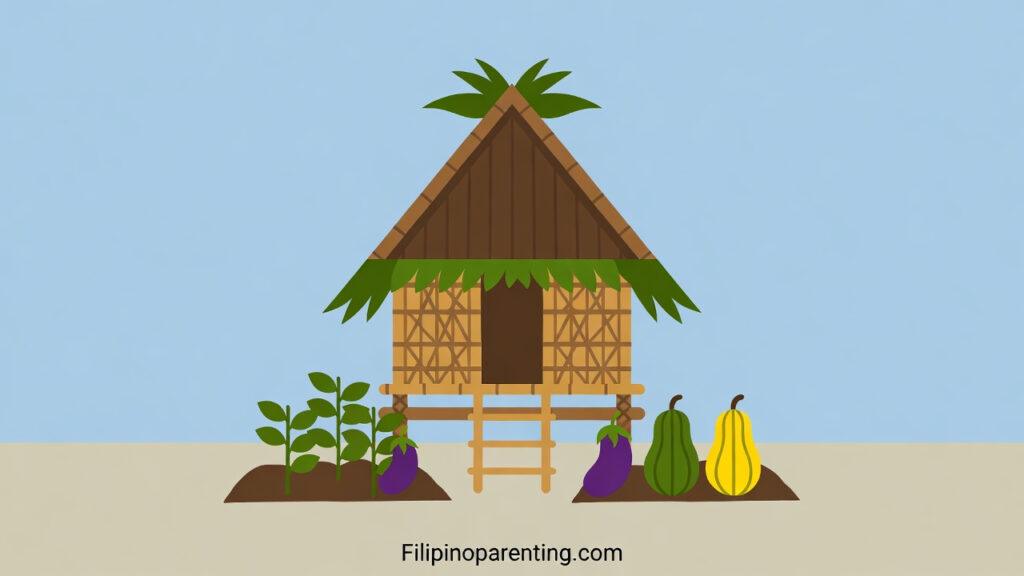
Table of Contents
The Full List of Bahay Kubo Vegetables
Here is the complete list of the Bahay kubo vegetables with their accurate names and scientific classifications:
- Singkamas – Yam Bean / Jicama (Pachyrhizus erosus)
- Talong – Eggplant (Solanum melongena)
- Sigarilyas – Winged Bean (Psophocarpus tetragonolobus)
- Mani – Peanut (Arachis hypogaea)
- Sitaw – String Beans (Vigna unguiculata)
- Bataw – Hyacinth Bean (Lablab purpureus)
- Patani – Lima Beans (Phaseolus lunatus)
- Kundol – Winter Melon (Benincasa hispida)
- Patola – Sponge Gourd (Luffa acutangula)
- Upo – Bottle Gourd (Lagenaria siceraria)
- Kalabasa – Squash (Cucurbita maxima)
- Labanos – Radish (Raphanus sativus)
- Mustasa – Mustard Greens (Brassica integrifolia)
- Sibuyas – Onion (Allium cepa)
- Kamatis – Tomato (Solanum lycopersicum)
- Bawang – Garlic (Allium sativum)
- Luya – Ginger (Zingiber officinale)
- Linga – Sesame (Sesamum indicum)
Fun Facts and Origins of Bahay Kubo Vegetables
Many people assume all these plants are native to the Philippines, but many Bahay kubo vegetables actually have global roots. This variety shows how Filipino culture has always welcomed flavors from around the world.
- Singkamas (Jicama): Originally from Mexico, it was brought to the islands via the Spanish galleon trade. It is crisp, refreshing, and often eaten raw.
- Kalabasa (Squash) and Kamatis (Tomato): These also originated in Central and South America.
- Upo and Patola: These gourds have origins in Africa and Asia and are now staples in dishes like tinola or ginisang ulam.
- Linga (Sesame): The song mentions sesame seeds are “sa paligid-ligid” or all around, highlighting their importance in many snacks.
Learning about these origins is a great way for parents to discuss history with their families while preparing a meal. For more information on plant varieties, you can visit Encyclopedia Britannica or the World Vegetable Center to see how these crops are grown globally.
Using Bahay Kubo Vegetables in Your Kitchen
Using these Bahay kubo vegetables in your daily cooking helps keep our heritage alive. Filipino families often use a mix of these in traditional recipes. For example, you can combine sitaw and kalabasa for a delicious vegetable stew. If you are looking for more specific ingredients, check out our list of English-Tagalog names of vegetables or see how to use herbs in Tagalog for extra flavor.
Here are some real-talk examples of how we talk about these vegetables at home:
- Ang sarap ng talong na inihaw ko kahapon! – How delicious the grilled eggplant I made yesterday!
- Nagluluto si lola ng sitaw at kalabasa sa gata. – Grandma is cooking string beans and squash in coconut milk.
- Magluluto ako ng upo sa tinola bukas. – I will cook bottle gourd in tinola tomorrow.
- Bawang at sibuyas ang una kong ginigisa. – Garlic and onion are the first things I sauté.
- Ang bango ng luya sa adobo natin! – The ginger smells so good in our adobo!
FAQ about Bahay Kubo Vegetables
How many vegetables are mentioned in the song?
There are 18 Bahay kubo vegetables mentioned in the main lyrics, ending with sesame seeds (linga) that are scattered all around.
What is the English name for Singkamas?
In English, Singkamas is known as the Yam Bean or Jicama. It is a crunchy root vegetable.
Is Kalabasa native to the Philippines?
No, Kalabasa (Squash) actually originated in Mexico and Central America before becoming a staple in Filipino gardens.
Which of these vegetables are best for soup?
Upo (Bottle Gourd) and Patola (Sponge Gourd) are excellent choices for clear soups or as an addition to chicken tinola. You can learn more about these in our lunch and dinner vocabulary guide.
Can I grow these in a home garden?
Yes! Many of these, like sitaw and kamatis, are perfect for Filipino vegetable gardening even in smaller spaces or backyard plots.
Conclusion
The Bahay kubo vegetables represent the abundance and simplicity of Filipino life. By teaching the younger generation the Tagalog names and the healthy benefits of these plants, we ensure that our culture and traditions continue to grow. Whether you are cooking a warm bowl of sinigang or a simple ginisang ampalaya, these vegetables bring the heart of the Philippines to your table.
Sing the song, enjoy the fresh flavors, and keep sharing the love for Pinoy food with your family. For a fun activity with the little ones, you might also enjoy our Bahay Kubo coloring pages to help them visualize the garden. Kain na tayo ng sari-saring gulay!
That is very interesting, You’re an overly professional blogger.
I have joined your rss feed and sit up for in the hunt for more of your wonderful post.
Additionally, I have shared your site in my social networks
Here is my blog post … https://www.google.com/maps/dir/?api=1&origin=26.03143603473487,-80.23729165123032&destination=Fix It Physical Therapy, LLC, 8246 Griffin Rd, Davie, FL 33328&travelmode=driving