If you are learning Tagalog, fascinated by marine mammals, or curious about wildlife vocabulary, the word for Sea Lion in Tagalog is leon-dagat (pronounced leh-yon DA-gat). While the Spanish-derived león marino is often used in casual conversation, leon-dagat is the authentic Tagalog term, literally translating to “lion of the sea.”
This post covers pronunciation, facts about these charismatic pinnipeds, and practical example sentences to help you use the term for Sea Lion in Tagalog confidently in your cultural and language studies.
Table of Contents
What Is “Sea Lion” in Tagalog? Pronunciation and Basics
Leon-dagat is the formal Tagalog translation for sea lion. It is a compound word: leon (lion) and dagat (sea).
Unlike true seals (which have no visible ear flaps and move awkwardly on land), a leon-dagat has external ear pinnae and can rotate its hind flippers forward to “walk.” In the Philippines, these intelligent animals are mainly seen in ocean parks or educational exhibits, such as Manila Ocean Park or Ocean Adventure in Subic. Because wild populations do not live in local waters, these venues provide essential marine mammal education for families and adult learners.
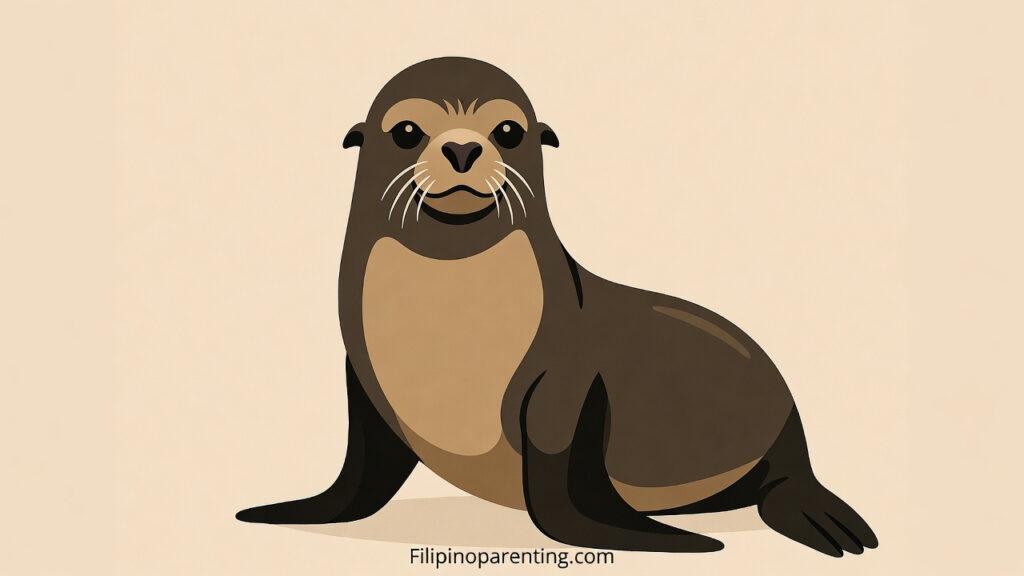
12 Fascinating Facts About Leon-Dagat
Knowing the name is just the start. To truly master the vocabulary for a Sea Lion in Tagalog, you need to understand the animal behind the word:
- Speed: Leon-dagat are excellent swimmers, reaching speeds up to 40 km/h underwater.
- Diving: They can dive to depths of 300 meters or more in search of food.
- Diet: They primarily hunt for fish, squid, and shrimp.
- The “Mane”: Adult males often develop a thick neck mane, which is why they are called “lions.”
- Vocalizations: They are famous for loud barking calls that sound like a lion’s roar.
- Social Life: They are highly social and usually live in large groups called colonies.
- Land Movement: Unlike seals, a leon-dagat can use all four flippers to move effectively on land.
- Intelligence: They are highly trainable, which is why they are the stars of most marine shows.
- Thermoregulation: You might see a leon-dagat lifting a flipper out of the water to absorb heat from the sun.
- Lifespan: In protected environments, they can live for over 20 years.
- Species: The California sea lion is the most common species seen in educational programs.
- Conservation: They are vital indicators of ocean health; protecting the leon-dagat means protecting our waters.
For more information on marine biology and conservation efforts, you can visit the National Oceanic and Atmospheric Administration (NOAA) or learn more about global pinniped diversity at the Ocean Conservancy.
How to Use “Leon-Dagat” in Everyday Tagalog: 12 Example Sentences
Use these sentences to practice your grammar and better understand how to refer to a Sea Lion in Tagalog. These are perfect for your regular study sessions!
- Ang leon-dagat ay may tainga na makikita sa labas. (The sea lion has visible external ears.)
- Nakakita ako ng leon-dagat sa Ocean Park noong nakaraang taon. (I saw a sea lion at Ocean Park last year.)
- Ang leon-dagat ay mahusay na lumalangoy at maaaring maglakad sa lupa. (Sea lions are excellent swimmers and can walk on land.)
- Sa zoo, ang leon-dagat ay gumaganap ng mga trick. (At the zoo, the sea lion performs tricks.)
- Paano magkaiba ang leon-dagat sa seal? (How is a sea lion different from a seal?)
- Ang lalaking leon-dagat ay mas malaki at may makapal na leeg. (The male sea lion is larger and has a thick neck.)
- Gusto kong panoorin ang leon-dagat na naglalaro sa tubig. (I want to watch the sea lion playing in the water.)
- Ang leon-dagat ay kumakain ng isda, pusit, at hipon. (Sea lions eat fish, squid, and shrimp.)
- Sa palabas, ang leon-dagat ay nagba-balance ng bola sa ilong. (In the show, the sea lion balances a ball on its nose.)
- Huwag kang mag-alala, ang leon-dagat ay hindi agresibo sa tao. (Don’t worry, sea lions are not aggressive toward people.)
- Nakakatuwa ang boses ng leon-dagat na parang aso na tumatahol. (The sea lion’s bark sounds funny, like a dog barking.)
- Sa Pilipinas, makikita mo ang leon-dagat sa aquarium o ocean park. (In the Philippines, you can see sea lions at aquariums or ocean parks.)
Related Tagalog Vocabulary for Marine Mammals
To expand your fluency, consider how the term for Sea Lion in Tagalog fits with other marine life names:
- Whale = Balyena
- Dolphin = Lumba-lumba
- Sea cow = Dugong
- Ocean park = Parke ng dagat
- Perform tricks = Mag-perform ng trick
If you enjoyed learning about the leon-dagat, check out our Fascinating Sea Lion Facts to expand your knowledge of these amazing animals!
FAQ About Leon-Dagat in Tagalog
What is the Tagalog word for sea lion?
Leon-dagat is the standard Tagalog term, though you will also hear the Spanish-influenced león marino. Using Sea Lion in Tagalog correctly helps show respect for the native language structure.
Are there wild sea lions in the Philippines?
No. Leon-dagat are not native to Philippine tropical waters; they are only seen in captivity or educational exhibits.
Why are they called “lions”?
Their loud, roar-like barks and the mane-like fur on the necks of adult males earned them the name leon-dagat.
Conclusion: Master the Vocabulary for a Sea Lion in Tagalog
Mastering the correct term for a Sea Lion in Tagalog is a powerful way to connect with the natural world through the beauty of the Filipino language. By practicing these 12 sentences and learning the unique traits of the leon-dagat, you are building a much stronger foundation for your language journey.
Whether you are exploring a parke ng dagat or sharing stories about marine life with the younger generation, using the phrase Sea Lion in Tagalog with confidence shows a deep respect for cultural education. Keep practicing your Tagalog vocabulary, and enjoy every step as you discover the incredible diversity of our oceans!