The peacock, with its stunning iridescent tail feathers and majestic display, is one of the most recognizable birds worldwide. In Tagalog, the language spoken by millions in the Philippines and diaspora communities, the word for Peacock in Tagalog is paboreal. This term, borrowed from the Spanish “pavo real,” is widely used in modern Filipino. While these birds are not native to the Philippine islands, they appear in zoos, parks, and as ornamental birds in some estates.
The closest native relative is the endangered Palawan peacock-pheasant, locally called tandikan. For parents teaching the younger generation or anyone building vocabulary, learning about the Peacock in Tagalog connects to animal names, colors, and beauty in Filipino culture.
Table of Contents
What is Peacock in Tagalog?
The standard translation for Peacock in Tagalog is paboreal. It refers specifically to the male bird famous for fanning its tail in a spectacular display. In casual “Real-Talk” conversation, it can cover the species in general.
- Paboreal – peacock (male) or the bird in general
- Tandikan – Palawan peacock-pheasant (a distinct, endemic species)
- Buntot ng paboreal – peacock’s tail (often symbolizing beauty or pride)
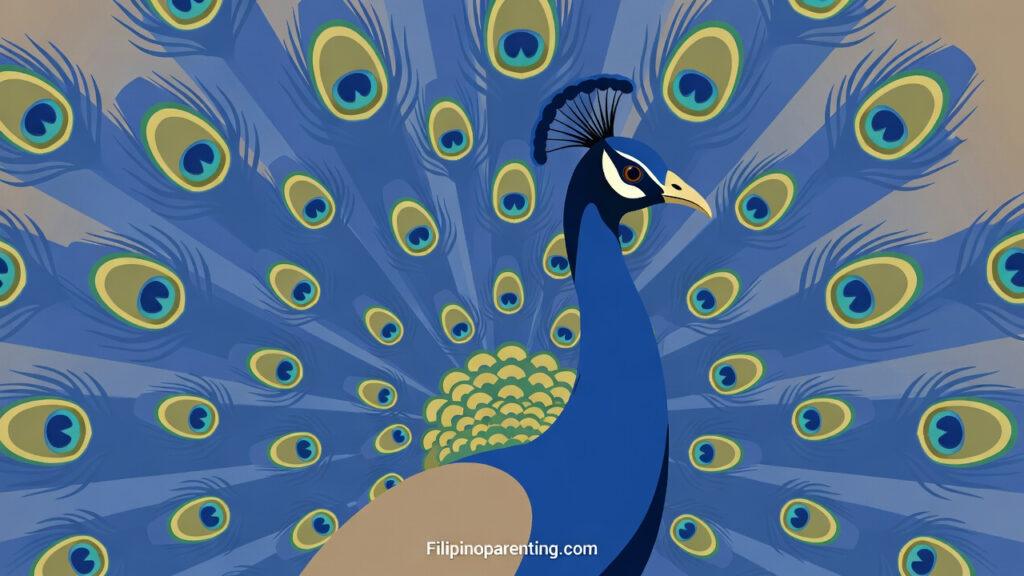
Common Vocabulary Related to Paboreal
Peacocks inspire terms tied to elegance and nature. When you are teaching learners, these related words are very helpful:
- Kulay ng paboreal – Peacock colors (iridescent blues, greens, and golds)
- Ipakita ang buntot – To display the tail (like the peacock’s fan)
- Mabangis na paboreal – An idiomatic way to describe a proud or vain person
- Tandikan – The endemic Philippine bird, a symbol of Palawan’s biodiversity
For more lessons on different creatures, you can explore our guides on Fish in Tagalog or the Sea Animal Names Word List.
10 Example Sentences for Practice
Here are practical sentences for families to use when practicing the term Peacock in Tagalog:
- Ang paboreal ay may magandang kulay sa buntot nito. (The peacock has beautiful colors on its tail.)
- Sa zoo, nakita namin ang isang malaking paboreal na nagpapakita ng buntot. (At the zoo, we saw a large peacock displaying its tail.)
- Ang tandikan ay katulad ng paboreal pero endemik sa Palawan. (The tandikan is similar to a peacock but endemic to Palawan.)
- Gusto ng mga learners ang paboreal dahil sa makukulay na balahibo. (Learners like the peacock because of its colorful feathers.)
- Ang paboreal ay simbolo ng kagandahan sa maraming kultura. (The peacock is a symbol of beauty in many cultures.)
- Huwag maging paboreal sa pamamagitan ng labis na pagmamayabang. (Don’t be a peacock by showing too much pride.)
- Sa hardin, may nag-aalaga ng paboreal para sa dekorasyon. (In the garden, someone keeps a peacock for decoration.)
- Ang buntot ng paboreal ay mukhang parang fan na may mga mata. (The peacock’s tail looks like a fan with eyes.)
- Nakita ko sa video ang sayaw ng paboreal sa ulan. (I saw in a video the peacock dancing in the rain.)
- Ang kulay ng paboreal ay inspirasyon para sa damit sa fashion show. (The peacock’s colors inspire outfits in fashion shows.)
To see how these birds fit into the wider world of wildlife, check our lists of Zoo Animals in Tagalog and Animals in English and Tagalog.
Cultural Significance and Real-Talk
Although not native, the Peacock in Tagalog culture appears in major wildlife parks like Avilon or Manila Zoo. The tandikan holds deeper meaning as an endangered species, featured on local seals to symbolize conservation. For parents living abroad, teaching the word “paboreal” links families to global animal knowledge while practicing the language.
You can find more information about Philippine avian conservation at the Philippine Eagle Foundation or global bird facts at National Geographic.
FAQ
What is the Tagalog word for peacock?
Paboreal is the most common term.
Is there a native Filipino bird similar to a peacock?
Yes, the tandikan (Palawan peacock-pheasant) is endemic to Palawan.
How do you say peahen in Tagalog?
It is often referred to as babaeng paboreal.
How to pronounce paboreal?
It’s pronounced “pa-bo-re-al” with a slight stress on the third syllable.
Conclusion
Discovering the Peacock in Tagalog enriches your vocabulary with a touch of exotic beauty. From zoo visits to symbolic meanings of pride, this word bridges global and local perspectives. Practice with these sentences to build confidence, and don’t forget to explore related birds like the Crow in Tagalog, the Heron in Tagalog, or our general Birds in Tagalog English list. Happy learning!