Filipino Foods in Tagalog are more than just words on a menu — they reflect a way of life that shapes the rhythm of each day in the Philippines. Growing up, I learned that there were not just three meals, but five. The day began with almusal (breakfast), followed by segundo almuerzo (a light morning snack), then pananghalian (lunch), merienda in the afternoon, and finally hapunan (dinner). Eating wasn’t rushed or random; it followed a comforting routine that brought everyone together.
Breakfast was always something to look forward to. There might be warm pandesal with soft white cheese, or champorado – a sweet chocolate rice porridge. Garlic fried rice or sinangag was common, paired with cured meats, dried fish, or salted eggs. Even snacks felt special — steamed rice cakes, noodles, or simple homemade treats shared over conversation. Rice, of course, was present almost every time we sat down to eat. A meal without rice hardly felt complete.
Meals were never served in stiff courses. Everything was placed on the table at once — soup, vegetables, fish, meat — allowing everyone to eat what they liked, in the order they preferred. Condiments and dipping sauces were always nearby. A spoon in one hand and a fork in the other was all you needed. In some homes, especially in the provinces, eating with your hands was still practiced — and honestly, it made the experience feel even more connected and authentic.
What stands out most to me is the hospitality. In Filipino homes, if you happened to walk by during mealtime, you would almost always hear, “Kain tayo” — Come and eat. It didn’t matter if you were family, a neighbor, or someone who had just dropped by briefly. Food was how people expressed generosity. It was how they showed care.
Even families with modest means made sure that celebrations were abundant. During fiestas, weddings, birthdays, Christmas, or New Year’s Eve, tables overflowed with dishes prepared with pride. Special occasions meant extra effort — roasted meats, noodle dishes symbolizing long life, and trays of sweet rice delicacies.
Some of my fondest memories are of shared tables — laughter between bites, neighbors invited in without hesitation, and the simple joy of eating together. Those moments shaped how I see food today. For me, a meal tastes better when it’s shared. Filipino cuisine isn’t only about ingredients or recipes; it’s about connection, generosity, and community.
And that’s exactly why learning these Tagalog food terms matters. Behind every word is a story, a memory, and a tradition waiting to be understood.
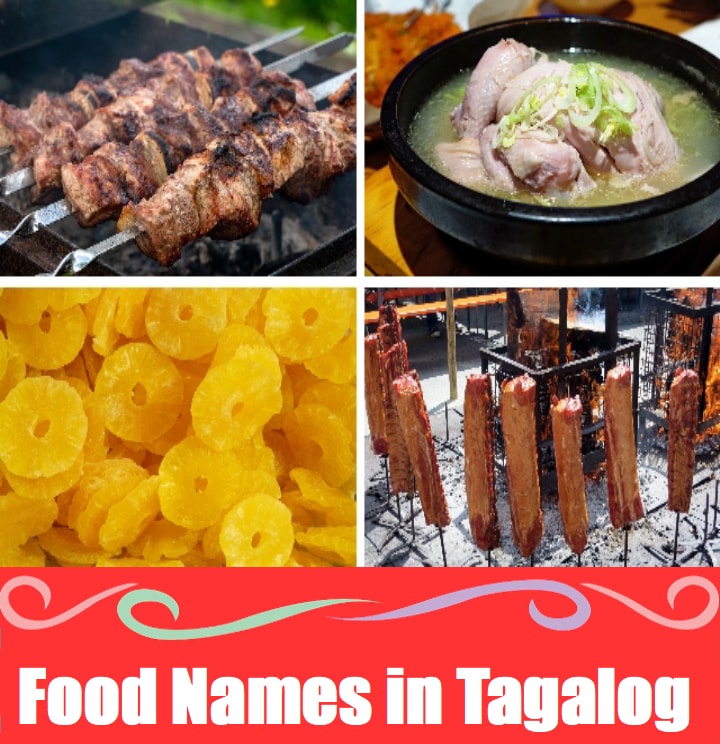
Filipino Foods in Tagalog: Complete List by Category
Below is a categorized glossary of common Filipino foods in Tagalog, including their English translations to help you navigate recipes and markets with confidence.
Table of Contents
🥬 Filipino Foods in Tagalog: Vegetables & Leafy Greens
If there is one thing that defines a Filipino kitchen, it’s the presence of fresh vegetables laid out beside the rice pot. Growing up, I remember how no meal ever felt complete without something green on the table — whether it was sautéed kang kong, tender malunggay leaves stirred into soup, or slices of fresh tomato and onion served simply with salted egg.
Vegetables in Filipino cooking are humble, yet deeply meaningful. Some are backyard staples, grown in small gardens beside the house. Others are picked fresh from local markets early in the morning, still carrying the scent of soil and rain. These ingredients aren’t just side dishes — they balance flavors, stretch meals for larger families, and quietly nourish everyone gathered at the table.
Below is a guide to common Tagalog vegetables and leafy greens you’ll often encounter in Filipino recipes, markets, and home kitchens.
| Tagalog | English |
|---|---|
| Abitsuelas | Green beans / Baguio beans |
| Alugbati | Malabar spinach |
| Ampalaya | Bitter melon |
| Bataw | Hyacinth bean pods |
| Kalabasa | Squash / Pumpkin |
| Kalamismis | Winged bean |
| Kamatis | Tomato |
| Kamote | Sweet potato |
| Kamoteng kahoy | Cassava / Tapioca |
| Kang kong | Water spinach / Swamp cabbage |
| Karot | Carrot |
| Kintsay | Celery |
| Kutsay | Chives |
| Dahon ng sili | Chili leaves |
| Gabi | Taro root |
| Gisantes | Green peas |
| Ispanaka | Spinach |
| Labanos | Radish |
| Letsugas | Lettuce |
| Malunggay | Moringa leaves |
| Okra | Okra |
| Papayang hilaw | Green papaya |
| Patola | Sponge gourd |
| Petsay | Chinese cabbage |
| Repolyo | Cabbage |
| Sayote | Chayote |
| Sibuyas | Onion |
| Sibuyas na mura | Spring onions |
| Sibuyas Tagalog | Native shallots |
| Siling berde | Green bell pepper |
| Singkamas | Jicama / Turnip |
| Sitsaro | Snow peas |
| Talbos ng kamote | Sweet potato leaves |
| Talong | Eggplant |
| Tanglad | Lemongrass |
| Tengang daga | Wood ear mushrooms |
| Togue | Bean sprouts |
| Ubod | Coconut heart |
| Wansuy | Coriander leaves |
What makes Filipino vegetables special isn’t just their flavor — it’s how they’re used. A simple bunch of talbos ng kamote can become a comforting soup. A slice of bitter ampalaya might remind someone of childhood meals lovingly prepared by a grandparent. Even everyday ingredients like onion, tomato, and eggplant carry stories of ordinary days made meaningful through shared food.
Learning these Tagalog vegetable names helps you read recipes with confidence, but more importantly, it brings you closer to the rhythm of a Filipino kitchen. It allows you to see that behind every ingredient is a memory, a tradition, and a way of caring for others through food.
And like many things in Filipino culture, even the simplest vegetables taste better when shared.
🍎 Filipino Foods in Tagalog: Fruits
Filipino fruits are more than just something sweet at the end of a meal — they are memories of hot afternoons, backyard trees, and sticky fingers after peeling something fresh and ripe. I remember climbing trees for bayabas and mangoes, or waiting patiently for saba bananas to ripen on the kitchen counter. Fruit was never just fruit; it was part of everyday life.
In the Philippines, many fruits are enjoyed straight from the tree, sliced and shared with family, or dipped in salt or bagoong for that perfect balance of sweet and sour. Others are transformed into juices, preserves, desserts, or festive treats served during special occasions. From the creamy richness of atis to the bold tang of kamias and sampaloc, Filipino fruits reflect the country’s tropical abundance and vibrant flavors.
Below is a guide to common Tagalog fruit names you’ll often encounter in markets, recipes, and Filipino gatherings.
| Tagalog | English |
|---|---|
| Atis | Sugar apple / Custard apple |
| Kaimito | Star apple |
| Kamias | Bilimbi |
| Dalanghita | Mandarin orange |
| Dayap | Lime |
| Duhat | Java plum |
| Guyabano | Soursop |
| Langka | Jackfruit |
| Manggang hilaw | Green mango |
| Papaya | Papaya |
| Saba | Banana (Lady finger) |
| Sampaloc | Tamarind |
| Tsiko (Chiko) | Sapodilla |
| Tubo | Sugarcane |
| Ube | Purple yam |
| Kaong | Sugar palm fruit |
| Macapuno | Soft coconut sport |
Each fruit carries its own personality — some sweet and gentle, others sharp and refreshing. A slice of green mango dipped in salt can instantly bring back childhood afternoons. A spoonful of ube dessert can remind someone of birthdays and holiday celebrations. Even something as simple as fresh papaya after dinner holds quiet comfort.
Learning these Tagalog fruit names does more than expand your vocabulary. It allows you to recognize the ingredients that shape Filipino desserts, drinks, and everyday snacks. It helps you understand the flavors that define the culture — bright, balanced, and meant to be shared.
Because in Filipino homes, fruit is rarely eaten alone. It’s sliced, passed around, and enjoyed together — just another small but meaningful way food connects people.
🐟 Filipino Foods in Tagalog: Seafood & Fish
Living in an archipelago surrounded by water, it’s no surprise that seafood plays such an important role in Filipino cooking. For many families, fresh fish from the morning market or seafood brought in straight from the shore is part of everyday life. I still remember the familiar scent of grilled fish in the air, the sound of oil sizzling as bangus hit the pan, and the careful cracking of crab shells at the dinner table.
Seafood in the Philippines is prepared in countless ways — grilled over charcoal, simmered in sour broths, sautéed with garlic and ginger, or simply fried until crisp and golden. From humble dried dilis served with rice to rich crab dishes saved for special occasions, these ingredients reflect both the country’s geography and its resourcefulness. Coastal communities rely on the sea not just for food, but for livelihood and tradition.
Below is a guide to common Tagalog seafood and fish names you’ll encounter in Filipino recipes and local markets.
| Tagalog | English |
|---|---|
| Alimasag | Blue swimmer crab |
| Alimango | Mud crab |
| Apahap | Sea bass |
| Bangus | Milkfish |
| Dalag | Mudfish |
| Dilis | Anchovy |
| Halaan | Clams |
| Hibe | Dried shrimp |
| Kuhol | Snail |
| Lapu-lapu | Grouper |
| Pusit | Squid |
| Tahong | Mussels |
| Talaba | Oyster |
| Tanguigue | Spanish mackerel |
Seafood dishes often bring people together in a uniquely Filipino way. A platter of grilled fish placed in the center of the table invites sharing. Crabs and shellfish turn dinner into a slow, joyful experience filled with laughter and messy hands. Even a simple meal of fried fish and rice can feel deeply comforting.
Learning these Tagalog seafood terms helps you better understand traditional dishes and the flavors of coastal Filipino cuisine. More than that, it gives you a glimpse into a way of life shaped by the ocean — where food is fresh, meals are communal, and every bite carries the taste of home.
Because in Filipino culture, whether it comes from land or sea, food is always meant to be shared.
🥩 Filipino Foods in Tagalog: Meat & Poultry
In many Filipino homes, meat dishes are the heart of the table — especially during weekends and special gatherings. I remember how the kitchen would slowly fill with the aroma of simmering pork, garlic frying in oil, or beef gently stewing for hours until tender. These were the meals everyone looked forward to, the ones that brought the whole family to the table without needing to be called twice.
Meat in Filipino cooking is often prepared with patience. Cuts like kasim and pata are braised until soft, while liempo is grilled until perfectly crisp on the outside and juicy inside. Some ingredients, like lengua or goto, may seem unfamiliar at first, but they reflect a deep tradition of using every part thoughtfully and respectfully. Whether it’s everyday comfort food or something reserved for celebrations, these dishes carry warmth, effort, and care in every bite.
Below is a guide to common Tagalog meat and poultry terms you’ll encounter in Filipino recipes and family kitchens.
| Tagalog | English |
|---|---|
| Bias / Biyas | Beef shank |
| Kambing | Goat |
| Kasim | Pork shoulder |
| Lengua / Dila | Ox tongue |
| Liempo | Pork belly |
| Pata | Pork leg |
| Pato | Duck |
| Pigue | Ham |
| Goto | Tripe |
Meat dishes often mark moments of togetherness — Sunday lunches, birthdays, fiestas, and holiday feasts. A slow-cooked stew placed at the center of the table invites everyone to gather closer. Crispy pork shared among many plates becomes part of laughter and conversation. These meals are rarely rushed; they are meant to be savored.
Learning these Tagalog meat and poultry terms helps you better understand traditional Filipino recipes and the stories behind them. It reminds us that food is not only about flavor, but about effort, celebration, and the joy of feeding the people we love.
Because in Filipino homes, a lovingly prepared dish of meat is more than just sustenance — it’s a gesture of generosity, pride, and shared happiness.
🧂 Filipino Foods in Tagalog: Condiments, Sauces & Seasonings
If rice is the foundation of a Filipino meal, condiments and seasonings are its soul. They are the quiet but powerful elements that transform simple ingredients into dishes full of character. I grew up watching small bowls of patis and suka placed on the table before anyone even started eating. A squeeze, a splash, a quick mix of chilies into vinegar — these tiny gestures made every bite personal.
Filipino cooking is built on balance. Salty meets sour, creamy meets savory, and sometimes a hint of sweetness ties everything together. Bagoong adds depth and boldness. Gata softens and enriches stews. Atsuete brings warmth and color. Even something as simple as laurel simmering in a pot signals that a comforting dish is on the way.
These ingredients may seem small compared to the main components of a meal, but without them, Filipino cuisine would lose its unmistakable identity. Below is a guide to common Tagalog condiments, sauces, and seasonings you’ll often find in Filipino kitchens.
| Tagalog | English |
|---|---|
| Atsuete | Annatto seeds (natural food coloring) |
| Bagoong | Shrimp paste |
| Bagoong isda | Fish paste |
| Gata | Coconut milk |
| Kakang gata | Coconut cream |
| Laurel | Bay leaf |
| Lihiya | Lye |
| Miso | Soybean paste |
| Pamintang buo | Peppercorns |
| Patis | Fish sauce |
| Suka | Vinegar |
| Sanque | Star anise |
| Tahure | Fermented bean paste |
| Pandan | Pandan leaves |
Condiments in Filipino culture are more than flavor enhancers — they’re expressions of preference and personality. Some people like extra vinegar in their dipping sauce. Others add more fish sauce for a stronger kick. At the table, everyone adjusts flavors to their liking, making the meal uniquely theirs.
Learning these Tagalog seasoning terms helps you better understand how Filipino dishes achieve their distinct taste — layered, balanced, and deeply satisfying. It gives you insight into the subtle techniques behind the cuisine, where even a small spoonful can change everything.
Because in Filipino cooking, it’s often the simplest ingredients — the splash of vinegar, the swirl of coconut milk, the pinch of spice — that bring the most memorable flavors to life.
🍜 Filipino Foods in Tagalog: Noodles, Rice & Grains
In Filipino homes, rice is more than a side dish — it’s the center of the meal. I grew up hearing the familiar question, “May kanin ba?” (Is there rice?) because without it, a meal hardly felt complete. Whether it was plain steamed rice beside grilled fish or warm lugaw on a rainy afternoon, grains have always been a quiet constant on the table.
Noodles, too, hold a special place in Filipino culture. They’re not just everyday comfort food — they’re symbols of celebration and long life. Birthdays, fiestas, and family gatherings often feature pancit made with bihon, kanton, or sotanghon, prepared in large trays meant for sharing. Even simple ingredients like malagkit become something meaningful when turned into sticky rice delicacies served during holidays.
Sweet treats also find their roots here. Sago and gulaman cool you down on hot afternoons, often mixed into colorful drinks sold by street vendors or served at parties. These humble grains and noodles carry both nourishment and tradition in every bite.
Below is a guide to common Tagalog terms for noodles, rice, and grains you’ll encounter in Filipino kitchens and celebrations.
| Tagalog | English |
|---|---|
| Bihon | Rice noodles |
| Kanton | Egg noodles |
| Lugaw | Rice porridge |
| Malagkit | Glutinous rice |
| Sotanghon | Glass noodles |
| Sago | Sago pearls |
| Gulaman | Agar / Jelly |
Grains and noodles represent comfort in its simplest form. A bowl of porridge can soothe. A plate of pancit can bring good wishes. A sticky rice dessert can mark an important occasion. These dishes are woven into daily routines and life’s biggest milestones alike.
Learning these Tagalog terms helps you better understand the backbone of Filipino cuisine. It shows how something as humble as rice or noodles can carry deep cultural meaning — feeding families, symbolizing prosperity, and bringing people together.
Because in Filipino culture, whether it’s a steaming bowl of lugaw or a festive tray of pancit, food made from grains is always meant to be shared — warm, generous, and full of heart.
🥥 Filipino Foods in Tagalog: Coconut & Coconut Products
In the Philippines, the coconut tree is often called the “Tree of Life” — and once you see how it’s used in everyday cooking, you’ll understand why. From the refreshing sweetness of buko on a hot afternoon to the rich creaminess of gata simmering in a pot of curry, coconut is everywhere in Filipino kitchens.
It’s more than just an ingredient. It’s a memory of roadside coconut stands, freshly grated niyog squeezed by hand, and dishes slowly cooked until thick and fragrant. Whether sweet or savory, coconut brings a signature depth and warmth that defines many Filipino dishes.
Below is a helpful guide to common coconut and coconut-based ingredients you’ll encounter when learning Filipino foods in Tagalog.
| Tagalog | English |
|---|---|
| Buko | Young coconut |
| Niyog | Coconut |
| Gata | Coconut milk |
| Kakang gata | Coconut cream |
| Macapuno | Soft coconut sport |
| Ubod | Coconut heart |
Coconut isn’t just used for flavor — it represents resourcefulness and tradition. Almost every part of the tree has a purpose. The milk enriches stews, the cream thickens desserts, the young coconut becomes refreshing drinks, and even the heart of the tree finds its way into special dishes.
Learning these coconut terms in Tagalog helps you better understand traditional recipes and appreciate how deeply rooted coconut is in Filipino culture. Once you recognize words like gata or buko, Filipino cooking becomes less intimidating and far more inviting.
Because in the Philippines, coconut isn’t just an ingredient — it’s a way of life.
🍽 Unique Filipino Cooking Terms
Some Filipino food terms don’t simply translate into ingredients — they tell stories about technique, tradition, and everyday life in the kitchen. These are the words you hear from elders while cooking, the little phrases passed down without ever being written in a formal recipe.
I remember watching rice being rinsed carefully, the cloudy hugas bigas never wasted but saved to enrich soups or stews. I remember the steady rhythm of wrapping lumpia at the table before a celebration, each roll lined up neatly and ready for frying. Even the unmistakable crunch of sitsaron carried memories of gatherings, snacks shared with friends, and plates passed around during lively conversations.
These terms represent habits and practices that feel natural in Filipino households — simple, practical, and rooted in generations of resourcefulness.
Below are a few unique Filipino cooking terms you’ll often hear in kitchens and at family gatherings.
| Tagalog | English |
|---|---|
| Hugas bigas | Rice washing water (used as stock base) |
| Lumpia | Spring rolls |
| Sitsaron | Pork crackling |
What makes these terms special is that they go beyond direct translation. They reflect how Filipinos cook — thoughtfully, creatively, and with very little going to waste. Even something as simple as rice washing water has a purpose. Even a humble snack like pork crackling becomes part of shared moments.
Learning these unique Tagalog cooking terms deepens your understanding of Filipino cuisine in a meaningful way. It’s not just about knowing what something is — it’s about understanding how and why it’s used.
Because in Filipino kitchens, every word carries experience, and every tradition carries heart.
Why Learning Filipino Foods in Tagalog Matters
Learning Filipino food vocabulary is about more than simply translating words — it’s about understanding the stories behind every dish. When you recognize terms like malunggay, patis, or kamias, you’re no longer just following a recipe. You’re stepping into a kitchen shaped by generations of tradition, memory, and shared experience.
Instead of second-guessing unfamiliar ingredients, you’ll begin to recognize them with confidence — whether you’re flipping through a well-worn cookbook, watching a home cook prepare a family specialty, or standing in the aisle of an Asian grocery store trying to decide what to bring home. Each word becomes familiar, less intimidating, and more inviting.
Food is deeply woven into Filipino identity. Celebrations, milestones, and even ordinary days revolve around meals prepared and shared together. Knowing the names of ingredients allows you to appreciate not just the flavors, but the meaning behind them. It helps you see that what’s on the table is never just food — it’s hospitality, pride, history, and love served generously.
Final Thoughts
Filipino cuisine is vibrant, layered, and wonderfully diverse. Many of its ingredients may feel unfamiliar at first, but that’s part of the joy — discovering flavors, textures, and traditions that make every dish unique. This glossary is meant to be a gentle guide, helping you move from curiosity to confidence in the kitchen.
I’ll continue adding new terms as I learn more myself, because understanding food — like culture — is never a finished journey. Whether you’re exploring Filipino cooking for the first time or reconnecting with flavors from childhood, I hope this guide encourages you to cook, to taste, and most importantly, to share. After all, in Filipino culture, a meal is always better when it’s enjoyed together.