Common Filipino Beef Cuts are the secret to making your home-cooked meals taste like they came straight from a Manila kitchen. “Nagluluto ako ng bistek Tagalog gamit ang tapadera” — this is a phrase many families use when preparing a weekend feast. Understanding the specific names for beef helps you navigate markets with ease and ensures you select the right texture for every dish.
In the Philippines, wet markets use local names such as kalitiran, kadera, paypay, and tapadera. This guide translates these terms to English, explains their best uses, and pairs them with classic recipes. By using the correct Common Filipino Beef Cuts, you can transform a simple dinner into an authentic cultural experience.
Table of Contents
Why Learn Filipino Beef Cut Names?
Many adults grew up hearing “Kumuha ka ng kalitiran para sa mechado” but may feel unsure when faced with a supermarket meat aisle. Learning these terms connects us to our roots and helps us teach the younger generation about our heritage through food. It also helps in choosing the right meat, as tougher cuts like kadera are perfect for slow-cooked stews.
For more kitchen-related vocabulary to use while you cook, check out our list of Tagalog kitchen utensils. You can also look into Filipino cooking conversions to make sure your recipes are precise.
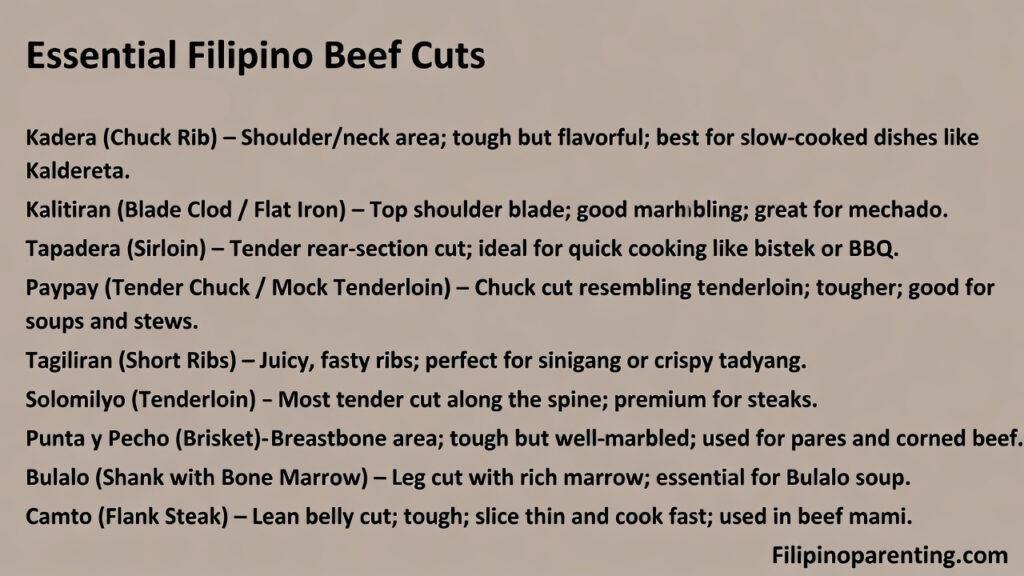
The Essential List of Common Filipino Beef Cuts
Here is the complete list of the most popular cuts used in Filipino households:
- Kadera (Chuck Rib) – This comes from the shoulder and neck area. It is tough but very flavorful, making it a favorite for slow-cooked stews like Beef Kaldereta.
- Kalitiran (Blade Clod / Flat Iron) – Taken from the top shoulder blade. It has good marbling and becomes tender when slow-cooked. It is often used for mechado.
- Tapadera (Sirloin) – A tender and flavorful cut from the rear section. It is the best choice for quick cooking like bistek Tagalog or barbecue.
- Paypay (Tender Chuck / Mock Tenderloin) – This cut from the chuck looks like a tenderloin but is tougher. It is best enjoyed when slow-cooked in soups or stews.
- Tagiliran (Short Ribs) – These are juicy, fatty ribs. They provide a rich flavor for sinigang or crispy tadyang.
- Solomilyo (Tenderloin) – The most tender cut located along the spine. It is a premium choice for high-heat cooking like steaks.
- Punta y Pecho (Brisket) – From the breastbone area, this cut is tough but well-marbled. It is the traditional choice for beef pares or corned beef.
- Bulalo (Shank with Bone Marrow) – A leg cut known for its rich marrow. It is the essential ingredient for the famous Bulalo soup.
- Camto (Flank Steak) – A lean and tough cut from the belly. It should be sliced thin and cooked fast, often seen in beef mami.
How to Use These Cuts in Family Conversation
Practicing Tagalog while cooking is a great way for parents to stay connected to the language. Here are example sentences you can use at home:
- Nagluluto ako ng kaldereta gamit ang kadera. – I am cooking kaldereta using chuck rib.
- Ang sarap ng bistek na gawa sa tapadera! – How delicious the beefsteak made with sirloin is!
- Gutom na ko sa bulalo na may marrow. – I am hungry for bulalo with bone marrow.
- Magluluto si lola ng nilaga with paypay bukas. – Grandma will cook nilaga with tender chuck tomorrow.
- Kinakain namin ang tagiliran na inihaw. – We are eating grilled short ribs.
- Solomilyo ang binili ko para sa special dinner. – I bought tenderloin for the special dinner.
- Punta y pecho ang ginagamit ko para sa corned beef. – I use brisket for making corned beef.
- Camto ang pinaka-tough pero masarap kapag sinlice thin. – Flank steak is the toughest but delicious when sliced thin.
- Kalitiran ang favorite ko para sa mechado. – Blade clod is my favorite for mechado.
- Busog na ko pero gusto ko pa ng tagiliran sinigang. – I am full but I still want short rib sinigang.
To expand your vocabulary beyond the kitchen, you might enjoy learning beautiful Tagalog words that describe our culture or exploring Filipino proverbs about character.
Delicious Recipes for Common Filipino Beef Cuts
Each cut has a specific “best use” that brings out its unique flavor and texture.
- Bistek Tagalog: Use tapadera (sirloin). Marinate the meat in soy sauce, calamansi, and garlic. Fry it quickly and top with plenty of white onion rings.
- Bulalo Soup: Use bulalo shank. Simmer the bones for hours with corn, potatoes, and pechay until the marrow is soft.
- Beef Kaldereta: Use kadera or kalitiran. Cook with tomato sauce and liver spread for a rich, festive flavor.
- Nilagang Baka: Use paypay or shank. This is perfect for a rainy day, served with cabbage and saba bananas.
For more ideas on what to serve with these beef dishes, browse our list of Filipino foods in Tagalog or see our guide on types of silog for breakfast.
FAQ About Common Filipino Beef Cuts
Q1: What is the Tagalog word for sirloin?
A: Tapadera. It is very tender and perfect for quick frying or grilling.
Q2: Which cut is best for a rich broth?
A: Bulalo (shank with marrow). The bone marrow adds a deep, buttery flavor to the soup.
Q3: Is kalitiran the same as tenderloin?
A: No. Kalitiran is from the chuck/shoulder area and is tougher. Solomilyo is the actual tenderloin.
Q4: What is paypay in English?
A: It is known as tender chuck or mock tenderloin. It looks like tenderloin but needs more time to cook.
Q5: Which cut is the most affordable?
A: Usually, bulalo shank or camto (flank) are very budget-friendly, though they require longer cooking times.
Conclusion
Knowing these Common Filipino Beef Cuts makes you a more confident cook and helps preserve our culinary language. Whether you are preparing a quick bistek with tapadera or a slow-simmered bulalo, choosing the right meat ensures your ulam is always a success. To ensure your ingredients are top quality, you can refer to the official meat inspection standards or learn more about the cultural history of cattle in the Philippines.
Practice using these names next time you visit the market and share the joy of Filipino cooking with your family. Understanding these cuts is about more than just a meal; it is about keeping our traditions alive in our own kitchens. Kain na tayo!