Enye Letter (Ñ) is a cornerstone of our heritage that bridges the gap between our historical roots and our modern identity. “Santo Niño ang dasal namin tuwing January,” is a phrase many of us grew up hearing, representing a deep faith that centers around a name using this specific letter. The Enye Letter (Ñ) may look like a simple “n” with a tilde, but it carries centuries of history, identity, and cultural pride. It is one of the 28 letters in the modern Filipino alphabet and reminds us of our Spanish colonial roots while celebrating how we made the language our own.
In this guide, we explore seven essential truths about the Enye Letter (Ñ) in Filipino language and culture. You will learn common examples, their meanings, and how to use them naturally. We include example sentences using the Tagalog vocabulary our families use every day. Whether you are teaching the younger generation or simply want to understand our heritage better, this post makes the history of our language clear and enjoyable.
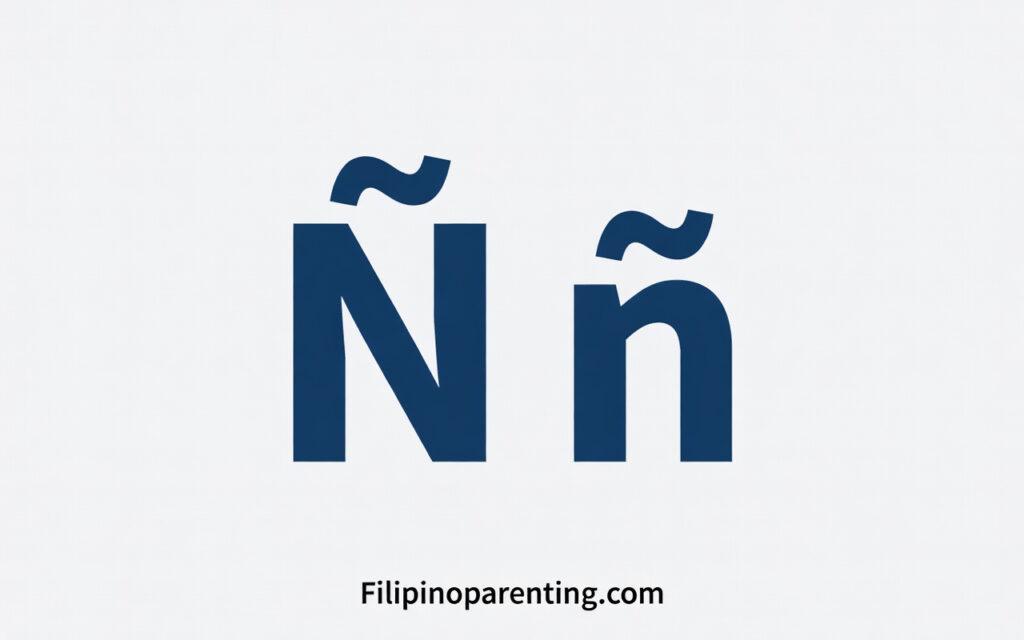
Table of Contents
1. The Enye Letter (Ñ) Is Part of the Official Filipino Alphabet
The modern Filipino alphabet has 28 letters: the 26 English letters plus Ñ and NG (treated as a single letter). The Enye Letter (Ñ) was kept in the official alphabet to honor its presence in proper names and important cultural terms. Even though many Spanish loanwords have been simplified over time—for example, looking at pineapple in Tagalog where “piña” often becomes “pinya” in casual writing—the ñ is proudly retained in formal contexts and family names. This ensures that the Alpabetong Filipino chart remains a complete reflection of our spoken and written traditions.
Example sentences:
- “Ang letra ñ ay bahagi ng ating Filipino alphabet.” – The letter ñ is part of our Filipino alphabet.
- “Maraming Filipino surnames ang may ñ, tulad ng Peña at Mañalac.” – Many Filipino surnames have ñ, like Peña and Mañalac.
2. Most Words with the Enye Letter (Ñ) Come from Spanish Influence
History tells us that the Philippines was under Spanish rule for more than 300 years. During that time, many Spanish words, names, and the Enye Letter (Ñ) entered our vocabulary. While native Tagalog words rarely use ñ, borrowed terms and proper names still carry it to preserve historical spelling. You can see this influence across many beautiful Tagalog words we use today to describe our surroundings and our clothing.
Example sentences:
- “Ang barong ko ay gawa sa piña cloth, sobrang ganda!” – My barong is made from pineapple fiber — it’s so beautiful!
- “Si Peña ang apelyido ng lola ko.” – Peña is my grandma’s surname.
3. Santo Niño Is a Heartfelt Use of the Enye Letter (Ñ)
One of the most important and emotional uses of ñ in Filipino culture is in Santo Niño—the devotion to the Holy Child Jesus. This is one of the oldest and most widespread traditions in the country. Families continue this devotion every January with prayers and gatherings. This deep connection is often reflected in Tagalog quotes about faith that sustain the community through every trial.
Example sentences:
- “Santo Niño ang patron namin.” – Santo Niño is our patron.
- “Tuwing January, nagdadasal kami kay Santo Niño para sa blessings.” – Every January, we pray to Santo Niño for blessings.
- “Santo Niño, gabayan mo ang pamilya namin.” – Santo Niño, guide our family.
4. Many Filipino Surnames Proudly Keep the Enye Letter (Ñ)
Family names are one of the strongest places where the Enye Letter (Ñ) survives. For parents, seeing these names is a great way to practice the alphabet in Tagalog with the younger generation. It helps them realize that their own names are part of a much larger linguistic history. Common Filipino surnames that keep the tilde include:
- Peña, Dela Peña
- Mañalac, Peñaranda
- Quiñones, Ibañez
- Muñoz, Añonuevo
Example sentences:
- “Ang apelyido namin ay Mañalac, galing sa probinsya ng Laguna.” – Our surname is Mañalac, from Laguna province.
- “Si Mr. Peña ang guro ko sa Filipino class.” – Mr. Peña is my Filipino teacher.
5. The Enye Letter (Ñ) Appears in Cultural and Everyday Terms
Besides names and religious terms, the Enye Letter (Ñ) is also seen in words like piñata and in various historical contexts. While modern casual writing often uses “ny” (pinya, kanyon), the original spelling with ñ is still respected in formal writing and cultural discussions. This distinction is important for those exploring Tagalog for beginners because it highlights the specific evolution of our writing system.
Example sentence:
- “May piñata sa birthday party ng mga learners, ang saya!” – There was a piñata at the learners’ party — it was so fun!
6. Understanding the Sound of the Enye Letter (Ñ)
To use the Enye Letter (Ñ) correctly, one must understand its unique sound. It is not a hard “n” but a palatal nasal. It is helpful to compare it to English sounds found in words like “canyon” or “onion.” According to linguistic resources from the Komisyon sa Wikang Filipino and the University of the Philippines, maintaining this pronunciation is key to being understood. This letter helps distinguish certain words and names that are vital to our heritage and daily conversations.
Example sentence:
- “Ang tunog ng letra ñ ay parang ‘ny’ sa salitang canyon.” – The sound of the letter ñ is like ‘ny’ in the word canyon.
7. The Enye Letter (Ñ) Connects Us to Our Roots
The Enye Letter (Ñ) keeps our culture alive regardless of where we are in the world. We see it in church devotions to Santo Niño and in family names on official documents. Teaching the younger generation to recognize and use ñ is a meaningful way to pass on our heritage. This cultural tie is as strong as the kindness and hospitality shown by Filipinos in every community.
Example sentence:
- “Salamat sa letra ñ — bahagi ito ng ating kultura!” – Thank you to the letter ñ — it is part of our culture!
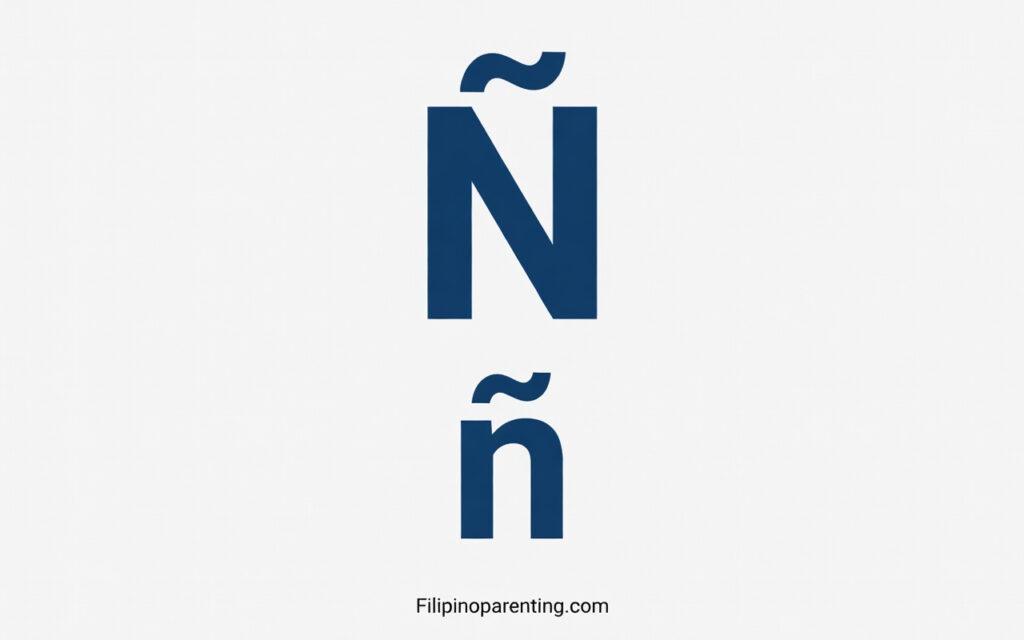
FAQ about the Enye Letter (Ñ) in Filipino Language
Q: Why is the Enye Letter (Ñ) important?
A: It preserves our history in surnames and religious terms like Santo Niño. It is a key part of the official 28-letter Filipino alphabet.
Q: How do you pronounce the Enye Letter (Ñ)?
A: It sounds like the “ny” in “canyon.” For example, “Niño” is pronounced “Nin-yo.”
Q: Is it used in native Tagalog words?
A: Generally no. Most words with ñ are borrowed from Spanish or are proper names and cultural terms.
Q: Can I write “ny” instead of “ñ”?
A: In casual texting, people often use “ny,” but for official names and religious titles, the tilde is traditionally preferred.
Q: Where can I see the enye letter used most often?
A: You will often see it in Filipino churches, cultural festivals, and on family legal documents.
Conclusion
The Enye Letter (Ñ) is small in size but huge in meaning. It connects us to our history, our faith through Santo Niño, and our family names. The ñ reminds us who we are and where we come from. Keeping the Enye Letter (Ñ) alive in our writing and our prayers is a beautiful way to honor our ancestors and pass on our rich Filipino culture to the next generation.