Time in Tagalog is a fundamental concept for anyone looking to navigate daily life in the Philippines or connect with the Filipino culture. Whether you are scheduling a meeting with families or simply greeting the younger generation, understanding how to express duration and specific moments is key. In Filipino culture, time is often shared through lively conversations where stories flow naturally, making the world feel softer and more meaningful.
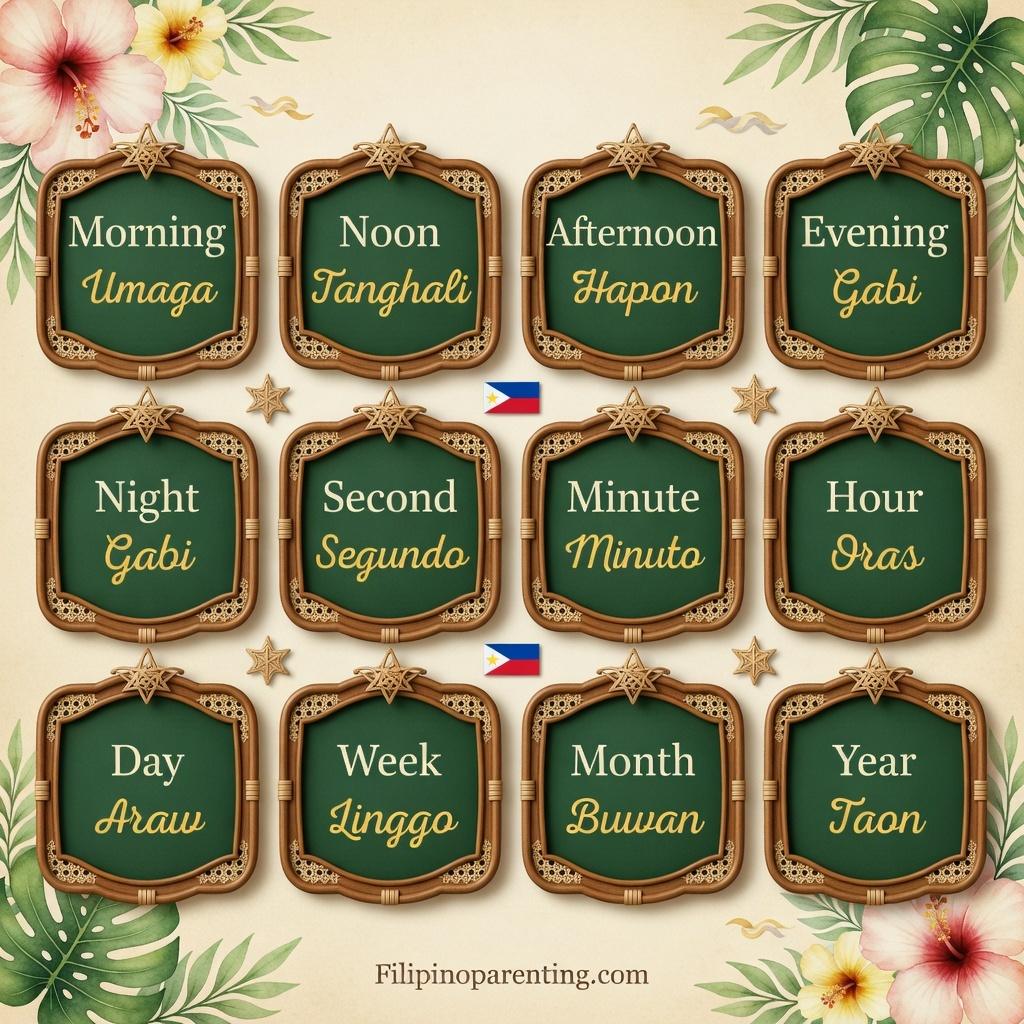
Table of Contents
Essential Periods of Time in Tagalog
To build a strong foundation, learners should focus on these verified terms for periods of time in Tagalog. These words are used daily by parents to organize household routines and by professionals to manage their schedules.
| English | Tagalog |
| Morning | Umaga |
| Noon | Tanghali |
| Afternoon | Hapon |
| Evening / Night | Gabi |
| Second | Segundo |
| Minute | Minuto |
| Hour | Oras |
| Day | Araw |
| Week | Linggo |
| Month | Buwan |
| Year | Taon |
Complete Tagalog Clock Time Guide
In the Philippines, telling the time in Tagalog uses a combination of Spanish-derived numbers and Tagalog periods of the day. Here is the full breakdown of every hour.
Morning and Noon (Umaga at Tanghali)
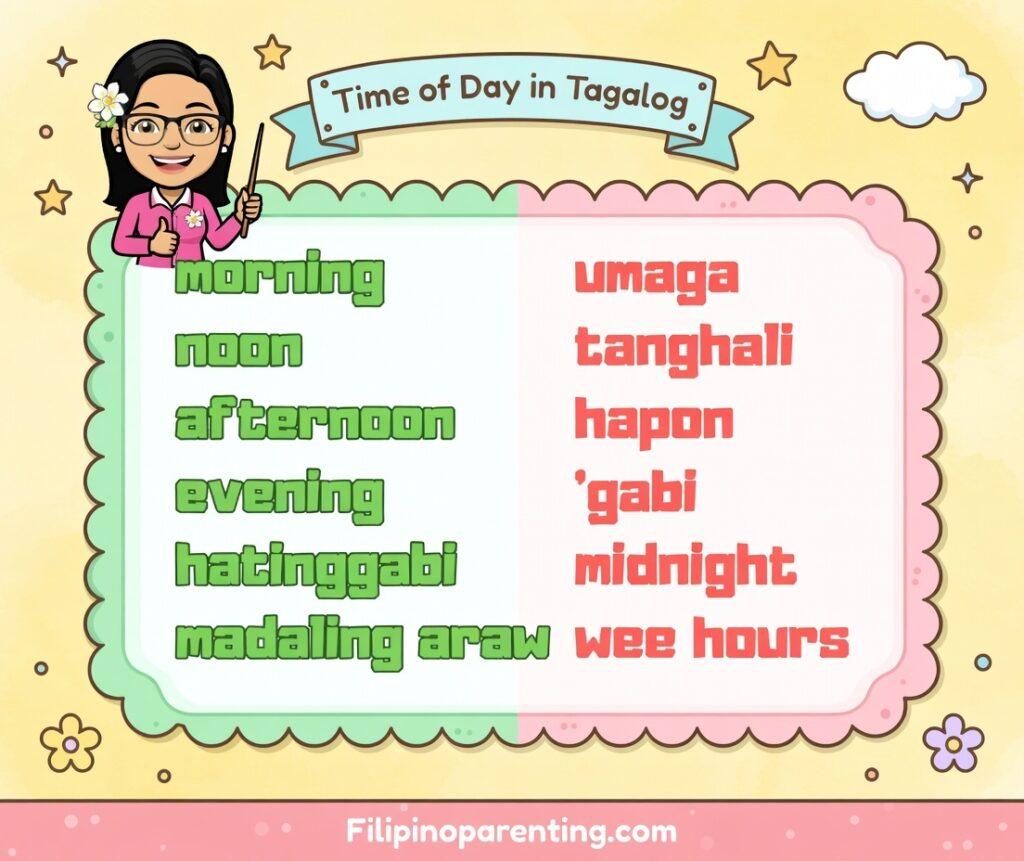
- 1:00 AM – Ala-una ng madaling-araw
- 2:00 AM – Alas-dos ng madaling-araw
- 3:00 AM – Alas-tres ng madaling-araw
- 4:00 AM – Alas-kwatro ng madaling-araw
- 5:00 AM – Alas-singko ng madaling-araw
- 6:00 AM – Alas-sais ng umaga
- 7:00 AM – Alas-syete ng umaga
- 8:00 AM – Alas-otso ng umaga
- 9:00 AM – Alas-nwebe ng umaga
- 10:00 AM – Alas-dyes ng umaga
- 11:00 AM – Alas-onse ng umaga
- 12:00 PM – Alas-dose ng tanghali
Afternoon, Evening, and Midnight (Hapon at Gabi)
- 1:00 PM – Ala-una ng hapon
- 2:00 PM – Alas-dos ng hapon
- 3:00 PM – Alas-tres ng hapon
- 4:00 PM – Alas-kwatro ng hapon
- 5:00 PM – Alas-singko ng hapon
- 6:00 PM – Alas-sais ng gabi
- 7:00 PM – Alas-syete ng gabi
- 8:00 PM – Alas-otso ng gabi
- 9:00 PM – Alas-nwebe ng gabi
- 10:00 PM – Alas-dyes ng gabi
- 11:00 PM – Alas-onse ng gabi
- 12:00 AM – Alas-dose ng hatinggabi
Note on Half-Hours: To express thirty minutes past the hour, add y medya (pronounced i medya).
- 3:30 – Alas-tres y medya
- 7:30 – Alas-syete y medya
Understanding these basics of time in Tagalog helps beginners transition into more complex sentences. For instance, knowing the difference between umaga and hapon is essential when using common greetings in Tagalog.
Describing the Rhythms of the Day
Time in Tagalog is often described through the warmth of the tropical sun and the quiet gestures of kindness that define the Filipino way of life. For families, the day is divided into distinct parts that dictate social activities and rest.
- Umaga (Morning): This is when the day begins with hope. You might start your day with a morning routine in Tagalog.
- Tanghali (Noon): The peak of the sun, often marked by a shared lunch.
- Hapon (Afternoon): A time for transitions, often leading into merienda or afternoon snacks.
- Gabi (Evening/Night): A time for togetherness. Before sleep, it is common to offer a good night in Tagalog.

The presence of others is celebrated throughout these periods, reminding us that life becomes richer when it is shared.
Cultural Context of Time
In the Philippines, community is a living experience. This means that time in Tagalog is not just about numbers on a clock; it is about the “invisible thread of generosity” that connects neighbors and friends.
When talking about longer stretches of time in Tagalog, such as months (buwan) or years (taon), Filipinos often reflect on relationships and sincerity. For those learning the language, mastering the days of the week in Tagalog and the names of the months is the next logical step.
For a deeper look at global standards of timekeeping, you can explore resources from the International Bureau of Weights and Measures or the National Institute of Standards and Technology.
Frequently Asked Questions (FAQ)
1. How do you say “What time is it?” in Tagalog?
The most common way is “Anong oras na?” which literally asks for the hour or time in Tagalog.
2. Is “Gabi” used for both evening and night?
Yes, in common Tagalog usage, Gabi covers the period from sunset until late at night.
3. What is the root word for “Minuto” and “Segundo”?
These terms for time in Tagalog are borrowed from Spanish (minuto and segundo), which is common in the Filipino language.
4. How do you say “Every day” in Tagalog?
You use the phrase Araw-araw to denote a daily occurrence.
5. Why is “Linggo” used for both “Sunday” and “Week”?
In the Filipino context of time in Tagalog, Linggo refers to the day of rest and the seven-day cycle starting from it.
6. How do you say “It’s already late” in Tagalog?
You can say “Huli na” or “Gabing-gabi na”.
Conclusion
Mastering the vocabulary for time in Tagalog allows learners to navigate the beautiful, sincere rhythms of Filipino life. By understanding these essential periods, you are better equipped to value the moments shared with others. Time is a gift, and in Filipino culture, no one should feel alone when others are near.