Learning the days of the week in Tagalog is one of the easiest ways to start building your Filipino vocabulary. Whether you’re studying the language, planning a trip to the Philippines, or teaching the younger generation at home, knowing the mga araw ng linggo helps you communicate more naturally with Tagalog speakers.
In this guide, we’ll explore each day, the correct pronunciation, and useful phrases you can use in daily conversations to sound like a local.
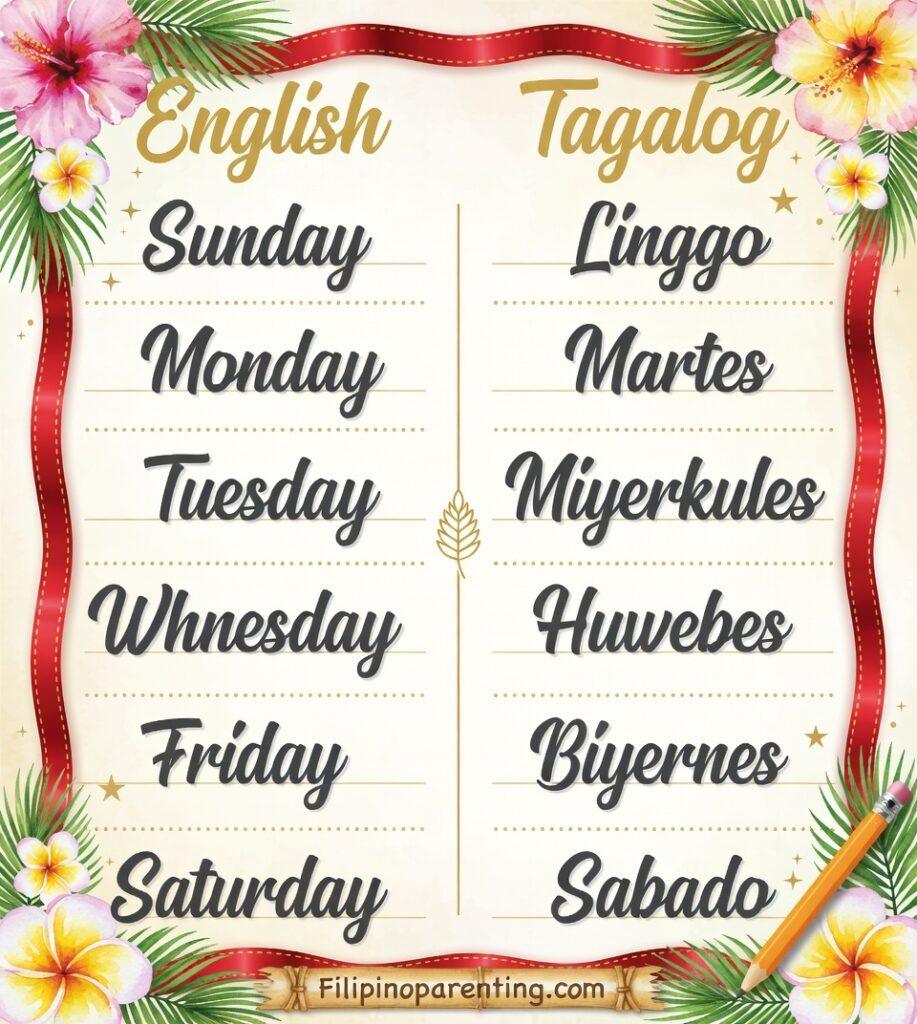
Table of Contents
Tagalog Weekdays: A Closer Look
Many days of the week in Tagalog names come from Spanish, reflecting the Philippines’ long history of Spanish influence. For instance, you might notice that Martes and Sabado sound exactly like their Spanish counterparts. While some families with deep Spanish roots still use “Domingo” for Sunday, Linggo is the standard used in schools and media today.
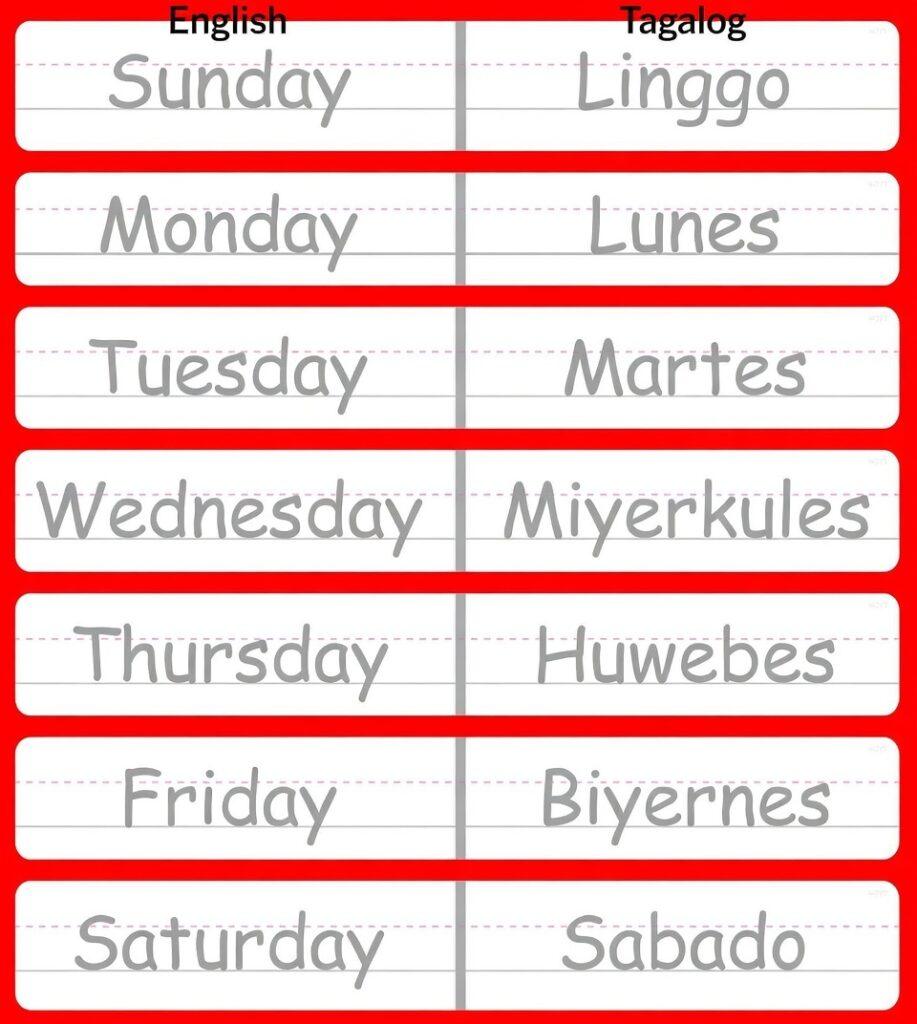
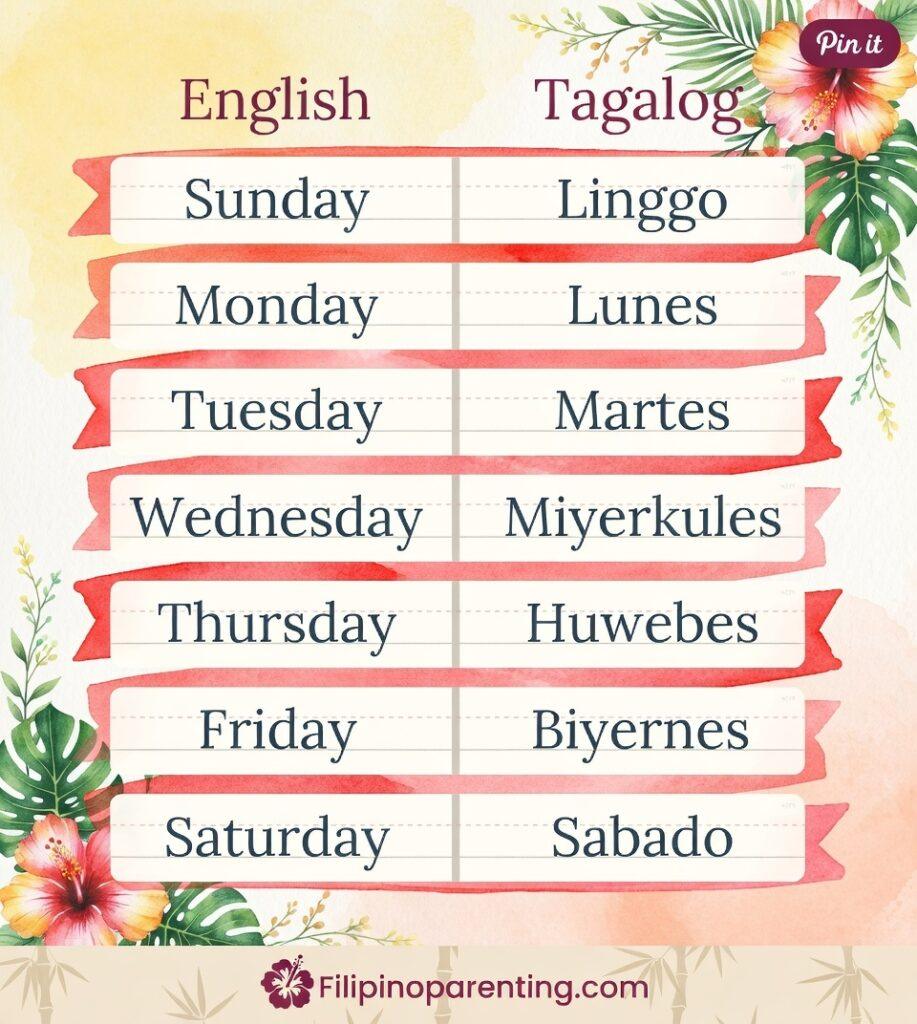
Here are the days of the week with consistent, beginner-friendly pronunciation guides:
- Lunes – Monday (LOO-nes)
- Martes – Tuesday (MAR-tes)
- Miyerkules – Wednesday (mee-YER-koo-les)
- Huwebes – Thursday (hoo-WEH-bes)
- Biyernes – Friday (bee-YER-nes)
- Sabado – Saturday (SAH-bah-doh)
- Linggo – Sunday (LEENG-goh)
Pro-Tip: Pronunciation varies slightly by region—listen to native speakers on YouTube or check out the Tagalog language guide on Omniglot to hear how these vowels flow together. You can also pair these withlearning Tagalog numbers to help with scheduling dates!
Useful Phrases for the Days of the Week in Tagalog
Now that you know the names, let’s look at how to use the days of the week in Tagalog in real life. These phrases focus on daily emotions and common Filipino sentiments.
Authentic Daily Greetings
- Maligayang Lunes! – Happy Monday!
- Martes na naman, kaya natin ‘to! – Tuesday again, we got this!
- Miyerkules — kalahati na ng linggo! – Wednesday — halfway through the week!
- Huwebes — malapit na weekend! – Thursday — weekend is near!
- Biyernes na! TGIF! – It’s Friday! TGIF!
- Sabado — pahinga at saya! – Saturday — rest and fun!
- Linggo — oras ng pamilya! – Sunday — family time!
Emotions and Activities by Day
- Refreshed na, ready for the week! – Using inspirational Tagalog words to start the week.
- Focus na sa trabaho! – Focus on work!
- Huli na sa hump day! – Almost over the hump!
- Excited na sa weekend! – Excited for the weekend!
- Masaya na sa TGIF! – Happy with TGIF!
- Relax na, no work today! – Relax, no work today!
- Calm na, ready for the week ahead! – Calm and ready for the week ahead!
Cultural Context: Togetherness and Time
Life in the Philippines is deeply rooted in togetherness. The days of the week in Tagalog represent a rhythm where relationships flourish. For example, Linggo (Sunday) is a day where families and friends are connected by an invisible thread of generosity.
Whether it’s a quick morning coffee on a Lunes or a gathering on Sabado, the presence of others is always celebrated. You can see this reflected in how we talk about time in Tagalog.
FAQ: Common Questions about Tagalog Days
How do you say “next week” or “last week” in Tagalog?
You use Susunod na linggo for “next week” and Nakaraang linggo for “last week.”
Is “Linggo” capitalized?
Yes, in formal writing, the days of the week in Tagalog are capitalized just like in English.
What is the best way to remember these names?
Try setting your phone calendar to Tagalog or using these during your Tagalog morning routine to build a daily habit.
Conclusion
Learning the mga araw ng linggo is a rewarding step toward mastering the language and understanding Filipino culture. These words help you talk about schedules and connect more naturally with others.
Which day is your favorite? Pin this guide for your Tagalog learning board! Would you like me to cover the months of the year in Tagalog next?
I’m very happy to find this site. I need to to thank you
for your time for this particularly fantastic read!! I definitely enjoyed every little bit of it and I have you saved
to fav to check out new stuff on your site.