Fishing in Tagalog is more than just a way to find food; it is a masterclass in patience and a celebration of togetherness. Whether you are a weekend angler with a simple rod or a parent teaching a learner how to cast, these authentic words and phrases will help you speak the language of the sea. Imagine the sun just peeking over the horizon, your lolo quietly untangling the linya while the gentle slap of waves hits the bangka. Suddenly—kagat!—the reel screams, everyone leans in, laughing and shouting “Iikot mo! Iikot mo!” That rush and the shared excitement is the true heart of Filipino fishing.
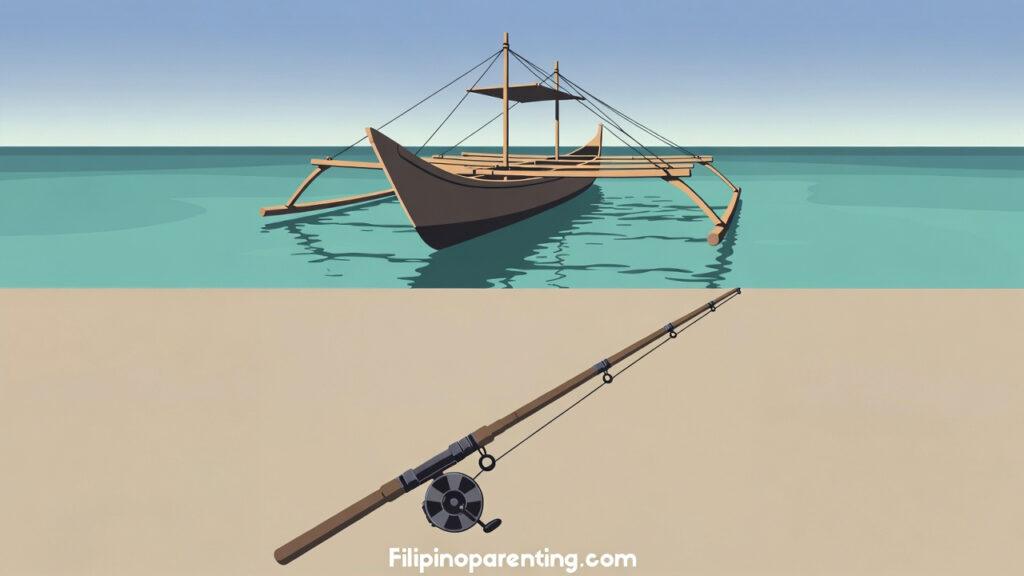
Table of Contents
The Tools of the Trade: Essential Gear
Nothing beats the satisfying click of the ikiran when you cast, or the way the pamingwit bends just right when a malaking isda fights back. In the Philippines, the gear is often a mix of modern tech and traditional wisdom. Learning these terms is essential for any beginner.
| English | Tagalog |
| Rod | Pamingwit |
| Reel | Ikiran |
| Fishing line | Linya |
| Hook | Kawit |
| Bait | Pain |
| Lure | Pain na artipisyal |
| Sinkers | Bigat |
| Float | Palutang |
| Net | Lambat |
For those who want to know more about the equipment involved, we have a full guide on tools names in Tagalog.
🐟 Feel the Fight: Action Words and the Big Catch
When you feel that first kagat, your heart races. The fish performs a laban—fighting hard against the line—until you finally bring it in with a triumphant huli! Fishing in Tagalog captures these high-energy moments perfectly.
- Isda (Fish): The general term for any catch.
- Kagat (Bite): That electric moment the fish takes the pain.
- Ikawit (To hook): Securing the catch properly.
- Iikot mo ang reel (Reel in): The physical act of bringing the line back.
- Ibalik sa tubig (Release): A vital practice for learners to understand sustainability.
- Malaking isda (Big fish): The dream of every mangingisda (fisherman).
If the fish is too small, you might hear a gentle “Ibalik natin sa tubig, maliit pa,” reminding us to respect the ocean’s cycle. This focus on character and respect is a key part of our Filipino proverbs.
10 Essential Practical Phrases for Fishing in Tagalog
Ready to head to the pantalan (pier)? To truly master fishing in Tagalog, you need to speak like a local mangingisda. These 10 practical phrases are perfect for families and beginner learners who want to connect with the community while out on the water.
- Anong pain ang gagamitin natin? – What bait are we using?
- May pamingwit at ikiran ka ba? – Do you have a rod and reel?
- Ilagay mo ang sinkers para lumubog ang linya. – Put the sinkers so the line sinks.
- Kailangan ko ng lambat para sa malaking isda. – I need a net for the big fish.
- Sumakay tayo sa bangka! – Let’s get on the boat!
- Ang laki ng huli ko! – My catch is huge!
- Maghintay tayo ng tide para sa fishing. – Let’s wait for the tide.
- Nasaan ang kahon ng kagamitan ko? – Where is my tackle box?
- Ilagay ang isda sa kooler para hindi masira. – Put the fish in the cooler so it doesn’t spoil.
- May kagat! Iikot mo ang reel! – There’s a bite! Reel it in!
A Culture Bound by the Sea
Life in the Philippines is deeply connected to the water. After a long day, families often sit together cleaning the catch, perhaps preparing a canned tuna lumpia recipe or a fresh feast. This shared labor reinforces the bonds of the younger generation with their elders.
Before heading out, it is always wise to check the weather in Tagalog to ensure the waves are friendly. You might even practice your Tagalog numbers by counting your catch! If you are just starting your journey, viewing our Alpabetong Filipino chart can help with pronunciation.
FAQ: Your Guide to Pinoy Angling
How do I tell my friends I’m going fishing?
Just say “Mangungisda ako!” or the more casual “Mangingisda tayo!”—and watch your Pinoy friends light up with excitement.
What is the best time for fishing in the Philippines?
Many locals prefer the early morning or late evening when the isda are most active and the sun is less intense.
What is a “Bangka”?
A bangka is a traditional outrigger boat. It is stable and perfect for navigating shallow reefs.
What should I do if the fish is too small?
Practice “Ibalik sa tubig” (release it to the water). This ensures there will be plenty of fish for the next generation of learners. To learn more about environmental stewardship, you can visit the BFAR (Bureau of Fisheries and Aquatic Resources).
Final Thoughts on Fishing in Tagalog
Maraming salamat for exploring the soulful world of fishing in Tagalog. These words—pain, kagat, huli, and laban—capture the patient and thrilling spirit of the Philippines. We hope this guide inspires you to grab your pamingwit and head to the nearest shore to practice what you have learned.
Whether you are bonding with the younger generation or connecting with local mangingisda, using these terms keeps the vibrant Filipino culture alive. To ensure you’re following the best maritime practices and staying safe on the water, you can visit the Philippine Coast Guard or the BFAR.