If you’re learning Tagalog, mastering Pinoy home cooking, or craving that perfect crispy texture in Filipino dishes, the word for Fry in Tagalog is prito (pronounced PREE-toh, with stress on the first syllable). This is the standard and most widely used Tagalog verb and noun for frying—whether deep-frying, pan-frying, or stir-frying. In everyday kitchen talk, you’ll hear magprito (“to fry” or “let’s fry”), pritong (fried/past tense), or simply prito as the method itself. The English word “fry” is sometimes borrowed (“mag-fry tayo!”), but prito is the authentic term locals use from street food stalls to family kitchens across the Philippines.
Frying is one of the most beloved cooking techniques in Filipino cuisine—quick, flavorful, and responsible for classics like crispy pork belly, fried fish, and golden lumpia. This ultimate guide covers pronunciation, frying traditions in the Philippines, 12 practical example sentences, popular fried dishes, and more to help you confidently talk about Fry in Tagalog terminology.
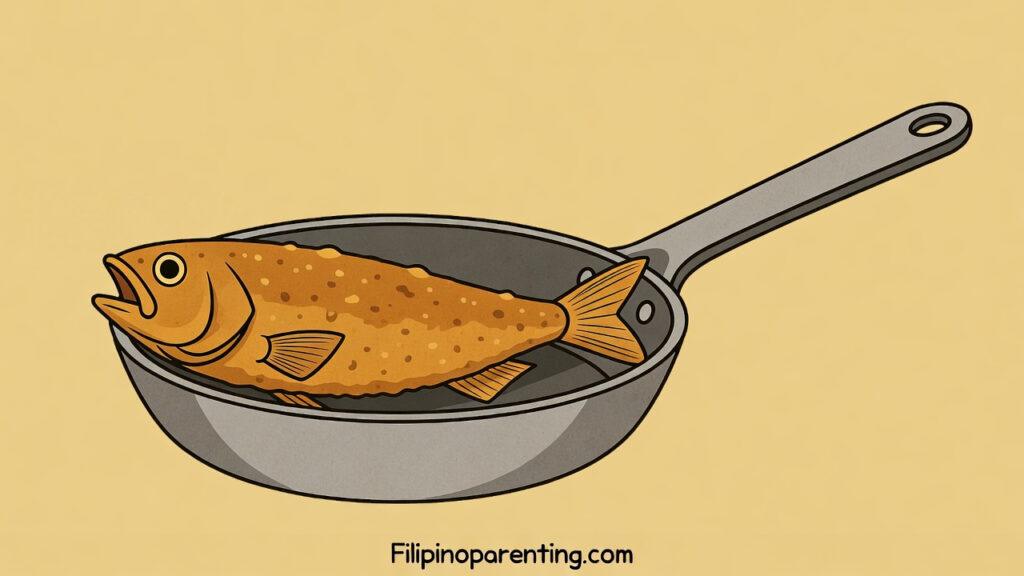
Table of Contents
What Is “Fry in Tagalog”? Pronunciation and Basics
Prito is the core Tagalog word for fry/fried. Common forms include:
- Magprito — to fry/let’s fry
- Pritong — fried (adjective, example: pritong manok = fried chicken)
- Pinirito — was fried/fried (past tense)
Pronunciation is PREE-toh—short, crisp, and easy to say. In markets and carinderias, vendors call out “Pritong isda! Pritong saging!” (Fried fish! Fried banana!). Frying in the Philippines usually means deep-frying in hot oil (mantika) for that signature golden crunch. Pan-frying (iprito sa kawali) and stir-frying are also common, especially with garlic and onions. Whether you are preparing fish or meat, getting the oil temperature right is the first step to success.
Fascinating Facts About Prito in Filipino Cuisine
Frying is central to everyday Filipino meals—affordable oil and simple ingredients make it accessible everywhere. Street food like tokwa’t baboy (fried tofu and pork), kwek-kwek (fried quail eggs), and banana cue (fried bananas on skewers) are national favorites. Deep-fried dishes often pair with rice and sawsawan (vinegar dips) for balance. This simple cooking style is a reflection of how Filipino hospitality often starts in the kitchen with a hot pan and a welcoming smile.
Coconut oil (mantika ng niyog) was traditional for frying, but vegetable oil is now common. Frying preserves food in hot climates and creates irresistible textures—crispy outside, tender inside. During family gatherings and fiestas, someone is always at the wok or deep fryer, turning out batch after batch of golden delights. For those looking for professional frying tips, Serious Eats offers great scientific insights, while Bon Appétit provides a helpful guide for beginners at home.
How to Use Prito and Magprito in Everyday Tagalog: 12 Example Sentences
Here are 12 practical sentences using prito, magprito, and related frying terms, with Tagalog first followed by English translation. Perfect for cooking chats, market orders, or family meal planning.
- Magprito tayo ng manok para sa hapunan. (Let’s fry chicken for dinner.)
- Masarap ang pritong bangus na may suka. (Fried milkfish with vinegar is delicious.)
- Paano magprito ng lumpia nang hindi mamantika? (How do you fry lumpia without it getting too oily?)
- Gusto ko ng pritong itlog na may toyo at bawang. (I want fried eggs with soy sauce and garlic.)
- Magprito kami ng hipon sa mantika ng niyog. (We’re frying shrimp in coconut oil.)
- Huwag kalimutan ang asin bago magprito ng isda. (Don’t forget the salt before frying the fish.)
- Sa palengke, sikat ang pritong tilapia. (At the market, fried tilapia is famous.)
- Paborito ko ang pritong saging na may asukal. (My favorite is fried bananas with sugar.)
- Magprito tayo ng tokwa para sa tokwa’t baboy. (Let’s fry tofu for tokwa’t baboy.)
- Nakakain ako ng masarap na pritong pusit sa Boracay. (I ate delicious fried squid in Boracay.)
- Gamitin ang mainit na mantika para malutong ang prito. (Use hot oil so the fried food becomes crispy.)
- Sa gabi, magprito kami ng french fries habang nanonood ng sine. (Tonight, we’ll fry french fries while watching a movie.)
Practice these sentences aloud—they’ll make you sound like a pro in any Fry in Tagalog conversation!
Prito in Filipino Cuisine: Popular Fried Dishes and Traditions
Frying creates some of the most beloved Pinoy foods:
- Pritong Manok — Fried chicken, often marinated in soy, calamansi, and garlic.
- Pritong Isda — Whole fried fish (bangus, tilapia, galunggong) served with rice and sawsawan.
- Pritong Lumpia — Deep-fried spring rolls with pork, shrimp, or vegetables.
- Pritong Saging — Fried bananas (banana cue or turon) dusted with sugar.
- Pritong Hipon — Whole or battered shrimp, crispy and juicy.
- Pritong Tokwa — Crispy fried tofu, perfect with vinegar dip.
Street vendors fry in large woks over wood or gas fires. At home, frying is quick and family-oriented—someone fries while others prepare rice and sides. Leftovers are often reheated in the pan for extra crunch. Knowing the right Fry in Tagalog terms helps you navigate these delicious traditions.
Related Tagalog Vocabulary for Frying
Expand your cooking terms:
- Fry (verb) = magprito
- Fried = pritong
- Oil = mantika
- Deep-fry = iprito nang malalim
- Pan-fry = iprito sa kawali
- Crispy = malutong
- Golden brown = ginintuang kayumanggi
- Dipping sauce = sawsawan
Try: “Magprito tayo ng hipon sa mantika!” (Let’s fry shrimp in oil!)
FAQ About Prito in Tagalog
What is the Tagalog word for fry?
Prito (fried); magprito (to fry).
How do you pronounce prito?
PREE-toh (stress on the first syllable).
What oil is best for magprito in Filipino cooking?
Vegetable oil or palm oil for deep-frying; coconut oil for authentic flavor.
What are the most popular pritong dishes?
Pritong bangus, pritong manok, pritong lumpia, pritong saging, pritong hipon.
How to make pritong food extra crispy?
Use hot oil, pat food dry before frying, and double-fry if needed.
Is frying healthy?
In moderation—choose lean ingredients, drain excess oil, and pair with vegetables.
Best tool for flipping fried food?
Sipit (tongs) or spatula.
How to say “Let’s fry” in Tagalog?
“Tara, magprito tayo!” or “Magprito na tayo!”
Conclusion: Start Using “Magprito” and Master Filipino Frying Today
Magprito is more than a cooking technique—it’s the sizzle of family meals, street food nights, and beach cookouts in the Philippines. From golden pritong bangus to crispy lumpia, frying creates textures and flavors that make Pinoy food irresistible. With these 12 example sentences, you can talk about Fry in Tagalog settings confidently: planning dinner, ordering from a vendor, or sharing recipes with friends.
Next time you heat oil or smell that irresistible crunch, say “Magprito na tayo!” and get cooking. Learning Tagalog through food traditions makes it warm, practical, and delicious. Keep practicing, perfect your frying skills, and explore more Pinoy kitchen vocabulary. Salamat for reading—happy frying and happy learning!