Learning body parts in Tagalog (mga bahagi ng katawan) is one of the most practical ways to start your language journey. Whether you are a parent teaching the younger generation or a learner preparing for a trip, these words appear in warm family conversations every day, reflecting Filipino values of care and closeness.
The general word for “body” is katawan (ka-ta-WAN), and “parts of the body” is mga bahagi ng katawan. Using these terms instead of English adds a layer of sincerity and cultural pride to your speech.
Table of Contents
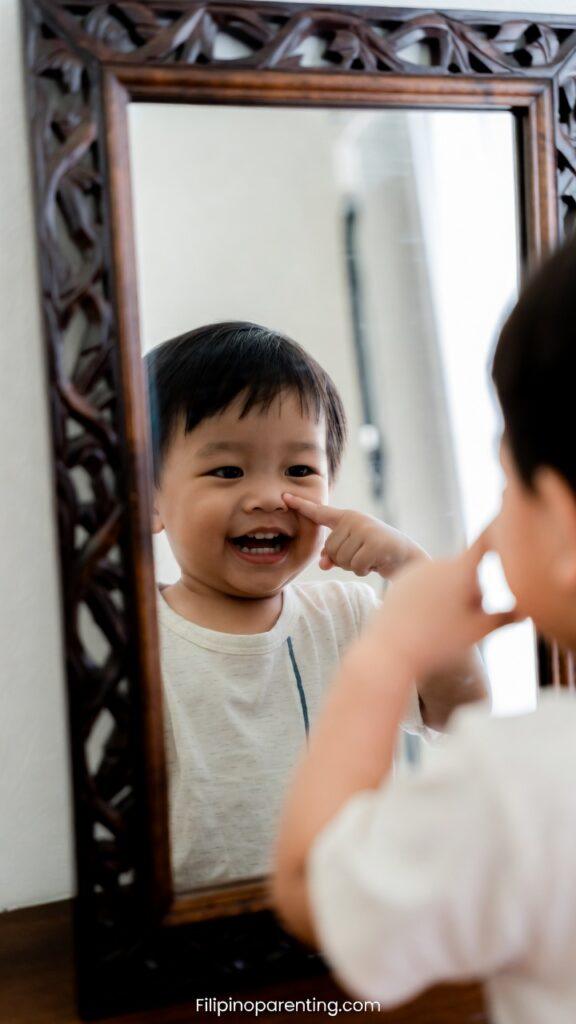
Head and Face (Ulo at Mukha)
In Filipino culture, looking someone in the eye and offering a gentle smile is a sign of respect. Here are the essential terms for the head and face:
| English | Tagalog (Pronunciation) |
| Head | Ulo (OO-lo) |
| Hair | Buhok (BOO-hok) |
| Forehead | Noo (no-O) |
| Eyebrow | Kilay (KEE-lay) |
| Eye | Mata (ma-TA) |
| Eyelashes | Pilikmata (pee-leek-ma-TA) |
| Ear | Tainga (ta-I-nga) |
| Nose | Ilong (ee-LONG) |
| Cheek | Pisngi (pees-NGEE) |
| Mouth | Bibig (bee-BEEG) |
| Lips | Labi (la-BEE) |
| Teeth | Ngipin (NGEE-peen) |
| Tongue | Dila (DEE-la) |
| Chin | Baba (ba-BA) |
Real-Talk Tip: When a learner has a headache, they might say, “Masakit ang ulo ko” (My head hurts). To compliment a friend’s kind expression, you could say, “Maganda ang mata mo!” (Your eyes are beautiful!).
Neck and Upper Body (Leeg at Itaas ng Katawan)
The upper body is associated with strength and the Filipino spirit of hard work. Knowing these terms helps when discussing physical activity or picking out clothing in Tagalog.
- Neck — Leeg (le-EG)
- Shoulder — Balikat (ba-LEE-kat)
- Arm — Braso (BRA-so)
- Elbow — Siko (SEE-ko)
- Hand — Kamay (ka-MAY)
- Palm — Palad (PA-lad)
- Finger — Daliri (da-LEE-ree)
- Thumb — Hinlalaki (heen-la-la-KEE)
- Fingernail — Kuko (KOO-ko)
- Chest — Dibdib (deeb-DEEB)
- Back — Likod (lee-KOD)
- Waist — Baywang (BAY-wang)
- Belly / Stomach — Tiyan (tee-YAN)
For deeper medical discussions regarding the upper body, check out our guide on Tagalog Medical Emergency Words.

Lower Body and Hips (Ibaba ng Katawan at Balakang)
Whether you’re playing a sport or describing a sore muscle after a long walk, these body parts in Tagalog are essential for daily life.
- Hip — Balakang (ba-la-KANG)
- Buttocks — Puwet (poo-WET) or Pigì (pee-GEE)
- Leg — Binti (been-TEE)
- Thigh — Hita (HEE-ta)
- Knee — Tuhod (too-HOD)
- Calf — Alak-alakan (a-lak-a-la-KAN)
- Shin — Lulod (LOO-lod)
- Ankle — Bukong-bukong (boo-kong-BOO-kong)
- Foot — Paa (pa-A)
- Heel — Sakong (SA-kong)
- Toe — Daliri ng paa (da-LEE-ree nang pa-A)
- Sole of the foot — Talampakan (ta-lam-pa-KAN)
Engage & Learn: Practice Tips for Families
Retention happens when you move! Try these activities to help beginners and parents memorize these terms:
- Simon Sabi (Simon Says): Call out commands like “Hawakan ang tainga mo!” (Touch your ear!) or “Itaas ang kamay!” (Raise your hand!).
- The Mirror Routine: While getting ready, point to a feature and name it: “Ito ang aking noo” (This is my forehead).
- The Classic Song: Sing the Tagalog version of “Head, Shoulders, Knees, and Toes”:“Ulo, balikat, tuhod, paa, tuhod, paa…”
- Practice Sentences:
- “Hawakan mo ang kamay ko” (Hold my hand).
- “Masakit ang tuhod at sakong ko pagkatapos maglakad” (My knee and heel hurt after walking).
To help with pronunciation, you can also review the Alpabetong Filipino Chart to master your vowel sounds.
FAQ: Frequently Asked Questions
What is the correct word for buttocks?
Both puwet and pigì are used. Puwet is common in daily talk, while pigì is slightly more formal or anatomical.
How do you say “fingers” versus “toes”?
Fingers are daliri, and toes are daliri ng paa (literally “fingers of the foot”).
Is “tiyan” used for internal stomach pain?
Yes, but it primarily refers to the belly area. For medical symptoms, check our guide on Symptoms in Tagalog.
Conclusion: Connecting Through Language
Mastering these body parts in Tagalog is about more than just memorizing a list; it’s about being able to communicate your needs and express affection with a “Real-Talk” sincerity that English sometimes misses. Whether you’re comforting a loved one or navigating a hospital in Tagalog, using the native tongue allows you to speak with more heart and clarity.
Keep practicing these 55 terms in your daily conversations. Remember, every new word you learn is a bridge to understanding Filipino culture more deeply and ensuring the next generation stays connected to their roots. For further linguistic study, you can explore the official archives at the National Library of the Philippines or check the latest language standardizations from the Komisyon sa Wikang Filipino.
Masaya matuto ng Tagalog! (It’s a joy to learn Tagalog!)