Monday in Tagalog is known as Lunes, and it marks the beginning of a fresh journey for every Filipino household. When you start your Monday in Tagalog, you are doing more than just identifying a day of the week; you are setting a tone of respect and togetherness for the days to follow. For parents and the younger generation, these morning interactions are the foundation of a harmonious home.
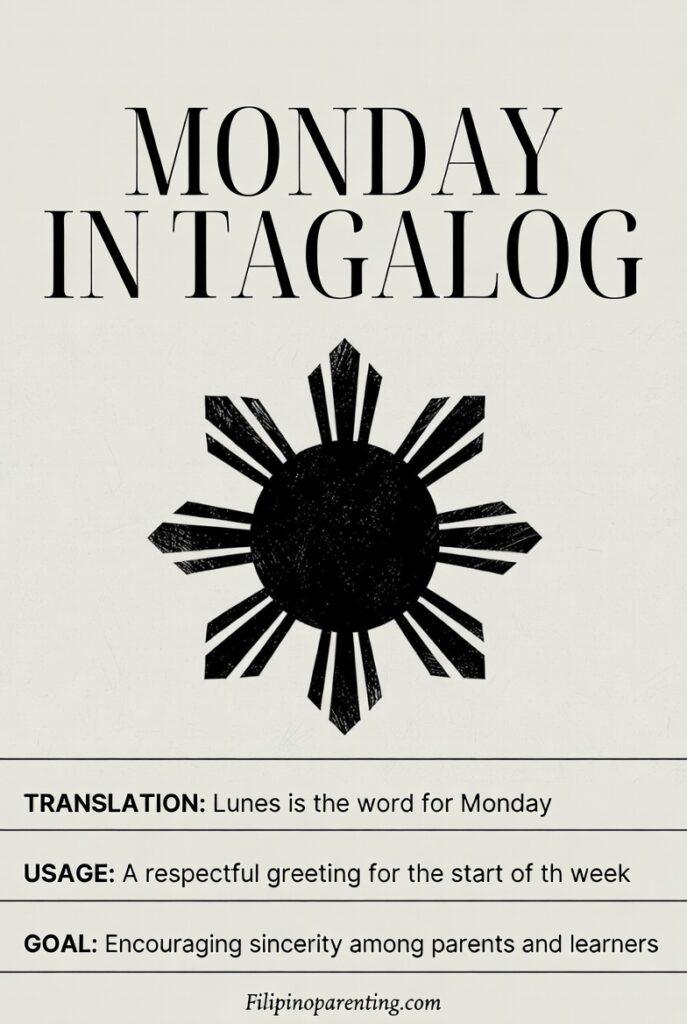
Table of Contents
Verified Morning Phrases for a Productive Lunes
In the Philippines, the way we wake up and greet one another reflects our deep cultural values. Here are the verified phrases to use during your Monday in Tagalog routine, as shared by Filipino families:
- Magandang Umaga! (Good morning!)
- Magandang Umaga po! (Good morning! — Respectful version)
- Gising ka na ba? (Are you awake yet?)
- Gising na po ba kayo? (Are you awake yet? — Respectful version)
- Bango na! (Get up!)
- Bango na po! (Get up! — Respectful version)
- Magbihis ka na! (Change your clothes already!)
- Magbihis na po kayo! (Change your clothes already! — Respectful version)
- Mag-almusal na tayo! (Let’s eat breakfast!)
- Mag-almusal na po tayo! (Let’s eat breakfast! — Respectful version)
- Alis na ako! (I’m leaving!)
- Alis na po ako! (I’m leaving! — Respectful version)
- Paalam! (Goodbye!)
The Cultural Meaning of a Beautiful Morning
Every Monday in Tagalog begins with a wish for beauty. The phrase “Magandang umaga” literally means “beautiful morning,” showing that we value peace and positivity from the moment we wake up. For beginners and learners, adding the word “po” is the most important step in showing respect to elders and parents.
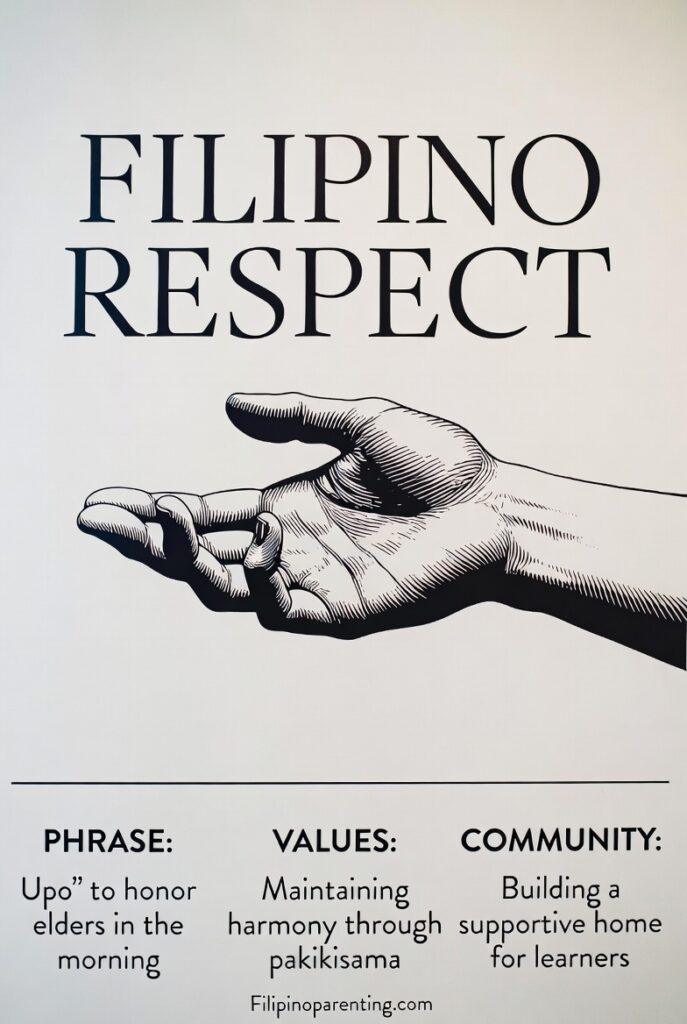
This tradition of respect is a cornerstone of our heritage. To see how these values extend into our character, you can read our guide on Filipino Proverbs and Character. If you are looking for more ways to express your feelings during the week, our list of Emotions in Tagalog is a helpful resource.
Starting the Work Week with Togetherness
A successful Monday in Tagalog often centers around the breakfast table. The invitation “Mag-almusal na tayo” is a call to gather and share a meal before everyone departs for their individual tasks. This reflects the Filipino belief that no one should face the day alone.

As you prepare to leave, saying “Alis na ako” is a simple way to acknowledge the family before you go. To stay inspired throughout the day, many find strength in Tagalog Quotes on Gratitude and Peace or Inspirational Tagalog Words for Success. You can also learn how to talk about the Weather in Tagalog to prepare for your commute.
For official language guidance and historical context, the National Commission for Culture and the Arts and the Komisyon sa Wikang Filipino offer extensive archives on Filipino traditions and linguistics.
FAQ: Common Questions About Monday in Tagalog
What is the word for Monday in Tagalog?
The word for Monday is Lunes. It is derived from the Spanish word “Lunes” and is used by all Tagalog speakers.
How do I say “Happy Monday” to my family?
A common way to say this is “Magandang Lunes!” which means “Beautiful Monday!” It is a great way to encourage learners and parents alike.
Is “Bango na” formal or informal?
“Bango na” is an informal, affectionate way to tell someone to get out of bed. In a formal setting or when speaking to an elder, you should say “Bango na po.”
Conclusion: Embracing the Spirit of Lunes
Starting your Monday in Tagalog with these sincere greetings helps preserve the warmth and togetherness of the Filipino spirit. By practicing these phrases, you are teaching the younger generation that every day is an opportunity to show respect and kindness through our unique language. These morning interactions are the invisible threads that keep our families connected, even as we head out into a busy world.
We hope these words bring light and harmony to your home every single week. Remember that your journey with the Filipino language does not end after the morning coffee is finished. Mastering the specific greetings for your Monday in Tagalog is just the beginning of a larger cultural experience.
If you want to continue building your vocabulary and learn how to name the other parts of your week, be sure to explore our complete guide on the Days of the Week in Tagalog. By understanding the full cycle of the week, parents and learners can create a more immersive environment at home. Whether you are saying “Magandang umaga” on a quiet morning or wishing someone an “Ingat” as they leave, you are keeping the heart of our culture alive with every word you speak.