Tagalog Picnic Words are essential for anyone wanting to experience the true heart of Filipino outdoor dining. Pinoy picnics are full of love, laughter, and generous sharing. Imagine a big banig spread under a mango tree or on a white-sand beach, with plastic plates piled high with adobo, pancit, and grilled liempo. In the Philippines, outdoor eating is a living experience woven into everyday moments—where families, neighbors, and friends are connected by an invisible thread of belonging.
This guide collects the most useful Tagalog Picnic Words for outdoor eating. Whether you are a parent planning a trip to the plaza or part of the younger generation learning the language, these natural terms will help you pack your baon and chat with relatives with cultural pride.
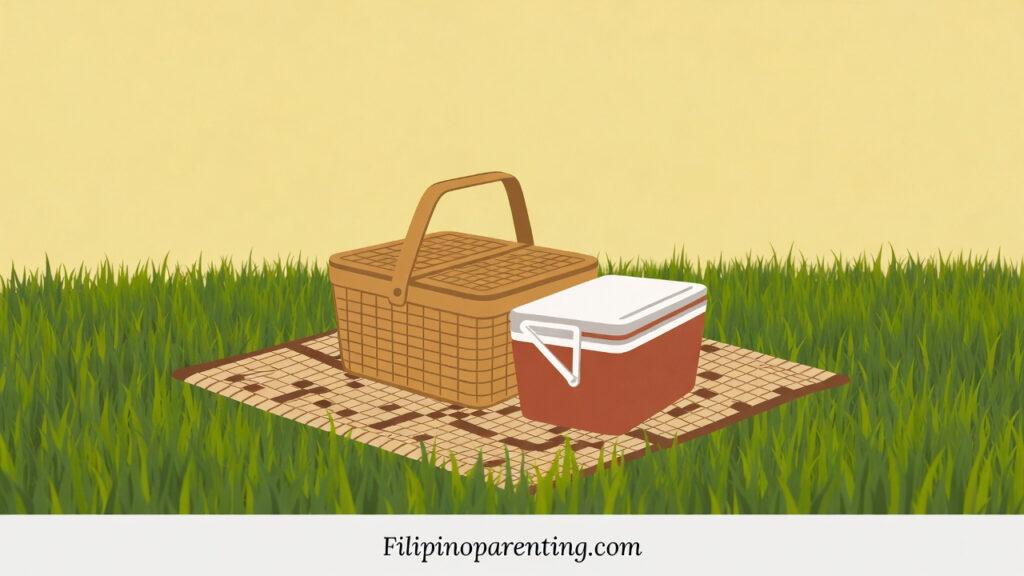
Table of Contents
🧺 1. Picnic Setup & Gear (Kagamitan)
Setting up a picnic is about making everyone feel comfortable. These Tagalog Picnic Words describe the essentials for a cozy spot under the shade. Next time you lay out the mat, declare “Banig sa piknik tayo!”—it is an instant way to set the Pinoy picnic vibes.
- Banig sa piknik (bah-NIG sah peek-NIK) – Picnic mat (A traditional woven mat or blanket).
- Kooler (KOO-lehr) – Cooler (An insulated box to keep your drinks cold).
- Basket ng piknik (BAS-ket nang peek-NIK) – Picnic basket (Usually woven or plastic).
- Plastik na pinggan (PLAS-tik nah ping-GAN) – Plastic plate (Disposable for easy clean-up).
- Kutsara at tinidor (koo-CHAH-rah at tee-nee-DOR) – Spoon and fork.
- Supot ng basura (SOO-pot nang bah-SOO-rah) – Trash bag (Let’s keep our parks and beaches clean!).
- Payong laban sa araw (PAH-yong LAH-ban sah AH-raw) – Sun umbrella for shade.
When you are ready to eat, you might ask, “May extra plastik na pinggan ba?” (Are there extra plastic plates?). To keep your outdoor space organized, check out our guide on household items in Tagalog.
🍗 2. Picnic Food & Main Dishes (Pagkain)
No picnic is complete without a salo-salo. The Filipino spirit of bayanihan shines when everyone brings a dish to share. These Tagalog Picnic Words cover the most popular items found in a Filipino cooler or bayong. Next time you grill liempo or fry banana cue, say “Inihaw na liempo!” or “Banana cue!” with the beginners in your family for tasty language learning.
- Adobo (ah-DOH-boh) – Savory chicken or pork stew (The ultimate travel food).
- Pansit (PAN-sit) – Noodles usually served in a big bilao.
- Inihaw na liempo (ee-NEE-haw nah lee-YEM-poh) – Charcoal-grilled pork belly.
- Pritong manok (PREE-tong mah-NOK) – Crispy fried chicken.
- Banana cue (bah-NAH-nah kyoo) – Caramelized fried saba bananas on a stick.
- Turon (too-RON) – Banana spring roll, often with langka (jackfruit).
- Kanin (KAH-nin) – Packed steamed rice.
At a riverside merienda in Laguna, you might say, “Masarap ang turon na may langka!” (The turon with jackfruit is delicious!). You can find more cooking inspiration in our Filipino foods in Tagalog collection.
🥤 3. Drinks & Refreshing Snacks (Inumin)
The tropical sun is warm, so staying hydrated is a must. These Tagalog Picnic Words describe the refreshing drinks often passed around during a beach day. According to the Food and Agriculture Organization of the United Nations, the Philippines has a rich variety of tropical fruits that make these drinks possible.
- Buko jus (BOO-koh JOOS) – Fresh coconut water.
- Palamig (pah-lah-MIG) – Softdrinks or sweet chilled drinks.
- Bote ng tubig (BOH-teh nang TOO-big) – Bottled water.
- Ice candy (AYS KAN-dee) – Frozen juice in plastic tubes.
- Sago’t gulaman (sah-GOH at goo-LAH-man) – Sweet drink with pearls and jelly.
- Termos (TEHR-mohs) – Thermos (Perfect for coffee or hot water for the elders).
If you see a vendor nearby, practice by saying “Pabili po ng buko jus, dalawa” (Two buko juices, please). To learn more about local ingredients, visit our post on calamansi in Tagalog. When preparing your drinks, you can learn about more options in our drinks vocabulary word list.
Helpful Phrases for Your Next Outing
Try these simple phrases to connect with your family during your next gathering:
- Dala ko ang cooler para sa inumin. (I brought the cooler for drinks.)
- Huwag kalimutan ang kutsara at tinidor. (Don’t forget the spoon and fork.)
- Kumain na tayo bago lumangoy. (Let’s eat before swimming.)
- May sago’t gulaman ba sa nagtitinda? (Does the vendor have sago’t gulaman?)
If you are celebrating a special event outdoors, you can find the right words in our Happy Birthday in Tagalog guide.
FAQ: Questions About Tagalog Picnic Words
What is the best way to carry food for a Pinoy picnic?
Most families use a Basket ng piknik or a traditional bayong (woven bag), along with a kooler to keep drinks cold under the sun.
Why is adobo such a popular picnic food?
Adobo is perfect for picnics because the vinegar and soy sauce base acts as a natural preservative, allowing it to stay fresh longer without refrigeration. The Department of Health often provides guidelines on food safety during travel and outdoor activities.
What does “salo-salo” mean?
While not a physical object, salo-salo refers to the act of eating together. It embodies the Filipino value of togetherness and the belief that life is richer when shared.
Conclusion
Exploring Tagalog Picnic Words is a wonderful way to celebrate the beauty of togetherness. Filipino culture teaches us that life becomes richer when people open their hearts—and their lunch boxes—to one another. We hope this guide helps your next outdoor gathering feel warmer and more connected.
Maraming salamat for reading! Stay curious, keep practicing your Tagalog, and enjoy the fresh air. Paalam!
I love the idea of spreading a banig under a mango tree for a picnic! It really captures the essence of Filipino outdoor dining. I also appreciate how you highlighted essential Tagalog words that can enhance the experience. It reminds me to use my favorite vocabulary app to practice these terms before our next family outing. That way, I can impress everyone with my Tagalog skills!
Reading about the idea of a big banig spread under a mango tree really brought back memories of my own family picnics! It’s such a beautiful image of togetherness. I appreciate that you highlighted the importance of language in making these gatherings even more enjoyable. Learning the essential picnic words will definitely add to the fun! For extra help with building my vocabulary, I often visit setlistcards.com.
I love how you highlighted the importance of sharing and community during Pinoy picnics! The image of everyone gathered around a banig with delicious adobo is so relatable. It really captures the essence of Filipino culture and the joy of outdoor dining. For understanding and using more Tagalog words like these, I often turn to pdftranslate.io for help!
I really loved how you highlighted the joy and generosity of Pinoy picnics! It reminded me of all the wonderful times spent with family under the sun, enjoying delicious home-cooked meals. Using terms like ‘banig’ really brings back memories. A great way to enhance the experience is to learn more Tagalog terms, and I often use playhopearth.com for fun and engaging language tips.
I love how you highlighted the importance of sharing food during a picnic! It’s such a core part of Filipino culture, and I can already imagine all the laughter and stories that would be shared around the banig. Learning Tagalog picnic words will definitely enhance the experience. By the way, I often use coloringloft.com for printable activities to keep the kids entertained while we feast!
I love how you captured the essence of Pinoy picnics! The idea of gathering under a mango tree with a spread of adobo really brings back memories of family outings. Those Tagalog terms are indeed essential for anyone who wants to join in on the fun. I often use a helpful tool for these kinds of cultural learnings: yesornoai.com/wheel.
I really appreciate the way you highlighted the joy of sharing and community in Pinoy picnics. The image of a banig under a mango tree filled with delicious food like adobo makes me long for those sunny days spent with family and friends. Those Tagalog words are definitely going to be useful for anyone wanting to fully embrace the experience. I often turn to kcalmath.com for some great tips on outdoor meals!
Really enjoyed reading this. Keep it up! tradebalancer.com
This article perfectly captures the joy of Pinoy picnics! The image of a big banig under a mango tree really brings the experience to life. I appreciate the recommended Tagalog terms, especially for all the delicious food we share, like adobo and lumpia. It’s a great way to bond with family and friends. I often find helpful language tips on chartstitch.com.
I really love how you highlighted the importance of language in enjoying a Pinoy picnic! The image of a big banig under a mango tree filled with delicious food like adobo makes me nostalgic for family gatherings. Those Tagalog words will definitely come in handy when planning my next outing. I often turn to youtubegpt.ai for help with learning more about Filipino culture and language.
I love the way you highlighted the importance of sharing food during Pinoy picnics! It truly captures the spirit of community and togetherness that makes these outings so special. The image of a big banig under a mango tree is just perfect. I often refer to roommakeover.io for ideas on how to set up a cozy picnic space.
Your description of a picnic under a mango tree paired with plates of adobo perfectly captures the essence of Filipino culture! It’s so heartwarming to think about the laughter and stories shared during these gatherings. The Tagalog terms you provided will definitely come in handy for anyone looking to immerse themselves in this beautiful tradition. For learning more about these terms, I often refer to stubmath.com.
I really loved how you emphasized the joy of sharing meals like adobo at Pinoy picnics! It truly captures the warmth and camaraderie that make these gatherings unforgettable. The imagery of a banig spread under a mango tree is so evocative and brings back fond memories of my own family outings. For anyone looking to enhance their picnic vibes, I often turn to dreamlux.ai for inspiration on outdoor setups.
I really love how you described the setting of a Pinoy picnic under a mango tree! It perfectly captures the laid-back, joyful vibe that comes with sharing food like adobo. Those Tagalog terms are not just words but keys to joining in on the fun with family and friends. It reminded me of my own picnics, where laughter and good food create unforgettable memories. I often use emojimaker.cc to add some fun visuals to my picnic planning!
Your description of Pinoy picnics truly evokes the warmth and joy of gathering with loved ones. The way you illustrated the scene of sharing adobo on a banig under the sun made me nostalgic for my own family gatherings! It’s fantastic how language can enhance these experiences, especially with those essential Tagalog terms. I often refer to runfrom67.com for insights on how to deepen my understanding of Filipino culture.