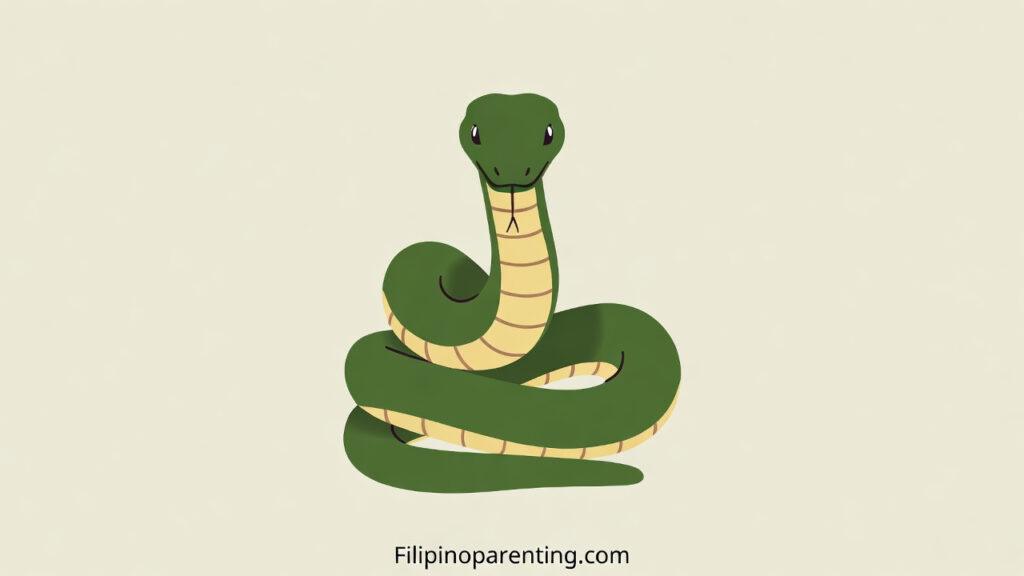
If you’re learning Tagalog, teaching beginners about animals, or exploring Philippine wildlife, the word for snake in Tagalog is ahas (pronounced ah-HAS, with stress on the second syllable). This is the standard, native, and most widely used term for all snakes—from harmless garden species to venomous cobras and pythons.
In everyday speech, rural conversations, and nature talks across the Philippines, you’ll hear this word everywhere: “May ahas sa likod ng bahay!” (There’s a snake behind the house!). Snakes are a significant part of Philippine biodiversity and culture—both feared and respected. This guide covers pronunciation, folklore, and 12 practical sentences to help you confidently use the phrase snake in Tagalog.
Table of Contents
What Is Snake in Tagalog? Pronunciation and Basics
Ahas is the core Tagalog word used for all species, whether they are venomous or non-venomous.
Common distinctions used by families and locals:
- Ahas = Snake (general)
- Mga ahas = Snakes (plural)
- Ahas na may lason = Venomous Snake
- Ahas na walang lason = Non-venomous Snake
In the Philippines, over 100 snake species exist. While many are harmless, such as the common wolf snake, others like the Philippine Cobra are highly dangerous. Understanding the term snake in Tagalog is the first step in learning about these fascinating reptiles safely.
Fascinating Facts About Ahas in Philippine Wildlife
The Philippines is a biodiversity hotspot with many endemic snakes. For more technical data on these species, you can check the Reptile Database or the IUCN Red List for conservation statuses. Iconic local species include:
- Philippine Cobra (Ahas na may hood) — Famous for spitting venom.
- King Cobra (Ahas na hari) — The longest venomous snake in the world.
- Reticulated Python (Sawa) — The longest snake in the Philippines; non-venomous but very powerful.
In Filipino folklore, ahas are powerful symbols, often appearing as guardians or omens. Many rural beliefs hold that certain snakes are protectors of treasures. The Philippine cobra is feared but respected; its hood-spreading display is a warning for people to keep their distance.
How to Use Ahas in Everyday Tagalog: 12 Example Sentences
Practice these 12 practical sentences featuring the phrase snake in Tagalog. These are perfect for nature talks, safety warnings, or storytelling.
- May ahas sa likod ng bahay — wag kang lumapit! (There’s a snake behind the house — don’t go near it!)
- Sa gubat, maraming ahas na walang lason. (In the forest, there are many non-venomous snakes.)
- Ang Philippine cobra ay ahas na may lason at nakakapag-spit ng kamandag. (The Philippine cobra is a venomous snake that can spit venom.)
- Paano makilala kung ang ahas ay may lason o wala? (How do you know if a snake is venomous or not?)
- Sa zoo, nakita ko ang king cobra na ahas na mahaba at malakas. (At the zoo, I saw a king cobra — a long and strong snake.)
- Huwag kang subukang hawakan ang ahas kahit mukhang hindi mapanganib. (Don’t try to touch a snake even if it looks harmless.)
- Ang sawa ay ahas na malaki at hindi nakakagat ng lason. (The python is a large snake that doesn’t bite with venom.)
- Sa probinsya, ang mga ahas ay kumakain ng daga at palaka. (In the province, snakes eat rats and frogs.)
- Nakakatuwa panoorin ang ahas na gumagapang sa damo. (It’s fascinating to watch a snake slither through the grass.)
- Sa kwentong bayan, ang ahas ay madalas na tuso at mapanlinlang. (In folk stories, the snake is often clever and deceptive.)
- Kung makakita ka ng ahas sa bahay, tawagan ang barangay para sa tulong. (If you see a snake in the house, call the barangay for help.)
- Ang ahas ay mahalaga sa kalikasan dahil kumokontrol ito ng mga peste. (Snakes are important in nature because they control pests.)
Using these sentences is a great way to improve your Tagalog vocabulary for sea animals and land creatures alike!
Related Tagalog Vocabulary for Reptiles
Boost your fluency by learning these related terms alongside snake in Tagalog:
- Venom = Kamandag / Lason
- Slither / Crawl = Gumapang
- Scale = Kaliskis
- Fang = Pangil
Try saying: “Ang ahas ay gumagapang gamit ang kaliskis nito.” (The snake slithers using its scales.)
FAQ About Ahas in Tagalog
What is the Tagalog word for snake? Ahas is the standard term.
How do you pronounce ahas? Ah-HAS (stress on the second syllable).
Are snakes common in the Philippines? Yes, with over 100 species. Most are harmless, but it’s important to stay alert in tall grass or forests.
How to say “snake bite” in Tagalog? Kagat ng ahas is the most common phrase used.
Conclusion: Respect the Ahas
The term snake in Tagalog carries a lot of weight—from feared guardians in folklore to misunderstood neighbors in rural rice fields. Snakes are vital to our ecosystem because they control pests like rodents. With these 12 example sentences, you can talk about ahas confidently and safely.
Next time you spot one from a safe distance, say “May ahas!” and observe with respect. Learning Tagalog through animals and nature makes the process thrilling and practical. Keep practicing, and don’t forget to check out our Filipino wildlife scavenger hunt for more fun learning!