Sunday in the Philippines is more than just a date on the calendar; it is a profound cultural experience. Blending deep spiritual roots with a fierce devotion to family, the Filipino Sunday is a day of warmth, rest, and connection. If you are a learner or a parent looking to share these values with the younger generation, understanding how to navigate Sunday in Tagalog is an essential building block.
In this ultimate guide, we will explore the linguistic history of the word Linggo, provide a comprehensive list of phrases for your home, and dive into the beautiful traditions that make a Filipino Sunday feel like a “sanctuary of love.”
Table of Contents
1. The Meaning and Origin of Linggo
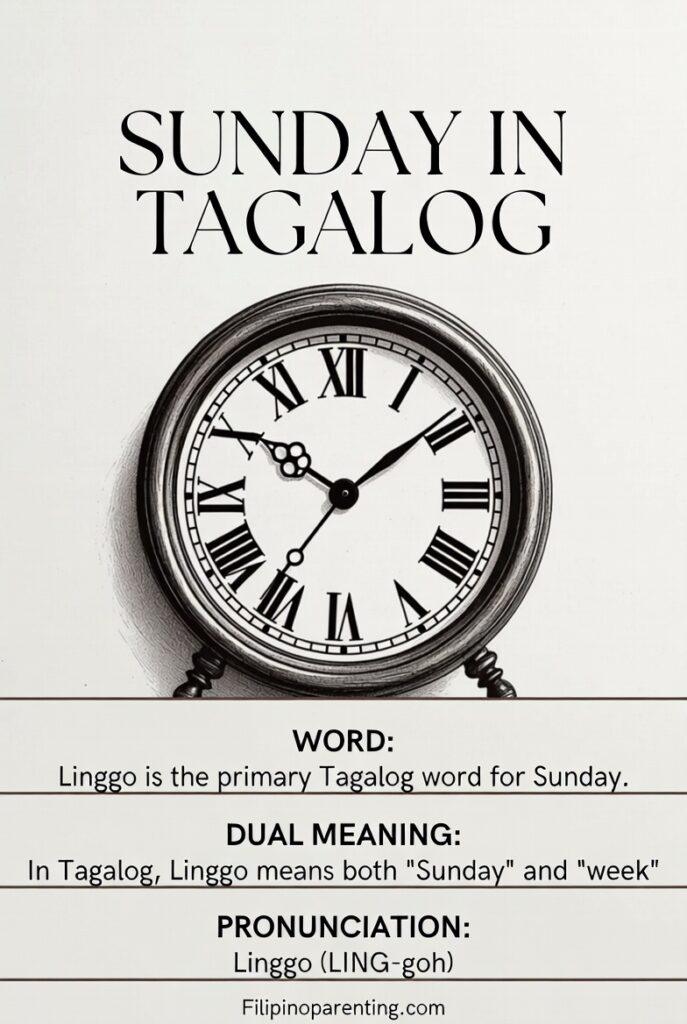
The primary word for Sunday in Tagalog is Linggo. While many days of the week in the Philippines are derived directly from Spanish (like Lunes for Monday or Martes for Tuesday), Linggo has a unique journey. It is believed to have roots in the Malay word Minggu, which was influenced by earlier Portuguese contact, though the formal and religious name Domingo (from Spanish) is still widely recognized in church settings.
The Dual Meaning: Sunday vs. Week
One of the most fascinating facts for beginners is that Linggo carries two meanings. It refers to the specific day (Sunday) and also the entire seven-day period (a week).
- Isang linggo – One week.
- Sa susunod na Linggo – This can mean “next Sunday” or “next week” depending on the conversation.
This dual meaning highlights how Sunday acts as the “anchor” for the entire week in Filipino life. To see how this fits into the full calendar, you can view our complete guide on the days of the week in Tagalog.
2. 15+ Common Sunday Phrases & Greetings in Tagalog
To help families and learners use the language naturally, here is a list of verified phrases. Using these “Real-Talk” expressions at home helps create an environment where the language flourishes.
General Greetings and Time-Based Phrases
Adding “po” to these phrases shows respect, especially when speaking to elders during Sunday gatherings.
- Ngayon ay Linggo! – Today is Sunday!
- Magandang umaga po! – Good morning! (Perfect for the start of a Sunday morning).
- Magandang Linggo! – Beautiful Sunday!
- Maligayang Linggo! – Happy Sunday!
- Linggo na! – It’s Sunday already!
- Linggo ng pahinga – Sunday of rest.
- Sa Linggo tayo magkita – Let’s meet on Sunday.
- Kumusta ang Linggo mo? – How is your Sunday?
Religious and Family Phrases
Because Sunday is a day of faith and togetherness, these phrases are heard in almost every Filipino household:
- Pumunta tayo sa simbahan – Let’s go to church.
- Kain na tayo! – Let’s eat! (The classic call for a post-Mass family lunch).
- Magdasal tayo – Let’s pray.
- Linggo ng Pagkabuhay – Easter Sunday (Resurrection Sunday).
- Linggo ng Palaspas – Palm Sunday.
- Salamat sa Diyos sa bagong linggo – Thank God for the new week/Sunday.
Evening and Closing Phrases
- Hanggang sa susunod na Linggo – Until next Sunday.
- Linggo ng gabi – pahinga na – Sunday evening – time to rest.
For those focusing on building a positive atmosphere at home, these greetings pair well with our collection of Tagalog quotes on gratitude and peace.
3. A Typical Sunday in Filipino Homes
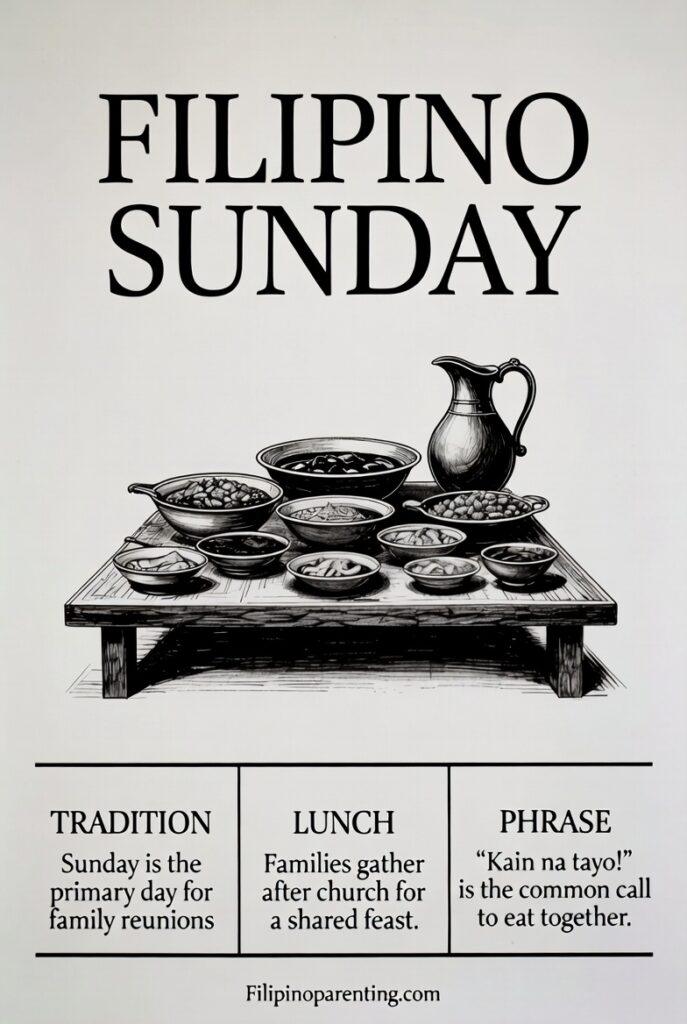
In the Philippines, life slows down on Sunday, but the homes become livelier. The day typically begins with an early morning Mass. It is common to see families dressed in their “Sunday best,” a tradition that reflects the sincerity and respect Filipinos have for the day.
The Sunday Lunch Tradition
The centerpiece of the day is the family lunch. It is rarely just the immediate family; aunts, uncles, cousins, and neighbors often drop by. You might see classic dishes like adobo or sinigang, and the atmosphere is filled with laughter and stories. This is the living experience of community, where relationships are nurtured over shared plates.
If you are planning your own Sunday meal, you might find inspiration in our types of silog Filipino breakfast guide for those slow Sunday brunch moments.
Afternoon Rest and Connection
The afternoon is often reserved for pahinga (rest). Whether it is a nap or a lively round of karaoke, the goal is to recharge. This rhythm of life—moving from the communal celebration of the morning to the quiet reflection of the evening—is a cornerstone of Filipino resilience.
4. Special Sundays and Cultural Traditions
Some Sundays in the Philippines are so significant they transform the entire country.
Linggo ng Palaspas (Palm Sunday)
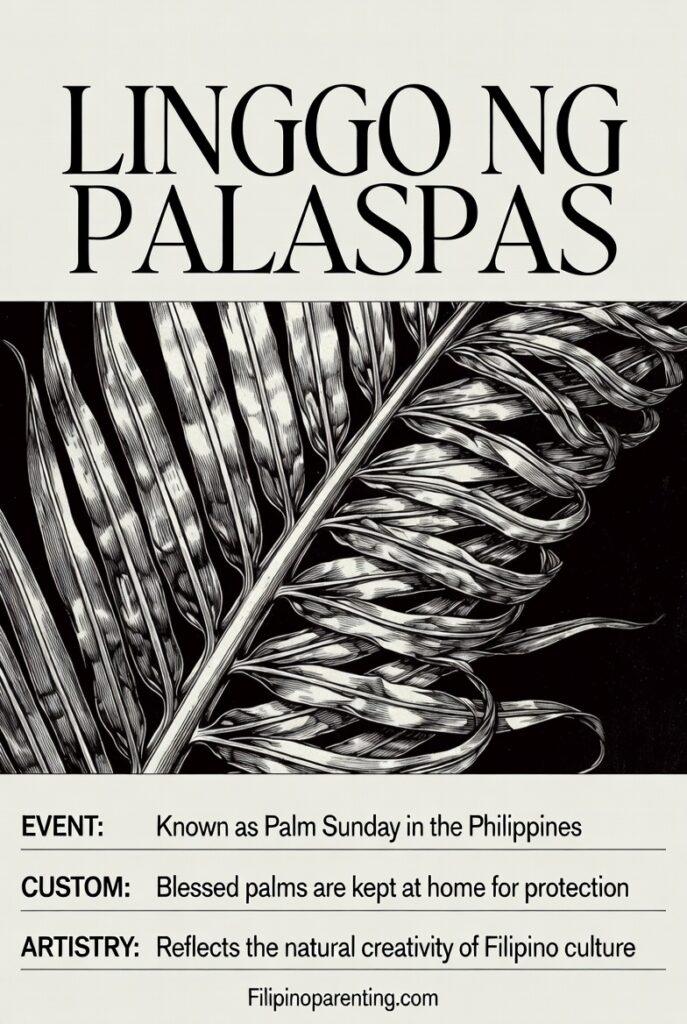
Filipinos have a natural ability to turn nature into art. On Palm Sunday, you will see people carrying palaspas, which are palm fronds woven into intricate shapes like stars or birds. These are brought to the church to be blessed with holy water, and then taken home to be placed near the front door for protection and blessing.
Linggo ng Pagkabuhay (Easter Sunday)
This is perhaps the most joyful Sunday of the year. It often starts before dawn with the Salubong, a ritual where a statue of the Risen Christ meets a statue of the grieving Virgin Mary. When they meet, an “angel” removes Mary’s black veil, signifying that the sorrow has ended. This celebration is a powerful example of Tagalog Christian hope.
5. Tips for Teaching Sunday Vocabulary to the Younger Generation
If you are a parent wanting to pass down these traditions, consistency is key. Here are a few ways to integrate Sunday in Tagalog into your routine:
- The Calendar Song: Teach the days of the week starting with Linggo.
- Sunday Journaling: Ask the learners to write one thing they are grateful for each Sunday using the phrase “Nagpapasalamat ako sa…” (I am thankful for…).
- Label the Day: Use a family whiteboard to write “Ngayon ay Linggo” every weekend.
By focusing on these small acts of consideration, you help the younger generation feel seen and valued within their culture. You can find more ways to encourage them in our post on Tagalog life lessons.
FAQ: Sunday in Tagalog
How do you say “Happy Sunday” in Tagalog?
The most common translation is “Maligayang Linggo!” or “Magandang Linggo!” Both are perfect for greetings.
Is Sunday the first day of the week in the Philippines?
Yes, in accordance with the Filipino calendar and Christian tradition, Sunday (Linggo) is considered the start of the week.
What is the difference between Linggo and Domingo?
Linggo is the everyday Tagalog word for Sunday and week. Domingo is the formal Spanish-derived name often used in religious texts or formal documents.
How do you say “See you next Sunday”?
You can say “Kita tayo sa susunod na Linggo.”
Conclusion
Mastering the word for Sunday in Tagalog opens up a world of cultural understanding. It is a day that represents the very heart of Filipino identity—faith, family, and a shared belief that life is better when we are together. As you move into your next Linggo, may it be a day of rest and meaningful connection for you and your family.
To continue learning about the values that shape the Filipino home, we invite you to read our guide on Filipino proverbs and character. For language resources, you can visit Tagalog.com or check out the USCCB website for more on global liturgical traditions.