Praying mantis in Tagalog is commonly called samba-samba.
In some regions, it is also known as mandarangkal or mandadangkal.
The name mandarangkal is believed to be related to the word dangkal (a hand-span measurement), possibly referring to the insect’s long forelegs that extend forward as if measuring twigs or branches. However, samba-samba is the more widely recognized and commonly used term in Tagalog-speaking areas.
These insects are famous for their folded front legs that resemble hands in prayer. Despite their calm appearance, praying mantises are highly skilled ambush predators. They can rotate their heads up to about 180 degrees and strike their prey with remarkable speed.
In the Philippines, praying mantises are commonly found in:
- Gardens
- Rice fields
- Forest edges
- Farms
- Urban backyards
They may look peaceful, but they are powerful hunters in the insect world.
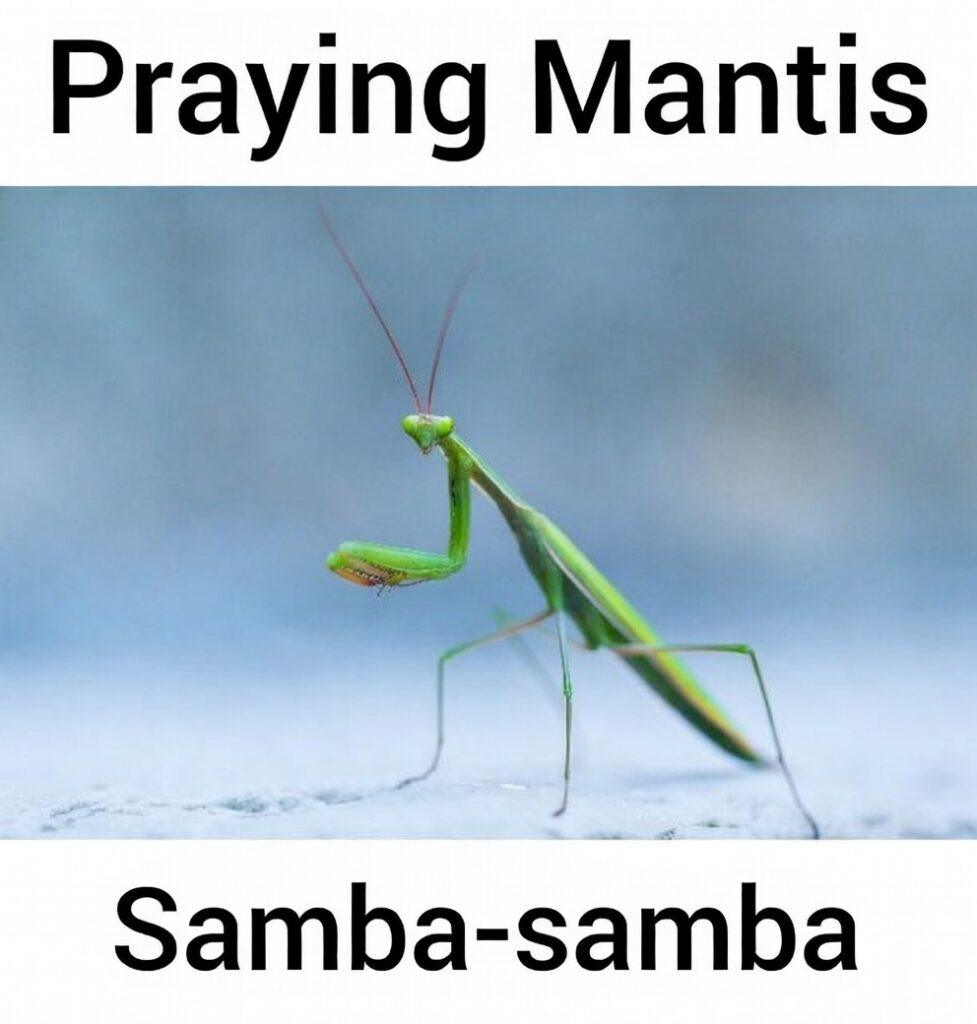
Table of Contents
Praying Mantis Vocabulary in Tagalog (Samba-Samba Terms and Meanings)
Learning important vocabulary about the praying mantis in Tagalog helps you describe its appearance, habitat, and behavior more clearly. The praying mantis in Tagalog is commonly called samba-samba, and understanding related words makes it easier to explain how this insect lives, hunts, and survives in the Philippines.
Below are essential Tagalog words and their English meanings to help improve your language skills and strengthen your knowledge about the praying mantis in Tagalog for conversations, school lessons, blogs, or educational content.
| Tagalog | English |
|---|---|
| Samba-samba | Praying mantis (common term) |
| Mandarangkál / Mandadangkal | Praying mantis (regional/traditional term) |
| Insekto | Insect |
| Berde / Luntian | Green |
| Kayumanggi | Brown |
| Damuhan | Grassy area |
| Hardin | Garden |
| Pakpak | Wing |
| Pagbabalat-kayo | Camouflage |
| Matalas na paningin | Sharp eyesight |
These vocabulary words make it easier to describe the praying mantis in Tagalog—its physical appearance, natural habitat, and unique hunting behavior—in everyday conversations, classroom discussions, vlogs, and educational content. By learning terms like samba-samba (praying mantis), pagbabalat-kayo (camouflage), and matalas na paningin (sharp eyesight), you can clearly explain how the praying mantis in Tagalog looks, where it lives, and how it survives in gardens, forests, and rice fields across the Philippines.
Using these words regularly will help you speak more confidently about insects and nature while naturally reinforcing the keyword praying mantis in Tagalog for better understanding and SEO clarity.
Praying Mantis Species in the Philippines
The Philippines has a tropical climate that supports a wide variety of mantis species. Some are native, and a few may be endemic.
Examples include:
Hierodula species
Often referred to as Giant Asian mantises. These are large, usually green mantises commonly seen in gardens and rice fields.
Hierodula parviceps
Sometimes called the Philippine giant mantis. It can appear green or brown depending on the environment.
Acromantis luzonica
A smaller species found in Luzon.
Acromantis philippina
A small native mantis species.
Bark mantises
Brown species that mimic tree bark and are often found on trunks or wooden surfaces.
Color variations you may observe:
- Green praying mantis in gardens
- Brown mantis blending into bark
- Smaller shrub-dwelling species
Color often depends on the species and the environment where the mantis lives. Some praying mantises are bright green to blend in with fresh leaves and grass, while others are brown or gray to match tree bark, dry plants, or soil. This natural color variation helps the praying mantis in Tagalog, or samba-samba, stay hidden from predators and ambush its prey more effectively.
In some cases, young mantises may even appear slightly different in shade as they grow and molt. Their ability to match their surroundings is one of the reasons they are such successful hunters in gardens, forests, rice fields, and urban areas.
Behavior and Hunting Style
Praying mantises are ambush predators. They:
- Remain completely still
- Blend into leaves or branches
- Wait patiently for prey
- Strike using specialized front legs called raptorial legs
They typically eat:
- Crickets
- Flies
- Grasshoppers
- Moths
- Beetles
- Occasionally small lizards or other mantises
Their strike is incredibly fast—so fast that it often appears as a blur to the human eye and is difficult to see clearly without slow-motion recording. A praying mantis can snap its specialized front legs forward in a fraction of a second, locking onto its prey with sharp spines before the victim has time to react.
This explosive movement is powered by strong muscles in the thorax and perfectly timed coordination between vision and reflexes. For the praying mantis in Tagalog, or samba-samba, this lightning-quick strike is the key to survival, allowing it to capture flies, crickets, and other insects with precision and efficiency.
Life Cycle of a Praying Mantis
Praying mantises undergo incomplete metamorphosis, meaning they do not have a larval stage like butterflies.
1. Egg Stage (Ootheca)
The female lays dozens to hundreds of eggs inside a foamy protective case called an ootheca. The foam hardens into a protective shell that shields the eggs from predators and weather.
2. Nymph Stage
Tiny mantises hatch from the ootheca. They look like miniature adults but lack fully developed wings. They molt several times as they grow.
3. Adult Stage
After several molts, they develop wings and reach reproductive maturity.
The full life cycle typically lasts around one year, depending on climate and food availability.
Mantises do not give live birth.
Example Sentences for Vlogs or Practice
Ang samba-samba ay may matalas na paningin.
(The praying mantis has sharp eyesight.)
Ang mandarangkal ay marunong magbalat-kayo sa mga dahon.
(The praying mantis knows how to camouflage among leaves.)
Ang samba-samba ay hindi mapanganib sa mga tao.
(The praying mantis is not dangerous to humans.)
Masdan ang ganda ng samba-samba sa gitna ng luntiang hardin.
(Observe the beauty of the mantis in the middle of the green garden.)
Practicing these sentences regularly helps strengthen both fluency and vocabulary confidence. By repeating them out loud, writing them down, or using them in conversation, you become more comfortable using terms related to the praying mantis in Tagalog, such as samba-samba and mandarangkal.
Over time, this practice improves pronunciation, sentence structure, and natural flow. It also helps you remember key descriptive words for appearance, habitat, and behavior, making it easier to explain facts about insects clearly and confidently in Tagalog.
Fun Facts About Praying Mantis
- They can rotate their heads up to about 180 degrees.
- They have excellent depth perception.
- They are among the few insects capable of true stereo (3D) vision.
- Females are usually larger than males.
- Not all females eat males after mating — that behavior is often exaggerated.
- Their forelegs are specially designed for gripping prey.
- They rely heavily on camouflage to avoid predators.
Despite their fierce hunting skills and intimidating appearance, praying mantises are not aggressive toward humans. They do not actively attack people and prefer to avoid confrontation whenever possible. Their powerful front legs are designed for catching insects—not for fighting larger animals.
If handled roughly, a mantis might try to defend itself with a small bite or by raising its legs in a warning posture, but this is rare and generally harmless. The praying mantis in Tagalog, or samba-samba, is actually more beneficial than dangerous, as it helps control pest populations in gardens, farms, and natural environments.
Cultural Beliefs in the Philippines
In some Filipino communities, seeing a samba-samba is associated with:
- Patience
- Focus
- Good luck
- Calmness
These interpretations are based on cultural beliefs rather than scientific evidence.
Frequently Asked Questions (FAQ)
What is praying mantis in Tagalog?
Praying mantis in Tagalog is commonly called samba-samba. It may also be called mandarangkal or mandadangkal in some regions.
Is “sasamba” correct?
“Sasamba” appears occasionally in some references, but samba-samba is the more widely recognized and commonly used term.
Are praying mantises dangerous?
No. They are not venomous to humans. They may bite if handled roughly, but bites are rare and generally harmless.
What do praying mantises eat?
They eat insects such as crickets, flies, moths, grasshoppers, and beetles.
Are there brown mantises in the Philippines?
Yes. Many species can appear brown to blend into bark or dry vegetation.
Conclusion
Understanding praying mantis in Tagalog helps improve vocabulary related to insects and nature. Whether you use samba-samba or mandarangkál, this fascinating insect plays an important ecological role by helping control insect populations.
From green garden hunters to bark-mimicking brown species, praying mantises are patient, precise, and powerful predators that contribute to environmental balance across the Philippines.