Blue in Tagalog is spelled asul or bughaw.
Both asul and bughaw mean the color blue in English. Asul is commonly used in everyday conversation, while bughaw is often heard in formal writing, literature, and poetic descriptions. These words are frequently used when describing the sky, clothing, furniture, vehicles, and decorations.
Learning how to say blue in Tagalog helps you describe objects and scenes more clearly. Since colors are part of daily communication, knowing asul and bughaw improves both vocabulary and cultural understanding.
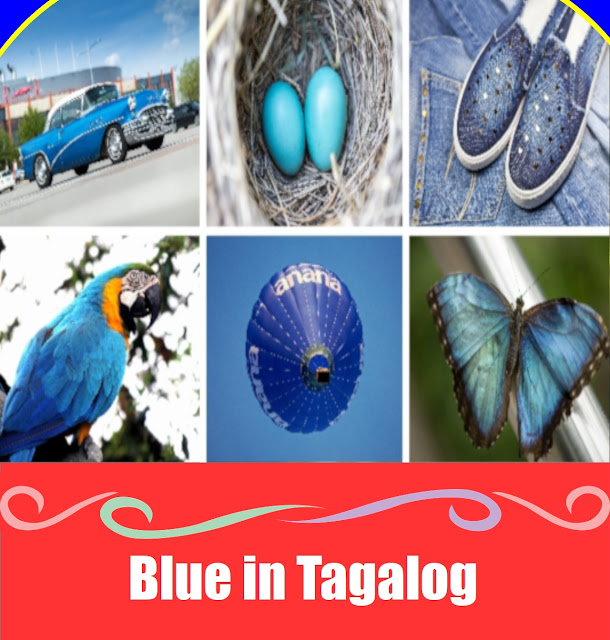
Table of Contents: Blue in Tagalog (Asul & Bughaw) Meaning, Vocabulary, and Examples
What Is Blue (Asul / Bughaw)?
Asul and bughaw are Tagalog words for the color blue. They are used as adjectives to describe objects that have a blue color.
The word asul is derived from the Spanish word azul, reflecting Spanish influence on the Filipino language. Bughaw, on the other hand, is a more native-sounding term and is often used in poetic or literary contexts.
Quick Facts
- Category: Adjective (color)
- Used For: Describing objects, clothing, sky, decorations, vehicles
- Common Context: Daily conversation, school, writing, art
- Related Root Word: Kulay
Blue (Asul / Bughaw) Vocabulary Words
Below is a related vocabulary chart connected to asul and bughaw.
| # | English | Tagalog |
|---|---|---|
| 1 | Blue | Asul / Bughaw |
| 2 | Color | Kulay |
| 3 | Rainbow | Bahaghari |
| 4 | Sky | Langit |
| 5 | Sea | Dagat |
| 6 | Ocean | Karagatan |
| 7 | Tint | Bahid |
| 8 | Coloring | Pagkulay |
| 9 | Paint | Pintura |
| 10 | Ink | Tinta |
| 11 | Blue Sky | Bughaw na langit |
| 12 | Blue Shirt | Asul na kamiseta |
| 13 | Blue Car | Asul na kotse |
| 14 | Blue Dress | Asul na bestida |
| 15 | Blue Notebook | Bughaw na kuwaderno |
| 16 | Blue Tiles | Bughaw na mga baldosa |
| 17 | Blue Roof | Bubong na kulay asul |
| 18 | Dark Blue | Maitim na asul |
| 19 | Light Blue | Mapusyaw na asul |
| 20 | Navy Blue | Kulay asul na madilim |
How Is Blue in Tagalog (Asul / Bughaw) Used in Sentences and Daily Conversation?
The words asul and bughaw are commonly used to describe color in many situations.
1. Describing Objects
They are used to describe furniture, tools, school supplies, and everyday items.
Examples:
- Asul na mesa
- Bughaw na kuwaderno
- Asul na kama
This helps give clear visual details.
2. Describing Nature
Blue is often used when talking about the sky and bodies of water.
Examples:
- Bughaw na langit
- Asul na dagat
It adds beauty and imagery to descriptions.
3. Clothing and Fashion
People commonly use asul when describing clothes.
For example, asul na bestida or bughaw na pantalon. This makes shopping and conversations more specific.
4. Art and School Activities
Students use the word when coloring or painting.
Examples:
- Gumamit siya ng asul na krayola.
- Kulayan mo ng bughaw ang langit.
It provides clear instructions.
5. Formal and Poetic Use
Bughaw is often used in poems and songs to describe the sky or scenery beautifully.
This gives a more expressive and artistic tone.
Importance and Practical Value of Blue in Tagalog (Asul / Bughaw)
Understanding asul and bughaw is useful for everyday communication.
1. Communication Benefit
It allows accurate description of objects and surroundings.
2. Cultural Relevance
Bughaw na langit is commonly used in Filipino songs and poetry.
3. Learning Advantage
It strengthens vocabulary related to colors and adjectives.
4. Practical Everyday Use
Useful in school, shopping, art, and daily conversations.
5. Social or Emotional Impact
Colors can reflect mood and personality.
6. Professional or Academic Value
Helpful in art, design, literature, and marketing.
How to Use Blue (Asul / Bughaw) in Daily Life
You can practice using these words easily.
Method 1: Describe your clothing using asul.
Method 2: Talk about the sky using bughaw.
Method 3: Use it in coloring or drawing activities.
Method 4: Practice making simple descriptive sentences.
Method 5: Listen for the word in Filipino songs or shows.
Commonly Used Example Phrases in Tagalog
Below are commonly used sentences with asul or bughaw.
- She has a blue bed in the bedroom.
Siya ay may asul na kama sa kuwarto. - The student was carrying a blue notebook to class.
Ang estudyante ay may dalang bughaw na kuwaderno sa klase. - The hot soup is on top of the blue table.
Ang mainit na sabaw ay nasa ibabaw ng asul na mesa. - He bought a blue pair of scissors at the store.
Siya ay bumili ng bughaw na pares ng gunting sa tindahan. - Their bathroom has clean blue tiles.
Ang kanilang paliguan ay may malinis na bughaw na mga baldosa. - My dad bought a new blue car.
Ang aking tatay ay bumili ng bagong bughaw na kotse. - My neighbor’s house has a blue roof.
Ang bahay ng aking kapitbahay ay may bubong na kulay asul. - My grandmother was riding a blue tricycle to the market.
Ang aking lola ay nakasakay sa bughaw na traysikel papuntang palengke. - She wore a blue dress to the party.
Siya ay nagsuot ng asul na bestida sa salu-salo. - The little boy is wearing blue pants.
Ang maliit na batang lalaki ay nakasuot ng bughaw na pantalon.
Frequently Asked Questions (FAQ)
1. What is Blue in Tagalog?
Blue in Tagalog is asul or bughaw.
2. What does Blue (Asul / Bughaw) mean in English/Tagalog?
It means the color blue.
3. Is Blue (Asul / Bughaw) formal or informal?
Asul is commonly used in daily conversation, while bughaw is more formal or poetic.
4. When should you use Blue (Asul / Bughaw)?
Use it when describing objects, clothing, the sky, water, or decorations.
5. How do you properly use Blue (Asul / Bughaw) in a sentence?
Use it as an adjective before a noun, such as asul na kotse or bughaw na langit.
Conclusion
Asul and bughaw both mean blue in Tagalog, with asul being more common in daily speech and bughaw often used in formal or poetic contexts. These words are essential for describing objects, nature, and clothing.
Learning how to use blue in Tagalog improves your vocabulary and helps you communicate more clearly. It is a simple but important color word that enriches everyday conversations and language learning.