Beetle in Tagalog is salagubang. Beetles are common insects found in farms, forests, coconut plantations, and even backyards across the Philippines. They come in many shapes, sizes, and colors—some are agricultural pests, while others play important roles in nature as decomposers and natural recyclers.
The Philippines is known for its rich biodiversity, and beetles are one of the most diverse groups of insects in the country. Some species are large and horned, while others are tiny and metallic. Despite their differences, they all share one important feature: a hard outer wing cover that protects their bodies.
This guide explains the meaning of beetle in Tagalog, useful vocabulary words, example sentences, key characteristics, fascinating facts, ecological importance, and frequently asked questions.
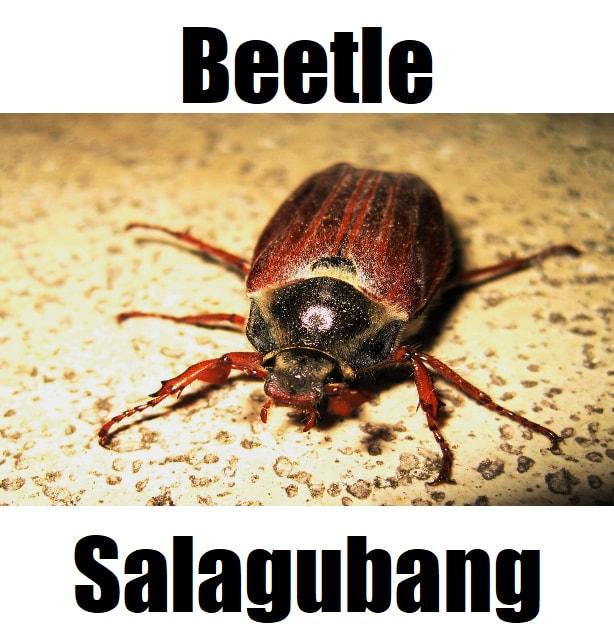
Table of Contents
Beetle Vocabulary Words in Tagalog
Here are common Tagalog words connected to beetles and their environment:
- Salagubang – beetle
- Insekto – insect
- Hayop – animal
- Kahoy – tree / wood
- Itim – black
- Paghiging – buzzing
- Lumilipad – flying
- Malakas – strong
- Bukid – farm
- Hayop na walang buto – invertebrate
- Pakpak – wing
- Itlog – egg
- Uod – larva
- Lupa – soil
- Dahon – leaf
These vocabulary words make it easier to clearly describe beetle in Tagalog in real-life conversations. They help you talk about a beetle’s life cycle—from itlog (egg) to uod (larva) and adult—while also explaining where they live, such as in kahoy (wood), lupa (soil), bukid (farm), or among dahon (leaves). Using these terms allows you to describe their behavior, including lumilipad (flying), paghiging (buzzing), hiding, or burrowing. You can also explain their physical features, such as their pakpak (wings), strong bodies, dark colors like itim, and their identity as a hayop na walang buto (invertebrate). Together, these words build confidence and accuracy when discussing beetles in everyday Filipino conversations.
Example Sentences Using “Beetle” in Tagalog
Here are simple Tagalog sentences to help you practice using beetle in Tagalog naturally:
Ang babaeng salagubang ay nangingitlog ng mahigit sa isang daang itlog.
Female beetles lay more than one hundred eggs.
Ang mga salagubang ay may malabong paningin.
Beetles have very poor eyesight.
Ang mga salagubang ay naninirahan sa itaas ng mga puno.
Beetles live on top of trees.
Ang mga salagubang ay may dalawang pares ng mga pakpak.
Beetles have two pairs of wings.
Ang salagubang ay may masangsang na amoy para pamprotekta sa kanyang sarili.
A beetle gives off a pungent odor to protect itself.
Ang salagubang ay nag-iiba ng kulay para maging magkakulay sa kanyang paligid.
A beetle can change color to blend with its environment.
May mga salagubang na nabubuhay lamang sa loob ng isang taon.
Some beetles live for only one year.
Ang salagubang ay isang napakalakas na insekto.
A beetle is a very strong insect.
Ang mga salagubang ay nakikipagkomunikasyon gamit ang paghiging.
Beetles communicate by buzzing.
Ang mga salagubang ay maaaring manirahan sa lupa at sa tubig.
Beetles can live on land and in water.
Practicing these sentences regularly will strengthen your understanding of beetle in Tagalog while improving your sentence structure and vocabulary retention. By reading and repeating them, you become more comfortable describing a salagubang’s habits, physical traits, habitat, and life cycle in natural conversation. Over time, these examples help you speak more confidently about insects, nature, and everyday observations in Filipino, whether you are in school, at home, or outdoors.
Common Beetle Types in the Philippines
The Philippines is home to thousands of beetle species, many of which are found nowhere else in the world. Some of the most common types include:
Rhinoceros Beetles (Uwang)
Large, horned beetles often found in coconut plantations. They are incredibly strong and sometimes considered agricultural pests.
Longhorn Beetles
Recognized by their very long antennae. They are often seen on tree trunks and wooden surfaces.
Stag Beetles
Known for their large, jaw-like mandibles. They are often found in forested areas and are popular among insect collectors.
Leaf Beetles
Usually smaller and found feeding on leaves and crops.
Jewel Beetles
Metallic and brightly colored, sometimes green, blue, or gold.
These examples highlight the remarkable diversity of beetles found throughout the Philippines, from farms and coconut plantations to dense forests and backyard gardens. Each type has unique physical features, behaviors, and ecological roles—some help break down organic matter, while others interact directly with crops and trees. Understanding these common varieties makes it easier to recognize a beetle in Tagalog in real-life situations and describe its size, color, habitat, and impact with greater accuracy and confidence.
Fascinating Facts About Beetles
Beetles are one of the most successful groups of animals on Earth. Here are some interesting facts:
- Beetles make up about one-fourth of all known animal species.
- There are hundreds of thousands of identified beetle species worldwide.
- Some beetles can lift objects many times heavier than their own body weight.
- Many beetles only live for one year, but others can survive for several years.
- Adult beetles have two sets of wings: one hardened outer pair and one soft inner pair used for flying.
- Some beetles release strong smells or chemicals to defend themselves.
- Certain beetles help break down animal waste and dead wood, returning nutrients to the soil.
- Many beetles are active at night and are attracted to lights.
Beetles in the Philippines are incredibly diverse, with thousands of native and endemic species thriving in forests, farms, mountains, and even urban areas. In Filipino, beetle in Tagalog is salagubang, a word commonly used to describe many large flying beetles seen in provinces and rural communities. The country’s tropical climate allows everything from tiny ground beetles to massive horned species to flourish year-round. Well-known examples include rhinoceros beetles in coconut plantations, atlas and stag beetles in forested regions, and longhorn beetles recognized for their striking antennae. There are also colorful species such as jewel beetles and important decomposers like dung beetles that help maintain soil health.
Beyond their local variety, beetles are one of the most successful animal groups on Earth. Scientists estimate that beetles make up roughly one-fourth of all known animal species, with hundreds of thousands identified worldwide. Adult beetles are easy to recognize because they have two sets of wings: a hardened outer pair that protects a softer inner pair used for flying. Some species are incredibly strong for their size, capable of lifting many times their own body weight. Others use clever defense mechanisms, such as releasing strong odors or chemical sprays to deter predators.
In the Philippines, many salagubang species play essential ecological roles. Some break down dead wood and animal waste, returning nutrients to the soil, while others help control plant growth or serve as food for birds and other wildlife. Many species are nocturnal and are naturally attracted to lights, which is why they are often seen around homes at night. Together, these characteristics show why the beetle in Tagalog, or salagubang, remains an important and fascinating part of Philippine biodiversity.
Life Cycle of a Beetle
Like most insects, beetles go through four stages:
- Itlog (Egg) – The female lays eggs in soil, wood, or leaves.
- Uod (Larva) – The feeding stage where the beetle grows rapidly.
- Pupa – The transformation stage inside a protective casing.
- Adult – The fully formed beetle emerges.
The length of each stage depends on the species and environmental conditions such as temperature, humidity, and food availability. In the Philippines, for example, the coconut rhinoceros beetle lays its eggs in decaying coconut trunks or compost piles. Its larvae feed on rotting organic matter before pupating in the soil, eventually emerging as strong, horned adults capable of flying to nearby trees.
Forest species such as stag beetles and atlas beetles also lay their eggs in decaying wood. Their larvae may spend several months — or even more than a year — feeding and growing inside logs before entering the pupal stage. Because of this long larval development, large horned beetles often take more time to reach adulthood compared to smaller species.
Household species like carpet beetles and flour beetles have much shorter life cycles. Their larvae feed on stored products, fabrics, or grains, pupate in hidden spaces, and quickly emerge as adults, which is why infestations can grow rapidly if left unmanaged.
Even brightly colored jewel beetles and long-antennaed longhorn beetles follow the same four-stage process, though their larval stages often develop inside wood. Despite their differences in size, habitat, and behavior, all these beetles share complete metamorphosis — a remarkable transformation from itlog to uod, to pupa, and finally to adult.
Ecological Role and Importance
Beetles play a vital role in maintaining ecological balance.
- Decomposers – Many species break down dead plants and animals.
- Soil enhancers – Some species improve soil quality by burying organic matter.
- Pollinators – Certain beetles help pollinate flowers.
- Natural pest control – Some species prey on harmful insects.
However, in the Philippines, the impact of beetles is especially noticeable in agriculture and rural communities. The coconut rhinoceros beetle remains one of the most serious pests, boring into young coconut palms and reducing coconut production in affected provinces. This directly impacts farmers’ income and local supply.
In rice fields and vegetable farms, certain leaf beetles and flea beetles feed on crops, creating holes in leaves and slowing plant growth. Meanwhile, in homes and small businesses, flour beetles and drugstore beetles can infest stored rice, grains, and dried goods—particularly in warm, humid conditions where reproduction happens quickly.
Wood-boring beetles and longhorn beetle larvae may also weaken wooden furniture or structures over time, especially in areas with high moisture. Because the Philippines has a tropical climate year-round, beetle activity does not fully stop during any season, making monitoring and proper storage practices important in both urban and rural environments.
FAQs About Beetle in Tagalog
What is beetle in Tagalog?
Beetle in Tagalog is salagubang.
Are all salagubang harmful?
No. Some species damage crops, but many are harmless and beneficial to the environment.
Where are beetles commonly found in the Philippines?
They are found in forests, farms, coconut plantations, gardens, soil, and sometimes inside homes.
Can beetles fly?
Yes. Most beetles can fly using their inner wings, which are protected by hard outer wings.
How long do beetles live?
Many species live for about one year, but some can live longer depending on their environment.
Conclusion
Understanding the meaning of beetle in Tagalog helps you describe insects, nature, and everyday encounters more accurately in Filipino. Salagubang are not just ordinary insects—they are strong, adaptable, and essential to the environment.
Whether found in farms, forests, or backyards, beetles contribute to soil health, nutrient recycling, and ecological balance. Learning their vocabulary, characteristics, and life cycle expands your Filipino language skills while deepening your appreciation for the natural world.