Orange in Tagalog is called kahel or dalandan.
Both kahel and dalandan are used to describe the color orange. Kahel is the more commonly used term in everyday conversation, while dalandan can refer to both the orange color and a citrus fruit. These words are frequently used when describing fruits, clothing, decorations, and natural scenes.
Learning how to say orange in Tagalog helps you describe colors more accurately. Since colors are part of daily speech, knowing kahel and dalandan strengthens your vocabulary and improves communication skills.
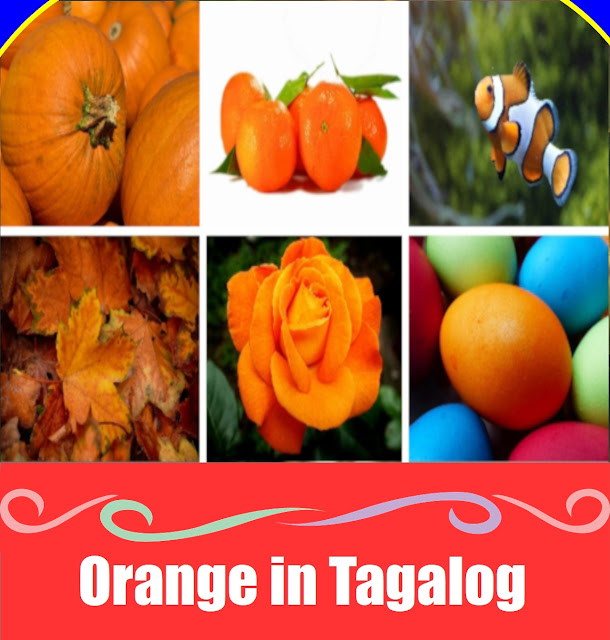
Orange in Tagalog: Complete Table of Contents Guide
What Is Orange (Kahel / Dalandan)?
Kahel and dalandan are Tagalog words for the color orange. They function mainly as adjectives when describing objects.
The word kahel is commonly used in modern conversation. Dalandan originally refers to a type of citrus fruit, and its bright color led to its use as a color term as well.
Quick Facts
- Category: Adjective (color); Noun (fruit – dalandan)
- Used For: Describing fruits, clothing, decorations, art
- Common Context: Daily conversation, school, shopping, holidays
- Related Root Word: Kulay
Orange (Kahel / Dalandan) Vocabulary Words
Below is a related vocabulary chart connected to kahel and dalandan.
| # | English | Tagalog |
|---|---|---|
| 1 | Orange | Kahel |
| 2 | Orange | Dalandan |
| 3 | Color | Kulay |
| 4 | Rainbow | Bahaghari |
| 5 | Coloring | Pagkulay |
| 6 | Citrus | Sitrus |
| 7 | Fruit | Prutas |
| 8 | Carrot | Karot |
| 9 | Pumpkin | Kalabasa |
| 10 | Sunset | Takipsilim |
| 11 | Paint | Pintura |
| 12 | Crayon | Krayola |
| 13 | Shirt | Kamiseta |
| 14 | Paper | Papel |
| 15 | Decoration | Dekorasyon |
| 16 | Light Orange | Mapusyaw na kahel |
| 17 | Dark Orange | Maitim na kahel |
| 18 | Orange Juice | Katas ng dalandan |
| 19 | Leaves | Mga dahon |
| 20 | Halloween | Undas |
How Is Orange (Kahel / Dalandan) Used?
The words kahel and dalandan are used to describe color in various contexts.
1. Describing Fruits
Orange is commonly used to describe citrus fruits and vegetables.
Examples:
- Kahel na prutas
- Karot na kulay dalandan
- Kahel na kalabasa
This helps clearly identify food items.
2. Describing Clothing
People often use kahel when describing what someone is wearing.
Examples:
- Kahel na kamiseta
- Dalandan na blusa
It makes conversations more specific.
3. Used in Art and School Activities
Students frequently use orange when coloring or painting.
For example, Kulayan mo ng kahel ang araw. This gives clear creative instructions.
4. Describing Nature
Orange is used to describe sunsets, leaves, and skies.
Examples:
- Kahel na takipsilim
- Dalandan na mga dahon
This adds vivid imagery to descriptions.
5. Holiday and Decoration Context
Orange is often associated with pumpkins and seasonal decorations.
Examples:
- Kahel na kalabasa para sa Undas
- Mga dekorasyong kulay dalandan
It helps describe festive settings.
Importance and Practical Value of Orange (Kahel / Dalandan)
Understanding kahel and dalandan improves descriptive language skills.
1. Communication Benefit
It allows accurate descriptions of objects and food.
2. Cultural Relevance
The word dalandan connects language with local fruits and traditions.
3. Learning Advantage
It expands vocabulary related to colors and adjectives.
4. Practical Everyday Use
Useful in school, shopping, cooking, and art.
5. Social or Emotional Impact
Bright colors like orange often symbolize energy and warmth.
6. Professional or Academic Value
Helpful in creative writing, art, and design discussions.
How to Use Orange (Kahel / Dalandan) in Daily Life
You can practice these words in simple ways.
Method 1: Describe fruits using kahel or dalandan.
Method 2: Use it when talking about clothes.
Method 3: Practice coloring activities using orange.
Method 4: Describe sunsets and nature scenes.
Method 5: Use it when shopping for colorful items.
Commonly Used Example Phrases in Tagalog
Below are commonly used sentences with kahel or dalandan.
- Her favorite color is orange.
Ang paborito niyang kulay ay kahel. - The orange fruit is rich in Vitamin C.
Ang prutas na kahel ay mayaman sa Bitamina C. - The painter added orange hues to his masterpiece.
Ang pintor ay nagdagdag ng dalandan na kulay sa kanyang obra maestra. - Their living room is painted orange.
Ang kanilang sala ay napinturahan ng dalandan na kulay. - She is carrying an orange umbrella to the park.
Siya ay may bitbit na kahel na payong sa parke. - She is wearing an orange shirt to the market.
Siya ay nakasuot ng kahel na kamiseta papunta sa palengke. - The girl is cutting orange paper for Art class.
Ang batang babae ay naggugupit ng papel na kulay dalandan para sa Sining. - The child loves to chew on orange carrots.
Ang bata ay mahilig ngumuya ng karot na kulay dalandan. - His father bought an orange pumpkin for Halloween.
Ang kanyang ama ay bumili ng kahel na kalabasa para sa Undas. - She washed her orange blouse with a stain.
Nilabhan niya ang kanyang kulay kahel na blusang may mantsa.
Frequently Asked Questions (FAQ)
1. What is Orange in Tagalog?
Orange in Tagalog is kahel or dalandan.
2. What does Orange (Kahel / Dalandan) mean in English/Tagalog?
It refers to the color orange; dalandan can also mean a citrus fruit.
3. Is Orange (Kahel / Dalandan) formal or informal?
Both are neutral and can be used in formal and informal situations.
4. When should you use Orange (Kahel / Dalandan)?
Use it when describing fruits, clothing, decorations, or natural scenes.
5. How do you properly use Orange (Kahel / Dalandan) in a sentence?
Use it as an adjective before a noun, such as kahel na kamiseta or dalandan na kulay.
Conclusion
Kahel and dalandan both mean orange in Tagalog, with kahel commonly used for the color and dalandan referring to both the fruit and the shade. These words are helpful for describing food, clothing, decorations, and nature.
Learning how to say orange in Tagalog enhances your vocabulary and improves your ability to describe the world around you. It is a simple yet valuable word for everyday conversation and language learning.