The kalesa in the Philippines is a traditional horse-drawn carriage that played a central role in the country’s transportation system during the Spanish colonial era. For centuries, it served as a primary mode of travel for both ordinary citizens and prominent families, becoming a familiar sight in town plazas and city streets. Although it is widely recognized as an iconic Filipino vehicle, the kalesa is not officially declared a national symbol.
More than just a means of transportation, the kalesa represents Filipino heritage, colonial-era life, skilled craftsmanship, and the blending of foreign influences with local identity. Each carriage reflects detailed woodwork, practical design, and the enduring tradition of the kutsero—the driver who guides the horse through historic streets.
Today, the kalesa remains visible in heritage destinations such as Intramuros and the preserved colonial streets of Vigan, where visitors can experience a living reminder of Philippine history. While modern vehicles dominate daily life, the kalesa continues to symbolize tradition, resilience, and cultural pride.
In this post, we’ll explore the history of the kalesa, its key parts and design, its cultural significance, and why it remains an important symbol of Filipino identity today.
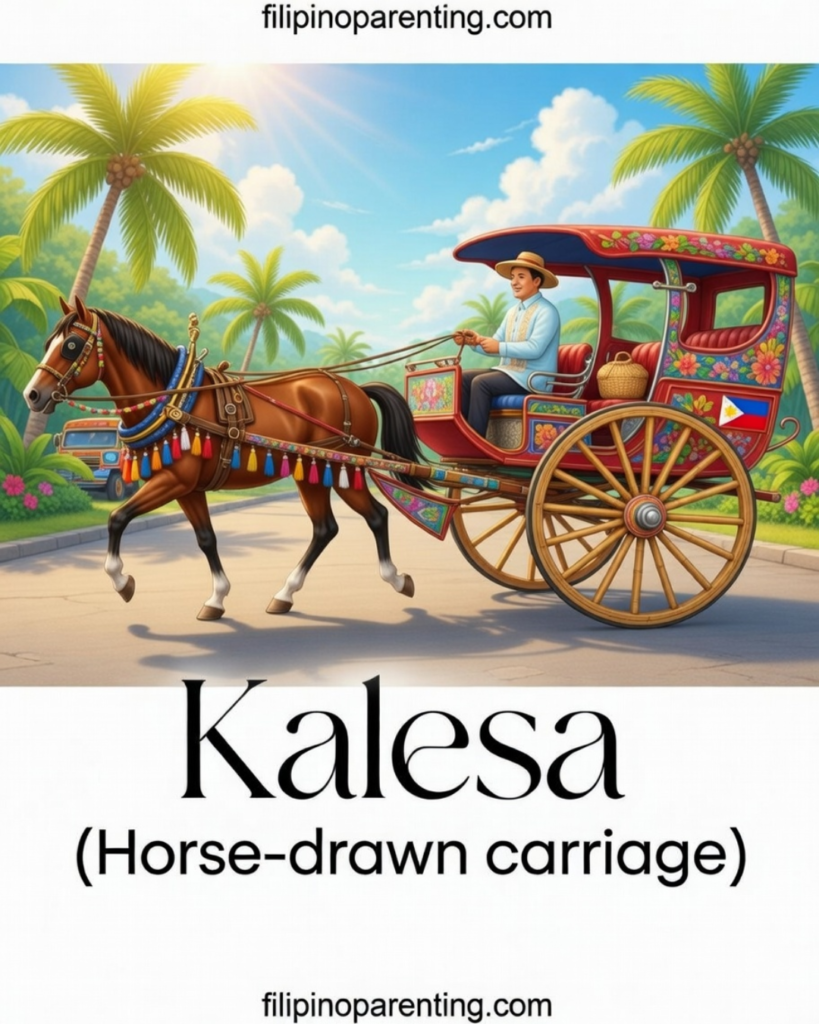
Table of Contents
🇵🇭 History of the Kalesa in the Philippines
The kalesa in the Philippines was introduced during the Spanish colonial period in the 18th century and soon became one of the most important modes of transportation in towns and cities. Inspired by European horse-drawn carriages, it was adapted by Filipino craftsmen using local materials and design techniques, blending foreign influence with Filipino ingenuity.
During the colonial era, the kalesa was a symbol of both practicality and social status.
- Wealthy families owned highly decorated and ornate kalesas, often customized with intricate wood carvings and detailed metalwork.
- Drivers, known as kutsero, skillfully guided the horse and carriage through narrow streets and busy town centers.
- Kalesas were a common sight in plazas, municipal halls, churches, and public squares, serving as everyday transportation for work, school, business, and social events.
Before automobiles became widespread in the early 20th century, the kalesa was considered one of the most reliable and accessible ways to travel, especially in urban centers and provincial communities. It connected neighborhoods, supported local economies, and played an essential role in daily Filipino life.
Today, kalesas can still be seen in heritage areas such as Intramuros in Manila and the preserved colonial streets of Vigan. They also appear in provincial towns, cultural festivals, and tourism sites across the country.
In modern times, the kalesa serves cultural, educational, and tourism purposes. More than a ride, it offers visitors a living glimpse into Philippine history—allowing both locals and tourists to experience a tangible connection to the nation’s colonial past and enduring traditions.
🐴 What Is a Kalesa?
A kalesa is a traditional Filipino horse-drawn carriage that typically has two or four wheels and is pulled by a single horse. Once a primary mode of transportation in the Philippines, it combined function, craftsmanship, and cultural identity in one practical vehicle.
Traditionally, a kalesa is constructed using durable local materials, including:
- Wood – forming the main body and frame, often handcrafted by skilled artisans
- Metal components – reinforcing the wheels, axles, and structural supports for stability and longevity
- Decorative details – carved panels, painted finishes, and ornamental designs that reflect Filipino artistry and regional style
The carriage usually accommodates two to four passengers, seated comfortably under a shaded roof. The horse is guided by a kutsero, the trained driver responsible for steering, controlling speed, and ensuring passenger safety.
Beyond its physical structure, the kalesa in the Philippines represents a meaningful blend of Spanish colonial influence and Filipino craftsmanship. Over time, its design evolved to suit local roads, tropical climate conditions, and the everyday needs of Filipino communities—making it uniquely adapted to Philippine life.
Today, although no longer used for daily commuting, the kalesa in the Philippines remains an enduring cultural symbol. It can still be seen in historic districts, cultural celebrations, and heritage tours across the country, where it continues to educate visitors and preserve an important part of Filipino history.
🌟 Symbolism and Meaning of the Kalesa
The kalesa in the Philippines is more than an old form of transportation — it is a moving symbol of the nation’s story. Through decades of change, it has remained a visible reminder of how Filipino identity was shaped by history, resilience, and cultural blending.
The kalesa represents:
- Filipino heritage and historical continuity – a link between past and present generations
- Life during the Spanish colonial period – when horse-drawn carriages defined mobility and social status
- Traditional Filipino craftsmanship – highlighting skilled woodwork, hand-built design, and artisan pride
- Cultural adaptation – transforming a European carriage into something distinctly Filipino
Unlike modern vehicles built for speed and efficiency, the kalesa symbolizes a slower rhythm of life. It reflects a time when transportation was personal, streets were community spaces, and daily routines revolved around family, faith, and local interaction.
Today, the kalesa in the Philippines continues to stand as a cultural emblem — not because it dominates the roads, but because it carries memory, identity, and tradition. More than a historic vehicle, it represents generations of stories shaped by colonial history, craftsmanship, and community life. It reminds Filipinos that progress does not erase heritage; instead, history travels alongside the present, preserving cultural roots even in a modern world.
🏛️ The Kalesa in the Philippines: Its Place in Modern Society
Although the kalesa is no longer used as everyday transportation, it continues to hold a meaningful place in modern Filipino society. Rather than disappearing with the rise of cars and public transit, it has evolved into a powerful cultural and tourism symbol.
Today, the kalesa plays an important role in:
- Cultural festivals and local celebrations, where it highlights traditional Filipino heritage
- Historical tours and preserved districts, offering visitors an immersive experience of the past
- Tourism and educational programs, helping younger generations understand colonial-era life and transportation
In heritage areas such as Intramuros in Manila and the cobblestone streets of Vigan, riding a kalesa is more than just a sightseeing activity. It becomes a living history lesson. The slow rhythm of the horse’s steps, the sound of wheels against stone, and the open-air view of historic architecture create an experience that modern vehicles simply cannot replicate.
For many Filipinos and tourists alike, the kalesa offers a rare opportunity to step back in time — to imagine how towns once functioned before engines replaced horses. It serves as a reminder that progress and preservation can coexist, and that cultural heritage remains valuable in a rapidly modernizing world, offers a glimpse into Philippine history and tradition.
🌏 Why the Kalesa Still Matters
In a world dominated by cars, buses, and motorcycles, the kalesa serves as a cultural touchstone:
- Preserving historical awareness
- Promoting heritage tourism
- Celebrating Filipino craftsmanship and design
- Connecting Filipinos to their historical roots and traditions
While it is not officially a national symbol, the kalesa is widely recognized culturally as the iconic traditional Filipino carriage.
❓ Frequently Asked Questions (FAQ) About the Kalesa
1. What is a kalesa?
A kalesa is a traditional Filipino horse-drawn carriage, often seen as the country’s iconic historical vehicle.
2. When was it widely used?
It became popular during the Spanish colonial period and remained common until modern vehicles took over.
3. Who drives a kalesa?
A kalesa is guided by a kutsero, the person controlling the horse and carriage.
4. Is the kalesa still used today?
Yes, but mostly for tourism, cultural events, and historical demonstrations.
5. Why is it significant in Filipino culture?
The kalesa reflects Filipino history, heritage, colonial-era life, and traditional craftsmanship.
6. How many passengers can ride a kalesa?
Depending on size, a typical kalesa can carry two to four passengers.
📌 Final Thoughts: Why the Kalesa in the Philippines Still Matters Today
The kalesa in the Philippines is far more than a traditional horse-drawn carriage—it is a living reflection of the country’s layered history and cultural evolution. From its introduction during the Spanish colonial era to its presence in modern heritage districts, the kalesa continues to tell a story of craftsmanship, adaptation, and Filipino identity.
As we’ve explored in these 7 fascinating facts about the traditional Filipino horse-drawn carriage, the kalesa represents more than transportation. It embodies artistry, community life, and the blending of global influence with local tradition. Each carriage carries with it generations of memory—of town plazas, family journeys, and historic streets.
While cars, buses, and motorcycles now dominate Philippine roads, the kalesa remains a powerful cultural symbol. It educates younger generations, enriches tourism experiences, and reminds Filipinos that progress does not erase heritage.
In a rapidly modernizing world, preserving symbols like the kalesa ensures that future generations can still connect with the traditions, values, and stories that shaped the nation. The wheels may turn more slowly today, but the legacy of the kalesa continues to move Filipino culture forward.