The Baro’t Saya is a timeless traditional Filipino dress that beautifully reflects the country’s rich history, vibrant culture, and enduring identity. More than just clothing, it tells the story of generations of Filipino women whose grace, dignity, and quiet strength shaped the nation. Elegant yet modest in design, the Baro’t Saya captures the essence of the Filipina — refined in appearance, resilient in spirit, and deeply rooted in heritage.
Worn during important celebrations, national events, and cultural gatherings across the Philippines, this traditional Filipino dress continues to stand as a powerful emblem of pride and femininity. Its delicate fabrics, flowing silhouette, and structured form symbolize both gentleness and inner fortitude — a balance that defines Filipino womanhood.
In this post, we will explore the history of the Baro’t Saya, examine its distinct parts, uncover its symbolism, trace its evolution through time, and understand why this traditional Filipino dress remains meaningful in modern Filipino culture.
Stunning Guide: Traditional Filipino Dress Roadmap
The Evolution and History of the Baro’t Saya: A Traditional Filipino Dress
The term Baro’t Saya comes from two words:
- Baro – blouse or upper garment
- Saya – skirt
Before colonization, early Filipino women already wore a simple combination of blouse and skirt. During the Spanish colonial period, this clothing evolved, becoming more refined and incorporating embroidery, lace, and delicate fabrics.
Over time, the Baro’t Saya developed into more formal versions, especially among the principalia (elite class). It eventually became a cultural symbol of Filipino femininity and identity.
Today, it is widely recognized as the traditional attire for Filipino women.
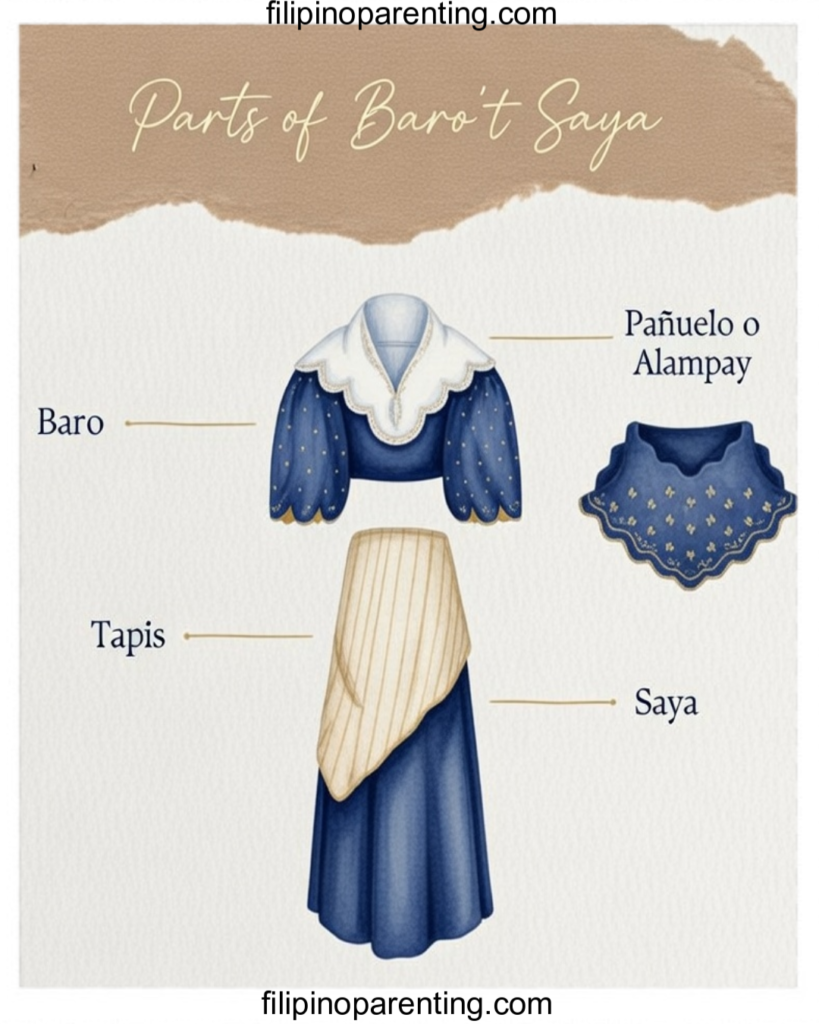
Understanding the Parts of the Baro’t Saya: The Traditional Filipino Dress
The traditional Baro’t Saya consists of several parts:
- Baro – A light blouse, often made of piña, jusi, or delicate fabric
- Saya – A long skirt that reaches the ankles
- Pañuelo – A square cloth worn over the shoulders
- Tapis – An overskirt wrapped around the waist
Each part contributes to the modest yet elegant look of the attire.
Symbolism of the Traditional Filipino Dress
The Baro’t Saya represents:
- Modesty and Grace: Embodying the Filipino ideal of feminine elegance
- Cultural Pride: Celebrating Filipino heritage and traditions
- Femininity and Dignity: Highlighting the strength and resilience of Filipino women
- Filipino Heritage: Reflecting the country’s deep-rooted values and identity
The soft fabrics and flowing design symbolize refinement, while the structure reflects discipline and tradition. It shows how Filipino women balance gentleness with inner strength.
Evolution of the Baro’t Saya
The Baro’t Saya evolved into several well-known variations:
Inspired by the character in a famous Filipino novel, this version features butterfly sleeves and a more formal design. It became a symbol of elegance and refinement.
🌺 Balintawak
A more colorful and simplified version, often worn during festivals and cultural performances. The Balintawak is vibrant and lively, representing the joyous spirit of Filipino celebrations.
These versions continue to be worn during:
- Cultural events
- National celebrations
- School programs
- Formal Filipino occasions
Why the Baro’t Saya Still Matters Today: The Future of the Traditional Filipino Dress
Even in modern times, the Baro’t Saya remains relevant. It serves as a reminder of Filipino roots and traditions. Designers continue to modernize the attire while preserving its cultural essence.
Wearing the Baro’t Saya is not just about fashion — it is about honoring Filipino identity and culture.
Frequently Asked Questions: The Traditional Filipino Dress
- What is the Baro’t Saya?
- The Baro’t Saya is the traditional Filipino attire for women, consisting of a blouse (baro) and a skirt (saya), often paired with a pañuelo and tapis.
- Why is the Baro’t Saya important?
- It represents Filipino culture, history, modesty, and femininity. It is a symbol of national pride and cultural heritage.
- Is Baro’t Saya the same as Maria Clara?
- Maria Clara is a formal version of the Baro’t Saya. While related, Maria Clara refers to a specific elegant style with butterfly sleeves.
- When is the Baro’t Saya worn?
- It is commonly worn during cultural celebrations, national holidays, school presentations, and formal Filipino events.
- What fabrics are used for Baro’t Saya?
- Traditional fabrics include piña, jusi, and other lightweight materials that reflect Filipino craftsmanship.
- Is the Baro’t Saya still worn today?
- Yes, the Baro’t Saya remains an important part of Filipino cultural identity, and is worn during special occasions and cultural celebrations.
The Stunning Future of the Traditional Filipino Dress Today
The Baro’t Saya is more than just a piece of clothing; it is a living reflection of Filipino history, values, and soul. As a beloved symbol of femininity, this traditional Filipino dress today stands for the grace, dignity, and cultural pride that define our nation. Whether seen in the bustling streets of Manila or against the backdrop of a rural sunset, it remains a stunning testament to our roots.
By preserving and wearing this traditional Filipino dress today, we continue to celebrate the beauty, strength, and resilience of the Filipina. It is an act of honoring our ancestors while showing the world that our culture is as vibrant now as it was centuries ago. As we move forward into the future, let us carry the elegance of the traditional Filipino dress today with us, ensuring that our heritage never fades.