Farming in Tagalog is spelled pagsasaka.
Farming is an important part of daily life in the Philippines, and the word pagsasaka is commonly used when talking about food production, rural life, and agriculture. You will often hear it mentioned in schools, news, and everyday conversations.
Learning farming-related vocabulary in Tagalog is useful because agriculture plays a major role in Filipino culture, livelihood, and economy, especially in the provinces.
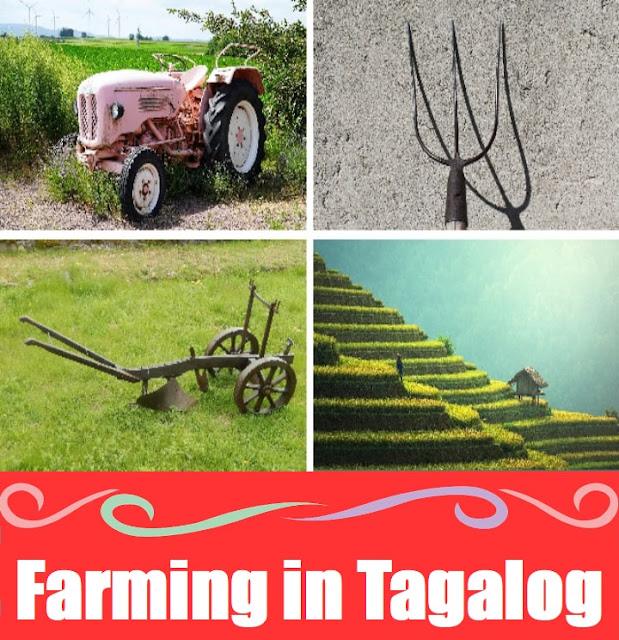
Table of Contents
What Is Farming?
Farming (pagsasaka) refers to the practice of cultivating land, growing crops, and raising animals for food and other products. It is a vital activity that supports families and communities.
The word pagsasaka comes from the root word saka, which relates to farming or tilling land. The prefix pag- turns it into a noun that refers to the act or practice of farming.
Quick Facts
- Category: Noun / Concept
- Used For: Agriculture, food production, livelihood
- Common Context: Provinces, farms, rural areas, education
- Related Root Word: Saka
Farming Vocabulary Words
Below is a related vocabulary chart connected to farming in Tagalog.
| # | English | Tagalog |
|---|---|---|
| 1 | Farming | Pagsasaka |
| 2 | Barn | Kamalig |
| 3 | Plow | Araro |
| 4 | Farm | Bukid |
| 5 | Farmer | Magsasaka |
| 6 | Orchard | Lagwerta |
| 7 | Pick axe | Piko |
| 8 | Scarecrow | Panakot ng ibon |
| 9 | Tractor | Traktor |
| 10 | Water tank | Tangke ng tubig |
| 11 | Compost | Abono |
| 12 | Drought | Tagtuyot |
| 13 | Barrel | Bariles |
| 14 | Box | Kahon |
| 15 | Bucket | Timba |
| 16 | Seed | Binhi |
| 17 | Wheelbarrow | Kartilya |
| 18 | Watering pot | Patubig |
| 19 | Pitchfork | Tuhugin |
| 20 | Gardening | Paghahardin |
How Is Farming Used?
The word pagsasaka is commonly used when talking about agriculture, food, and rural life.
1. Talking About Livelihood
Farming is often mentioned as a source of income.
Examples:
- Farming supports many families.
- Farmers work hard daily.
Pagsasaka reflects dedication and labor.
2. Food Production
The word is used when discussing where food comes from.
Farming connects land to food.
3. Rural and Provincial Life
Farming is associated with life in the provinces.
It represents tradition and sustainability.
4. Education and Awareness
Farming terms are used in schools and discussions.
It helps explain agriculture and environment.
5. National Importance
Farming is used when talking about the economy.
It highlights food security.
Importance and Practical Value of Farming
Farming plays a vital role in communication and culture.
1. Communication Benefit
Helps talk about food and agriculture clearly.
2. Cultural Relevance
Pagsasaka is deeply rooted in Filipino life.
3. Learning Advantage
Useful vocabulary for beginners and students.
4. Practical Everyday Use
Used in news, school, and daily conversation.
5. Social or Emotional Impact
Represents hard work and perseverance.
6. Professional or Academic Value
Important in agriculture, education, and policy.
How to Use Farming in Daily Life
You can use pagsasaka in simple ways:
- Method 1: Talk about food sources.
- Method 2: Describe rural life.
- Method 3: Discuss agriculture issues.
- Method 4: Explain family livelihoods.
- Method 5: Learn environmental topics.
Commonly Used Example Phrases in Tagalog
Below are exactly 10 example phrases using farming-related words.
- Farming is essential work in the Philippines.
Ang pagsasaka ay mahalagang trabaho sa Pilipinas. - The farmer stored the hay inside the barn.
Inimbak ng magsasaka ang dayami sa loob ng kamalig. - The water buffalo is used to plow the field.
Ang kalabaw ay ginagamit sa pag-aararo ng parang. - The rice harvest is bountiful.
Ang ani ng palay ay masagana. - Eat healthy fruits for a strong immune system.
Kumain ng masustansyang prutas para sa malakas na resistensya. - Vegetables are good for your health.
Ang mga gulay ay mainam para sa kalusugan. - The farm workers harvested the rice grains.
Inani ng mga manggagawa sa bukid ang mga butil ng palay. - Most agricultural lands in the province are planted with corn.
Karamihan sa mga lupaing agrikultural sa probinsya ay tinaniman ng mais. - The sweet smell of mango shows it is already ripe.
Ang matamis na amoy ng mangga ay nagpapahiwatig na ito ay hinog na. - The sheep are eating grass in the pasture.
Ang mga tupa ay kumakain ng damo sa pastulan.
Frequently Asked Questions (FAQ)
1. What is farming in Tagalog?
Farming in Tagalog is pagsasaka.
2. What does pagsasaka mean in English?
It means farming or agriculture.
3. Is pagsasaka formal or informal?
It is neutral and used in both formal and informal contexts.
4. When should you use pagsasaka?
Use it when talking about agriculture, food production, or rural life.
5. How do you properly use pagsasaka in a sentence?
Use it as a noun to describe the practice of farming.
Conclusion
Farming in Tagalog, or pagsasaka, is an important word that reflects Filipino culture, livelihood, and food production. It is commonly used in daily conversations, education, and national discussions.
By learning farming-related vocabulary in Tagalog, you gain a deeper understanding of Filipino life and can communicate more clearly about agriculture and everyday topics.