The word moth in Tagalog is gamu-gamo. This common Filipino term refers to the small flying insect often seen at night, especially around lights. When learning moth in Tagalog, you are not just translating a word—you are also understanding how this insect is viewed in everyday Filipino life.
Because moths are commonly found in the Philippines, knowing the correct translation of moth in Tagalog helps expand your vocabulary while connecting language with science and nature. The word gamu-gamo is widely used in conversations, school lessons, and even in local stories.
In this post, you will learn more about moth in Tagalog, including vocabulary words, example phrases, body parts, species found in the Philippines, and interesting facts.
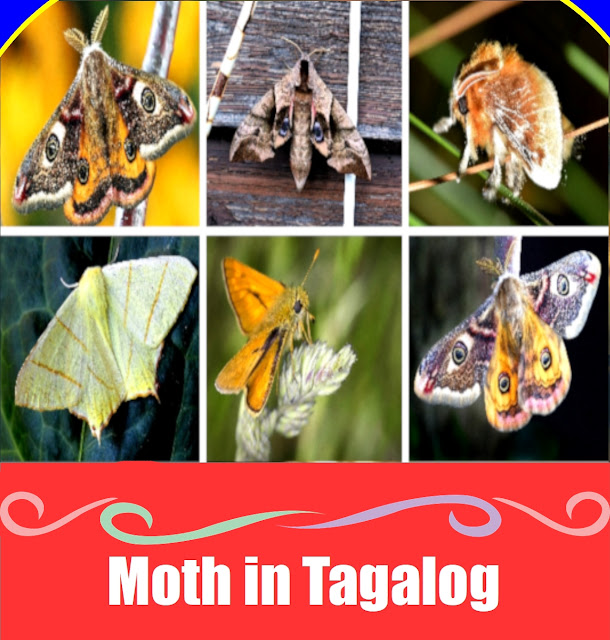
Table of Contents
Moth Vocabulary Words (English–Tagalog)
Listed below are common words related to moth in Tagalog and related concepts:
| English | Tagalog |
|---|---|
| Moth | Gamu-gamo |
| Insect | Insekto |
| Flying | Lumilipad |
| To fly | Lumipad |
| Invertebrate | Hayop na walang buto |
| Night | Gabi |
| Light | Ilaw |
| Pollination | Polinasyon |
| Camouflage | Balatkayo |
| Species | Uri |
Moth Example Phrases
Here are example sentences using moth in Tagalog (gamu-gamo):
- A moth searches food at night.
→ Ang gamu-gamo ay naghahanap ng pagkain sa gabi. - A moth has a very short lifespan.
→ Ang gamu-gamo ay may maikling buhay. - A moth is a furry insect.
→ Ang gamu-gamo ay mabalahibong insekto. - A moth has a sharp sense of smell.
→ Ang gamu-gamo ay may matalas na pang-amoy. - There are big and small moths.
→ May mga malaki at maliit na mga gamu-gamo. - Some moths do not need to eat.
→ May mga gamu-gamo na hindi kailangang kumakain. - Some moths do not have mouths.
→ May mga gamu-gamong walang bibig. - A moth is important in pollination.
→ Ang gamu-gamo ay mahalaga sa polinasyon. - A moth can camouflage using tree bark and leaves.
→ Ang gamu-gamo ay nagbabalatkayo gamit ang balakbak ng puno at mga dahon. - There are more species of moths than butterflies.
→ Mas maraming uri ng mga gamu-gamo kaysa mga paru-paro.
Parts of a Moth
Moths have three main body parts—a head, thorax, and abdomen—covered in tiny scales. They also have four wings, six legs, and sensitive antennae. Their bodies are usually stouter and fuzzier than butterflies.
They use a long, straw-like tongue called a proboscis to drink nectar and antennae to smell.
Key Moth Body Parts Explained
Head (Ulo)
Contains two large compound eyes that help moths see in low light. The antennae are usually feathery or thin and are used to smell food and detect mates.
Proboscis (Panghigop)
A long, coiled tube under the head that acts like a straw for feeding on nectar. Some moth species do not have a functional proboscis.
Thorax (Dibdib)
The middle part of the body. All four wings (two forewings and two hindwings) and six legs are attached here. This is the “engine room” of the moth.
Abdomen (Tiyan)
The rear part of the body that contains the stomach and other internal organs.
Wings (Pakpak)
Covered in tiny overlapping scales that create patterns used for camouflage or warning predators.
Legs (Mga Paa)
Six jointed legs for resting and clinging to surfaces.
Moth Species in the Philippines
The Philippines has a high diversity of moth species due to its tropical climate and many islands.
Some common groups include:
- Silkworm moths
- Owlet moths
- Geometer moths
- Grass moths
- Tropical swallowtail moth
Many species found in the Philippines are endemic, meaning they are found only in the country. Some large moths are even seen in urban areas during certain seasons.
Why Moths Are Important
Moths are not just insects that gather around lights. They play important roles in nature.
They help:
- Pollinate plants
- Support biodiversity
- Serve as food for birds and bats
- Maintain ecosystem balance
Some plants depend on moths for nighttime pollination.
Interesting Facts About Moths
- There are more moth species than butterflies worldwide.
- Not all moths fly at night; some are active during the day.
- Some adult moths do not eat at all.
- Male moths can detect female scents from far distances.
- Many moths use camouflage to blend into tree bark and leaves.
Frequently Asked Questions About Moth in Tagalog
What is moth in Tagalog?
Moth in Tagalog is gamu-gamo.
Is a moth an insect?
Yes. A moth is an insect because it has six legs, three body parts, and antennae.
Why are moths attracted to light?
Moths are naturally drawn to light sources at night, although scientists are still studying the exact reason.
Are moths harmful?
Most moths are harmless and do not bite or spread diseases.
Are there many moth species in the Philippines?
Yes. The Philippines has a wide variety of moth species due to its tropical environment.
Final Thoughts on Moth in Tagalog
Learning the meaning of moth in Tagalog (gamu-gamo) connects language with science and everyday life. While often misunderstood, moths are important pollinators and valuable members of the ecosystem.
Understanding moth in Tagalog helps improve vocabulary while also building awareness of nature and biodiversity in the Philippines.