Tagalog jeepney phrases are your ticket to experiencing the true heartbeat of the Philippines. Road trips in the Philippines are full of adventure and Pinoy charm — the open road, jeepneys honking colorful routes, tricycles weaving through small towns, and the smell of grilled corn from roadside stalls. Whether it’s a family drive to Tagaytay for bulalo or island‑hopping with rented scooters, knowing the right words makes the journey much more meaningful for parents and learners alike.
Navigating the local transport system is a unique skill. To help you sound like a local, this guide explores the most important Tagalog jeepney phrases to use while traveling, ensuring you can navigate the streets of Manila, Cebu, or Davao with confidence.
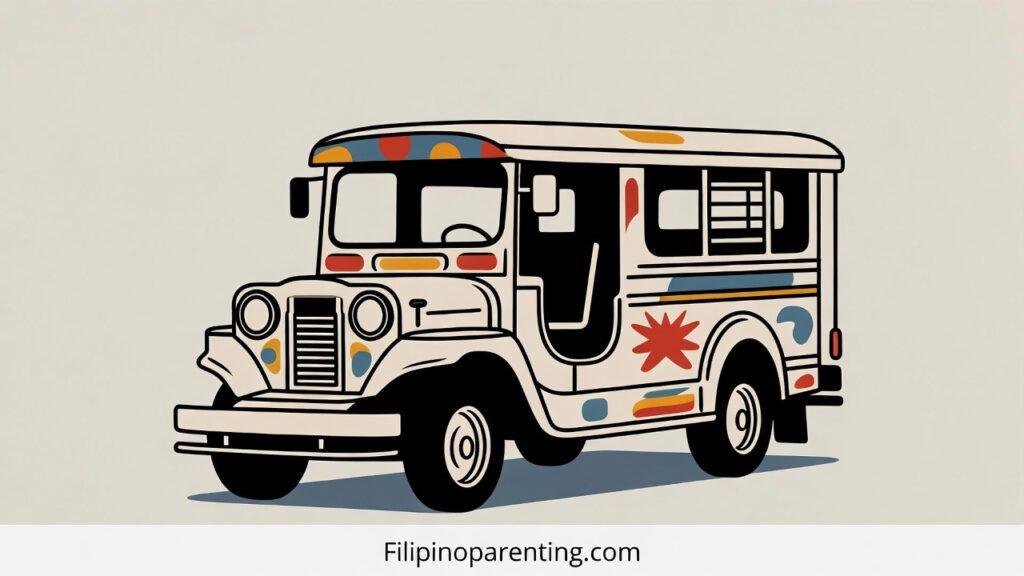
Table of Contents
1. Master Your Commute with Tagalog Jeepney Phrases
The jeepney is the most iconic mode of transport in the country. To ride one effectively, you need to understand the social etiquette of the vehicle. For example, when you are ready to get off, the most important Tagalog jeepney phrases to remember is “Para po!” which alerts the driver to stop.
For travelers planning their logistics, the Department of Transportation provides official updates on public utility vehicle standards, while sites like TripAdvisor offer community tips on navigating busy streets.
🚌 Jeepney & Public Transport Vocabulary
- Jeepney – Dyipni — The colorful public minibus with long benches.
- Fare – Bayad — Your payment for the ride.
- Driver – Tsuper — The person steering the dyipni.
- Conductor – Konduktor — The helper who collects fares on busy routes.
- Route sign – Karatula ng ruta — The destination board on the windshield.
- Handle bar – Baras ng jeepney — Metal bars used for balance.
- Rear door – Pintong likod — The open entrance at the back.
- Horn – Busina — The loud signal used to alert other cars.
- Sticker – Etiketa — Religious or decorative decals inside the vehicle.
- Bench seat – Upuan ng jeepney — The long seats where passengers sit side-by-side.
Practical Jeepney Examples
- Bayad po, bayad. – Fare please.
- Para po sa may Quiapo! – Stop at Quiapo please!
- Sa dulo po ako. – I’ll get off at the end.
- Pwede bang magbayad sa konduktor? – Can I pay the conductor?
- Ilang bayad po sa Cubao? – How much is the fare to Cubao?
- Maingay ang busina ng jeepney! – The jeepney horn is loud!
- Tara, sumakay na tayo sa jeep. – Let’s ride the jeepney.
2. Planning Your Filipino Road Trip
When you move beyond city limits, your Tagalog jeepney phrases will still come in handy at bus terminals or rest stops. Exploring the provinces often requires a mix of private cars and local transport. If you are traveling with the younger generation, knowing how to ask for a pahingahan (rest stop) is vital for a comfortable trip. You may also want to check the weather in Tagalog to avoid the rainy season during your trek.
- Road trip – Road trip / biyahe sa daan — A long journey by vehicle.
- Map – Mapa — Essential for navigating new provinces.
- Gas station – Gasolinahan — Where you refuel your car or scooter.
- Rest stop – Pahingahan — A place for bathroom breaks and snacks.
- Toll gate – Tarangkahan ng bayarin — Expressway payment booths.
- Traffic – Trapiko — Common in urban centers like Manila or Cebu.
- Sign – Karatula — Road signs and direction markers.
- Car – Sasakyan / kotse — Private transportation.
- Snack – Merienda sa biyahe — Food kept in the car for the drive.
Travel Phrases to Use
- Mag‑road trip tayo sa Tagaytay! – Let’s go on a road trip to Tagaytay!
- May trapiko ba sa SLEX? – Is there traffic on SLEX?
- Tigil muna tayo sa pahingahan. – Let’s stop at the rest area.
- Puno na ang gasolinahan. – Fill up the tank.
- May merienda ba sa biyahe? – Do we have snacks for the trip?
- Saan po ang daan papuntang Baguio? – Where is the road to Baguio?
- Ingat sa trapiko, driver. – Be careful with the traffic.
If you are feeling stressed by the journey, reading some Tagalog quotes for choosing peace can help keep the mood light.
3. Roadside Food and Snacks
Part of the fun of using Tagalog jeepney phrases is the ability to interact with street vendors during pit stops. Filipino hospitality is legendary, and vendors are often happy to help learners practice their skills. Whether you are craving banana cue or a quick tilapia fish ball, these words will help you order like a pro.
- Grilled corn – Inihaw na mais — Freshly grilled corn on the cob.
- Banana cue — Fried bananas with a brown sugar glaze.
- Fishball — Deep-fried savory balls served with sauce.
- Kwek‑kwek — Boiled quail eggs in orange batter.
- Street vendor – Tindero sa kanto — The person selling food by the road.
- Plastic stool – Plastik na bangko — Where you sit while eating.
- Chili vinegar – Suka na may sili — A popular dipping sauce.
- Bottled water – Bote ng tubig — Cold water for the heat.
- Ice candy — Fruit-flavored frozen treats in plastic.
- Plastic bag – Plastik na supot — For carrying your leftovers.
Phrases for Roadside Stops
- Pabili po ng inihaw na mais. – One grilled corn, please.
- May banana cue ba sa kanto? – Do they have banana cue at the corner?
- Extra spicy po ang sawsawan. – Extra spicy sauce please.
- Pahingi ng ice candy, chocolate flavor. – Chocolate ice candy please.
- Kailangan ko ng bote ng tubig sa biyahe. – I need bottled water for the trip.
For more essential communication tips, see our guide on 10 essential phrases for learning Tagalog or browse through our emotions vocabulary word list in Tagalog to better express your excitement during the trip.
FAQ: Riding the Jeepney
How do I pay my fare if I am sitting at the back?
You simply pass your money to the passenger next to you and say “Bayad po.” The people sitting between you and the driver will pass it forward until it reaches the tsuper.
How do I know where the jeepney is going?
Check the karatula ng ruta on the windshield and the sides of the vehicle. It lists major landmarks and neighborhoods the ride will pass through.
Is it safe to ride a jeepney with a family?
Yes, it is a very common way for families and the younger generation to travel. Just be mindful of the trapiko and keep your belongings close.
What if the driver doesn’t hear me say “Para po”?
You can tap a coin against the metal handrail or the ceiling. The clicking sound is a universal signal for “stop” in Tagalog jeepney phrases culture.
How much is the fare?
Fares usually start at a base rate for the first few kilometers. You can ask “Magkano po ang bayad?” to be sure.
Conclusion
Maraming salamat for exploring these Tagalog jeepney phrases and road trip essentials. These words — bayad, para po, inihaw na mais, trapiko — capture the chaotic, fun, and connected spirit of Pinoy travel. Whether you are bargaining fares or sharing stories with strangers, these phrases make every journey feel more authentic.
Paalam for now — see you on the next Tagalog adventure! 🚌🌴🍢